







Question: This is going to be a long answer that needs to stitch several layers together. Assume you have two PCs, one with a web server
This is going to be a long answer that needs to stitch several layers together. Assume you have two PCs, one with a web server and the other with a web browser directly connected to one another. Assume the server has a 3 KByte file the browser wants to retrieve.
1. What configuration steps do you need to take before attempting the file transfer?
For each protocol involved in this transaction
2.What is the protocol,
3. What are the distinct payload sizes that occur in this transaction?
4. What are the header sizes for each packet (this is obviously a constant across all packets at each layer for this transaction.)
For the transaction as a whole
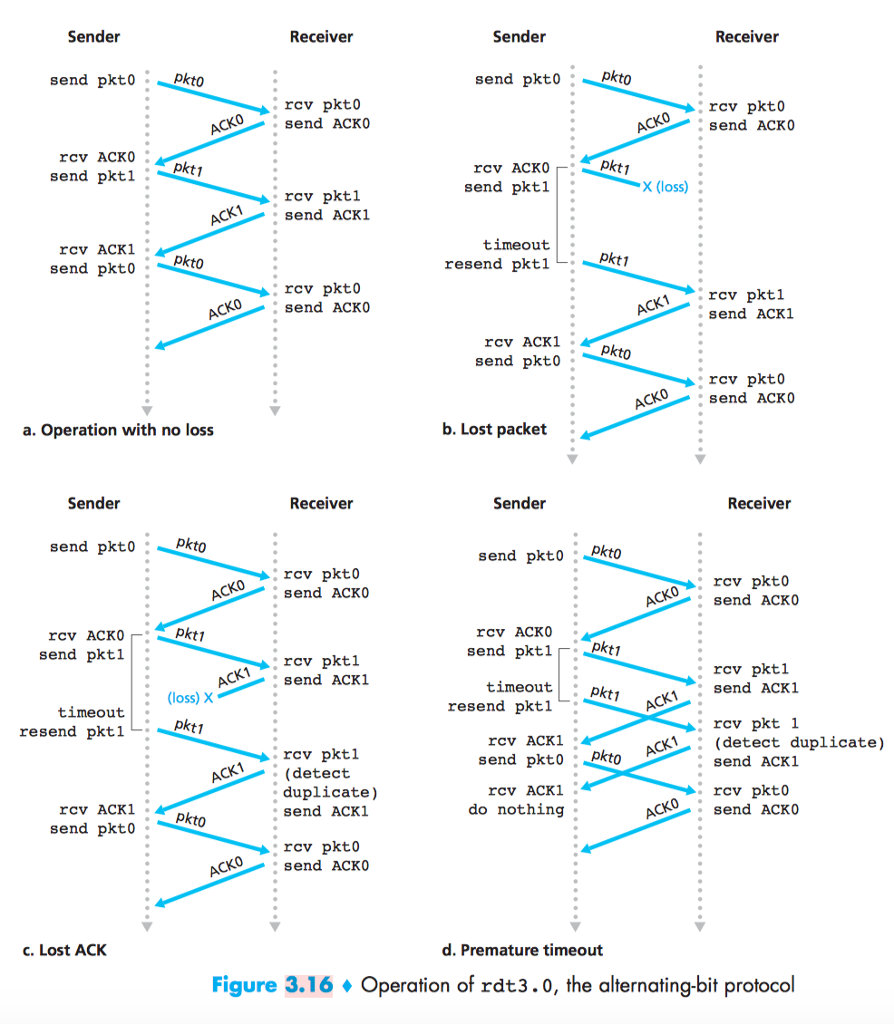
5. Draw a packet flow diagram for the entire transaction in the format of one of the pictures in Figure 3.16 attached.
6. What is the total amount of data that's actually transferred over the cable for this transaction
Sender Receiver Sender Receiver send pkto pkto send pkto:pkto rcv pkto CKOend ACKO rcv pkt0 Csend ACKO rcv ACKO send pkt1 pkti send pktl X (loss) rev pktl end ACK1 timeout resend pktl rcv ACK1 send pkto:pkto : rcv pkt0 CKOsend ACKo CK1 rev pkt1 send ACK1 rcv ACK1 send pkto:Pt rev pkto CK0send ACKo a. Operation with no loss b. Lost packet Sender Receiver Sender Receiver send pkto:Pkto send pkto :Pkto sd ACKo : rcv pkt0 : send ACKO t7 rcv ACKO send pktl. send pkt 1ekti :rcv pktl send ACK1 : rev pktl timeout resend pktl. CK1 send ACKl :(loss) X timeout : rcv pkt 1 send ACK1 rcv pkto resend pkt1t rcv ACK1 ck: (detect duplicate) rcv pktl CKdetect : duplicate) send ACK1 send pkto Pkto rcv ACK1: rcv ACK1 send pktO : do nothing Ksend ACKo rcv pkt0 Cend ACKO c. Lost ACK d. Premature timeout Figure 3.16 Operation of rdt3.0, the alternating-bit protocol
Step by Step Solution
There are 3 Steps involved in it

Get step-by-step solutions from verified subject matter experts
 Study Help