







Question: THIS IS ONE QUESTION WILL MULTIPLE PARTS. PER CHEGG POLICY, YOU MUST ANSWER ALL PARTS OF A MULTI PART QUESTION. PLEASE ANSWER ALL PARTS OR
THIS IS ONE QUESTION WILL MULTIPLE PARTS. PER CHEGG POLICY, YOU MUST ANSWER ALL PARTS OF A MULTI PART QUESTION. PLEASE ANSWER ALL PARTS OR I WILL DOWNVOTE YOUR ANSWER.
The last person who was assigned to answer this tried to sideline Chegg and asked me to email them and would charge me to answer the question outside on Chegg. I'm not doing that. Please just answer the question.
*****PART ONE*****
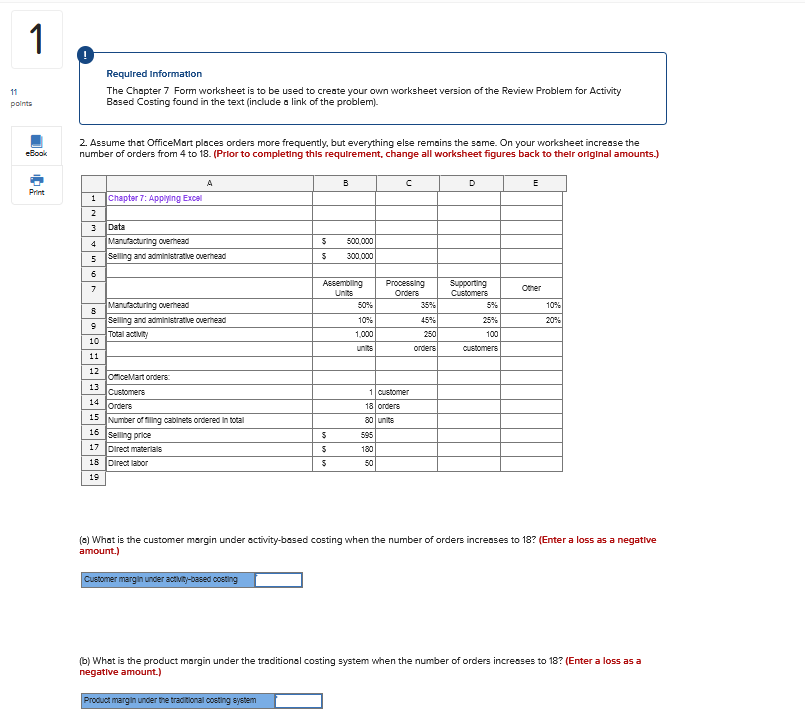
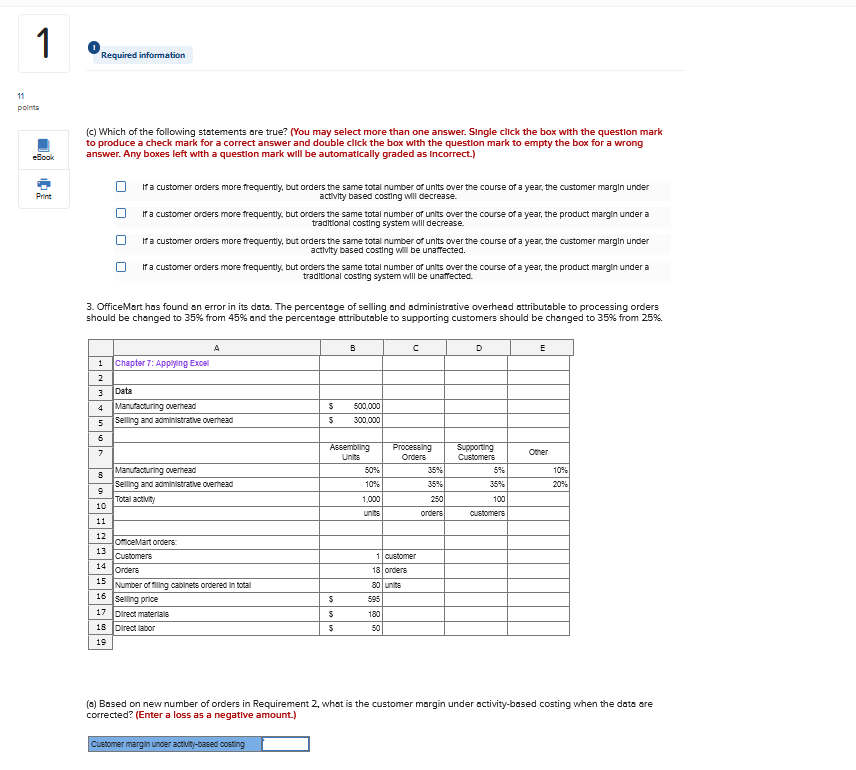
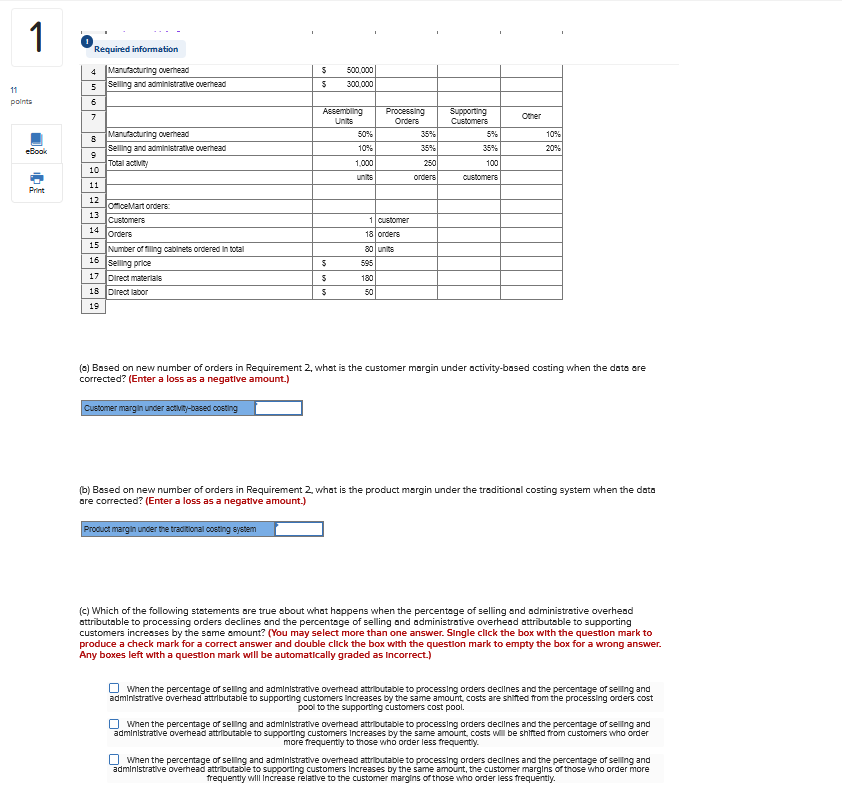
*****PART TWO*****
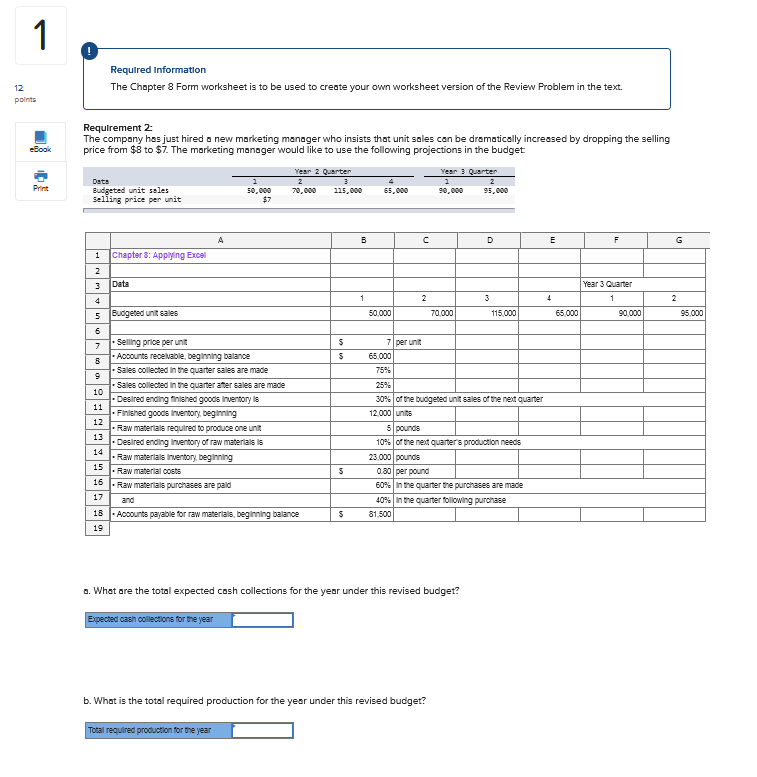
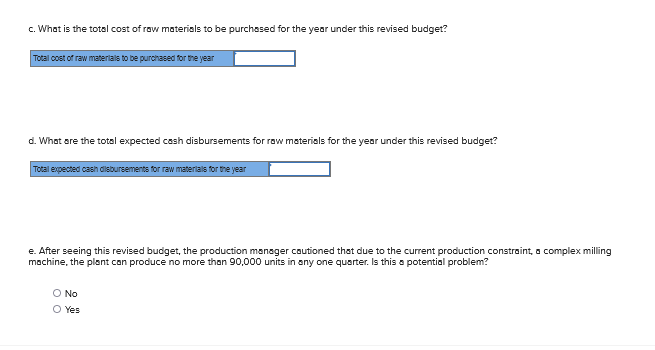
Required Information The Chapter 7 Form worksheet is to be used to create your own worksheet version of the Review Problem for Activity Based Costing found in the text (include a link of the problem). 2. Assume that OfficeMart places orders more frequently, but everything else remains the same. On your worksheet increase the number of orders from 4 to 18 . (Prior to completing this requirement, change all worksheet figures back to their orlginal amounts.) (a) What is the customer margin under activity-based costing when the number of orders increases to 18 ? (Enter a loss as a negative amount.) Customer marg in under acting-based costing (b) What is the product margin under the traditional costing system when the number of orders incresses to 18 ? (Enter a loss as a negative amount.) Proouct margin under the traotitonal costing system (c) Which of the following statements are true? (You may select more than one answer. Single click the box with the question mark to produce a check mark for a correct answer and double click the box with the question mark to empty the box for a wrong answer. Any boxes left with a questlon mark will be automatically graded as Incorrect.) If a customer orders more frequently, but orders the same total number of units over the course of a year, the customer margin under activity based costing will decrease. If a customer orders more frequently, but orders the same total number of units over the course of a year, the product margin under a traditional costlng system will decrease If a customer orders more frequentyy, but orders the same total number of units over the course of a year, the customer margin under actlvity based costing wir be unatrected. If a customer orders more frequently, but orders the same total number of units over the course of a year, the product margin under a tradtional costing system will be unaffected. 3. OfficeMart has found an error in its date. The percentsge of selling and administrative overhead attributable to processing orders should be changed to 35% from 45% and the percentage attributable to supporting customers should be changed to 35% from 25%. (a) Based on new number of orders in Requirement 2, what is the customer margin under activity-based coating when the date are corrected? (Enter a loss as a negative amount.) (a) Based on new number of orders in Requirement 2, what is the customer margin under activity-based costing when the dato are corrected? (Enter a loss as a negative amount.) (b) Based on new number of orders in Requirement 2, what is the product margin under the traditional costing system when the data are corrected? (Enter a loss as a negatlve amount.) (c) Which of the following statements are true sbout what happens when the percentage of selling and administrative overhead attributable to processing orders declines and the percentsge of selling and administrative overhead attributable to supporting customers incresses by the same amount? (You may select more than one answer. Single click the box with the questlon mark to produce a check mark for a correct answer and double click the box with the questlon mark to empty the box for a wrong answer. Any boxes left with a questlon mark will be automatically graded as Incorrect.) When the percentage of seling and administrative overhead attroutable to processing orders declines and the percentage of seiling and acministrative overhead attibutable to supporting customers increases by the same amount, costs are shifted from the processing orders cost pool to the supporting customers cost pool. When the percentage of seling and administrative overhead attroutable to processing orders decllnes and the percentage of seiling and duministrative overhead attrlbutable to supporting customers increases by the same amount, costs will be shifted from customers who order more frequently to those who order less frequently. When the percentage of seling and administrative overhead attroutable to processing orders declines and the percentage of seiling and duministrative overhead attroutable to supporting customers increases by the same amount, the customer margins of those who order more frequently will Increase relatlve to the customer margins of those who order less frequently. Required Informatlon The Chapter 8 Form worksheet is to be used to create your own worksheet version of the Review Problem in the text. Requirement 2 The company has just hired a new marketing manager who insists that unit sales can be dramatically increased by dropping the selling price from $8 to $7. The marketing manager would like to use the following projections in the budget 0. What are the total expected cosh collections for the year under this revised budget? b. What is the total required production for the year under this revised budget? c. What is the totel cost of raw materials to be purchosed for the year under this revised budget? d. What are the total expected cash disbursements for raw materials for the year under this revised budget? e. After seeing this revised budget, the production manager cautioned that due to the current production constraint, a complex milling machine, the plant can produce no more than 90,000 units in any one quarter. Is this a potential problem? No Yes Required Information The Chapter 7 Form worksheet is to be used to create your own worksheet version of the Review Problem for Activity Based Costing found in the text (include a link of the problem). 2. Assume that OfficeMart places orders more frequently, but everything else remains the same. On your worksheet increase the number of orders from 4 to 18 . (Prior to completing this requirement, change all worksheet figures back to their orlginal amounts.) (a) What is the customer margin under activity-based costing when the number of orders increases to 18 ? (Enter a loss as a negative amount.) Customer marg in under acting-based costing (b) What is the product margin under the traditional costing system when the number of orders incresses to 18 ? (Enter a loss as a negative amount.) Proouct margin under the traotitonal costing system (c) Which of the following statements are true? (You may select more than one answer. Single click the box with the question mark to produce a check mark for a correct answer and double click the box with the question mark to empty the box for a wrong answer. Any boxes left with a questlon mark will be automatically graded as Incorrect.) If a customer orders more frequently, but orders the same total number of units over the course of a year, the customer margin under activity based costing will decrease. If a customer orders more frequently, but orders the same total number of units over the course of a year, the product margin under a traditional costlng system will decrease If a customer orders more frequentyy, but orders the same total number of units over the course of a year, the customer margin under actlvity based costing wir be unatrected. If a customer orders more frequently, but orders the same total number of units over the course of a year, the product margin under a tradtional costing system will be unaffected. 3. OfficeMart has found an error in its date. The percentsge of selling and administrative overhead attributable to processing orders should be changed to 35% from 45% and the percentage attributable to supporting customers should be changed to 35% from 25%. (a) Based on new number of orders in Requirement 2, what is the customer margin under activity-based coating when the date are corrected? (Enter a loss as a negative amount.) (a) Based on new number of orders in Requirement 2, what is the customer margin under activity-based costing when the dato are corrected? (Enter a loss as a negative amount.) (b) Based on new number of orders in Requirement 2, what is the product margin under the traditional costing system when the data are corrected? (Enter a loss as a negatlve amount.) (c) Which of the following statements are true sbout what happens when the percentage of selling and administrative overhead attributable to processing orders declines and the percentsge of selling and administrative overhead attributable to supporting customers incresses by the same amount? (You may select more than one answer. Single click the box with the questlon mark to produce a check mark for a correct answer and double click the box with the questlon mark to empty the box for a wrong answer. Any boxes left with a questlon mark will be automatically graded as Incorrect.) When the percentage of seling and administrative overhead attroutable to processing orders declines and the percentage of seiling and acministrative overhead attibutable to supporting customers increases by the same amount, costs are shifted from the processing orders cost pool to the supporting customers cost pool. When the percentage of seling and administrative overhead attroutable to processing orders decllnes and the percentage of seiling and duministrative overhead attrlbutable to supporting customers increases by the same amount, costs will be shifted from customers who order more frequently to those who order less frequently. When the percentage of seling and administrative overhead attroutable to processing orders declines and the percentage of seiling and duministrative overhead attroutable to supporting customers increases by the same amount, the customer margins of those who order more frequently will Increase relatlve to the customer margins of those who order less frequently. Required Informatlon The Chapter 8 Form worksheet is to be used to create your own worksheet version of the Review Problem in the text. Requirement 2 The company has just hired a new marketing manager who insists that unit sales can be dramatically increased by dropping the selling price from $8 to $7. The marketing manager would like to use the following projections in the budget 0. What are the total expected cosh collections for the year under this revised budget? b. What is the total required production for the year under this revised budget? c. What is the totel cost of raw materials to be purchosed for the year under this revised budget? d. What are the total expected cash disbursements for raw materials for the year under this revised budget? e. After seeing this revised budget, the production manager cautioned that due to the current production constraint, a complex milling machine, the plant can produce no more than 90,000 units in any one quarter. Is this a potential problem? No Yes
Step by Step Solution
There are 3 Steps involved in it

Get step-by-step solutions from verified subject matter experts
 Study Help