Question: This is part 1, so my part second should be based on part-1. Try not to copy past from google and use your own words,
This is part 1, so my part second should be based on part-1. Try not to copy past from google and use your own words, please.
NEED ALL THE POINTS THAT WERE ASKED IN PART 2 PLEASE.
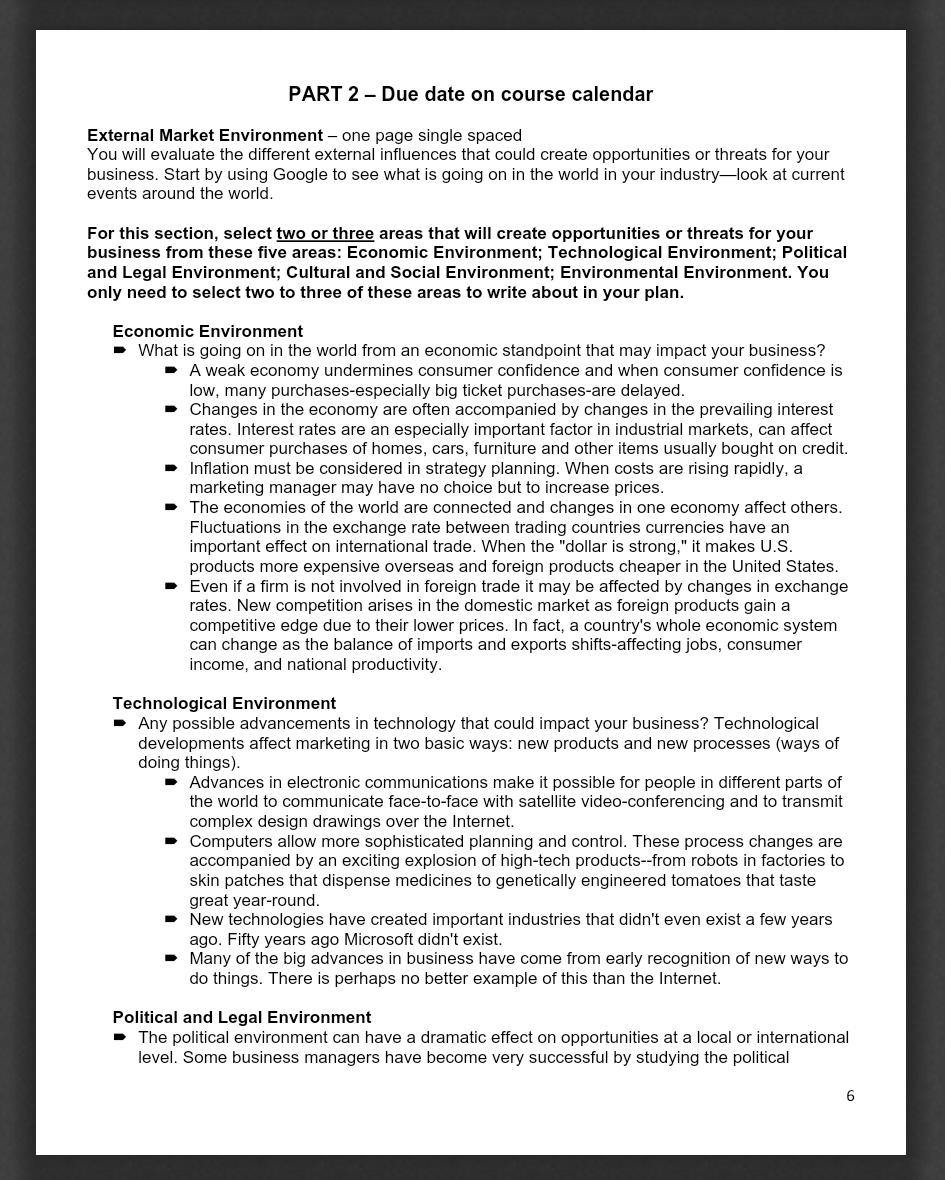
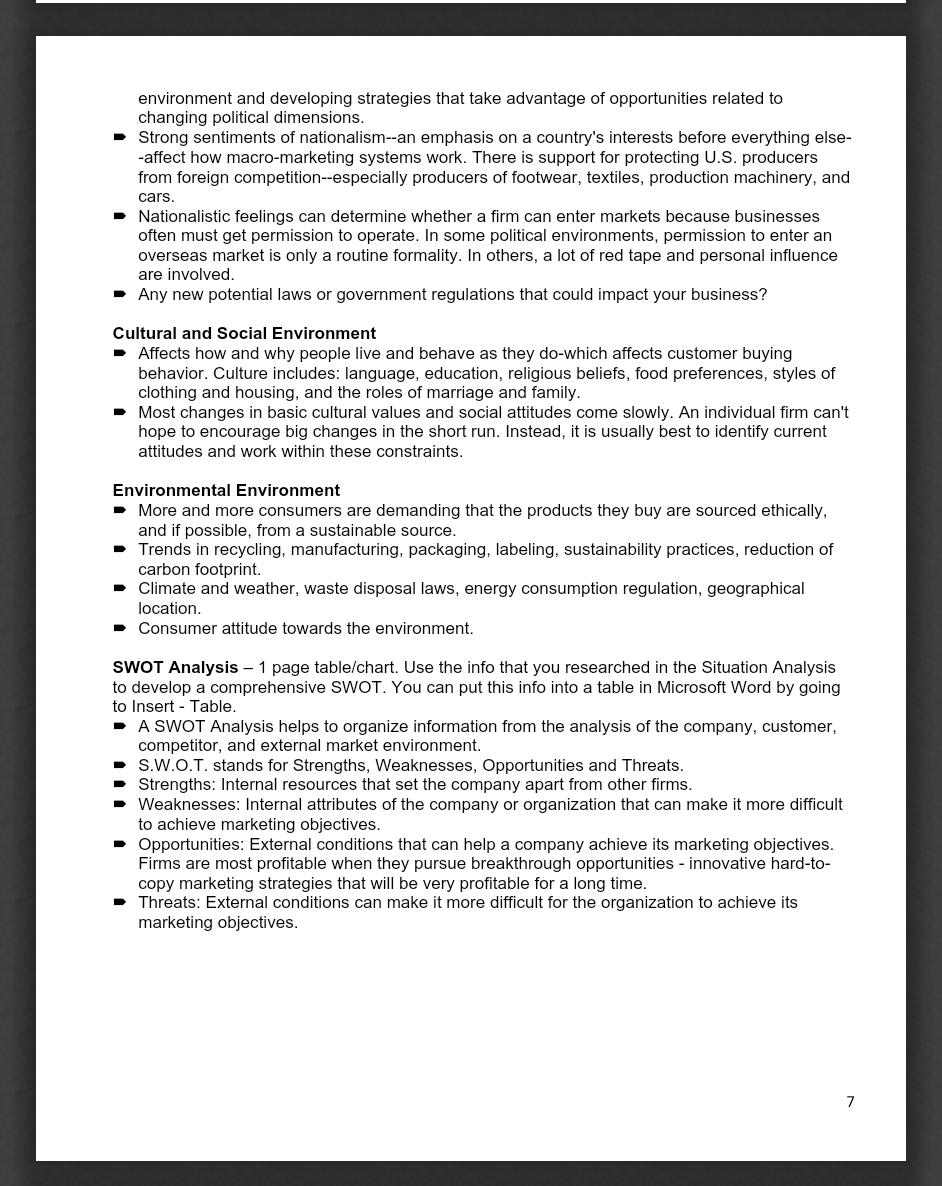
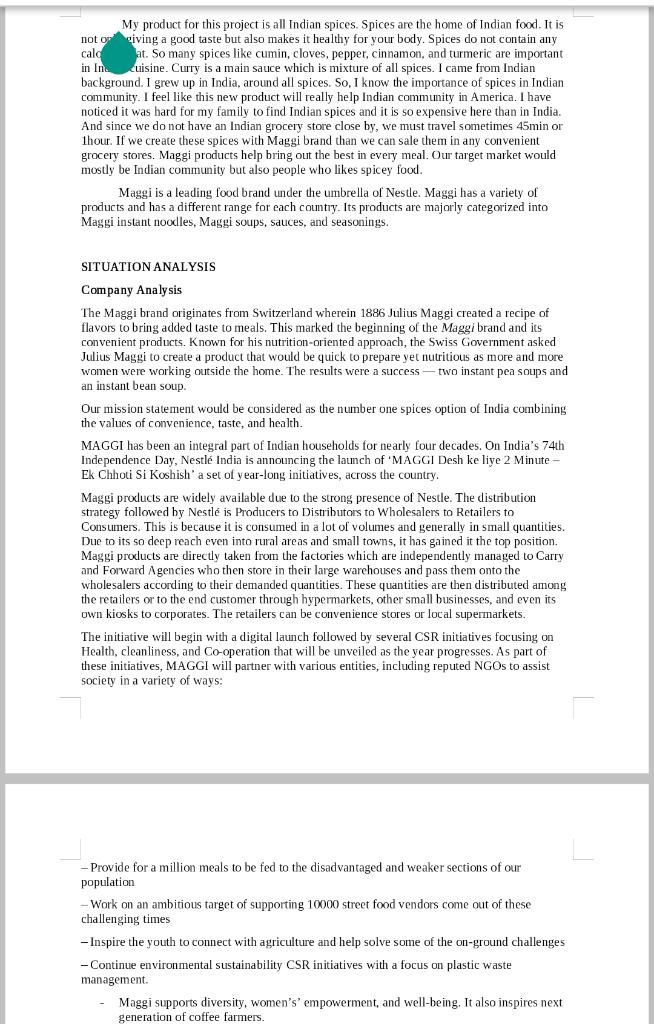
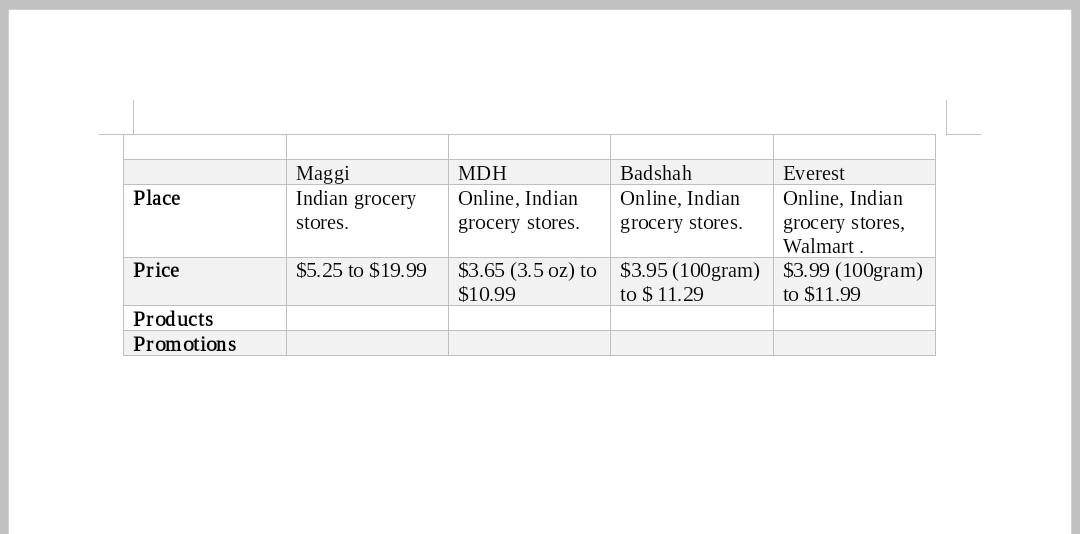
My product for this project is all Indian spices. Spices are the home of Indian food. It is noto civing a good taste but also makes it healthy for your body. Spices do not contain any cald at. So many spices like cumin, cloves, pepper, cinnamon, and turmeric are important in In cuisine. Curry is a main sauce which is mixture of all spices. I came from Indian background. I grew up in India, around all spices. So, I know the importance of spices in Indian community. I feel like this new product will really help Indian community in America. I have noticed it was hard for my family to find Indian spices and it is so expensive here than in India And since we do not have an Indian grocery store close by, we must travel sometimes 45min or 1hour. If we create these spices with Maggi brand than we can sale them in any convenient grocery stores. Maggi products help bring out the best in every meal. Our target market would mostly be Indian community but also people who likes spicey food. Maggi is a leading food brand under the umbrella of Nestle. Maggi has a variety of products and has a different range for each country. Its products are majorly categorized into Maggi instant noodles, Maggi soups, sauces, and seasonings. SITUATION ANALYSIS Company Analysis The Maggi brand originates from Switzerland wherein 1886 Julius Maggi created a recipe of flavors to bring added taste to meals. This marked the beginning of the Maggi brand and its convenient products. Known for his nutrition-oriented approach, the Swiss Government asked Julius Maggi to create a product that would be quick to prepare yet nutritious as more and more women were working outside the home. The results were a success - two instant pea soups and an instant bean soup. Our mission statement would be considered as the number one spices option of India combining the values of convenience, taste, and health. MAGGI has been an integral part of Indian households for nearly four decades. On India's 74th Independence Day, Nestl India is announcing the launch of 'MAGGI Desh ke liye 2 Minute Ek Chhoti Si Koshish' a set of year-long initiatives, across the country. Maggi products are widely available due to the strong presence of Nestle. The distribution strategy followed by Nestl is Producers to Distributors to Wholesalers to Retailers to Consumers. This is because it is consumed in a lot of volumes and generally in small quantities. Due to its so deep reach even into rural areas and small towns, it has gained it the top position. Maggi products are directly taken from the factories which are independently managed to Carry and Forward Agencies who then store in their large warehouses and pass them onto the wholesalers according to their demanded quantities. These quantities are then distributed among the retailers or to the end customer through hypermarkets, other small businesses, and even its own kiosks to corporates. The retailers can be convenience stores or local supermarkets. The initiative will begin with a digital launch followed by several CSR initiatives focusing on Health, cleanliness, and Co-operation that will be unveiled as the year progresses. As part of these initiatives, MAGGI will partner with various entities, including reputed NGOs to assist society in a variety of ways: - Provide for a million meals to be fed to the disadvantaged and weaker sections of our population - Work on an ambitious target of supporting 10000 street food vendors come out of these challenging times - Inspire the youth to connect with agriculture and help solve some of the on-ground challenges - Continue environmental sustainability CSR initiatives with a focus on plastic waste management Maggi supports diversity, women's' empowerment, and well-being. It also inspires next generation of coffee farmers. Place Maggi Indian grocery stores. MDH Online, Indian grocery stores. Badshah Everest Online, Indian Online, Indian grocery stores. grocery stores, Walmart $3.95 (100gram) $3.99 (100gram) to $ 11.29 to $11.99 Price $5.25 to $19.99 $3.65 (3.5 oz) to $10.99 Products Promotions PART 2 - Due date on course calendar External Market Environment - one page single spaced You will evaluate the different external influences that could create opportunities or threats for your business. Start by using Google to see what is going on in the world in your industry-look at current events around the world. For this section, select two or three areas that will create opportunities or threats for your business from these five areas: Economic Environment; Technological Environment; Political and Legal Environment; Cultural and Social Environment; Environmental Environment. You only need to select two to three of these areas to write about in your plan. Economic Environment - What is going on in the world from an economic standpoint that may impact your business? - A weak economy undermines consumer confidence and when consumer confidence is low, many purchases-especially big ticket purchases-are delayed. - Changes in the economy are often accompanied by changes in the prevailing interest rates. Interest rates are an especially important factor in industrial markets, can affect consumer purchases of homes, cars, furniture and other items usually bought on credit. - Inflation must be considered in strategy planning. When costs are rising rapidly, a marketing manager may have no choice but to increase prices. - The economies of the world are connected and changes in one economy affect others. Fluctuations in the exchange rate between trading countries currencies have an important effect on international trade. When the "dollar is strong," it makes U.S. products more expensive overseas and foreign products cheaper in the United States. - Even if a firm is not involved in foreign trade it may be affected by changes in exchange rates. New competition arises in the domestic market as foreign products gain a competitive edge due to their lower prices. In fact, a country's whole economic system can change as the balance of imports and exports shifts-affecting jobs, consumer income, and national productivity. Technological Environment - Any possible advancements in technology that could impact your business? Technological developments affect marketing in two basic ways: new products and new processes (ways of doing things). - Advances in electronic communications make it possible for people in different parts of the world to communicate face-to-face with satellite video-conferencing and to transmit complex design drawings over the Internet. - Computers allow more sophisticated planning and control. These process changes are accompanied by an exciting explosion of high-tech products--from robots in factories to skin patches that dispense medicines to genetically engineered tomatoes that taste great year-round. - New technologies have created important industries that didn't even exist a few years ago. Fifty years ago Microsoft didn't exist. - Many of the big advances in business have come from early recognition of new ways to do things. There is perhaps no better example of this than the Internet. Political and Legal Environment - The political environment can have a dramatic effect on opportunities at a local or international level. Some business managers have become very successful by studying the political 6 environment and developing strategies that take advantage of opportunities related to changing political dimensions. Strong sentiments of nationalism--an emphasis on a country's interests before everything else- -affect how macro-marketing systems work. There is support for protecting U.S. producers from foreign competition--especially producers of footwear, textiles, production machinery, and cars. - Nationalistic feelings can determine whether a firm can enter markets because businesses often must get permission to operate. In some political environments, permission to enter an overseas market is only a routine formality. In others, a lot of red tape and personal influence are involved. - Any new potential laws or government regulations that could impact your business? Cultural and Social Environment Affects how and why people live and behave as they do-which affects customer buying behavior. Culture includes: language, education, religious beliefs, food preferences, styles of clothing and housing, and the roles of marriage and family. Most changes in basic cultural values and social attitudes come slowly. An individual firm can't hope to encourage big changes in the short run. Instead, it is usually best to identify current attitudes and work within these constraints. Environmental Environment - More and more consumers are demanding that the products they buy are sourced ethically, and if possible, from a sustainable source. Trends in recycling, manufacturing, packaging, labeling, sustainability practices, reduction of carbon footprint. - Climate and weather, waste disposal laws, energy consumption regulation, geographical location. - Consumer attitude towards the environment. SWOT Analysis - 1 page table/chart. Use the info that you researched in the Situation Analysis to develop a comprehensive SWOT. You can put this info into a table in Microsoft Word by going to Insert - Table. - A SWOT Analysis helps to organize information from the analysis of the company, customer, competitor, and external market environment. - S.W.O.T. stands for Strengths, Weaknesses, Opportunities and Threats. - Strengths: Internal resources that set the company apart from other firms. Weaknesses: Internal attributes of the company or organization that can make it more difficult to achieve marketing objectives. Opportunities: External conditions that can help a company achieve its marketing objectives. Firms are most profitable when they pursue breakthrough opportunities - innovative hard-to- copy marketing strategies that will be very profitable for a long time. - Threats: External conditions can make it more difficult for the organization to achieve its marketing objectives. 7









 Study Help