Question: this is the second case in the assignment Task Organisational behaviour writers such as Robbins et al. (2013, 2017) draw attention to the idea that
this is the second case in the assignment
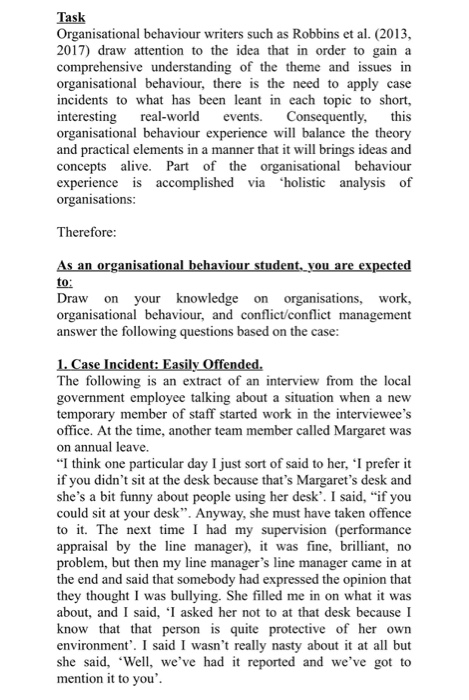
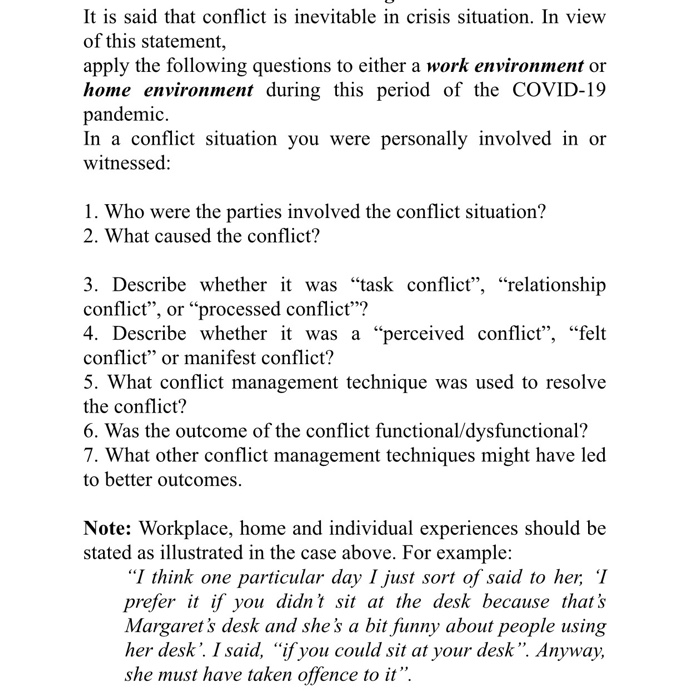
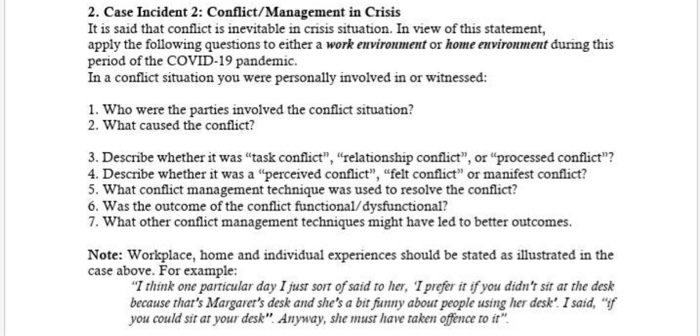
Task Organisational behaviour writers such as Robbins et al. (2013, 2017) draw attention to the idea that in order to gain a comprehensive understanding of the theme and issues in organisational behaviour, there is the need to apply case incidents to what has been leant in each topic to short, interesting real-world events. Consequently, this organisational behaviour experience will balance the theory and practical elements in a manner that it will brings ideas and concepts alive. Part of the organisational behaviour experience is accomplished via "holistic analysis of organisations: Therefore: As an organisational behaviour student, you are expected to: Draw on your knowledge on organisations, work, organisational behaviour, and conflict/conflict management answer the following questions based on the case: 1. Case Incident: Easily Offended. The following is an extract of an interview from the local government employee talking about a situation when a new temporary member of staff started work in the interviewee's office. At the time, another team member called Margaret was on annual leave. "I think one particular day I just sort of said to her, 'I prefer it if you didn't sit at the desk because that's Margaret's desk and she's a bit funny about people using her desk. I said, If you could sit at your desk. Anyway, she must have taken offence to it. The next time I had my supervision (performance appraisal by the line manager), it was fine, brilliant, no problem, but then my line manager's line manager came in at the end and said that somebody had expressed the opinion that they thought I was bullying. She filled me in on what it was about, and I said, 'I asked her not to at that desk because I know that that person is quite protective of her own environment. I said I wasn't really nasty about it at all but she said, 'Well, we've had it reported and we've got to mention it to you'. The complaint was then prepared to accept an apology and so an apology was made. The interviewee goes on to describe the impact of the situation following this. After that, because of what had been said previously, I was really, really paranoid about saying anything that might offend. When I had the next supervision (performance appraisal), it was mentioned that I was very quiet and I wasn't talking to anyone. I wasn't being part of the team and I said, 'I really do feel comfortable. I was disappointed that my line manager felt she'd had to bring her line manager in to tell me something like that when really, if she had raised the matter with me I'd have just apologised for what I said. The situation continued with a bad atmosphere in the next two or three months. (adapted from CIPD, 2008) Answer the following questions based on the case: 1. What caused the conflict in this case? 2. Describe whether it was a felt conflict or a perceived conflict". 3. What conflict management technique was used to resolve the conflict 4. Was the outcome of the conflict functional/dysfunctional? 5. What other conflict management techniques might have led to better outcomes. It is said that conflict is inevitable in crisis situation. In view of this statement, apply the following questions to either a work environment or home environment during this period of the COVID-19 pandemic. In a conflict situation you were personally involved in or witnessed: 1. Who were the parties involved the conflict situation? 2. What caused the conflict? 3. Describe whether it was "task conflict", "relationship conflict", or "processed conflict? 4. Describe whether it was a perceived conflict, felt conflict or manifest conflict? 5. What conflict management technique was used to resolve the conflict? 6. Was the outcome of the conflict functional/dysfunctional? 7. What other conflict management techniques might have led to better outcomes. Note: Workplace, home and individual experiences should be stated as illustrated in the case above. For example: I think one particular day I just sort of said to her, I prefer it if you didn't sit at the desk because that's Margaret's desk and she's a bit funny about people using her desk'. I said, "if you could sit at your desk". Anyway, she must have taken offence to it". Purpose: To demonstrate the ability to look at organisational behaviour using a case study. Consequently, you will therefore work on Organisational Behaviour (OB) topics in the form of case (study) analysis and you will be asked to produce a written report. 2. Case Incident 2: Conflict/Management in Crisis It is said that conflict is inevitable in crisis situation. In view of this statement, apply the following questions to either a work environment or home environment during this period of the COVID-19 pandemic. In a conflict situation you were personally involved in or witnessed: 1. Who were the parties involved the conflict situation? 2. What caused the conflict? 3. Describe whether it was "task conflict", "relationship conflict, or processed conflict"? 4. Describe whether it was a "perceived conflict", "felt conflict" or manifest conflict? 5. What conflict management technique was used to resolve the conflict? 6. Was the outcome of the conflict functional/dysfunctional? 7. What other conflict management techniques might have led to better outcomes. Note: Workplace, home and individual experiences should be stated as illustrated in the case above. For example: "I think one particular day I just sort of said to her, I prefer it if you didn't sit at the desk because that's Margaret's desk and she's a bit funny about people using her desk". I said, "f you could sit at your desk". Anyway, she must have taken offence to it". Task Organisational behaviour writers such as Robbins et al. (2013, 2017) draw attention to the idea that in order to gain a comprehensive understanding of the theme and issues in organisational behaviour, there is the need to apply case incidents to what has been leant in each topic to short, interesting real-world events. Consequently, this organisational behaviour experience will balance the theory and practical elements in a manner that it will brings ideas and concepts alive. Part of the organisational behaviour experience is accomplished via "holistic analysis of organisations: Therefore: As an organisational behaviour student, you are expected to: Draw on your knowledge on organisations, work, organisational behaviour, and conflict/conflict management answer the following questions based on the case: 1. Case Incident: Easily Offended. The following is an extract of an interview from the local government employee talking about a situation when a new temporary member of staff started work in the interviewee's office. At the time, another team member called Margaret was on annual leave. "I think one particular day I just sort of said to her, 'I prefer it if you didn't sit at the desk because that's Margaret's desk and she's a bit funny about people using her desk. I said, If you could sit at your desk. Anyway, she must have taken offence to it. The next time I had my supervision (performance appraisal by the line manager), it was fine, brilliant, no problem, but then my line manager's line manager came in at the end and said that somebody had expressed the opinion that they thought I was bullying. She filled me in on what it was about, and I said, 'I asked her not to at that desk because I know that that person is quite protective of her own environment. I said I wasn't really nasty about it at all but she said, 'Well, we've had it reported and we've got to mention it to you'. The complaint was then prepared to accept an apology and so an apology was made. The interviewee goes on to describe the impact of the situation following this. After that, because of what had been said previously, I was really, really paranoid about saying anything that might offend. When I had the next supervision (performance appraisal), it was mentioned that I was very quiet and I wasn't talking to anyone. I wasn't being part of the team and I said, 'I really do feel comfortable. I was disappointed that my line manager felt she'd had to bring her line manager in to tell me something like that when really, if she had raised the matter with me I'd have just apologised for what I said. The situation continued with a bad atmosphere in the next two or three months. (adapted from CIPD, 2008) Answer the following questions based on the case: 1. What caused the conflict in this case? 2. Describe whether it was a felt conflict or a perceived conflict". 3. What conflict management technique was used to resolve the conflict 4. Was the outcome of the conflict functional/dysfunctional? 5. What other conflict management techniques might have led to better outcomes. It is said that conflict is inevitable in crisis situation. In view of this statement, apply the following questions to either a work environment or home environment during this period of the COVID-19 pandemic. In a conflict situation you were personally involved in or witnessed: 1. Who were the parties involved the conflict situation? 2. What caused the conflict? 3. Describe whether it was "task conflict", "relationship conflict", or "processed conflict? 4. Describe whether it was a perceived conflict, felt conflict or manifest conflict? 5. What conflict management technique was used to resolve the conflict? 6. Was the outcome of the conflict functional/dysfunctional? 7. What other conflict management techniques might have led to better outcomes. Note: Workplace, home and individual experiences should be stated as illustrated in the case above. For example: I think one particular day I just sort of said to her, I prefer it if you didn't sit at the desk because that's Margaret's desk and she's a bit funny about people using her desk'. I said, "if you could sit at your desk". Anyway, she must have taken offence to it". Purpose: To demonstrate the ability to look at organisational behaviour using a case study. Consequently, you will therefore work on Organisational Behaviour (OB) topics in the form of case (study) analysis and you will be asked to produce a written report. 2. Case Incident 2: Conflict/Management in Crisis It is said that conflict is inevitable in crisis situation. In view of this statement, apply the following questions to either a work environment or home environment during this period of the COVID-19 pandemic. In a conflict situation you were personally involved in or witnessed: 1. Who were the parties involved the conflict situation? 2. What caused the conflict? 3. Describe whether it was "task conflict", "relationship conflict, or processed conflict"? 4. Describe whether it was a "perceived conflict", "felt conflict" or manifest conflict? 5. What conflict management technique was used to resolve the conflict? 6. Was the outcome of the conflict functional/dysfunctional? 7. What other conflict management techniques might have led to better outcomes. Note: Workplace, home and individual experiences should be stated as illustrated in the case above. For example: "I think one particular day I just sort of said to her, I prefer it if you didn't sit at the desk because that's Margaret's desk and she's a bit funny about people using her desk". I said, "f you could sit at your desk". Anyway, she must have taken offence to it










 Study Help