







Question: This is the solution to part 4. Can you do part 5? Thanks 1. How much will the project cost? 2. What does the cash
 This is the solution to part 4. Can you do part 5? Thanks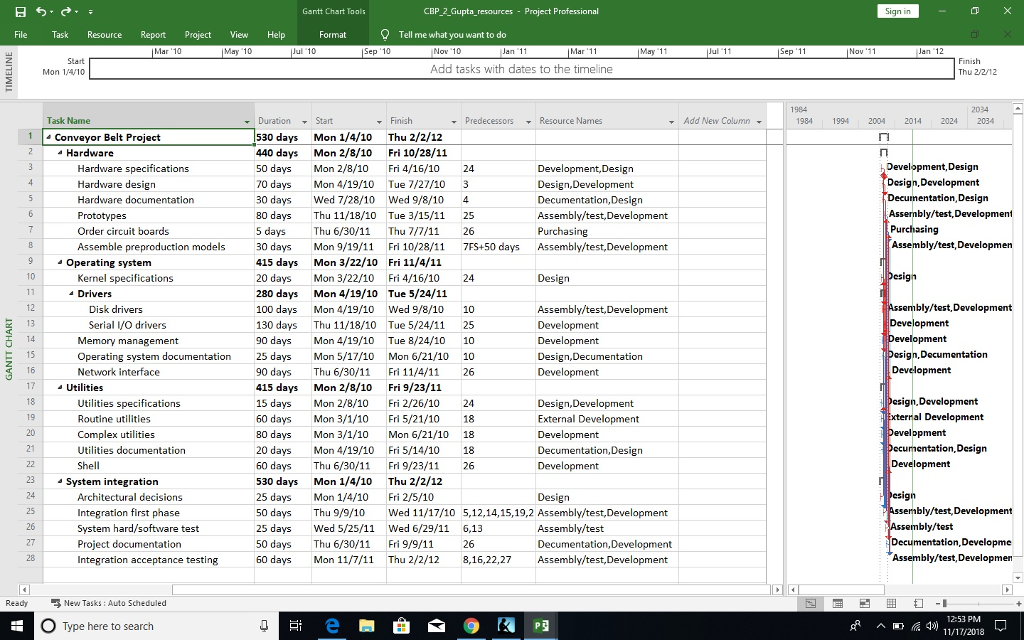
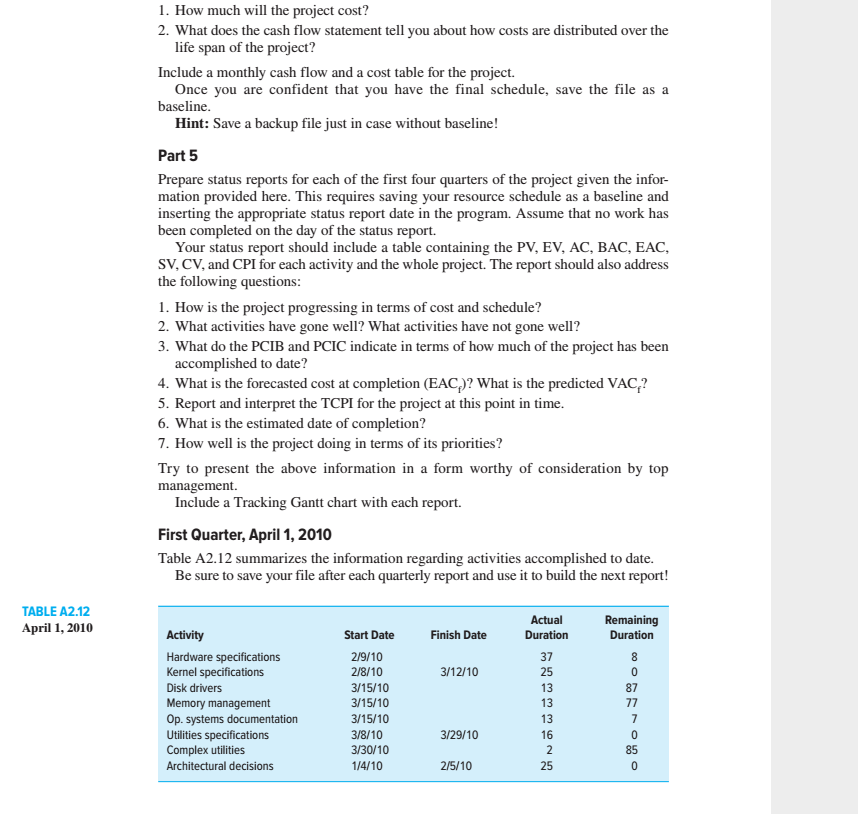
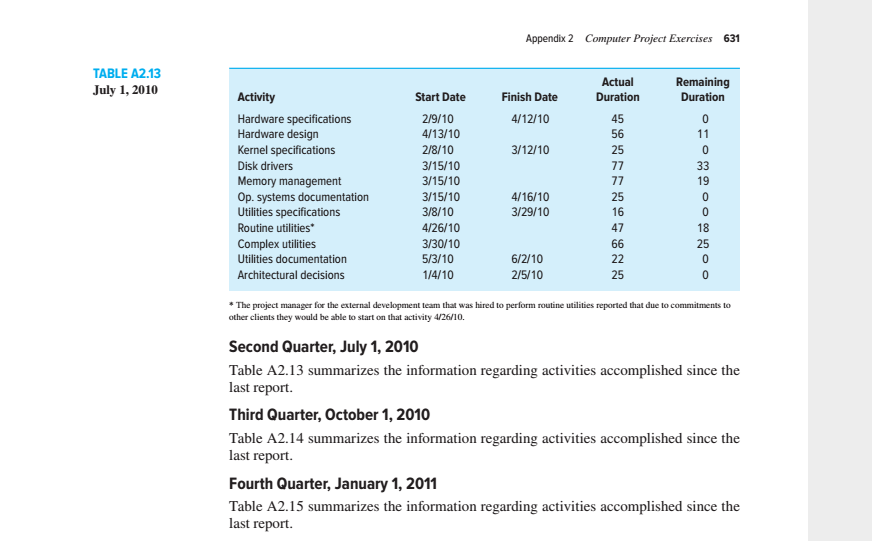
1. How much will the project cost? 2. What does the cash flow statement tell you about how costs are distributed over the life span of the project? Include a monthly cash flow and a cost table for the project. Once you are confident that you have the final schedule, save the file as a baseline Hint: Save a backup file just in case without baseline! Part 5 Prepare status reports for each of the first four quarters of the project given the infor mation provided h inserting the appropriate status report date in the program. Assume that no work has been completed on the day of the status report. ere. This requires saving your resource schedule as a baseline and Your status report should include a table containing the PV, EV, AC, BAC, EAC, SV, CV, and CPI for each activity and the whole project. The report should also address the following questions 1. How is the project progressing in terms of cost and schedule? 2. What activities have gone well? What activities have not gone well? 3. What do the PCIB and PCIC indicate in terms of how much of the project has been accomplished to date? 4. What is the forecasted cost at completion (EAC)? What is the predicted VAC? 5. Report and interpret the TCPI for the project at this point in time 6. What is the estimated date of completion? 7. How well is the project doing in terms of its priorities? Try to present the above information in a form worthy of consideration by top management. Include a Tracking Gantt chart with each report. First Quarter, April 1, 2010 Table A2.12 summarizes the information regarding activities accomplished to date. Be sure to save your file after each quarterly report and use it to build the next report! TABLE A2.12 April 1, 2010 Actual Remaining Start Date Finish Date Hardware specifications Kernel specifications Disk drivers Memory management Op. systems documentation Utilities specifications Complex utilities Architectural decisions 2/9/10 2/8/10 3/15/10 3/15/10 3/15/10 3/8/10 3/30/10 1/4/10 37 25 13 13 13 3/12/10 87 3/29/10 85 2/5/10 25 1. How much will the project cost? 2. What does the cash flow statement tell you about how costs are distributed over the life span of the project? Include a monthly cash flow and a cost table for the project. Once you are confident that you have the final schedule, save the file as a baseline Hint: Save a backup file just in case without baseline! Part 5 Prepare status reports for each of the first four quarters of the project given the infor mation provided h inserting the appropriate status report date in the program. Assume that no work has been completed on the day of the status report. ere. This requires saving your resource schedule as a baseline and Your status report should include a table containing the PV, EV, AC, BAC, EAC, SV, CV, and CPI for each activity and the whole project. The report should also address the following questions 1. How is the project progressing in terms of cost and schedule? 2. What activities have gone well? What activities have not gone well? 3. What do the PCIB and PCIC indicate in terms of how much of the project has been accomplished to date? 4. What is the forecasted cost at completion (EAC)? What is the predicted VAC? 5. Report and interpret the TCPI for the project at this point in time 6. What is the estimated date of completion? 7. How well is the project doing in terms of its priorities? Try to present the above information in a form worthy of consideration by top management. Include a Tracking Gantt chart with each report. First Quarter, April 1, 2010 Table A2.12 summarizes the information regarding activities accomplished to date. Be sure to save your file after each quarterly report and use it to build the next report! TABLE A2.12 April 1, 2010 Actual Remaining Start Date Finish Date Hardware specifications Kernel specifications Disk drivers Memory management Op. systems documentation Utilities specifications Complex utilities Architectural decisions 2/9/10 2/8/10 3/15/10 3/15/10 3/15/10 3/8/10 3/30/10 1/4/10 37 25 13 13 13 3/12/10 87 3/29/10 85 2/5/10 25
Step by Step Solution
There are 3 Steps involved in it

Get step-by-step solutions from verified subject matter experts
 Study Help