







Question: This is typically referred to as the efficiency vs equity tradeoff, markets are efficient but may not always be equitable (fair depending on how you
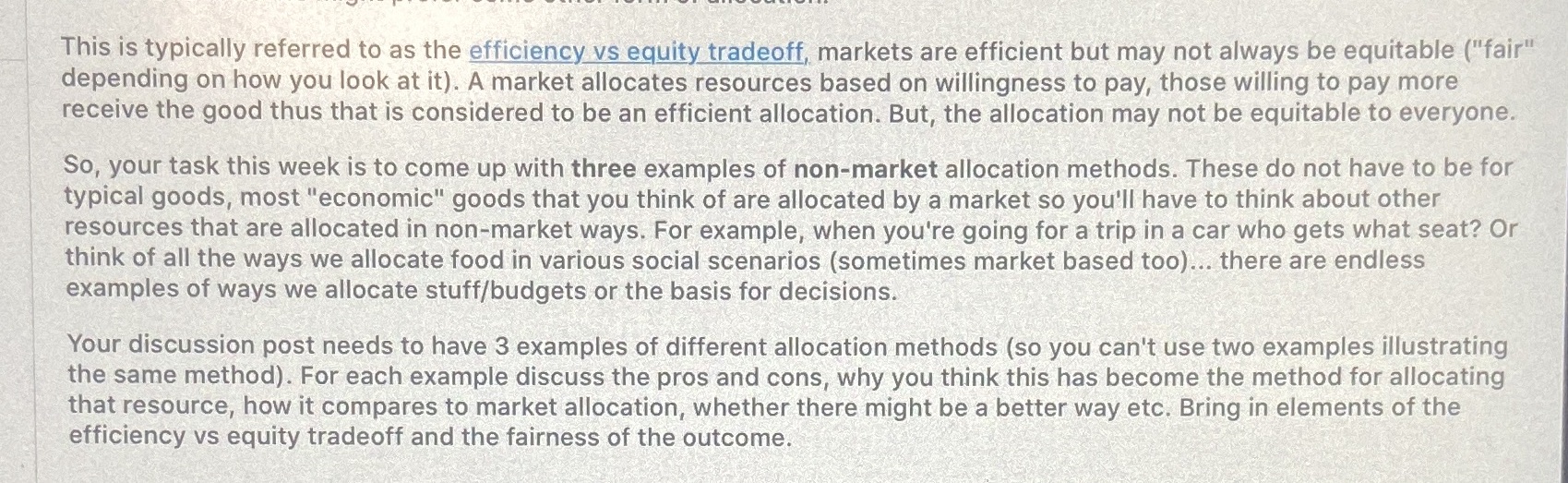
This is typically referred to as the efficiency vs equity tradeoff, markets are efficient but may not always be equitable ("fair" depending on how you look at it). A market allocates resources based on willingness to pay, those willing to pay more receive the good thus that is considered to be an efficient allocation. But, the allocation may not be equitable to everyone. So, your task this week is to come up with three examples of non-market allocation methods. These do not have to be for typical goods, most "economic" goods that you think of are allocated by a market so you'll have to think about other resources that are allocated in non-market ways. For example, when you're going for a trip in a car who gets what seat? Or think of all the ways we allocate food in various social scenarios (sometimes market based too)... there are endless examples of ways we allocate stuff/budgets or the basis for decisions. Your discussion post needs to have 3 examples of different allocation methods (so you can't use two examples illustrating the same method). For each example discuss the pros and cons, why you think this has become the method for allocating that resource, how it compares to market allocation, whether there might be a better way etc. Bring in elements of the efficiency vs equity tradeoff and the fairness of the outcome
Step by Step Solution
There are 3 Steps involved in it

Get step-by-step solutions from verified subject matter experts
 Study Help