Question: This outline below needs to be redone with changes added from the notes from the teacher then write the paper after that Mr. Robert Wilson
This outline below needs to be redone with changes added from the notes from the teacher then write the paper after that
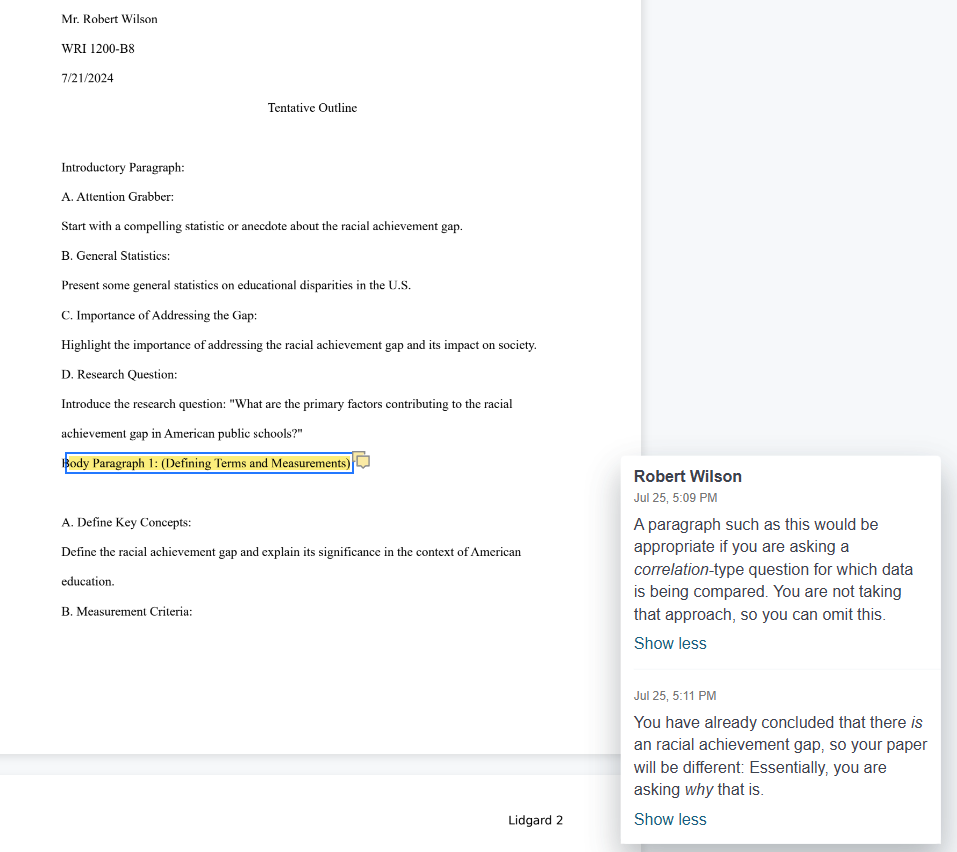
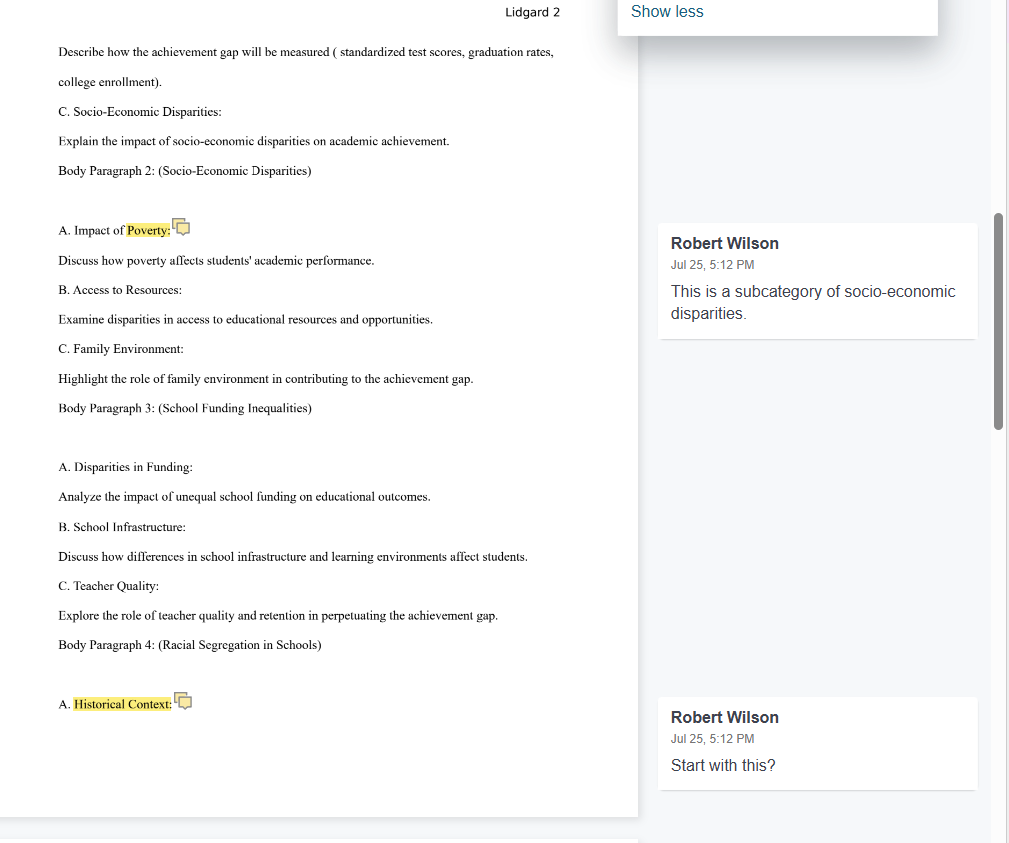
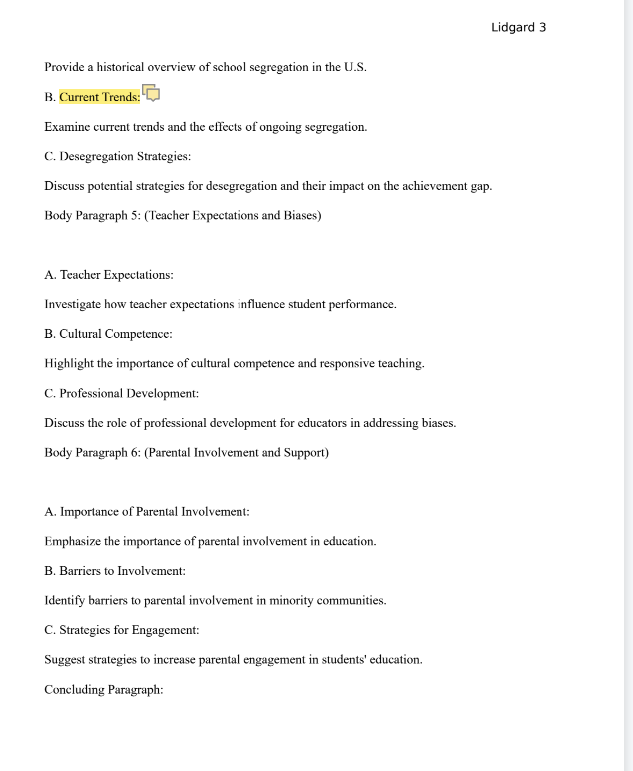
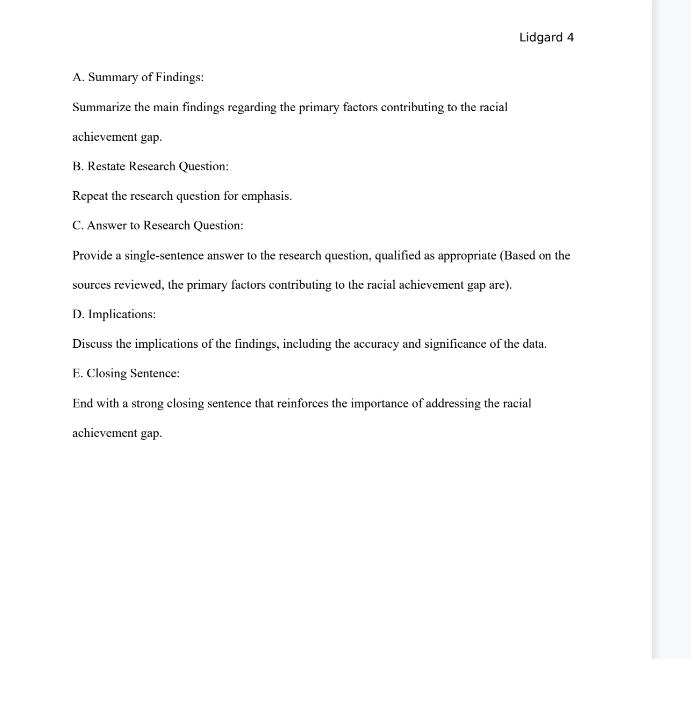
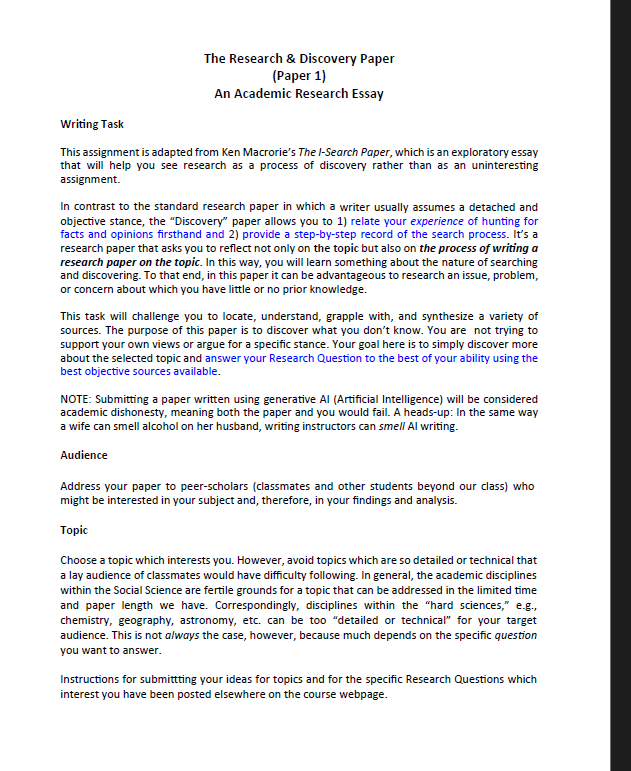
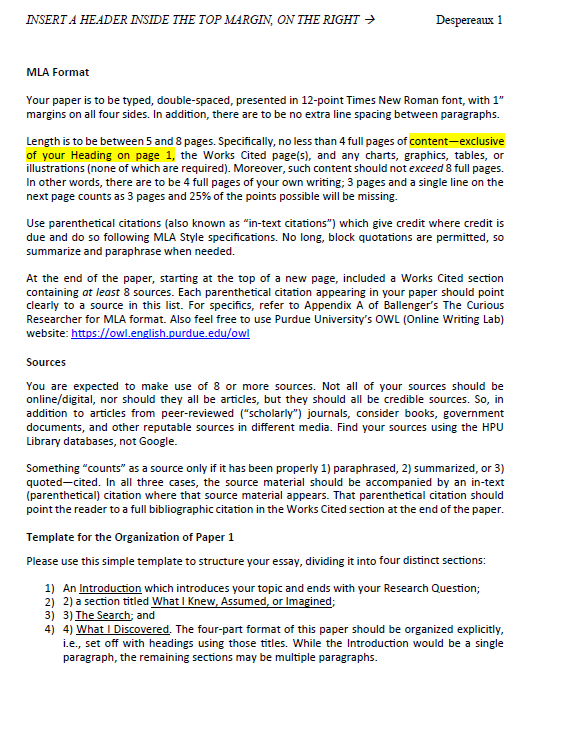
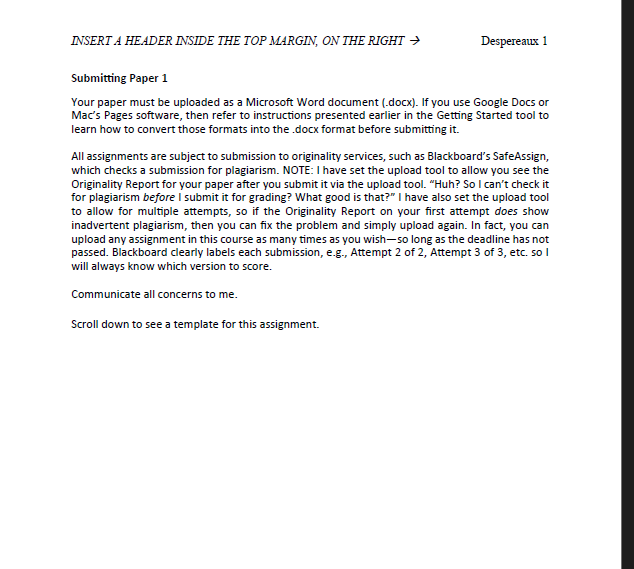
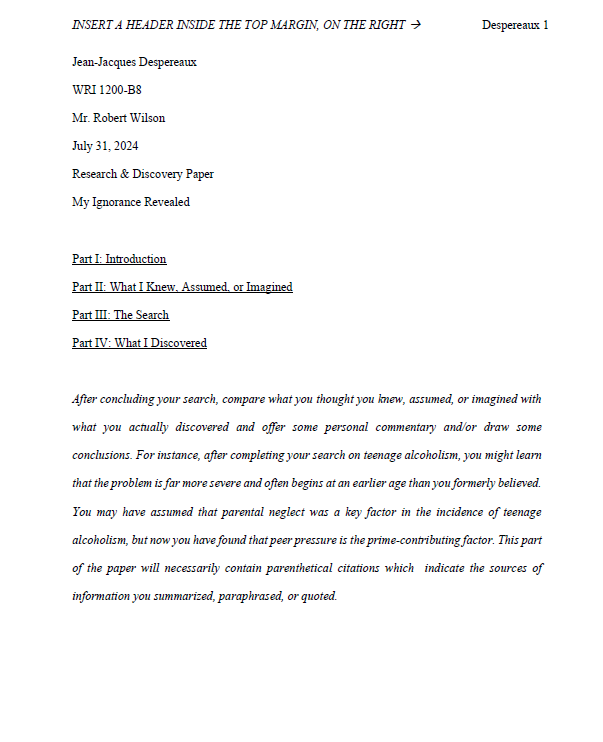
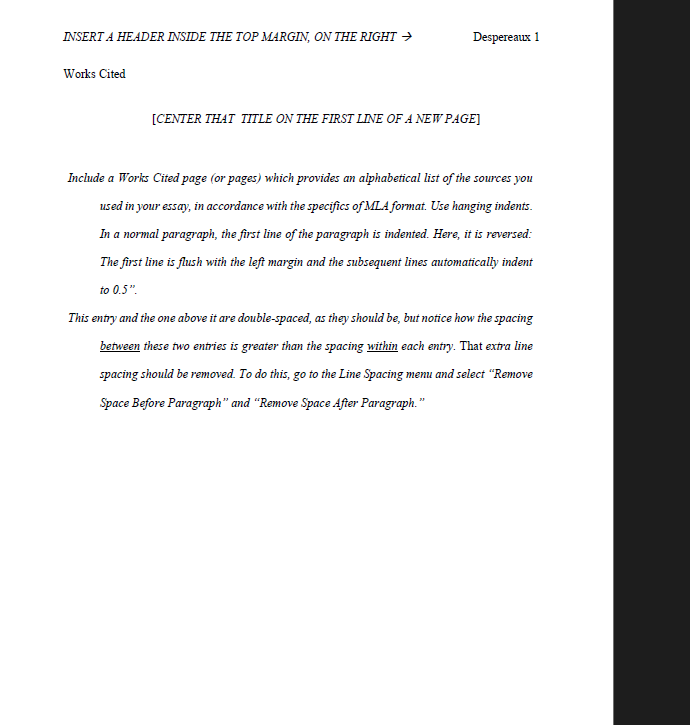
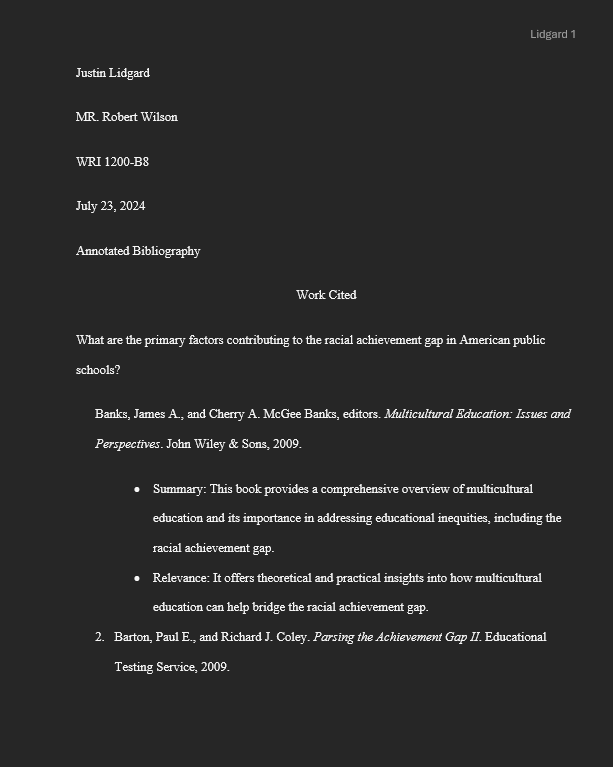
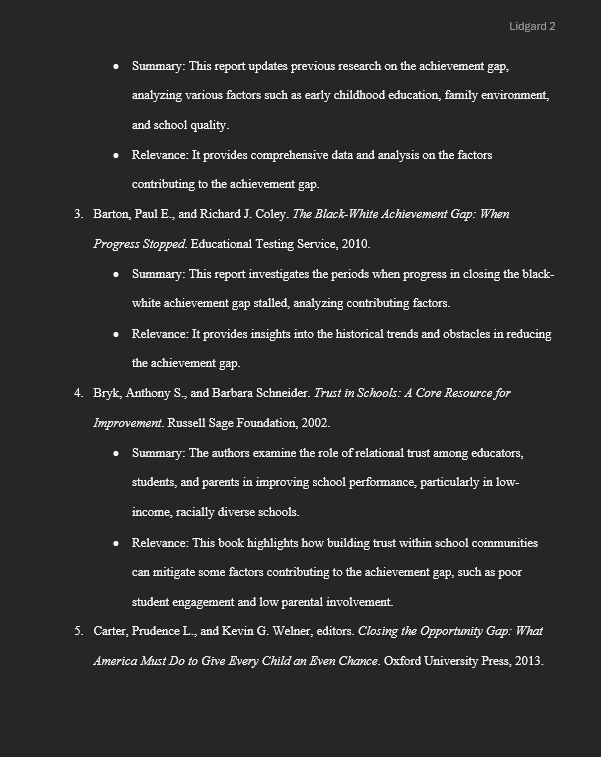
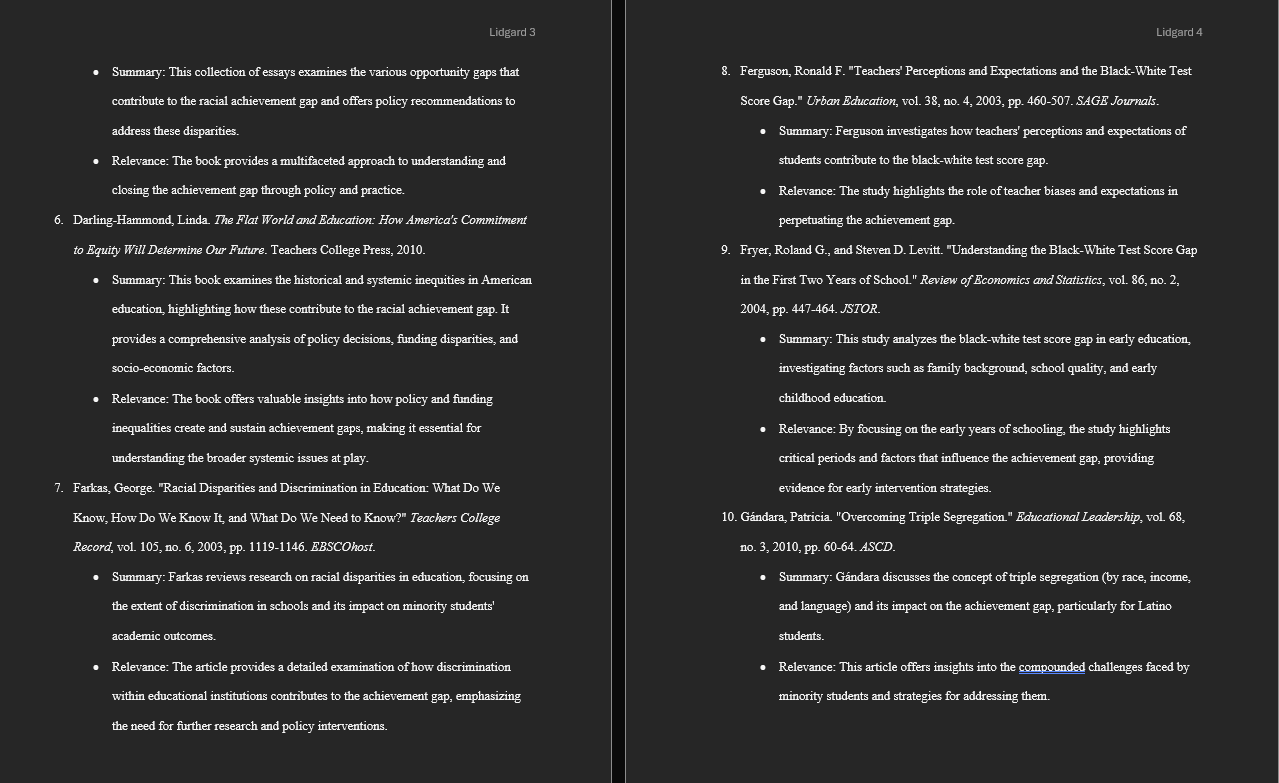
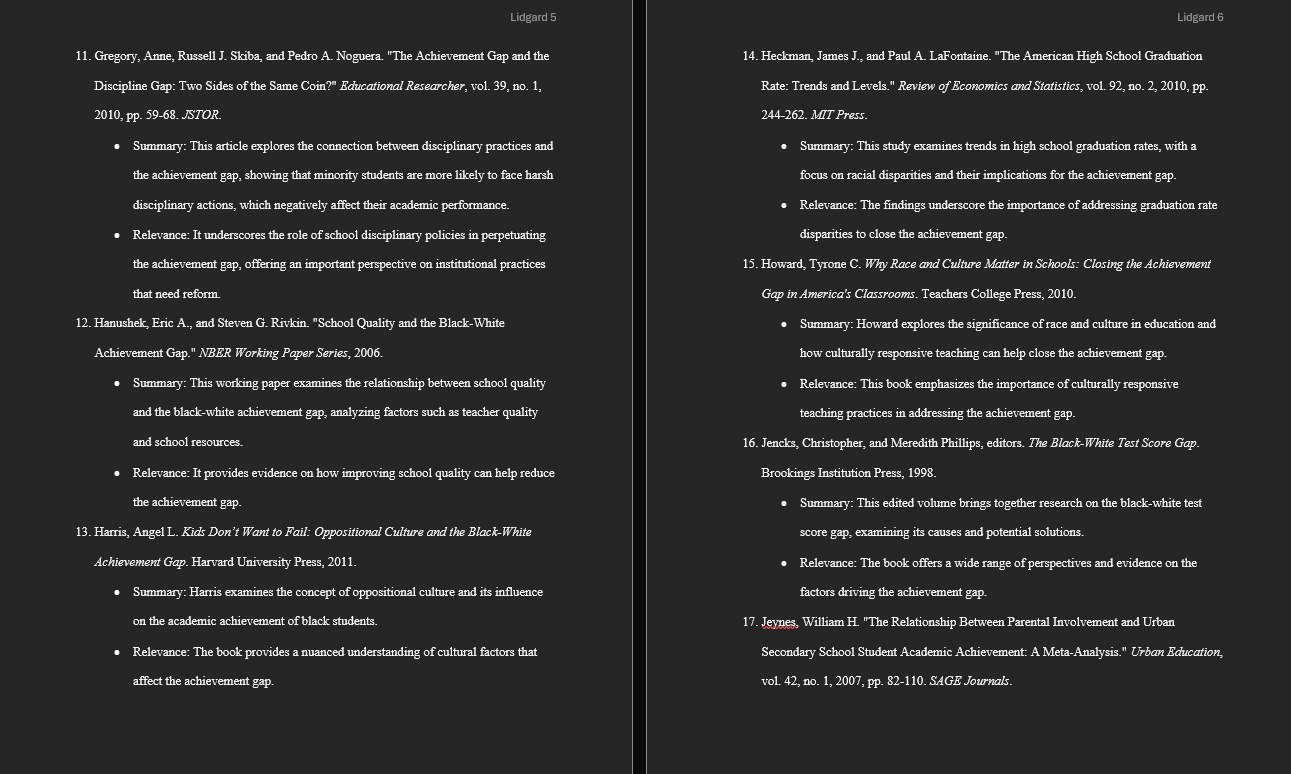
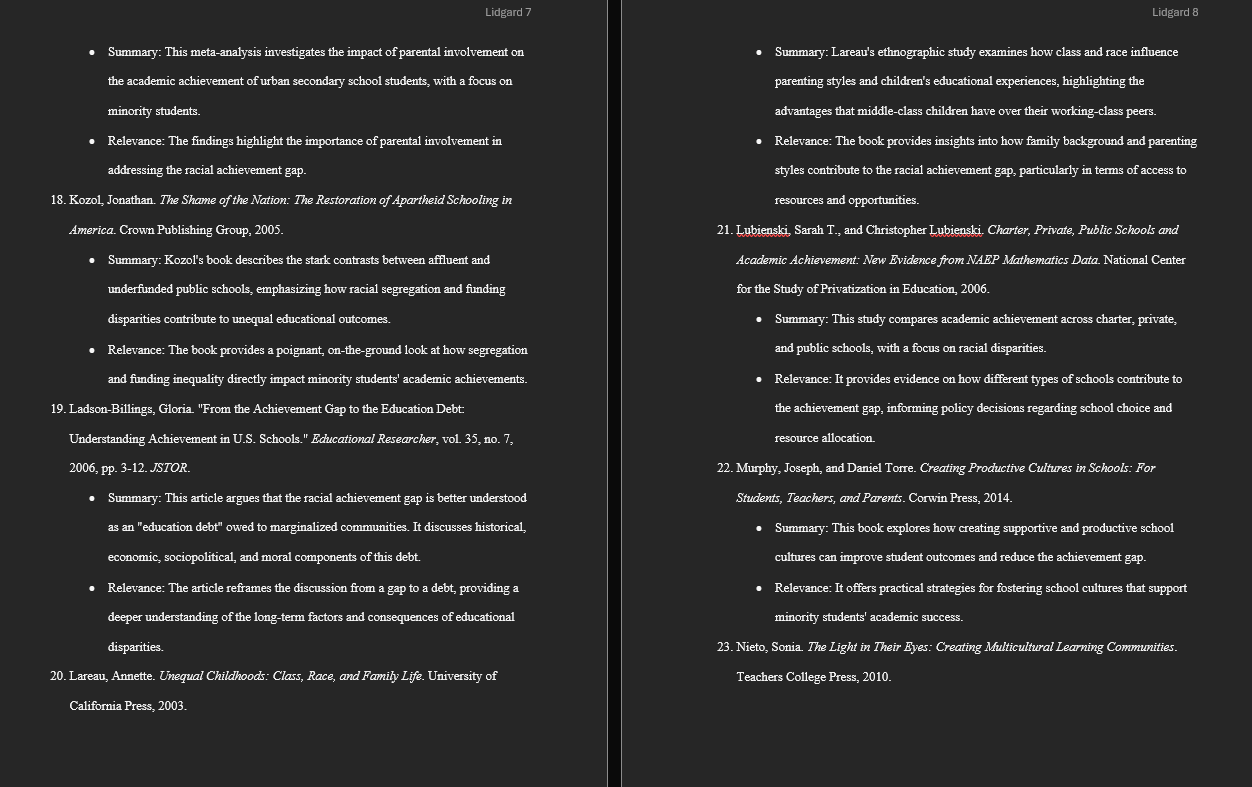
Mr. Robert Wilson WRI 1200-B8 7/21/2024 Tentative Outline Introductory Paragraph: A. Attention Grabber: Start with a compelling statistic or anecdote about the racial achievement gap. B. General Statistics: Present some general statistics on educational disparities in the U.S. C. Importance of Addressing the Gap: Highlight the importance of addressing the racial achievement gap and its impact on society. D. Research Question: Introduce the research question: "What are the primary factors contributing to the racial achievement gap in American public schools?" Body Paragraph 1: (Defining Terms and Measurements)] Robert Wilson Jul 25, 5:09 PM A. Define Key Concepts: A paragraph such as this would be Define the racial achievement gap and explain its significance in the context of American appropriate if you are asking a correlation-type question for which data education. is being compared. You are not taking B. Measurement Criteria: that approach, so you can omit this. Show less Jul 25, 5:11 PM You have already concluded that there is an racial achievement gap, so your paper will be different: Essentially, you are asking why that is. Lidgard 2 Show lessLidgard 2 Show less Describe how the achievement gap will be measured ( standardized test scores, graduation rates, college enrollment). C. Socio-Economic Disparities: Explain the impact of socio-economic disparities on academic achievement. Body Paragraph 2: (Socio-Economic Disparities) A. Impact of Poverty: [ Robert Wilson Discuss how poverty affects students' academic performance. Jul 25, 5:12 PM B. Access to Resources: This is a subcategory of socio-economic Examine disparities in access to educational resources and opportunities. disparities. C. Family Environment: Highlight the role of family environment in contributing to the achievement gap. Body Paragraph 3: (School Funding Inequalities) A. Disparities in Funding: Analyze the impact of unequal school funding on educational outcomes. B. School Infrastructure: Discuss how differences in school infrastructure and learning environments affect students. C. Teacher Quality: Explore the role of teacher quality and retention in perpetuating the achievement gap. Body Paragraph 4: (Racial Segregation in Schools) A. Historical Context: [ Robert Wilson Jul 25, 5:12 PM Start with this?Lidgard 3 Provide a historical overview of school segregation in the U.S. B. Current Trends: Examine current trends and the effects of ongoing segregation. C. Desegregation Strategies: Discuss potential strategies for desegregation and their impact on the achievement gap. Body Paragraph 5: (Teacher Expectations and Biases) A. Teacher Expectations: Investigate how teacher expectations influence student performance. B. Cultural Competence: Highlight the importance of cultural competence and responsive teaching. C. Professional Development: Discuss the role of professional development for educators in addressing biases. Body Paragraph 6: (Parental Involvement and Support) A. Importance of Parental Involvement: Emphasize the importance of parental involvement in education. B. Barriers to Involvement: Identify barriers to parental involvement in minority communities. C. Strategies for Engagement: Suggest strategies to increase parental engagement in students' education. Concluding Paragraph:Lidgard 4 A. Summary of Findings: Summarize the main findings regarding the primary factors contributing to the racial achievement gap. B. Kestate Research Question: Repeat the research question for emphasis. C. Answer to Research Question: Provide a single-sentence answer to the research question, qualified as appropriate (Based on the sources reviewed, the primary factors contributing to the racial achievement gap are). D. Implications: Discuss the implications of the findings, including the accuracy and significance of the data. E. Closing Sentence: End with a strong closing sentence that reinforces the importance of addressing the racial achievement gap.The Research & Discovery Paper (Paper 1) An Academic Research Essay Writing Task This assignment is adapted from Ken Macrorie's The I-Search Paper, which is an exploratory essay that will help you see research as a process of discovery rather than as an uninteresting assignment. In contrast to the standard research paper in which a writer usually assumes a detached and objective stance, the \"Discovery\" paper allows you to 1) relate your experience of hunting for facts and opinions firsthand and 2) provide a step-by-step record of the search process. It's a research paper that asks you to reflect not only on the topic but also on the process of writing a research paper on the topic. In this way, you will learn something about the nature of searching and discovering. To that end, in this paper it can be advantageous to research an issue, problem, or concern about which you have little or no prior knowledge. This task will challenge you to locate, understand, grapple with, and synthesize a variety of sources. The purpose of this paper is to discover what you don't know. You are not trying to support your own views or argue for a specific stance. Your goal here is to simply discover more about the selected topic and answer your Research Question to the best of your ability using the best objective sources available. MOTE: Submitting a paper written using generative Al (Artificial Intelligence) will be considered academic dishonesty, meaning both the paper and you would fail. A heads-up: In the same way a wife can smell alcohol on her husband, writing instructors can smell Al writing. Audience Address your paper to peer-scholars [classmates and other students beyond our class) who miight be interested in your subject and, therefore, in your findings and analysis. Topic Choose a topic which interests you. However, avoid topics which are so detailed or technical that a lay audience of classmates would have difficulty following. In general, the academic disciplines within the Social Science are fertile grounds for a topic that can be addressed in the limited time and paper length we have. Correspondingly, disciplines within the "hard sciences e.g., chemistry, geography, astronomy, etc. can be too \"detailed or technical\" for your target audience. This is not always the case, however, because much depends on the specific guestion you want to answer. Instructions for submittting your ideas for topics and for the specific Research Questions which interest you have been posted elsewhere on the course webpage. INSERT 4 HEADER INSIDE THE TOFP MARGIN, ON THE RIGHT 2 Despereanx 1 MLA Format Your paper is to be typed, double-spaced, presented in 12-point Times Mew Roman font, with 1 margins on all four sides. In addition, there are to be no extra line spacing between paragraphs. Length is to be between 5 and 8 pages. Specifically, no less than 4 full pages of contentexclusive of your Heading on page 1, the Works Cited pageis), and any charts, graphics, tables, or illustrations (none of which are required). Moreover, such content should not exceed B full pages. In other words, there are to be 4 full pages of your own writing; 3 pages and a single line on the next page counts as 3 pages and 25%: of the points possible will be missing. Use parenthetical citations {also known as \"in-text citations\") which give credit where credit is due and do so following MLA Style specifications. No long, block quotations are permitted, so summarize and paraphrase when needed. At the end of the paper, starting at the top of a new page, included a Works Cited section containing at least B sources. Each parenthetical citation appearing in your paper should point clearly to a source in this list. For specifics, refer to Appendix A of Ballenger's The Curious Researcher for MLA format. Also feel free to use Purdue University's OWL (Online Writing Lab) website: https://owl english.purdue_edu/owl Sources You are expected to make use of & or more sources. Mot all of your sources should be anline/digital, nor should they all be articles, but they should all be credible sources. 5o, in addition to articles from peer-reviewed (\"scholarly\") journals, consider books, government documents, and other reputable sources in different media. Find your sources using the HPU Library databases, not Google. Something \"counts\" as a source only if it has been properly 1) paraphrased, 2) summarized, or 3} guotedcited. In all three cases, the source material should be accompanied by an in-text {paranthetical) citation where that source material appears. That parenthetical citation should point the reader to a full bibliographic citation in the Works Cited section at the end of the paper. Template for the Organization of Paper 1 Please use this simple template to structure your essay, dividing it into four distinct sections: 1) An Introduction which introduces your topic and ends with your Research Question; 2) 2)asection titled What | Knew, Assumed, or Imagined; 3) 3)The Search; and 4) 4) What | Discovered. The four-part format of this paper should be organized explicitly, i.e., set off with headings using those titles. While the Introduction would be a single paragraph, the remaining sections may be multiple paragraphs. INSERT 4 HEADER INSIDE THE TOP MARGIN, ON THE RIGHT 2 Despereaux 1 Submitting Paper 1 Your paper must be uploaded as a Microsoft Word document {_docx). If you use Google Docs or Mac's Pages software, then refer to instructions presented earlier in the Getting Started tool to learn how to convert those formats into the .docx format before submitting it. All assignments are subject to submission to originality services, such as Blackboard's Safefssign, which checks a submission for plagiarism. NOTE: | have set the upload tool to allow you see the Originality Report for your paper after you submit it via the upload tool. \"Huh? 5o | can't check it for plagiarism before | submit it for grading? What good is that?" | have also set the upload tool 1o allow for multiple attempts, so if the Originality Report on your first attempt does show inadvertent plagiarism, then you can fix the problem and simply upload again. In fact, you can upload any assignment in this course as many times as you wishso long as the deadline has not passed. Blackboard clearly labels each submission, e.g., Attempt 2 of 2, Attempt 3 of 3, etc. s0 | will always know which version to score. Communicate all concerns to me. Scroll down to see a template for this assignment. INSERT A HEADER INSIDE THE TOP MARGIN, ON THE RIGHT Despereaux 1 Jean-Jacques Despereaux WRI 1200-B8 Mr. Robert Wilson July 31, 2024 Research & Discovery Paper My Ignorance Revealed Part I: Introduction Part II: What I Knew. Assumed. or Imagined Part III: The Search Part IV: What I Discovered After concluding your search, compare what you thought you knew, assumed, or imagined with what you actually discovered and offer some personal commentary and or draw some conclusions. For instance, after completing your search on teenage alcoholism, you might learn that the problem is far more severe and often begins at an earlier age than you formerly believed. You may have assumed that parental neglect was a key factor in the incidence of teenage alcoholism, but now you have found that peer pressure is the prime-contributing factor. This part of the paper will necessarily contain parenthetical citations which indicate the sources of information you summarized, paraphrased, or quoted.INSERT A HEADER INSIDE THE TOP MARGIN, ON THE RIGHT - Despereaux 1 Works Cited [CENTER THAT TITLE ON THE FIRST LINE OF A NEW PAGE] Include a Works Cited page (or pages) which provides an alphabetical list of the sources you used in your essay, in accordance with the specifics of MLA format. Use hanging indents. In a normal paragraph, the first line of the paragraph is indented. Here, it is reversed: The first line is flush with the left margin and the subsequent lines automatically indent to 0.5". This entry and the one above it are double-spaced, as they should be, but notice how the spacing between these two entries is greater than the spacing within each entry. That extra line spacing should be removed. To do this, go to the Line Spacing menu and select "Remove Space Before Paragraph" and "Remove Space After Paragraph."Lidgard 1 Justin Lidgard MR. Robert Wilson WRI 1200-BS July 23, 2024 Annotated Bibliography Work Cited What are the primary factors contributing to the racial achievement gap in American public schools? Banks, James A., and Cherry A. McGee Banks, editors. Multicultural Education: Issues and Perspectives. John Wiley & Sons, 2009. Summary: This book provides a comprehensive overview of multicultural education and its importance in addressing educational inequities, including the racial achievement gap. Relevance: It offers theoretical and practical insights into how multicultural education can help bridge the racial achievement gap. 2. Barton, Paul E., and Richard J. Coley. Parsing the Achievement Gap /. Educational Testing Service, 2009. Summary: This report updates previous research on the achievement gap, analyzing various factors such as early childhood education, family environment, and school quality. Relevance: It provides comprehensive data and analysis on the factors contributing to the achievement gap. 3. Barton, Paul E., and Richard J. Coley. The Black-White Achievement Gap: When Progress Stopped. Educational Testing Service, 2010. Summary: This report investigates the periods when progress in closing the black- white achievement gap stalled, analyzing contributing factors. Eelevance: It provides insights into the historieal trends and obstacles in reducing the achievement gap. 4. Bryk Anthony 3. and Barhara Schneider. Trust in Schools: 4 Core Resource for Improvement. Enzsell Sage Foundation, 2002 s Summary: The authors examine the role of relational trust among educators, students, and parents in improving school performance, particularly in low- income, racially diverse schools. Eelevance: This bock highlights how building trust within school communities can mitigate some factors contributing to the achievement gap, such as poor student engasement and low parental involvement. 5. Carter, Pmdence L and Kevin G. Welner, editors. Closing the Opporfumity Gap: What America Mist Do o Give Every Child an Even Chance. Oxford University Press, 2013, Lidgard 3 Lidgard 4 Summary: This collection of essays examines the various opportunity gaps that 8. Ferguson, Ronald F. "Teachers' Perceptions and Expectations and the Black-White Test contribute to the racial achievement gap and offers policy recommendations to Score Gap." Urban Education, vol. 38, no. 4, 2003, pp. 460-507. SAGE Journals. address these disparities. . Summary: Ferguson investigates how teachers' perceptions and expectations of Relevance: The book provides a multifaceted approach to understanding and students contribute to the black-white test score gap. closing the achievement gap through policy and practice. . Relevance: The study highlights the role of teacher biases and expectations in 6. Darling-Hammond, Linda. The Flat World and Education: How America's Commitment perpetuating the achievement gap. to Equity Will Determine Our Future. Teachers College Press, 2010. 9. Fryer, Roland G., and Steven D. Levitt. "Understanding the Black-White Test Score Gap Summary: This book examines the historical and systemic inequities in American in the First Two Years of School." Review of Economics and Statistics, vol. 86, no. 2, education, highlighting how these contribute to the racial achievement gap. It 2004, pp. 447-464. JSTOR. provides a comprehensive analysis of policy decisions, funding disparities, and Summary: This study analyzes the black-white test score gap in early education, socio-economic factors. investigating factors such as family background, school quality, and early Relevance: The book offers valuable insights into how policy and funding childhood education. inequalities create and sustain achievement gaps, making it essential for . Relevance: By focusing on the early years of schooling, the study highlights understanding the broader systemic issues at play. critical periods and factors that influence the achievement gap, providing 7. Farkas, George. "Racial Disparities and Discrimination in Education: What Do We evidence for early intervention strategies. Know, How Do We Know It, and What Do We Need to Know?" Teachers College 10. Gandara, Patricia. "Overcoming Triple Segregation." Educational Leadership, vol. 68, Record, vol. 105, no. 6, 2003, pp. 1119-1146. EBSCOhost. no. 3, 2010, pp. 60-64. ASCD. Summary: Farkas reviews research on racial disparities in education, focusing on . Summary: Gandara discusses the concept of triple segregation (by race, income, the extent of discrimination in schools and its impact on minority students' and language) and its impact on the achievement gap, particularly for Latino academic outcomes. students. Relevance: The article provides a detailed examination of how discrimination Relevance: This article offers insights into the compounded challenges faced by within educational institutions contributes to the achievement gap, emphasizing minority students and strategies for addressing them. the need for further research and policy interventions.Lidgard 5 Lidgard 6 11. Gregory, Anne, Russell J. Skiba, and Pedro A. Noguera. "The Achievement Gap and the 14. Heckman, James J., and Paul A. LaFontaine. "The American High School Graduation Discipline Gap: Two Sides of the Same Coin?" Educational Researcher, vol. 39, no. 1, Rate: Trends and Levels." Review of Economics and Statistics, vol. 92, no. 2, 2010, pp. 2010, pp. 59-68. JSTOR. 244-262. MIT Press. Summary: This article explores the connection between disciplinary practices and Summary: This study examines trends in high school graduation rates, with a the achievement gap, showing that minority students are more likely to face harsh focus on racial disparities and their implications for the achievement gap. disciplinary actions, which negatively affect their academic performance. Relevance: The findings underscore the importance of addressing graduation rate . Relevance: It underscores the role of school disciplinary policies in perpetuating disparities to close the achievement gap. the achievement gap, offering an important perspective on institutional practices 15. Howard, Tyrone C. Why Race and Culture Matter in Schools: Closing the Achievement that need reform. Gap in America's Classrooms. Teachers College Press, 2010. 12. Hanushek, Eric A., and Steven G. Rivkin. "School Quality and the Black-White Summary: Howard explores the significance of race and culture in education and Achievement Gap." NBER Working Paper Series, 2006. how culturally responsive teaching can help close the achievement gap. . Summary: This working paper examines the relationship between school quality Relevance: This book emphasizes the importance of culturally responsive and the black-white achievement gap, analyzing factors such as teacher quality teaching practices in addressing the achievement gap. and school resources. 16. Jencks, Christopher, and Meredith Phillips, editors. The Black-White Test Score Gap. Relevance: It provides evidence on how improving school quality can help reduce Brookings Institution Press, 1998. the achievement gap. . Summary: This edited volume brings together research on the black-white test 13. Harris, Angel L. Kids Don't Want to Fail: Oppositional Culture and the Black-White score gap, examining its causes and potential solutions. Achievement Gap. Harvard University Press, 2011. Relevance: The book offers a wide range of perspectives and evidence on the Summary: Harris examines the concept of oppositional culture and its influence factors driving the achievement gap. on the academic achievement of black students. 17. Jeynes, William H. "The Relationship Between Parental Involvement and Urban Relevance: The book provides a nuanced understanding of cultural factors that Secondary School Student Academic Achievement: A Meta-Analysis." Urban Education, affect the achievement gap. vol. 42, no. 1, 2007, pp. 82-110. SAGE Journals.Lidgard 7 Lidgard 8 Summary: This meta-analysis investigates the impact of parental involvement on Summary: Lareau's ethnographic study examines how class and race influence the academic achievement of urban secondary school students, with a focus on parenting styles and children's educational experiences, highlighting the minority students. advantages that middle-class children have over their working-class peers. Relevance: The findings highlight the importance of parental involvement in Relevance: The book provides insights into how family background and parenting addressing the racial achievement gap. styles contribute to the racial achievement gap, particularly in terms of access to 18. Kozol, Jonathan. The Shame of the Nation: The Restoration of Apartheid Schooling in resources and opportunities. America. Crown Publishing Group, 2005. 21. Lubienski, Sarah T., and Christopher Lubienski. Charter, Private, Public Schools and Summary: Kozol's book describes the stark contrasts between affluent and Academic Achievement: New Evidence from NAEP Mathematics Data. National Center underfunded public schools, emphasizing how racial segregation and funding for the Study of Privatization in Education, 2006. disparities contribute to unequal educational outcomes. Summary: This study compares academic achievement across charter, private, . Relevance: The book provides a poignant, on-the-ground look at how segregation and public schools, with a focus on racial disparities. and funding inequality directly impact minority students' academic achievements. Relevance: It provides evidence on how different types of schools contribute to 19. Ladson-Billings, Gloria. "From the Achievement Gap to the Education Debt: the achievement gap, informing policy decisions regarding school choice and Understanding Achievement in U.S. Schools." Educational Researcher, vol. 35, no. 7, resource allocation. 2006, pp. 3-12. JSTOR. 22. Murphy, Joseph, and Daniel Torre. Creating Productive Cultures in Schools: For Summary: This article argues that the racial achievement gap is better understood Students, Teachers, and Parents. Corwin Press, 2014. as an "education debt" owed to marginalized communities. It discusses historical, . Summary: This book explores how creating supportive and productive school economic, sociopolitical, and moral components of this debt. cultures can improve student outcomes and reduce the achievement gap. Relevance: The article reframes the discussion from a gap to a debt, providing a Relevance: It offers practical strategies for fostering school cultures that support deeper understanding of the long-term factors and consequences of educational minority students' academic success. disparities. 23. Nieto, Sonia. The Light in Their Eyes: Creating Multicultural Learning Communities. 20. Lareau, Annette. Unequal Childhoods: Class, Race, and Family Life. University of Teachers College Press, 2010. California Press, 2003
Step by Step Solution
There are 3 Steps involved in it
1 Expert Approved Answer
Step: 1 Unlock
Question Has Been Solved by an Expert!
Get step-by-step solutions from verified subject matter experts
Step: 2 Unlock
Step: 3 Unlock
Students Have Also Explored These Related Business Writing Questions!









 Study Help