







Question: THIS POST CONTAINS 5 CODES. PLEASE DO IT IN ORDER OF THE PICTURE. STARTS FROM THE TOP AND FOLLOWS TO THE BOTTOM. THEY ARE RELATED
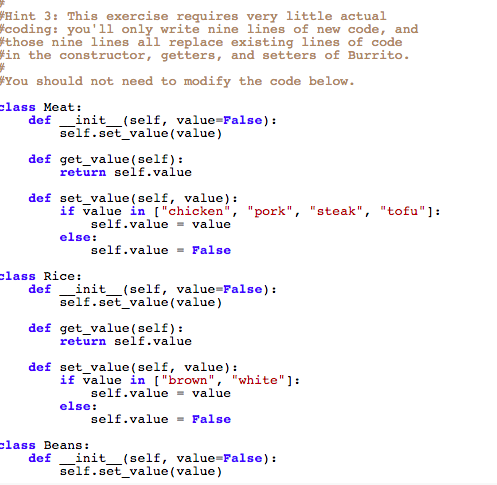
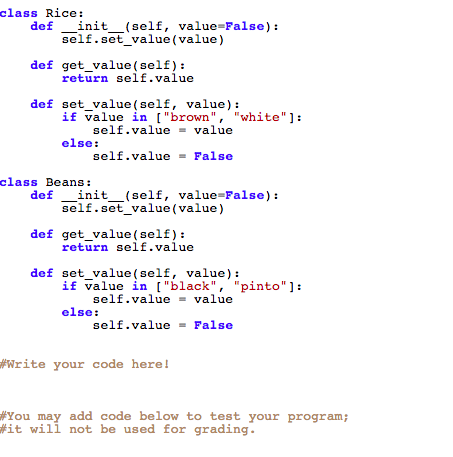
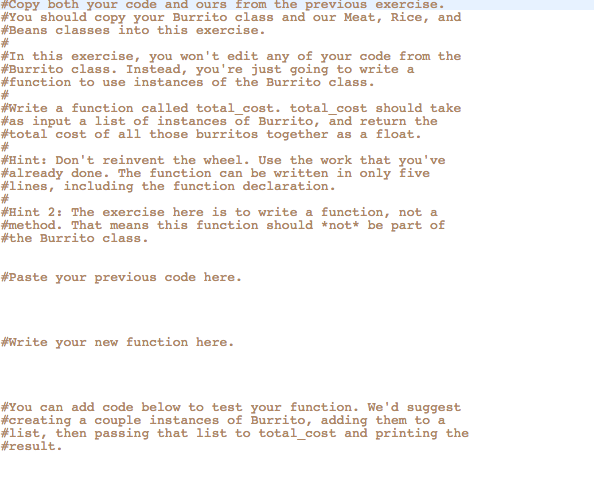
THIS POST CONTAINS 5 CODES. PLEASE DO IT IN ORDER OF THE PICTURE. STARTS FROM THE TOP AND FOLLOWS TO THE BOTTOM. THEY ARE RELATED TO EACH OTHER THAT'S WHY I DIDN'T PUT IN DIFFERENT POSTS. PYTHON
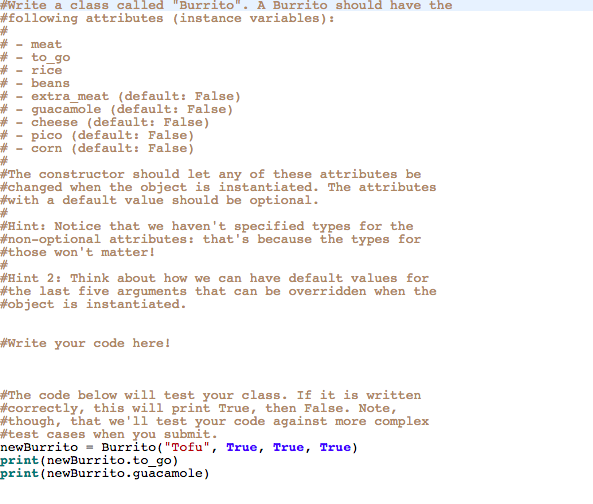
Write a class called "Burrito". A Burrito should have the #following attributes (instance variables): meat # -to-go rice #-beans #-extra meat (default: False) #-guacamole (default: False) #-cheese (default: False) #-pico (default: False) #-corn (default: False) #The constructor should let any of these attributes be #changed when the object is instantiated. The attributes #with a default value should be optional #Hint: Notice that we haven't specified types for the #non-optional attributes: that's because the types for those won't matter! #Hint 2: Think about how we can have default values for the last five arguments that can be overridden when the #object is instantiated. Write your code here! The code below will test your class. If it is written #correctly, this will print True, then False. Note, # though, that we'll test your code against more complex # test cases when you submit. newBurrito = Burrito ("Toru", True , True , True) print(newBurrito.to go print(newBurrito.guacamole) Write a class called "Burrito". A Burrito should have the #following attributes (instance variables): meat # -to-go rice #-beans #-extra meat (default: False) #-guacamole (default: False) #-cheese (default: False) #-pico (default: False) #-corn (default: False) #The constructor should let any of these attributes be #changed when the object is instantiated. The attributes #with a default value should be optional #Hint: Notice that we haven't specified types for the #non-optional attributes: that's because the types for those won't matter! #Hint 2: Think about how we can have default values for the last five arguments that can be overridden when the #object is instantiated. Write your code here! The code below will test your class. If it is written #correctly, this will print True, then False. Note, # though, that we'll test your code against more complex # test cases when you submit. newBurrito = Burrito ("Toru", True , True , True) print(newBurrito.to go print(newBurrito.guacamole)
Step by Step Solution
There are 3 Steps involved in it

Get step-by-step solutions from verified subject matter experts
 Study Help