







Question: This question has many assumptions so bear with me. WHAT IS THE ISSUE WITH THE QUESTION? fQ IBl) The first order conditions for the above
This question has many assumptions so bear with me. WHAT IS THE ISSUE WITH THE QUESTION?
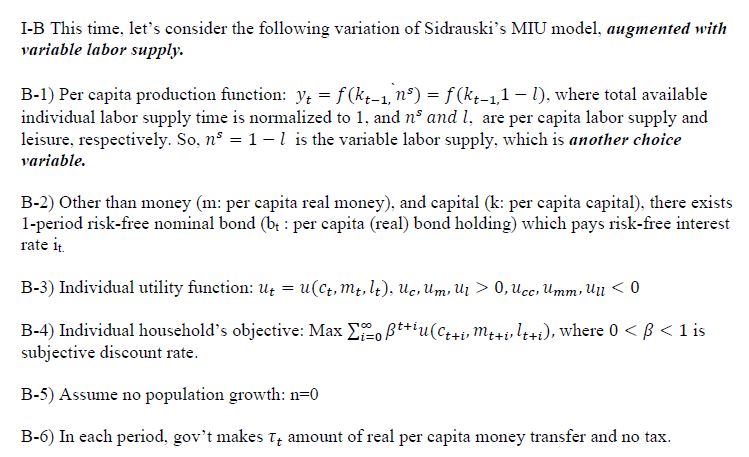
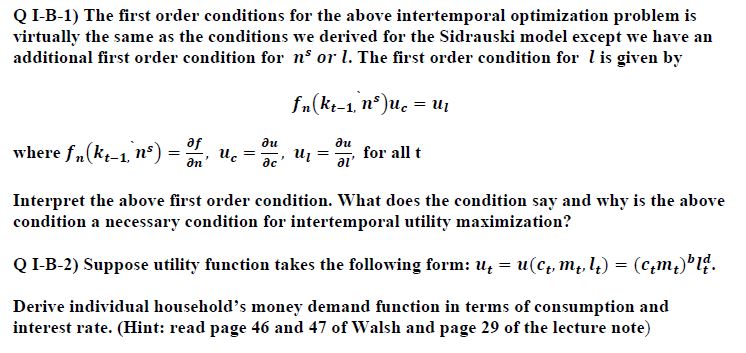
\fQ IBl) The first order conditions for the above intertemporal optimization problem is virtually the same as the conditions we derived for the Sidrauski model except we have an additional first order condition for n5 or I. The first order condition for I is given by fn(ktLlns]uc = \"I 1Where fnUEtL'HE) = 3. RC = E, u: = 21:. for all t Interpret the above first order condition. What does the condition say and why is the above condition a necessary condition for intertemporal utilityr maximization? Q IBZ) Suppose utility function takes the following form: \"t = uct, mt, ft) = {Ctmtff Derive individual household's money,r demand function in terms of consumption and interest rate. (Hint: read page 46 and 4? of 1Walsh and page 29' of the lecture note)
Step by Step Solution
There are 3 Steps involved in it

Get step-by-step solutions from verified subject matter experts
 Study Help