







Question: This question is based on our implementation of ArrayLists , which is typical. Recall that our implementation, internally calls a helper method ensureCapacity() whenever extra
This question is based on our implementation of ArrayLists, which is typical. Recall that our implementation, internally calls a helper method ensureCapacity() whenever extra storage space is needed. Some details of this operation are universal for theoretical reasons. We may not have covered the theoretical reasons yet, but we have studied the implementation of ensureCapacity(). Below is a reminder of the method definition and an example call to ensureCapacity():
public boolean add(E x) { if( mObjects.length == mSize ) ensureCapacity(2*mSize + 1); mObjects[mSize++] = x; modCount++; return true; } public void ensureCapacity(int minCapacity) { if (mObjects != null) { if( minCapacity 0) System.arraycopy(srcArray, 0, mObjects, 0, mSize); }
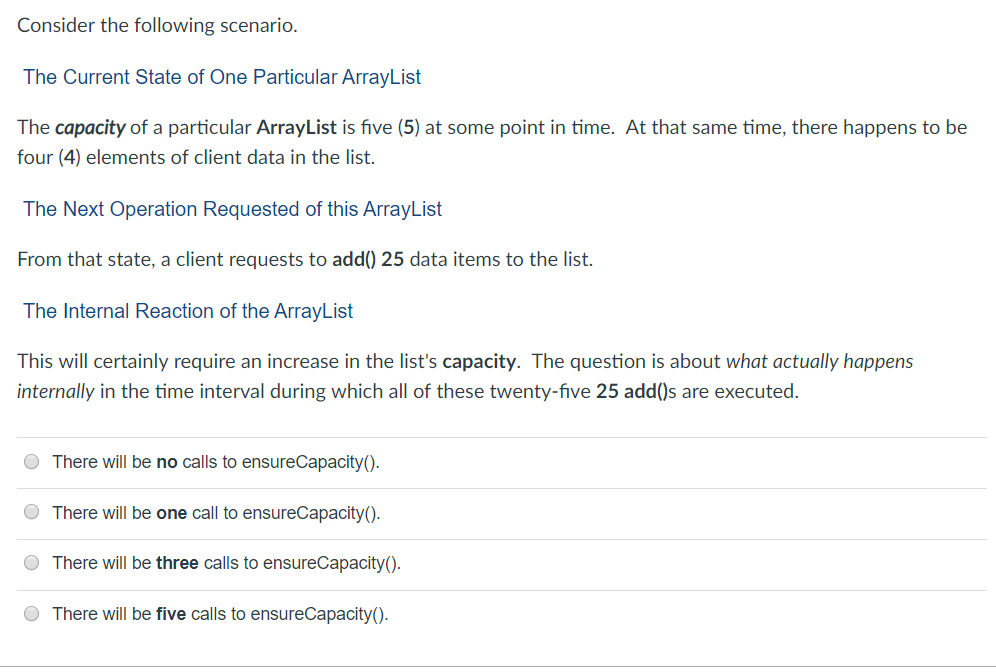
Consider the following scenario. The Current State of One Particular ArrayList The capacity of a particular ArrayList is five (5) at some point in time. At that same time, there happens to be four (4) elements of client data in the list. The Next Operation Requested of this ArrayList From that state, a client requests to add) 25 data items to the list The Internal Reaction of the ArrayList This will certainly require an increase in the list's capacity. The question is about what actually happens internally in the time interval during which all of these twenty-five 25 add)s are executed. There will be no calls to ensureCapacity(). There will be one call to ensureCapacity O There will be three calls to ensureCapacity) There will be five calls to ensureCapacity)
Step by Step Solution
There are 3 Steps involved in it

Get step-by-step solutions from verified subject matter experts
 Study Help