







Question: This question is designed to be answered without a calculator. If f(x) dx = 4 and J g(x) dx = -3, then [2f(x) - g(x)]
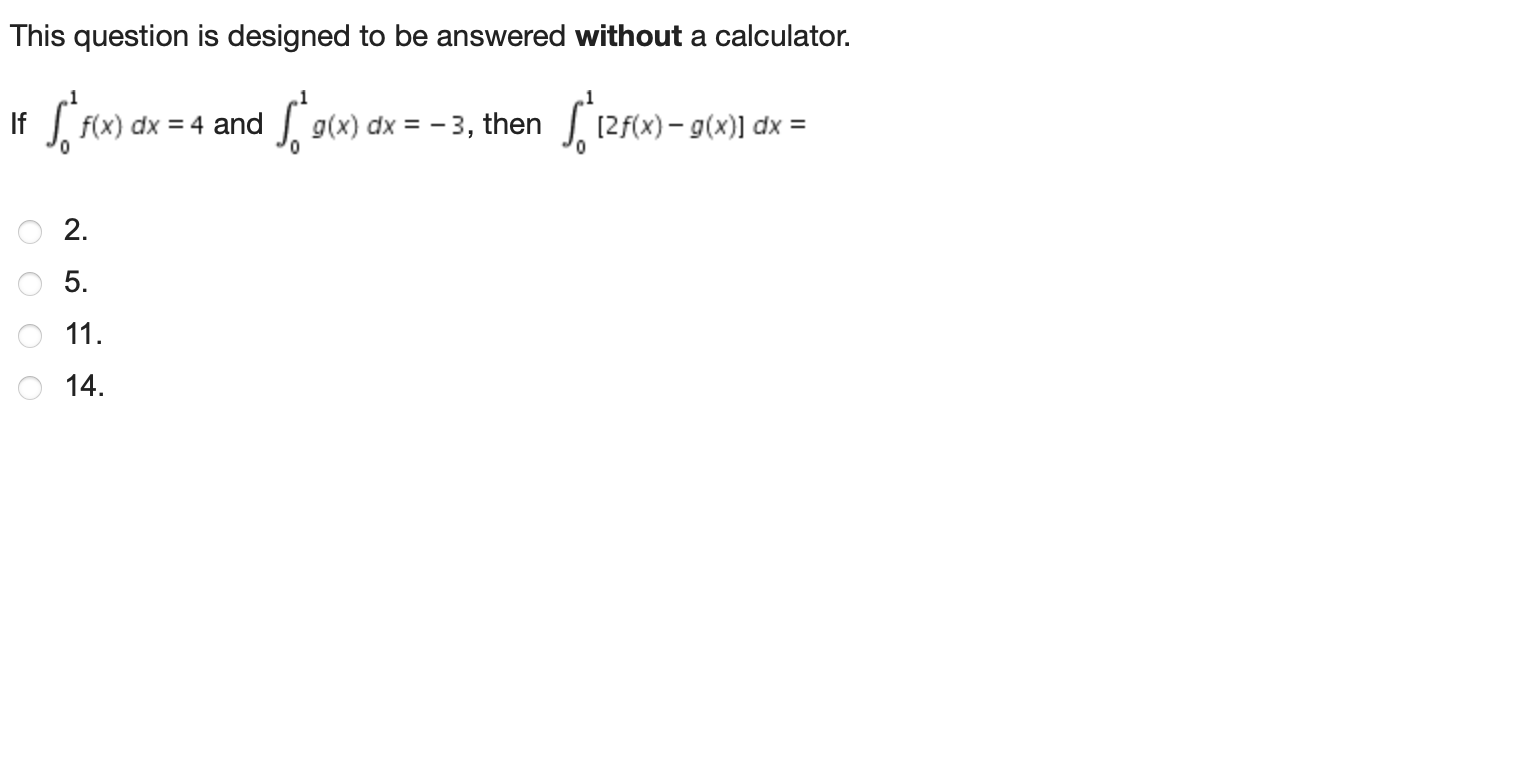
![- g(x)] dx = O 2. O 5. O 11. O 14.This](https://s3.amazonaws.com/si.experts.images/answers/2024/06/66652ac4e4f21_11666652ac4c66c8.jpg)
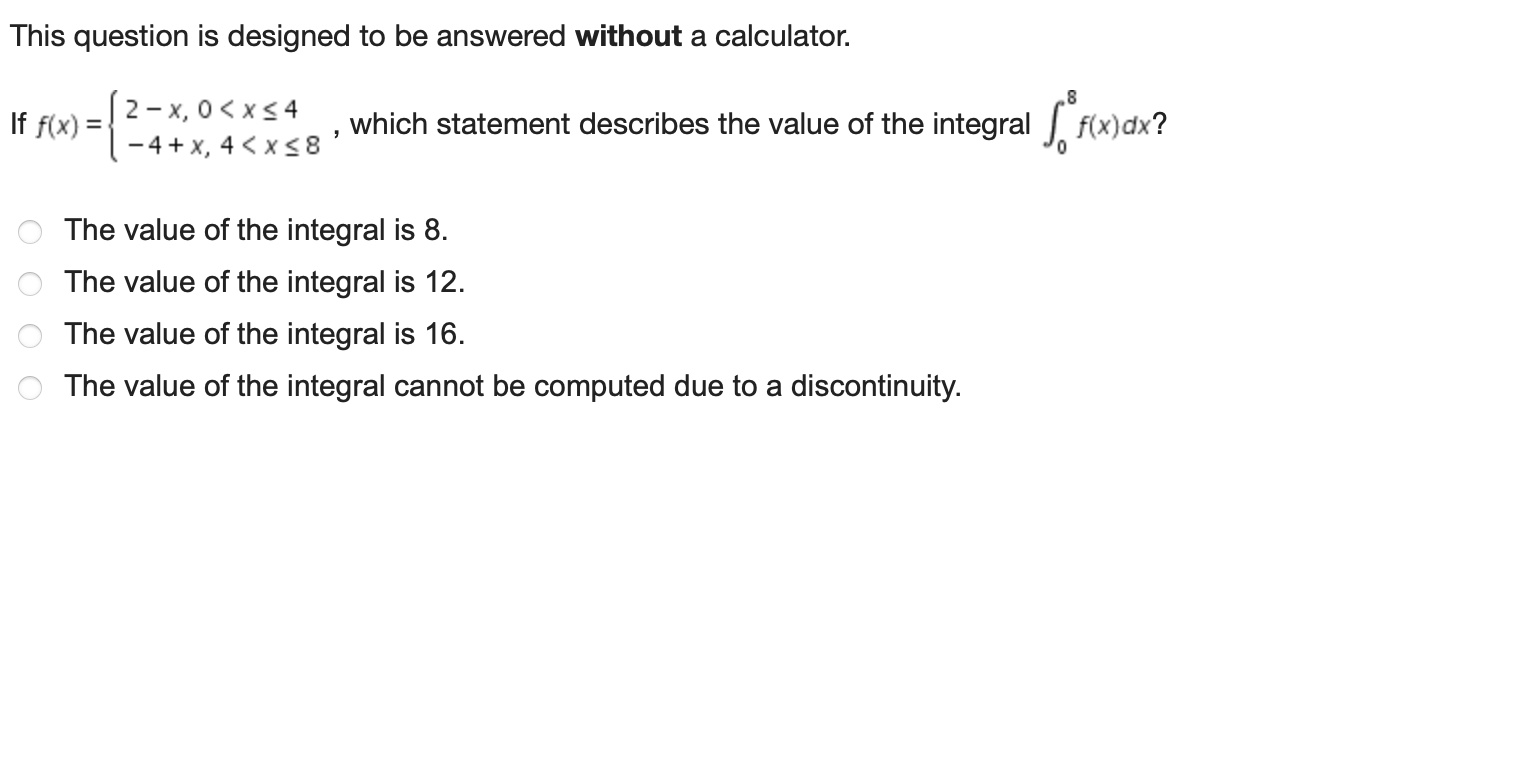
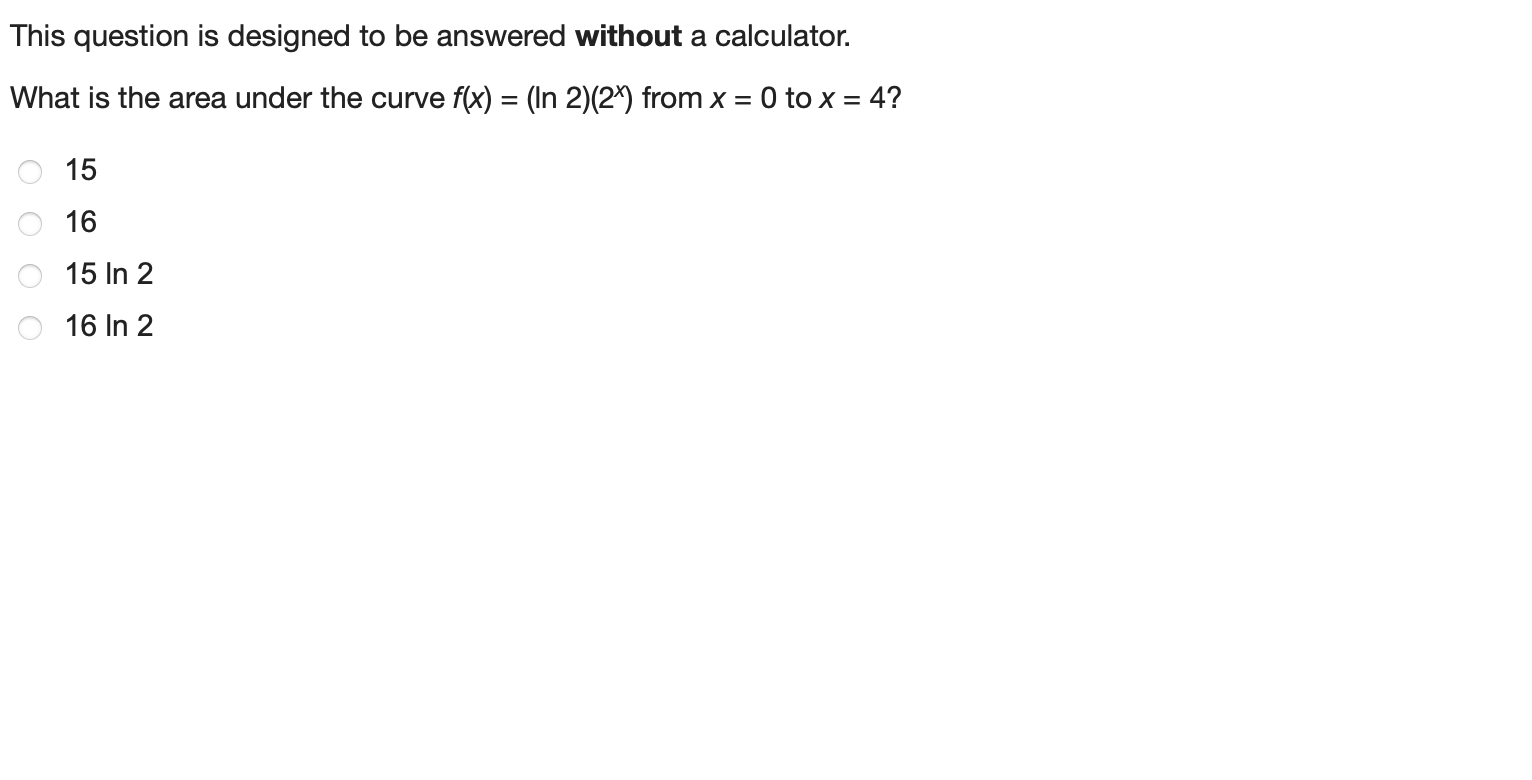
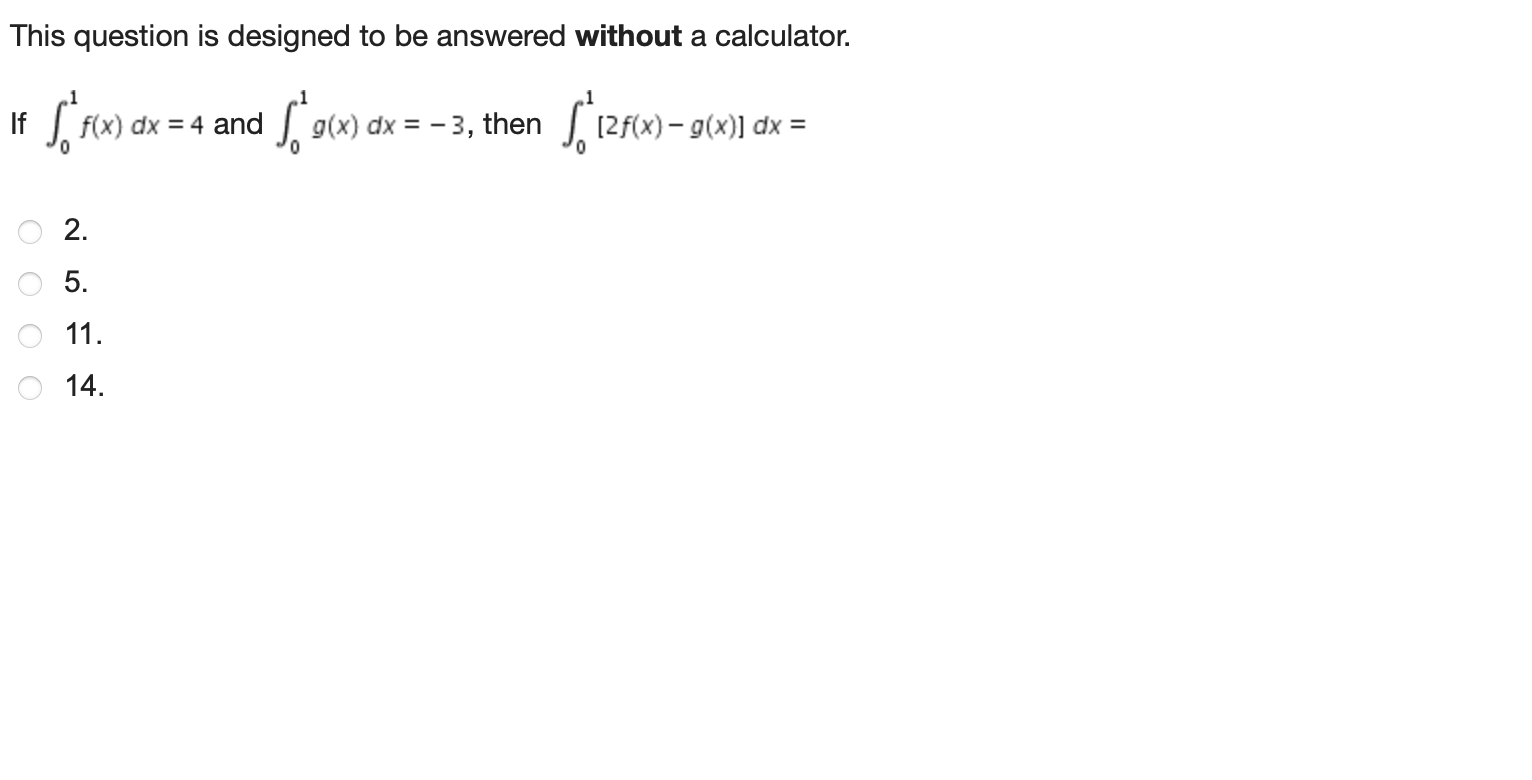
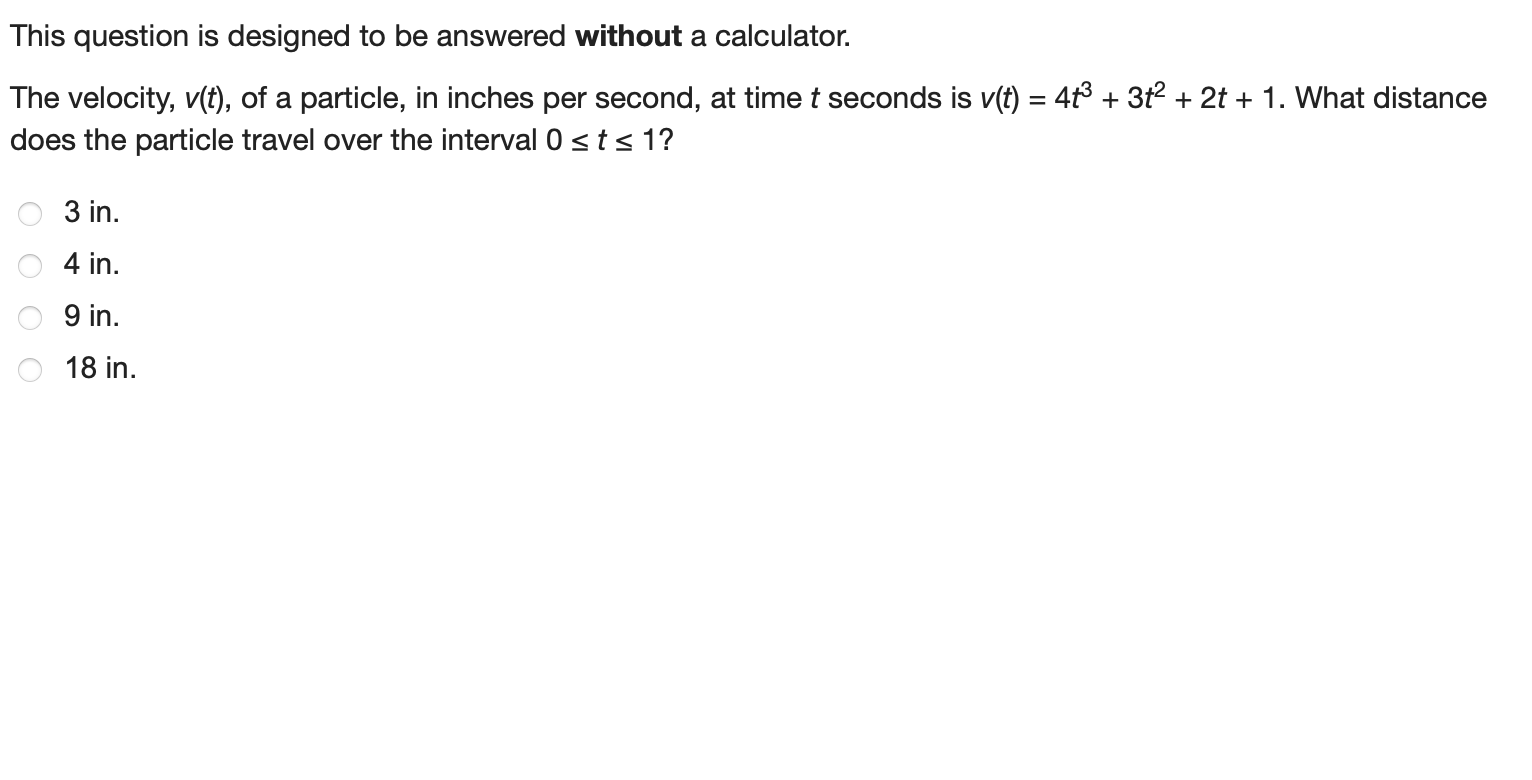
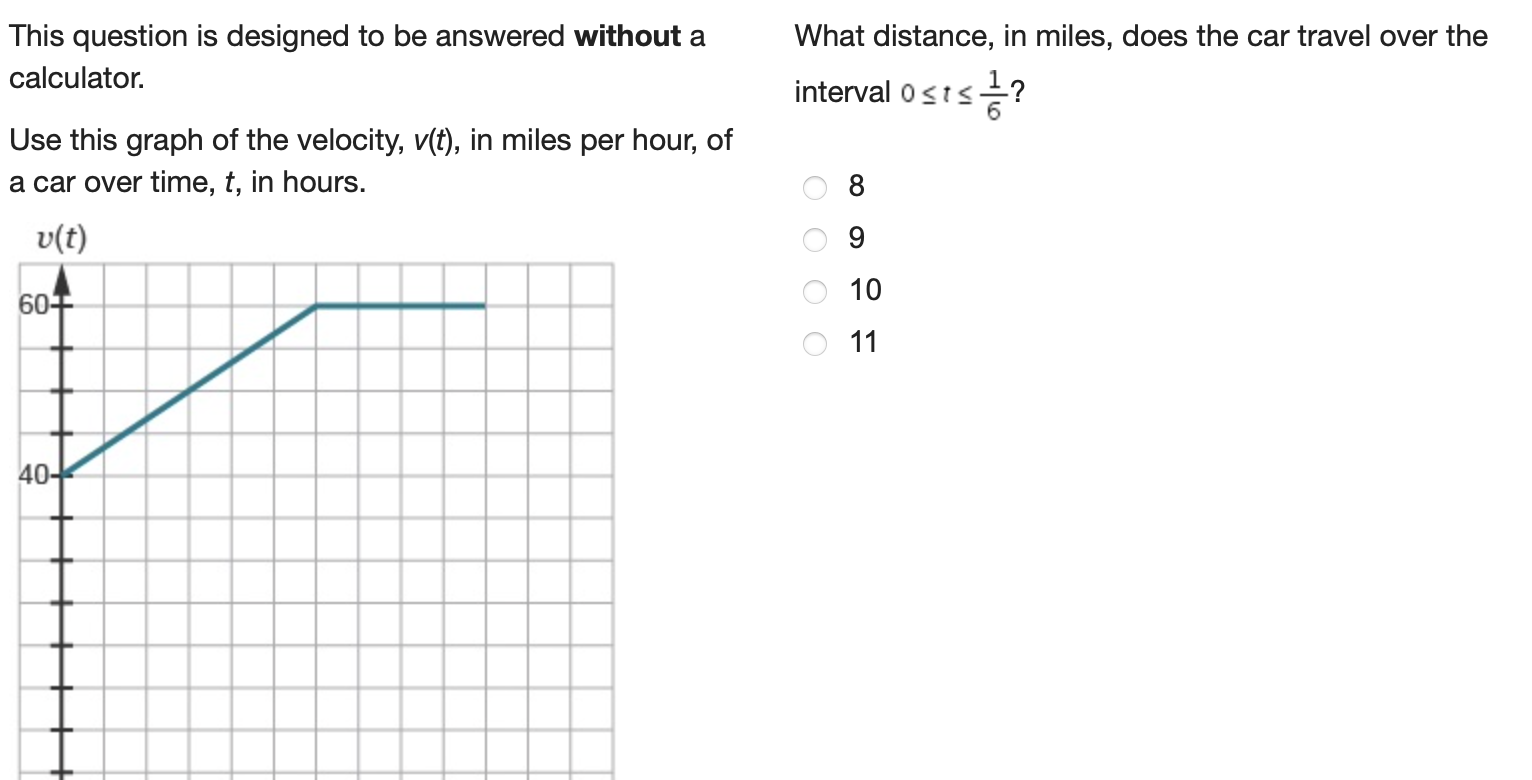
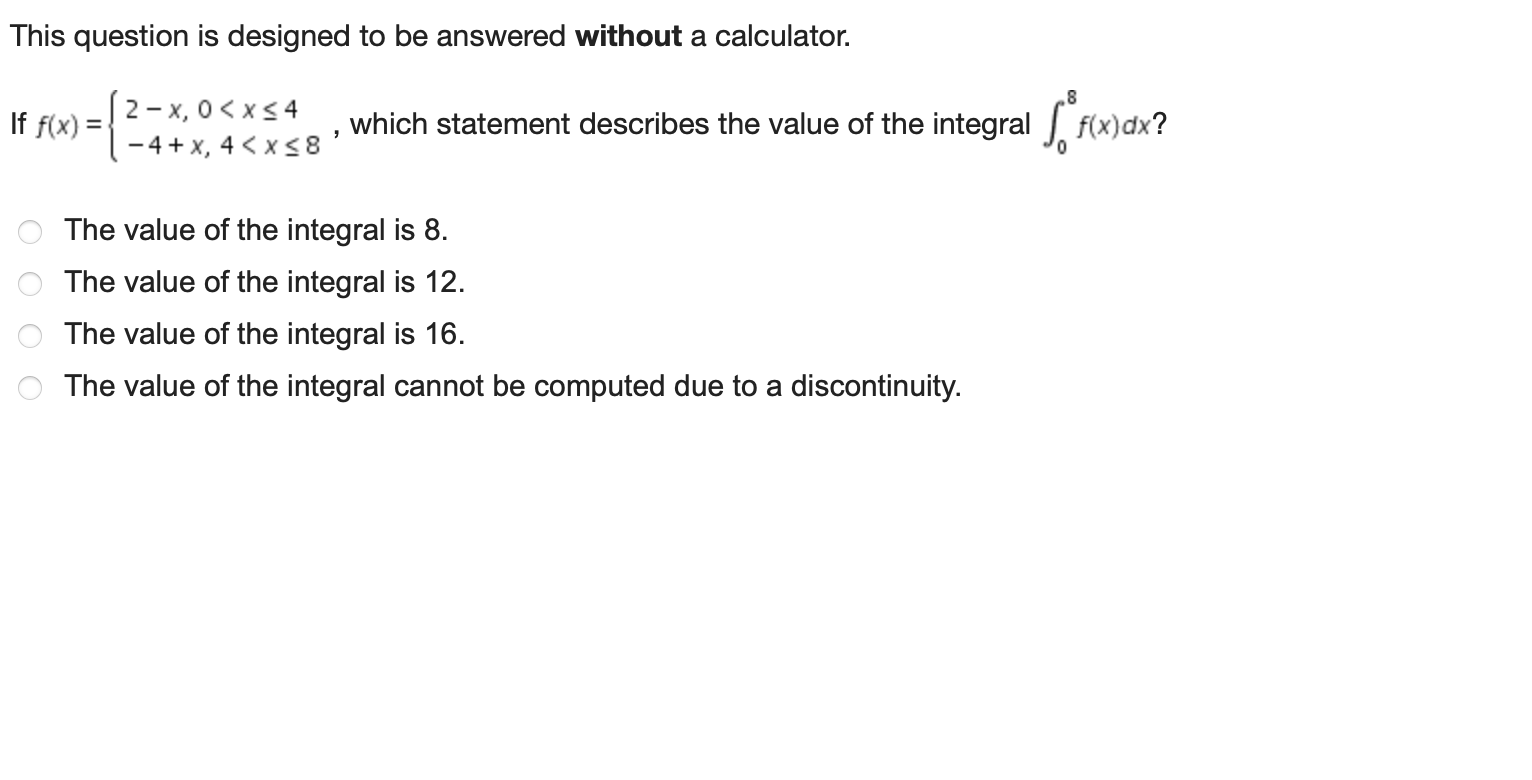
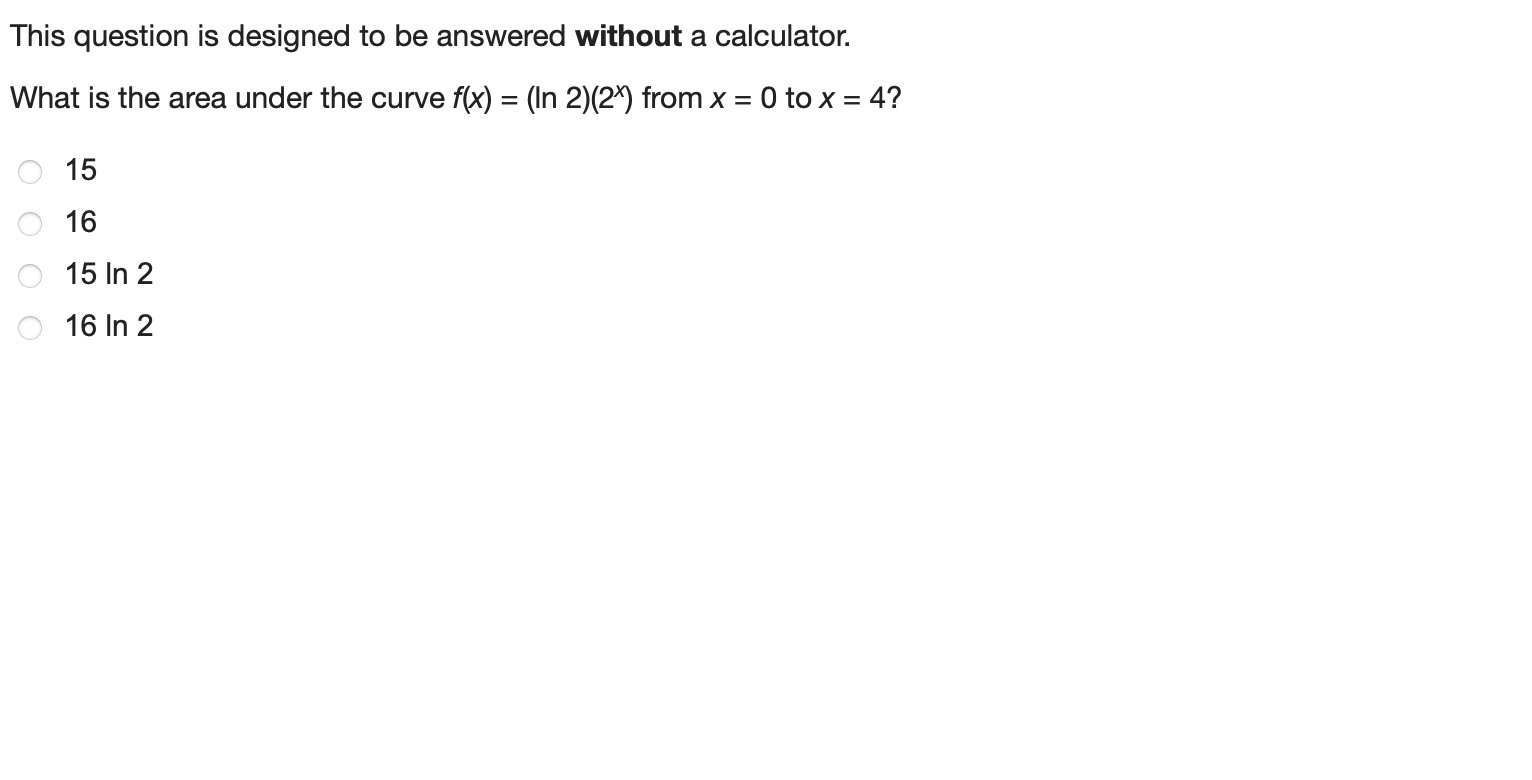
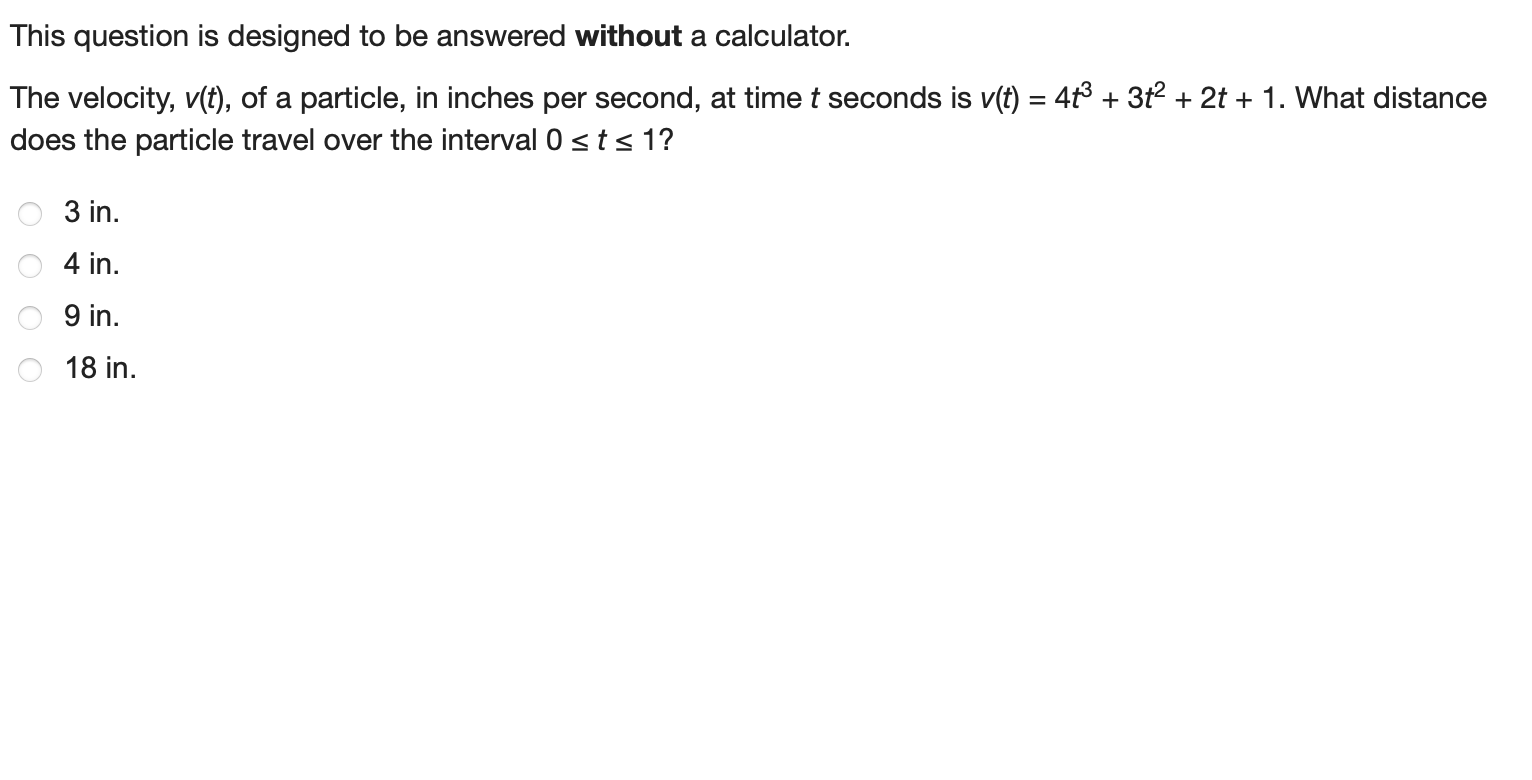
This question is designed to be answered without a calculator. If f(x) dx = 4 and J g(x) dx = -3, then [2f(x) - g(x)] dx = O 2. O 5. O 11. O 14.This question is designed to be answered without a calculator. The velocity, v(t), of a particle, in inches per second, at time t seconds is v(t) 2 4t3 + 3t2 + 21' + 1. What distance does the particle travel over the interval 0 s t s 1? 3 in. 4 in. 9 in. 18 in. This question is designed to be answered without a What distance, in miles, does the car travel over the calculator. interval 0 s t s %? Use this graph of the velocity, v(t), in miles per hour, of a car over time, t, in hours. 3 v(r) 9 60 10 11 40 This question is designed to be answered without a calculator. 8 If fix] = ' , which statement describes the value of the integral fa fixmx'? The value of the integral is 8. The value of the integral is 12. The value of the integral is 16. The value of the integral cannot be computed due to a discontinuity. This question is designed to be answered without a calculator. What is the area under the curve f(x) = (In 2)(2*) from x = 0 to x = 4? O 15 O 16 O 15 In 2 O 16 In 2
Step by Step Solution
There are 3 Steps involved in it

Get step-by-step solutions from verified subject matter experts
 Study Help