







Question: This section examines several leading theories that attempt to explain why firms choose to invest in foreign markets rather than use alternatives such as licensing
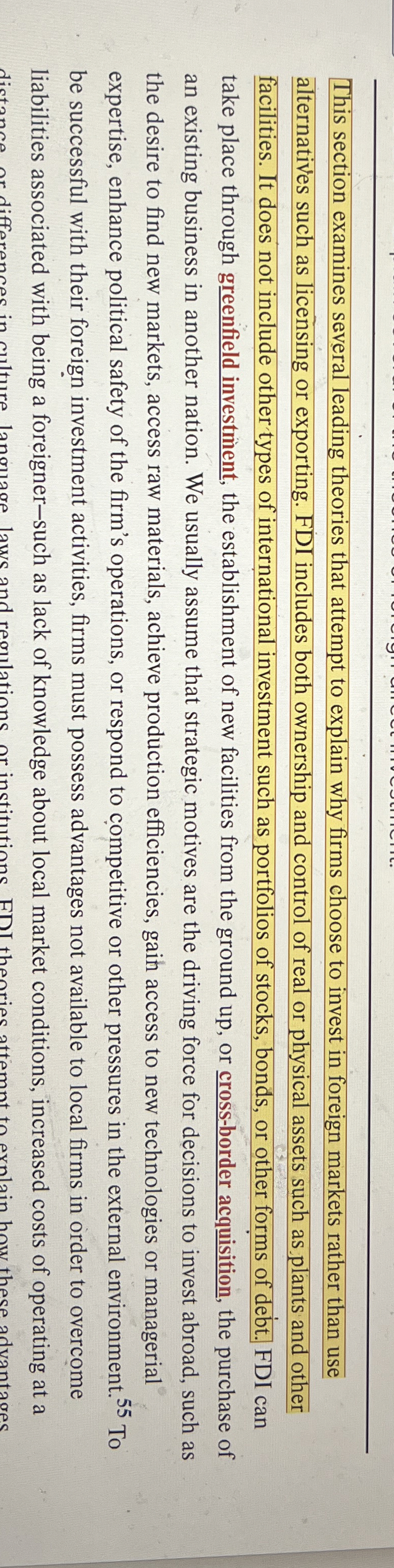
This section examines several leading theories that attempt to explain why firms choose to invest in foreign markets rather than use
alternatives such as licensing or exporting. FDI includes both ownership and control of real or physical assets such as plants and other
facilities. It does not include other types of international investment such as portfolios of stocks, bonds, or other forms of debit. FDI can
take place through greenfield investment, the establishment of new facilities from the ground up or crossborder acquisition, the purchase of
an existing business in another nation. We usually assume that strategic motives are the driving force for decisions to invest abroad, such as
the desire to find new markets, access raw materials, achieve production efficiencies, gaih access to new technologies or managerial
expertise, enhance political safety of the firm's operations, or respond to competitive or other pressures in the external environment.
be successful with their foreign investment activities, firms must possess advantages not available to local firms in order to overcome
liabilities associated with being a foreignersuch as lack of knowledge about local market conditions, increased costs of operating at a
Step by Step Solution
There are 3 Steps involved in it
1 Expert Approved Answer
Step: 1 Unlock

Question Has Been Solved by an Expert!
Get step-by-step solutions from verified subject matter experts
Step: 2 Unlock
Step: 3 Unlock
 Study Help