







Question: This time line is for question 1: Question #1: Using the PBS timeline provided, briefly describe three instances in U.S. history where there have been

This time line is for question 1:
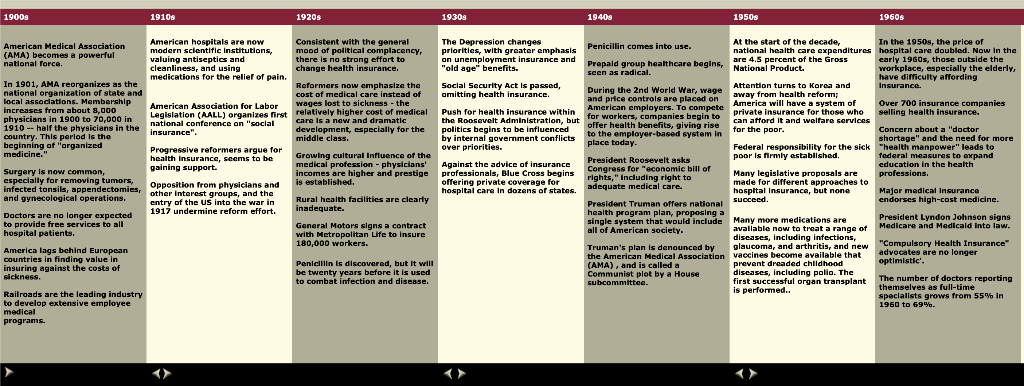
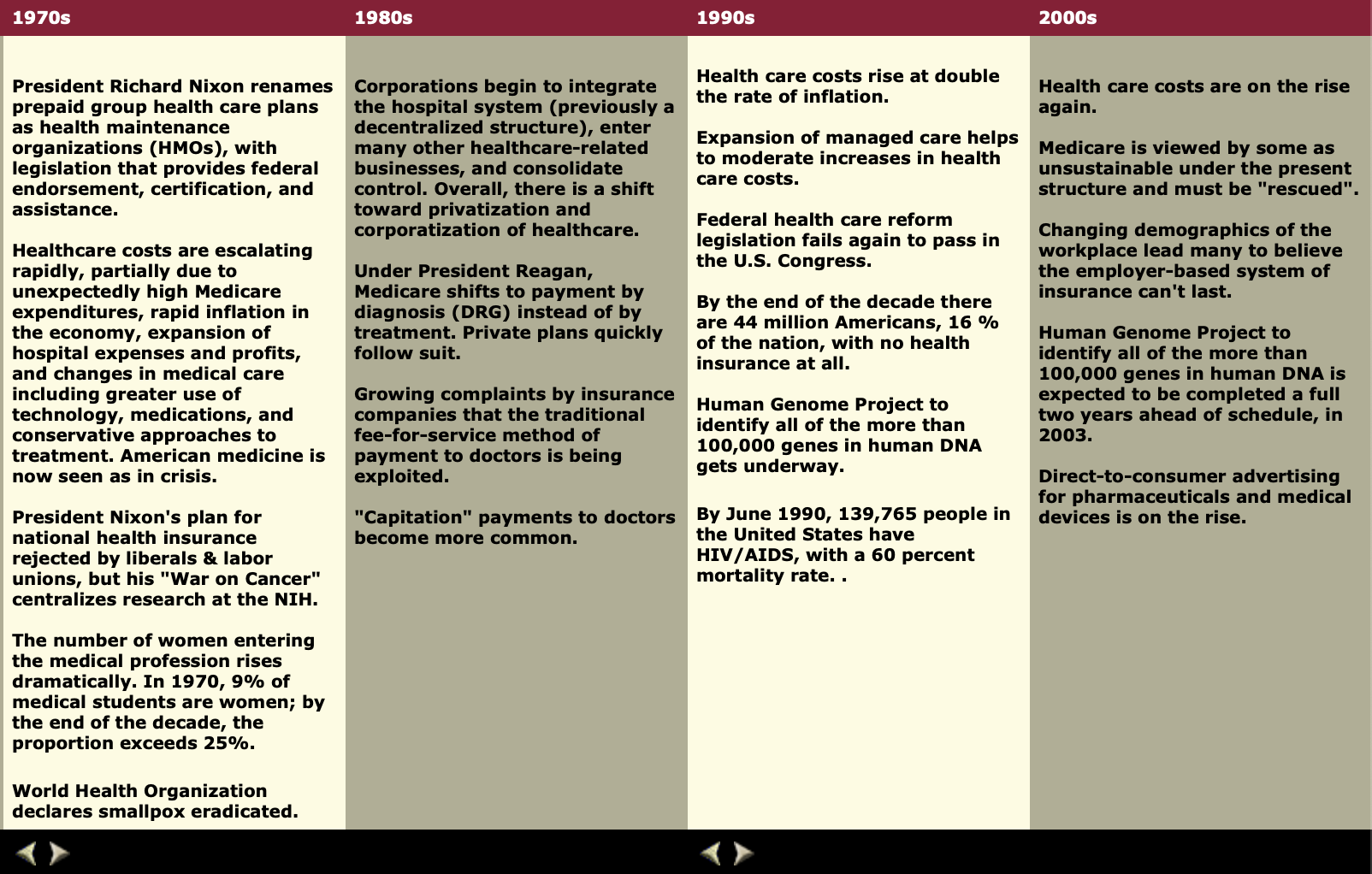
Question #1: Using the PBS timeline provided, briefly describe three instances in U.S. history where there have been indications that a doctor shortage has occurred, and the reason(s) why the shortage may have occurred at that point in time. (Directional arrows for the timeline are at the bottom of the timeline itself). offer health benefits, giving rise can afford it and welfare services concern about a "dactor . 19003 1910s 1920s 19309 1940s 1950s 1960s Consistent with the general American Medical Association American hospitals are now The Depression changes At the start of the decade, Penicillin comes into use. In the 1950s, the price of (AMA) becomes a powerful modern scientific Institutions, mood of political complacency, priorities, with greater emphasis national health care expenditures hospital care doubled. Now in the national force. valuing antiseptics and there is no strong effort to on unemployment insurance and early 1960s, those outside the cleanliness, and using change health insurance, "old age" benefits. medications for the relief of pain. Reformers now emphasize the Prepaid group healthcare begins, are 4.5 percent of the Gross workplace, especially the elderly, In 1901, AMA reorganizes as the have difficulty affording Social Security Act is passed, Attention turns to Korea and Insurance. national organization of state and cost of medical care instead of omitting health insurance. During the 2nd World War, wage away from health reform local associations. Membership wages lost to sickness - the American Association for Labor and price controls are placed on America will have a system of increases from about 8,000 Over 700 insurance companies Legislation (AALL) organizes first relatively higher cost of medical Push for health insurance within American employers. To compete private insurance for those who physicians in 1900 to 70,000 in selling health insurance. national conference on "social care is a new and dramatic 1910 -- half the physicians in the the Roosevelt Administration, but for workers, companies begin to development, especially for the , insurance". politics begins to be influenced country. This period is the . middle class. by internal government conflicts to the employer-based system in for the poor. beginning of organized shortage" and the need for more place today. over priorities. Progressive reformers argue for medicine." Federal responsibility for the sick "health manpower" leads to health insurance, seems to be Growing cultural Influence of the President Roosevelt asks poor is firmly established, federal measures to expand medical profession - physicians' Against the advice of insurance gaining support. Surgery is now common, education in the health incomes are higher and prestige professionals, Blue Cross begins Congress for economic bill of Many legislative proposals are professions. especially for removing tumors, is established. Opposition from physicians and infected tonsils, appendectomies, other interest groups, and the offering private coverage for rights,"Including right to made for different approaches to adequate medical care. hospital care in dozens of states. hospital Insurance, but none Major medical Insurance and gynecological operations. Rural health facilities are clearly entry of the US into the war in endorses high-cost medicine. President Truman offers national succeed. 1917 undermine reform effort. inadequate. Doctors are no longer expected health program plan, proposing a to provide free services to all President Lyndon Johnson signs General Motors signs a contract single system that would include Many more medications are Medicare and Medicaid into law. hospital patients. with Metropolitan Life to insure available now to treat a range of all of American society. 180,000 workers. diseases, including infections, America lags behind European Truman's plan is denounced by glaucoma, and arthritis, and new "Compulsory Health Insurance" advocates are no longer countries in finding value in the American Medical Association vaccines become available that Penicillin is discovered, but it will insuring against the costs of CAMA), and is called a optimistic. prevent dreaded childhood sickness. be twenty years before it is used Communist plot by a House diseases, including polio. The to combat infection and disease. subcommittee first successful organ transplant The number of doctors reporting themselves as full-time is performed.. Railroads are the leading industry to develop extensive employee specialists grows from 55% in 1960 to 69%. medical 1970s 1980s 1990s 2000s President Richard Nixon renames prepaid group health care plans as health maintenance organizations (HMOs), with legislation that provides federal endorsement, certification, and assistance. Corporations begin to integrate the hospital system (previously a decentralized structure), enter many other healthcare-related businesses, and consolidate control. Overall, there is a shift toward privatization and corporatization of healthcare. Under President Reagan, Medicare shifts to payment by diagnosis (DRG) instead of by treatment. Private plans quickly follow suit. Healthcare costs are escalating rapidly, partially due to unexpectedly high Medicare expenditures, rapid inflation in the economy, expansion of hospital expenses and profits, and changes in medical care including ter use of technology, medications, and conservative approaches to treatment. American medicine is now seen as in crisis. Health care costs rise at double Health care costs are on the rise the rate of inflation. again. Expansion of managed care helps Medicare is viewed by some as to moderate increases in health unsustainable under the present care costs. structure and must be "rescued". Federal health care reform Changing demographics of the legislation fails again to pass in the U.S. Congress. workplace lead many to believe the employer-based system of insurance can't last. By the end of the decade there are 44 million Americans, 16 % Human Genome Project to of the nation, with no health identify all of the more than insurance at all. 100,000 genes in human DNA is Human Genome Project to ected to be completed a full identify all of the more than two years ahead of schedule, in 2003. 100,000 genes in human DNA gets underway. Direct-to-consumer advertising for pharmaceuticals and medical By June 1990, 139,765 people in devices is on the rise. the United States have HIV/AIDS, with a 60 percent mortality rate. . Growing complaints by insurance companies that the traditional fee-for-service method of payment to doctors is being exploited. "Capitation" payments to doctors become more common. President Nixon's plan for national health insurance rejected by liberals & labor unions, but his "War on Cancer" centralizes research at the NIH. The number of women entering the medical profession rises dramatically. In 1970, 9% of medical students are women; by the end of the decade, the proportion exceeds 25%. World Health Organization declares smallpox eradicated
Step by Step Solution
There are 3 Steps involved in it
1 Expert Approved Answer
Step: 1 Unlock

Question Has Been Solved by an Expert!
Get step-by-step solutions from verified subject matter experts
Step: 2 Unlock
Step: 3 Unlock
 Study Help