Question: thos.s3.ap-southeast-2.amazonaws.com/5de9b0c2d91ec/1891273?response-cache-control privat Case Study - Implementing Project Management Lorenzo Machine Tools BACKGROUND For 85 years, the Lorenzo Machine Tool company had provided quality products to
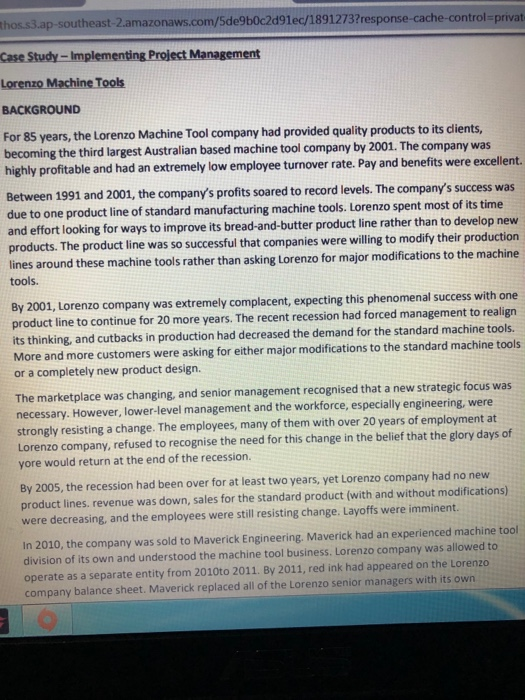
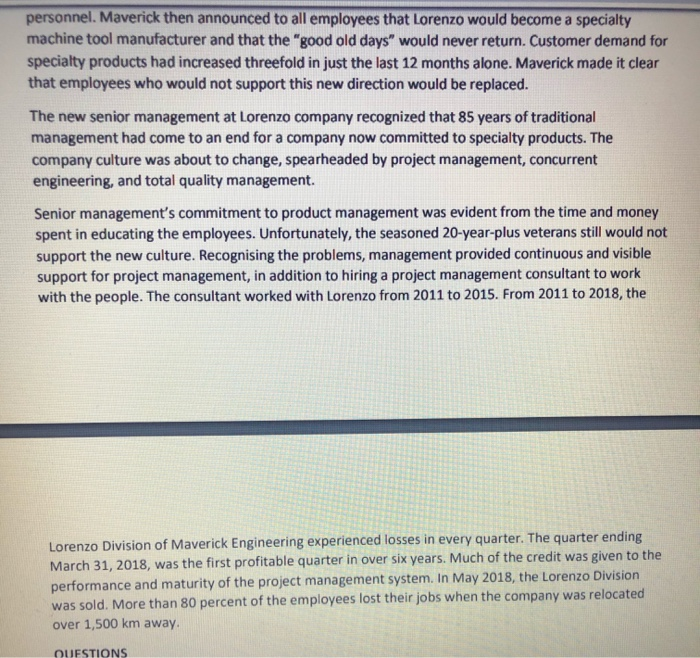
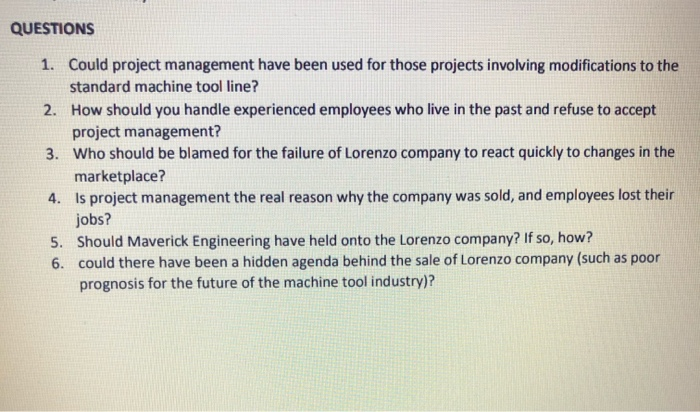
thos.s3.ap-southeast-2.amazonaws.com/5de9b0c2d91ec/1891273?response-cache-control privat Case Study - Implementing Project Management Lorenzo Machine Tools BACKGROUND For 85 years, the Lorenzo Machine Tool company had provided quality products to its clients, becoming the third largest Australian based machine tool company by 2001. The company was highly profitable and had an extremely low employee turnover rate. Pay and benefits were excellent. Between 1991 and 2001, the company's profits soared to record levels. The company's success was due to one product line of standard manufacturing machine tools. Lorenzo spent most of its time and effort looking for ways to improve its bread-and-butter product line rather than to develop new products. The product line was so successful that companies were willing to modify their production lines around these machine tools rather than asking Lorenzo for major modifications to the machine tools. By 2001, Lorenzo company was extremely complacent, expecting this phenomenal success with one product line to continue for 20 more years. The recent recession had forced management to realign its thinking, and cutbacks in production had decreased the demand for the standard machine tools. More and more customers were asking for either major modifications to the standard machine tools or a completely new product design. The marketplace was changing, and senior management recognised that a new strategic focus was necessary. However, lower-level management and the workforce, especially engineering, were strongly resisting a change. The employees, many of them with over 20 years of employment at Lorenzo company, refused to recognise the need for this change in the belief that the glory days of yore would return at the end of the recession. By 2005, the recession had been over for at least two years, yet Lorenzo company had no new product lines, revenue was down, sales for the standard product (with and without modifications) were decreasing, and the employees were still resisting change. Layoffs were imminent. In 2010, the company was sold to Maverick Engineering. Maverick had an experienced machine tool division of its own and understood the machine tool business, Lorenzo company was allowed to operate as a separate entity from 2010to 2011. By 2011, red ink had appeared on the Lorenzo company balance sheet. Maverick replaced all of the Lorenzo senior managers with its own personnel. Maverick then announced to all employees that Lorenzo would become a specialty machine tool manufacturer and that the "good old days" would never return. Customer demand for specialty products had increased threefold in just the last 12 months alone. Maverick made it clear that employees who would not support this new direction would be replaced. The new senior management at Lorenzo company recognized that 85 years of traditional management had come to an end for a company now committed to specialty products. The company culture was about to change, spearheaded by project management, concurrent engineering, and total quality management. Senior management's commitment to product management was evident from the time and money spent in educating the employees. Unfortunately, the seasoned 20-year-plus veterans still would not support the new culture. Recognising the problems, management provided continuous and visible support for project management, in addition to hiring a project management consultant to work with the people. The consultant worked with Lorenzo from 2011 to 2015. From 2011 to 2018, the Lorenzo Division of Maverick Engineering experienced losses in every quarter. The quarter ending March 31, 2018, was the first profitable quarter in over six years. Much of the credit was given to the performance and maturity of the project management system. In May 2018, the Lorenzo Division was sold. More than 80 percent of the employees lost their jobs when the company was relocated over 1,500 km away. OUESTIONS QUESTIONS 1. Could project management have been used for those projects involving modifications to the standard machine tool line? 2. How should you handle experienced employees who live in the past and refuse to accept project management? 3. Who should be blamed for the failure of Lorenzo company to react quickly to changes in the marketplace? 4. Is project management the real reason why the company was sold, and employees lost their jobs? 5. Should Maverick Engineering have held onto the Lorenzo company? If so, how? 6. could there have been a hidden agenda behind the sale of Lorenzo company (such as poor prognosis for the future of the machine tool industry)









 Study Help