







Question: Thrasher Construction Co. was contracted to construct a building for $945,000. The building is owned by the customer throughout the contract period. The contract provides
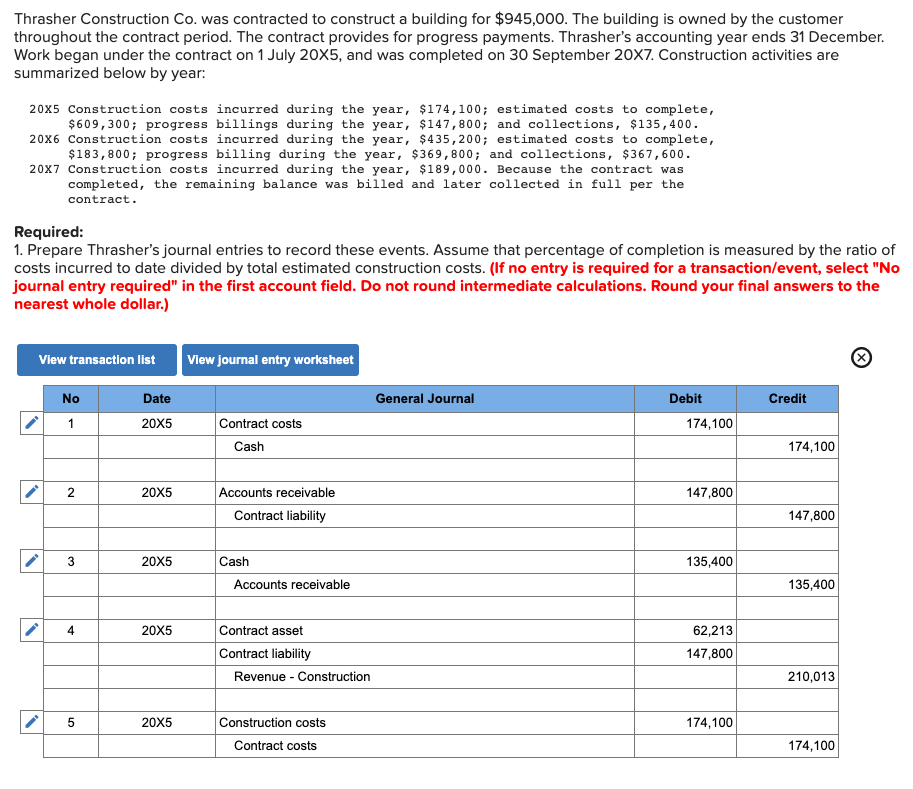
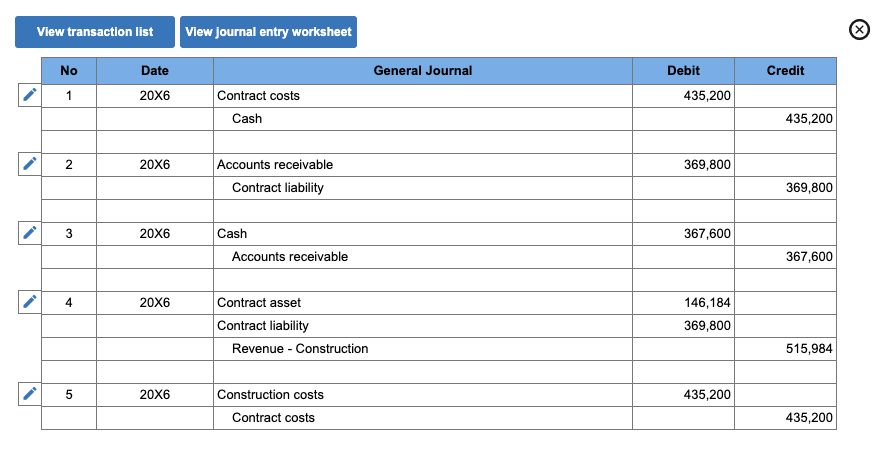
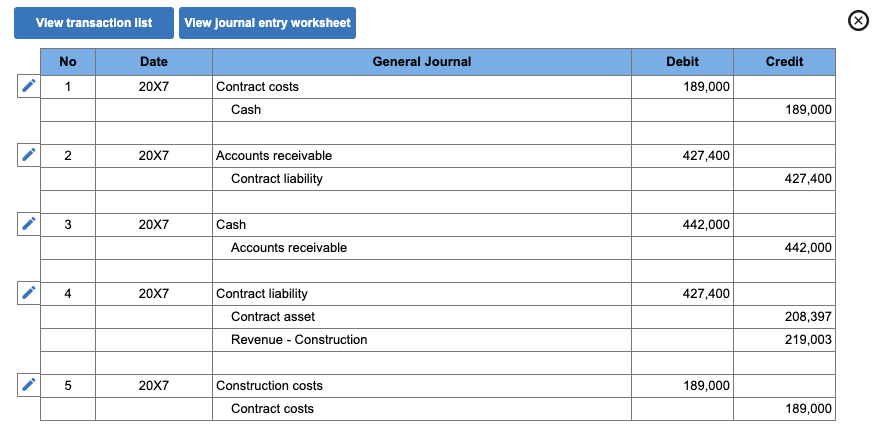
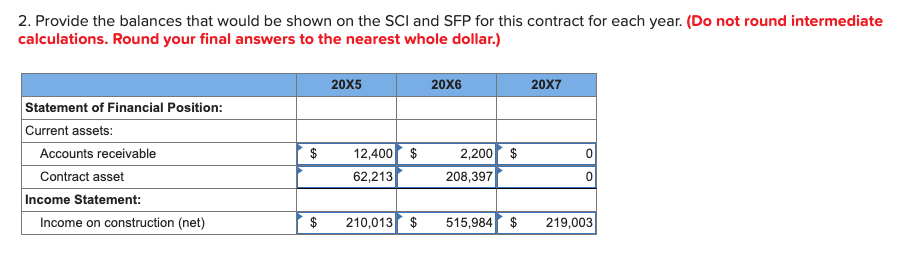
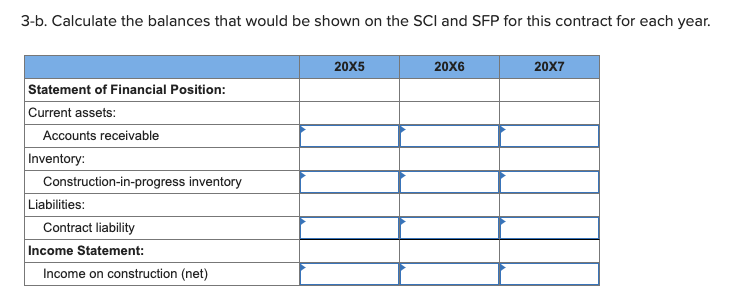
Thrasher Construction Co. was contracted to construct a building for $945,000. The building is owned by the customer throughout the contract period. The contract provides for progress payments. Thrasher's accounting year ends 31 December. Work began under the contract on 1 July 20X5, and was completed on 30 September 20x7. Construction activities are summarized below by year: 20x5 Construction costs incurred during the year, $174,100; estimated costs to complete, $609,300; progress billings during the year, $147,800; and collections, $135,400. 20x6 Construction costs incurred during the year, $435,200; estimated costs to complete, $183,800; progress billing during the year, $369,800; and collections, $367,600. 20x7 Construction costs incurred during the year, $189,000. Because the contract was completed, the remaining balance was billed and later collected in full per the contract. Required: 1. Prepare Thrasher's journal entries to record these events. Assume that percentage of completion is measured by the ratio of costs incurred to date divided by total estimated construction costs. (If no entry is required for a transaction/event, select "No journal entry required" in the first account field. Do not round intermediate calculations. Round your final answers to the nearest whole dollar.) View transaction list View journal entry worksheet No General Journal Credit Date 20X5 Debit 174,100 1 Contract costs Cash 174,100 2 20X5 147,800 Accounts receivable Contract liability 147,800 3 20X5 Cash 135,400 Accounts receivable 135,400 4 20X5 Contract asset Contract liability Revenue - Construction 62,213 147,800 210,013 5 20X5 174,100 Construction costs Contract costs 174,100 View transaction list View journal entry worksheet No General Journal Debit Credit Date 20X6 1 435,200 Contract costs Cash 435,200 N 20X6 369,800 Accounts receivable Contract liability 369,800 3 20X6 367,600 Cash Accounts receivable 367,600 4 20X6 Contract asset Contract liability Revenue - Construction 146,184 369,800 515,984 5 5 20X6 435,200 Construction costs Contract costs 435,200 View transaction list View journal entry worksheet No Date General Journal Debit Credit 1 20x7 189,000 Contract costs Cash 189,000 2 20X7 427,400 Accounts receivable Contract liability 427,400 3 20X7 442,000 Cash Accounts receivable 442,000 4 20X7 427,400 Contract liability Contract asset Revenue - Construction 208,397 219,003 5 20X7 189,000 Construction costs Contract costs 189,000 2. Provide the balances that would be shown on the SCI and SFP for this contract for each year. (Do not round intermediate calculations. Round your final answers to the nearest whole dollar.) 20x5 20X6 20X7 $ 0 Statement of Financial Position: Current assets: Accounts receivable Contract asset Income Statement: Income on construction (net) 12,400 $ 62,213 2,200 $ 208,397 0 $ 210,013 $ 515,984 $ 219,003 3-a. Now assume that the building is owned by Thrasher throughout the construction period and title is transferred to the customer only once the building is fully constructed. Prepare the journal entries required to record the events from 20x5 to 20x7. (If no entry is required for a transaction/event, select "No journal entry required" in the first account field.) View transaction list X: 1 Record the construction costs incurred. > 2 Record the progress billings. 3 Record the collection of billings. Credit Note : = journal entry has been entered Record entry Clear entry View general Journal X Record the construction costs incurred. > Record the progress billings. 3 Record the collection of billings. Credit Note : = journal entry has been entered Record entry Clear entry View general journal View transaction list 1 Record the construction costs incurred. > 2 Record the progress billings. 3 Record the collection of billings. 4 Record the transfer of construction in progress to construction cost. Credit 5 Record the transfer of contract liability to recognise revenue. Note : = journal entry has been entered Record entry Clear entry View general Journal 3-b. Calculate the balances that would be shown on the SCI and SFP for this contract for each year. 20x5 20X6 20x7 Statement of Financial Position: Current assets: Accounts receivable Inventory: Construction-in-progress inventory Liabilities: Contract liability Income Statement: Income on construction (net) Thrasher Construction Co. was contracted to construct a building for $945,000. The building is owned by the customer throughout the contract period. The contract provides for progress payments. Thrasher's accounting year ends 31 December. Work began under the contract on 1 July 20X5, and was completed on 30 September 20x7. Construction activities are summarized below by year: 20x5 Construction costs incurred during the year, $174,100; estimated costs to complete, $609,300; progress billings during the year, $147,800; and collections, $135,400. 20x6 Construction costs incurred during the year, $435,200; estimated costs to complete, $183,800; progress billing during the year, $369,800; and collections, $367,600. 20x7 Construction costs incurred during the year, $189,000. Because the contract was completed, the remaining balance was billed and later collected in full per the contract. Required: 1. Prepare Thrasher's journal entries to record these events. Assume that percentage of completion is measured by the ratio of costs incurred to date divided by total estimated construction costs. (If no entry is required for a transaction/event, select "No journal entry required" in the first account field. Do not round intermediate calculations. Round your final answers to the nearest whole dollar.) View transaction list View journal entry worksheet No General Journal Credit Date 20X5 Debit 174,100 1 Contract costs Cash 174,100 2 20X5 147,800 Accounts receivable Contract liability 147,800 3 20X5 Cash 135,400 Accounts receivable 135,400 4 20X5 Contract asset Contract liability Revenue - Construction 62,213 147,800 210,013 5 20X5 174,100 Construction costs Contract costs 174,100 View transaction list View journal entry worksheet No General Journal Debit Credit Date 20X6 1 435,200 Contract costs Cash 435,200 N 20X6 369,800 Accounts receivable Contract liability 369,800 3 20X6 367,600 Cash Accounts receivable 367,600 4 20X6 Contract asset Contract liability Revenue - Construction 146,184 369,800 515,984 5 5 20X6 435,200 Construction costs Contract costs 435,200 View transaction list View journal entry worksheet No Date General Journal Debit Credit 1 20x7 189,000 Contract costs Cash 189,000 2 20X7 427,400 Accounts receivable Contract liability 427,400 3 20X7 442,000 Cash Accounts receivable 442,000 4 20X7 427,400 Contract liability Contract asset Revenue - Construction 208,397 219,003 5 20X7 189,000 Construction costs Contract costs 189,000 2. Provide the balances that would be shown on the SCI and SFP for this contract for each year. (Do not round intermediate calculations. Round your final answers to the nearest whole dollar.) 20x5 20X6 20X7 $ 0 Statement of Financial Position: Current assets: Accounts receivable Contract asset Income Statement: Income on construction (net) 12,400 $ 62,213 2,200 $ 208,397 0 $ 210,013 $ 515,984 $ 219,003 3-a. Now assume that the building is owned by Thrasher throughout the construction period and title is transferred to the customer only once the building is fully constructed. Prepare the journal entries required to record the events from 20x5 to 20x7. (If no entry is required for a transaction/event, select "No journal entry required" in the first account field.) View transaction list X: 1 Record the construction costs incurred. > 2 Record the progress billings. 3 Record the collection of billings. Credit Note : = journal entry has been entered Record entry Clear entry View general Journal X Record the construction costs incurred. > Record the progress billings. 3 Record the collection of billings. Credit Note : = journal entry has been entered Record entry Clear entry View general journal View transaction list 1 Record the construction costs incurred. > 2 Record the progress billings. 3 Record the collection of billings. 4 Record the transfer of construction in progress to construction cost. Credit 5 Record the transfer of contract liability to recognise revenue. Note : = journal entry has been entered Record entry Clear entry View general Journal 3-b. Calculate the balances that would be shown on the SCI and SFP for this contract for each year. 20x5 20X6 20x7 Statement of Financial Position: Current assets: Accounts receivable Inventory: Construction-in-progress inventory Liabilities: Contract liability Income Statement: Income on construction (net)
Step by Step Solution
There are 3 Steps involved in it

Get step-by-step solutions from verified subject matter experts
 Study Help