







Question: To complete the conclusion section, read the information below (about 250 to 300 words). Do not copy and paste the same thing twice. Please help,
To complete the conclusion section, read the information below (about 250 to 300 words). Do not copy and paste the same thing twice. Please help, I will leave a like. So CapitaLand is the company that I am working for and I have all 4 solutions that are needed to reach the SG Green Plan 2030 targets under Green Reset pillar. I now have to write the conclusion. Please help.
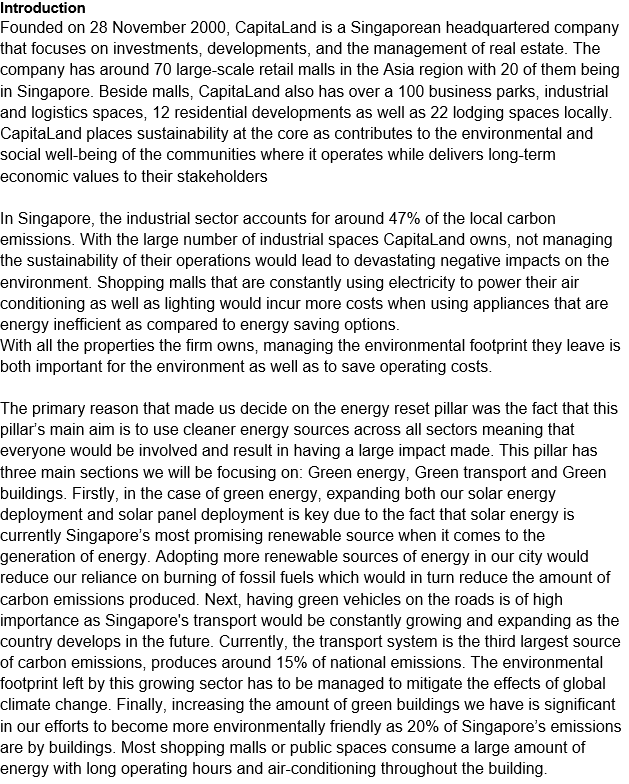
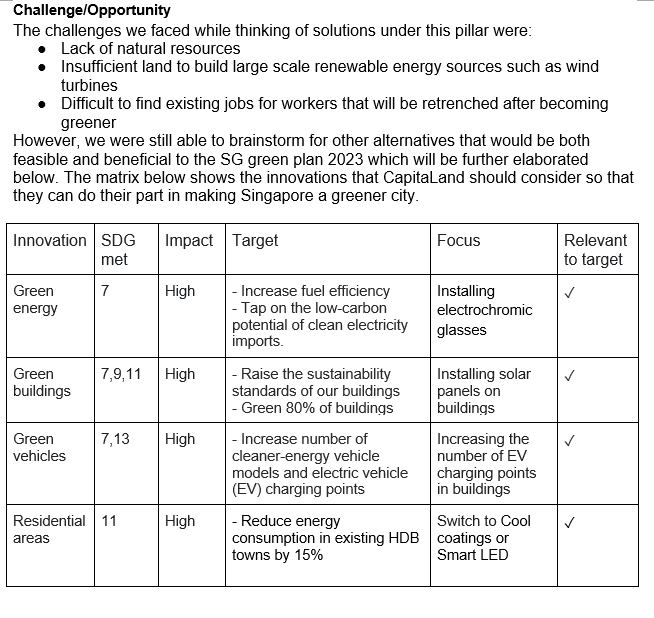
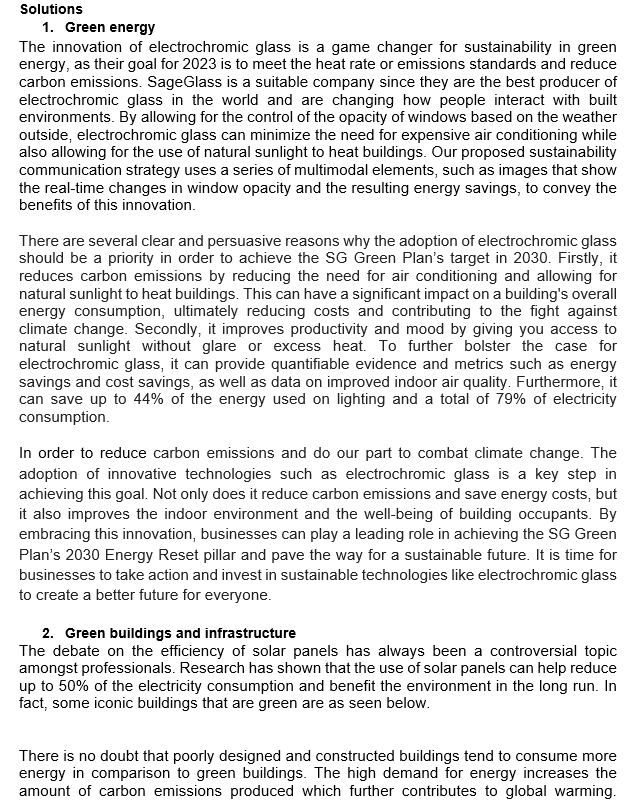
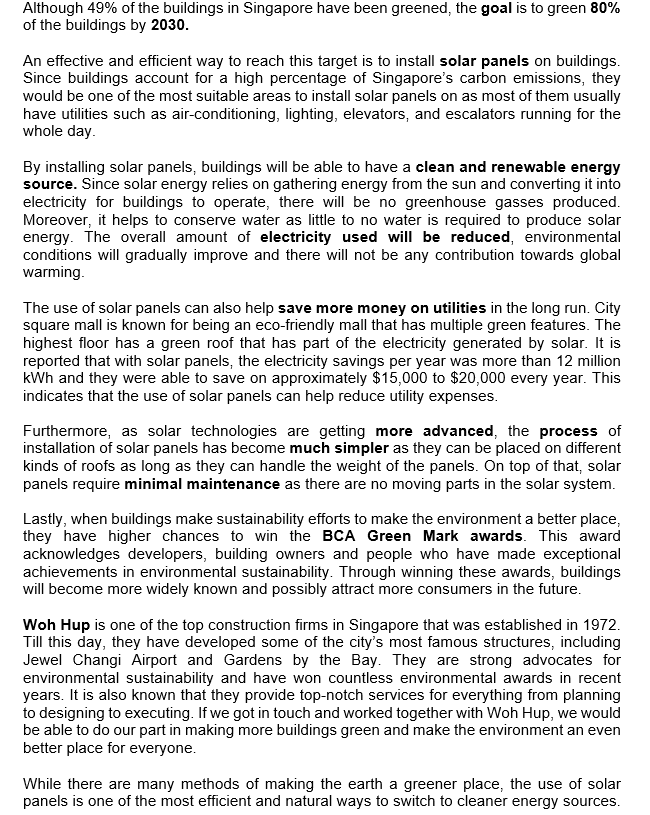
Introduction Founded on 28 November 2000, CapitaLand is a Singaporean headquartered company that focuses on investments, developments, and the management of real estate. The company has around 70 large-scale retail malls in the Asia region with 20 of them being in Singapore. Beside malls, CapitaLand also has over a 100 business parks, industrial and logistics spaces, 12 residential developments as well as 22 lodging spaces locally. CapitaLand places sustainability at the core as contributes to the environmental and social well-being of the communities where it operates while delivers long-term economic values to their stakeholders In Singapore, the industrial sector accounts for around 47% of the local carbon emissions. With the large number of industrial spaces CapitaLand owns, not managing the sustainability of their operations would lead to devastating negative impacts on the environment. Shopping malls that are constantly using electricity to power their air conditioning as well as lighting would incur more costs when using appliances that are energy inefficient as compared to energy saving options. With all the properties the firm owns, managing the environmental footprint they leave is both important for the environment as well as to save operating costs. The primary reason that made us decide on the energy reset pillar was the fact that this pillar's main aim is to use cleaner energy sources across all sectors meaning that everyone would be involved and result in having a large impact made. This pillar has three main sections we will be focusing on: Green energy, Green transport and Green buildings. Firstly, in the case of green energy, expanding both our solar energy deployment and solar panel deployment is key due to the fact that solar energy is currently Singapore's most promising renewable source when it comes to the generation of energy. Adopting more renewable sources of energy in our city would reduce our reliance on burning of fossil fuels which would in turn reduce the amount of carbon emissions produced. Next, having green vehicles on the roads is of high importance as Singapore's transport would be constantly growing and expanding as the country develops in the future. Currently, the transport system is the third largest source of carbon emissions, produces around 15% of national emissions. The environmental footprint left by this growing sector has to be managed to mitigate the effects of global climate change. Finally, increasing the amount of green buildings we have is significant in our efforts to become more environmentally friendly as 20% of Singapore's emissions are by buildings. Most shopping malls or public spaces consume a large amount of energy with long operating hours and air-conditioning throughout the building. Challenge/Opportunity The challenges we faced while thinking of solutions under this pillar were: - Lack of natural resources - Insufficient land to build large scale renewable energy sources such as wind turbines - Difficult to find existing jobs for workers that will be retrenched after becoming greener However, we were still able to brainstorm for other alternatives that would be both feasible and beneficial to the SG green plan 2023 which will be further elaborated below. The matrix below shows the innovations that Capitaland should consider so that they can do their part in making Singapore a greener city. Solutions 1. Green energy The innovation of electrochromic glass is a game changer for sustainability in green energy, as their goal for 2023 is to meet the heat rate or emissions standards and reduce carbon emissions. SageGlass is a suitable company since they are the best producer of electrochromic glass in the world and are changing how people interact with built environments. By allowing for the control of the opacity of windows based on the weather outside, electrochromic glass can minimize the need for expensive air conditioning while also allowing for the use of natural sunlight to heat buildings. Our proposed sustainability communication strategy uses a series of multimodal elements, such as images that show the real-time changes in window opacity and the resulting energy savings, to convey the benefits of this innovation. There are several clear and persuasive reasons why the adoption of electrochromic glass should be a priority in order to achieve the SG Green Plan's target in 2030. Firstly, it reduces carbon emissions by reducing the need for air conditioning and allowing for natural sunlight to heat buildings. This can have a significant impact on a building's overall energy consumption, ultimately reducing costs and contributing to the fight against climate change. Secondly, it improves productivity and mood by giving you access to natural sunlight without glare or excess heat. To further bolster the case for electrochromic glass, it can provide quantifiable evidence and metrics such as energy savings and cost savings, as well as data on improved indoor air quality. Furthermore, it can save up to 44% of the energy used on lighting and a total of 79% of electricity consumption. In order to reduce carbon emissions and do our part to combat climate change. The adoption of innovative technologies such as electrochromic glass is a key step in achieving this goal. Not only does it reduce carbon emissions and save energy costs, but it also improves the indoor environment and the well-being of building occupants. By embracing this innovation, businesses can play a leading role in achieving the SG Green Plan's 2030 Energy Reset pillar and pave the way for a sustainable future. It is time for businesses to take action and invest in sustainable technologies like electrochromic glass to create a better future for everyone. 2. Green buildings and infrastructure The debate on the efficiency of solar panels has always been a controversial topic amongst professionals. Research has shown that the use of solar panels can help reduce up to 50% of the electricity consumption and benefit the environment in the long run. In fact, some iconic buildings that are green are as seen below. There is no doubt that poorly designed and constructed buildings tend to consume more energy in comparison to green buildings. The high demand for energy increases the amount of carbon emissions produced which further contributes to global warming. Although 49% of the buildings in Singapore have been greened, the goal is to green 80% of the buildings by 2030 . An effective and efficient way to reach this target is to install solar panels on buildings. Since buildings account for a high percentage of Singapore's carbon emissions, they would be one of the most suitable areas to install solar panels on as most of them usually have utilities such as air-conditioning, lighting, elevators, and escalators running for the whole day. By installing solar panels, buildings will be able to have a clean and renewable energy source. Since solar energy relies on gathering energy from the sun and converting it into electricity for buildings to operate, there will be no greenhouse gasses produced. Moreover, it helps to conserve water as little to no water is required to produce solar energy. The overall amount of electricity used will be reduced, environmental conditions will gradually improve and there will not be any contribution towards global warming. The use of solar panels can also help save more money on utilities in the long run. City square mall is known for being an eco-friendly mall that has multiple green features. The highest floor has a green roof that has part of the electricity generated by solar. It is reported that with solar panels, the electricity savings per year was more than 12 million kWh and they were able to save on approximately $15,000 to $20,000 every year. This indicates that the use of solar panels can help reduce utility expenses. Furthermore, as solar technologies are getting more advanced, the process of installation of solar panels has become much simpler as they can be placed on different kinds of roofs as long as they can handle the weight of the panels. On top of that, solar panels require minimal maintenance as there are no moving parts in the solar system. Lastly, when buildings make sustainability efforts to make the environment a better place, they have higher chances to win the BCA Green Mark awards. This award acknowledges developers, building owners and people who have made exceptional achievements in environmental sustainability. Through winning these awards, buildings will become more widely known and possibly attract more consumers in the future. Woh Hup is one of the top construction firms in Singapore that was established in 1972. Till this day, they have developed some of the city's most famous structures, including Jewel Changi Airport and Gardens by the Bay. They are strong advocates for environmental sustainability and have won countless environmental awards in recent years. It is also known that they provide top-notch services for everything from planning to designing to executing. If we got in touch and worked together with Woh Hup, we would be able to do our part in making more buildings green and make the environment an even better place for everyone. While there are many methods of making the earth a greener place, the use of solar panels is one of the most efficient and natural ways to switch to cleaner energy sources. With its many advantages, it would leave a positive impact on the environment without having people's lifestyles drastically change. 3. Green vehicles The innovation of public EV charging stations and electric industrial vehicles would play a part in having more green vehicles on the roads. According to local newspaper, The Strait Times, there are currently around 6,466 fully electric and plug-in hybrid cars on the roads as of November 2022 , showing a 77.9% increase from the previous figures at endDecember 2021. Although there is a significant increase in the figures as compared to before, much is to be done to achieve the targeted reduction of peak land transport emissions by 80%. According to the Ministry of transport, local EV vehicles generate up to 50% lesser carbon emissions as compared to petroleum-fueled vehicles. Most electric vehicles have a range of traveling up to 300km per charge which should last car owners for a week or so. If all of Singapore's light vehicles run on electricity, carbon emissions would be reduced by a whopping 1.5 to 2 million, equivalent to about 4% of national emissions. Recent research also showed that some reasons for the small amount of EVs in Singapore is due to the fact that the upfront cost of purchasing an EV in Singapore is higher as compared to an internal combustion vehicle that runs on petroleum. Consumers that choose EV vehicles also face the lack of resources as well as options for their vehicle. As of November 2022, Singapore has around 3000 public EV charging stations island wide, less than the goal of having 40,000 units by 2030 . By installing more charging stations in both residential and commercial districts there would be more accessible venues for people all around the island to charge their vehicles. Switching out all company vehicles for electric alternatives would contribute to having more green vehicles. Heavy duty diesel-powered industrial vehicles like trucks and vans can be replaced with electrical options which have long lasting battery life and zero emissions. There are several distinct reasons for installing more EV charging stations in developments and using electrical alternatives for company vehicles. Firstly, having more charging stations would encourage employees, as well as the public to purchase electric vehicles as they are able to charge their vehicles using the EV charging stations in shopping malls and their residential car parks, which is a cheaper alternative than refueling their vehicles on petroleum. Next, replacing company vehicles to electrical alternatives would reduce the carbon footprint of the firm as these vehicles do not produce emissions and the batteries, they run on are not made of heavy metals or toxic substances. Since there are no engines or motor oils needed for the vehicles to function, the firm can also save on maintenance costs while being environmentally friendly as electric vehicles would emit 83% less carbon emissions compared to fuel. Besides being a more environmentally friendly option, this option would also allow the firm to reduce operating costs and earn extra revenue through this service. A suitable company for this would be BYD Singapore which is a subsidiary of BYD private limited - the largest rechargeable battery supplier globally present across 6 continents, more than 70 countries, 400 cities worldwide. Currently, the firm has a total of 122 charging stations island wide making it a major player on the scene of sustainable transportation. 4. Residential areas In Singapore, there are several types of residential properties available, each with its own unique features and benefits. The three main types include public housing (HDB flats), private condominiums and apartments and landed properties. The most common type is public housing, HDB flats, where they are government subsidized properties built and managed by the Housing and Development Board, designed to provide affordable housing for the majority of Singaporeans. From 1-5 room apartments, HDB flats are available in a variety of shapes and sizes. They are frequently situated in accessible, convenient areas and come with facilities like playgrounds, supermarkets, and community centers. HDB flats are the most common and extensively owned type of housing in Singapore, where they are home to 78.6 percent of the population. In recent years, the rise in energy consumption in the household sector due to a variety of causes, including population expansion, urbanization, as well as an increase in the number of home appliances and devices. Has led to a greater demand for energy, and has put pressure on Singapore's energy infrastructure. Thus, prompting a growing focus on energy efficiency and conservation, as well as efforts to increase the use of renewable energy sources in the household sector to meet this growing demand. Additionally, demand for energy in the household sector is anticipated to rise along with Singapore's population growth. Common areas in HDBs typically make up a sizeable portion of the entire building's electricity use. This is due to the fact that common areas are frequently used and typically need to be kept at optimum temperatures for tenants' comfort. To reach the goal of reducing energy consumption in existing HDBs by 15% by 2030 , we can reduce electricity consumption in existing HDBs is the implementation of smart LED lighting. HDB has started replacing the traditional lightings with Light Emitting Diode (LED) lights in public areas such as common corridors and staircases, an example is in Jurong Town in 2008, as it is energy efficient and suitable for wide-scale implementation. After switching from the previous T8 lighting to LED lighting in common areas such as corridors, staircases, and lift lobbies, they achieved a 50% reduction in energy consumption. The main benefits of LED lights are their efficiency, where they use less power than traditional incandescent bulbs which leads to cost savings on electricity bills for residents. Another way to help reduce energy consumption is the implementation of smart lighting control systems. These systems allow residents to remotely control the lighting in their homes with a smartphone or other devices. This includes features such as scheduling, dimming, and automatic light sensing, which can help to optimize energy usage and improve the overall living experience. Additionally, smart LED lighting can also be integrated with other smart home devices, allowing for greater convenience and control over the lighting in the home. Overall, smart LED lighting can bring a range of benefits to HDB residents, from cost savings to improved comfort and convenience. Penta Lighting is a leading lighting company established in 1990 which has a strong belief in safe luminescence and functional and energy-saving systems. They offer a wide range of products applicable to residential and commercial sectors which can help us implement smart LED lighting into homes and common areas and help us reach the goal of reducing energy consumption in existing HDBs by 15% by 2030
Step by Step Solution
There are 3 Steps involved in it

Get step-by-step solutions from verified subject matter experts
 Study Help