



Question: To prepare for this Assignment , review the readings on tools for strategic change such as those described in Chapter 12 of Dyer, Godfrey, Jensen,
To prepare for this Assignment, review the readings on tools for strategic change such as those described in Chapter 12 of Dyer, Godfrey, Jensen, and Bryce (2020) and choose one reading for further examination. Consider how the context of a specific organization (industry, geographical location, status within industry, etc.) can influence both the choice and the implementation of your selected tool, as well as how the application of a tool might vary among different business leaders and practitioners. Be sure to utilize scholarly, peer-reviewed resources from the Walden Library to identify additional supportive examples of organizations applying the tools and principles of strategic planning and their results.
a 3- to 5-page evaluation of your research on a specific tool for strategic implementation. Your evaluation should include the following:
- A brief description of your chosen tool, including relevant background, an APA-cited scholarly illustration, and detailed rationale for your choice
- An assessment of how your chosen tool is affected by different strategic influences (such as environmental factors; internal, organizational considerations; etc.) and whether these changes impact your choice for implementation. Include at least one supportive example.
- An explanation of the usefulness of your chosen tool to you as a practitioner and independent scholar, including how it will benefit your strategic business leadership. Be sure to provide supportive scholarly examples.
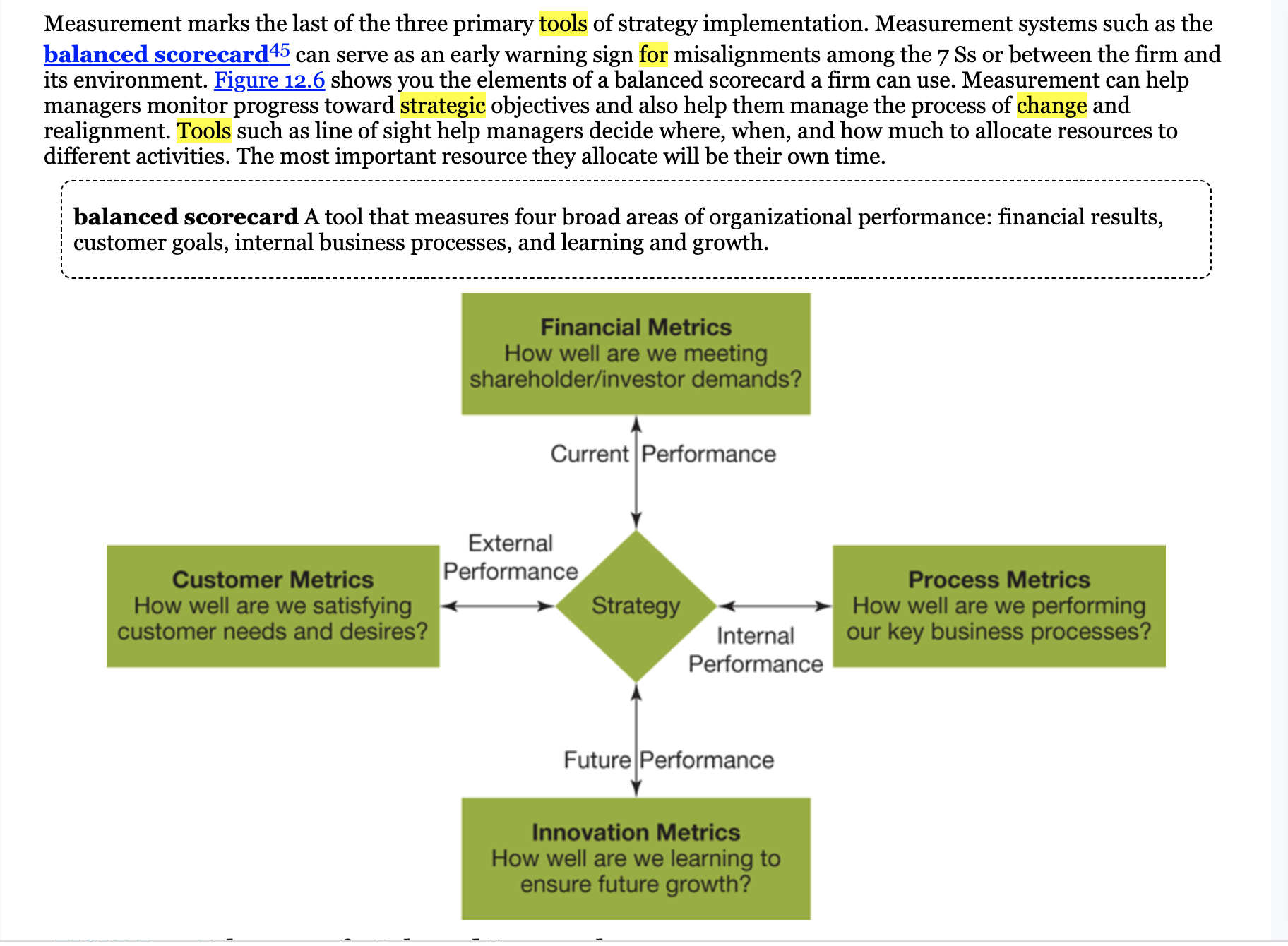
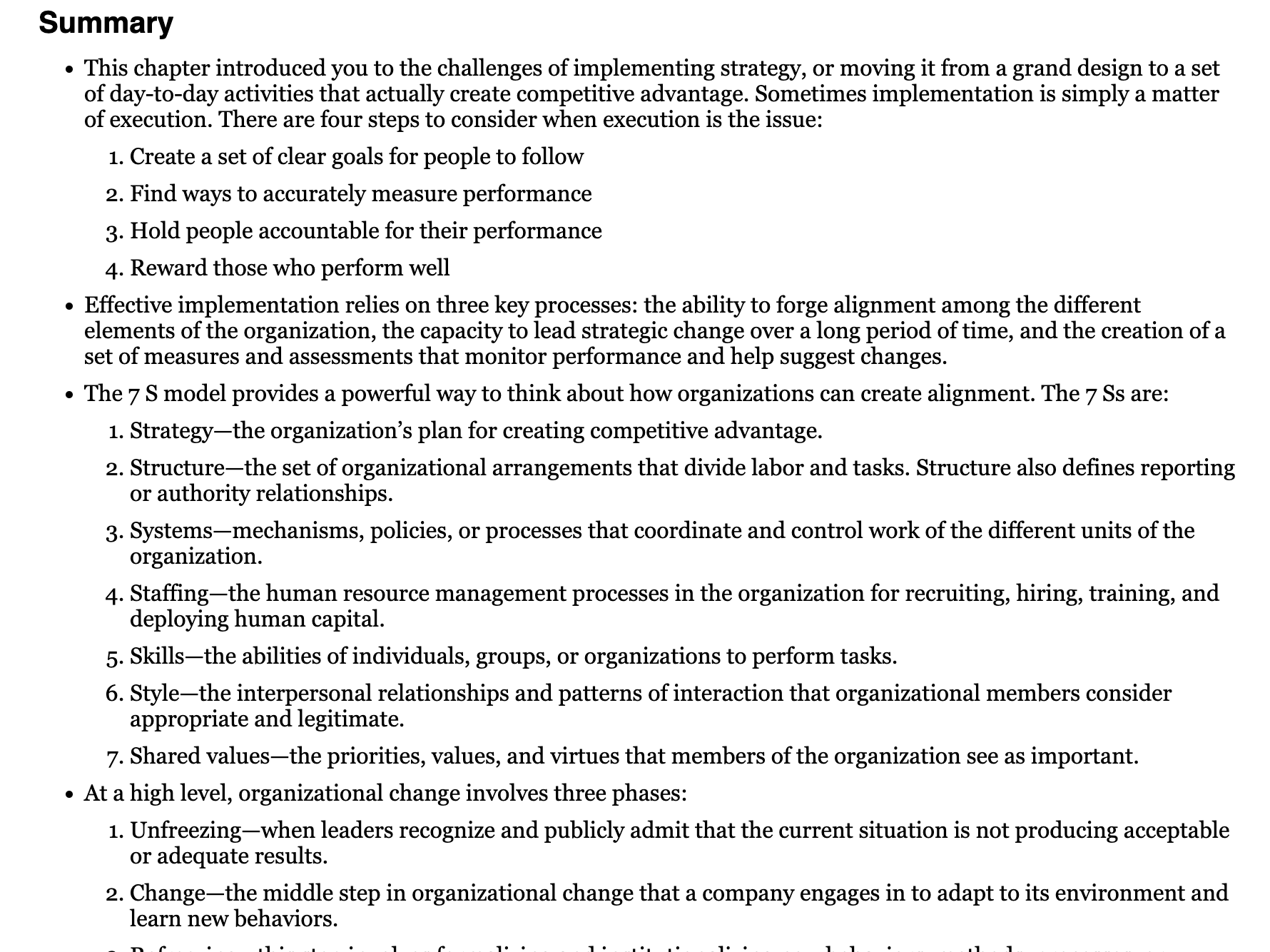
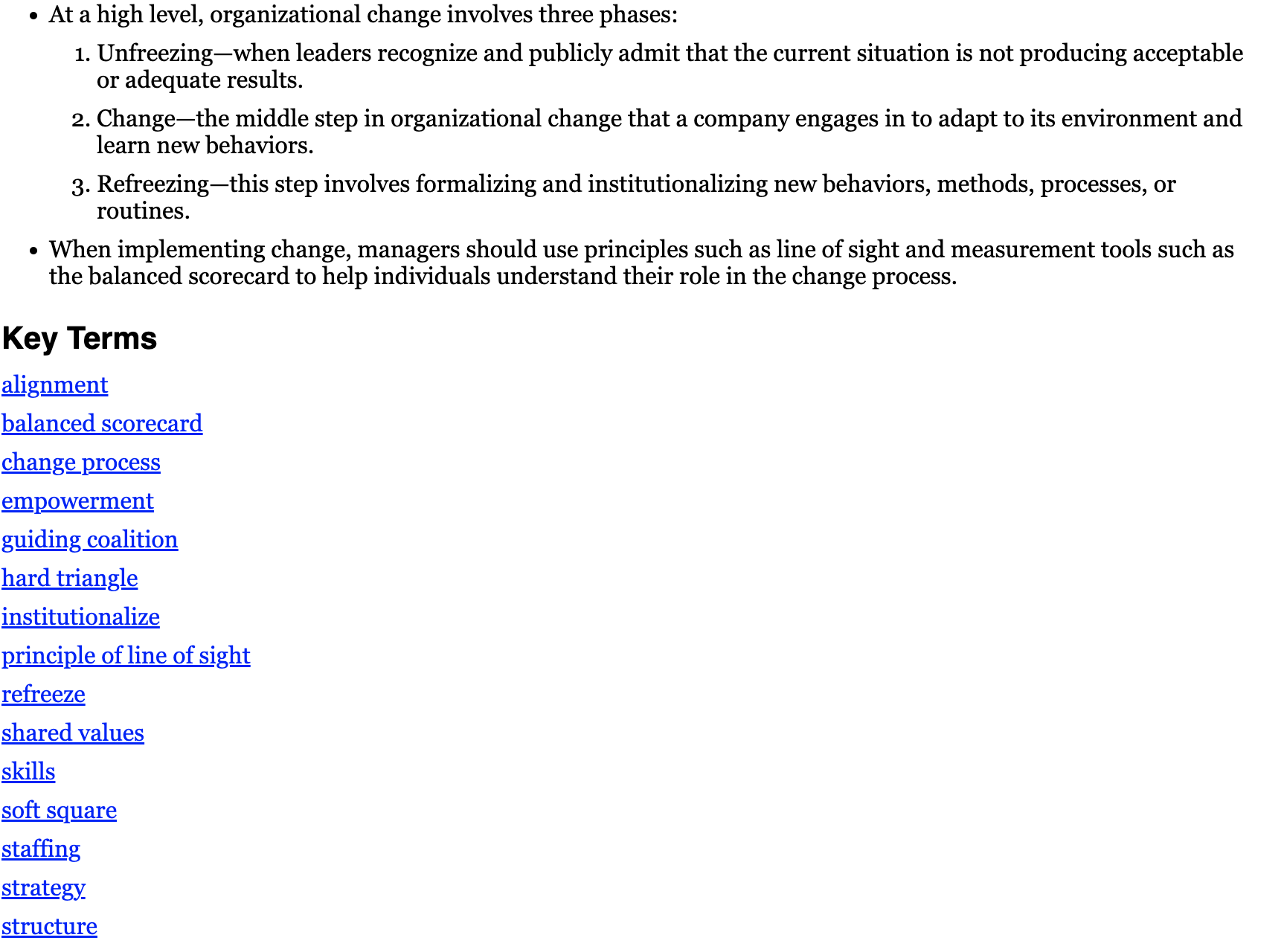
Measurement marks the last of the three primary tools of strategy implementation. Measurement systems such as the balanced scorecard45 can serve as an early warning sign for misalignments among the 7 Ss or between the firm and its environment. Figure 12.6 shows you the elements of a balanced scorecard a firm can use. Measurement can help managers monitor progress toward strategic objectives and also help them manage the process of change and realignment. Tools such as line of sight help managers decide where, when, and how much to allocate resources to different activities. The most important resource they allocate will be their own time. balanced scorecard A tool that measures four broad areas of organizational performance: financial results, customer goals, internal business processes, and learning and growth. Financial Metrics How well are we meeting shareholder/investor demands? Current Performance External Customer Metrics Performance Process Metrics How well are we satisfying Strategy How well are we performing customer needs and desires? Internal our key business processes? Performance Future Performance Innovation Metrics How well are we learning to ensure future growth?Summary - This chapter introduced you to the challenges of implementing strategy, or moving it from a grand design to a set of day-to-day activities that actually create competitive advantage. Sometimes implementation is simply a matter of execution. There are four steps to consider when execution is the issue: 1. Create a set of clear goals for people to follow 2. Find ways to accurately measure performance 3. Hold people accountable for their performance 4. Reward those who perform well . Effective implementation relies on three key processes: the ability to forge alignment among the different elements of the organization, the capacity to lead strategic change over a long period of time, and the creation of a set of measures and assessments that monitor performance and help suggest changes. . The 7 S model provides a powerful way to think about how organizations can create alignment. The 7 Ss are: 1. Strategythe organization's plan for creating competitive advantage. 2. Structurethe set of organizational arrangements that divide labor and tasks. Structure also denes reporting or authority relationships. 3. Systemsmechanisms, policies, or processes that coordinate and control work of the different units of the organization. 4. Stafngthe human resource management processes in the organization for recruiting, hiring, training, and deploying human capital. 5. Skillsthe abilities of individuals, groups, or organizations to perform tasks. 6. Stylethe interpersonal relationships and patterns of interaction that organizational members consider appropriate and legitimate. 7. Shared valuesthe priorities, values, and virtues that members of the organization see as important. . At a high level, organizational change involves three phases: 1. Unfreezingwhen leaders recognize and publicly admit that the current situation is not producing acceptable or adequate results. 2. Changethe middle step in organizational change that a company engages in to adapt to its environment and learn new behaviors. _ 11 l' ' .1' I ' 1 r 1' ' 1' I'I l' 1' ' 1 1 ' :1 1 . At a high level, organizational change involves three phases: 1. Unfreezing-when leaders recognize and publicly admit that the current situation is not producing acceptable or adequate results. 2. Change-the middle step in organizational change that a company engages in to adapt to its environment and learn new behaviors. 3. Refreezing-this step involves formalizing and institutionalizing new behaviors, methods, processes, or routines. . When implementing change, managers should use principles such as line of sight and measurement tools such as the balanced scorecard to help individuals understand their role in the change process. Key Terms alignment balanced scorecard change process empowerment guiding coalition hard triangle institutionalize principle of line of sight refreeze shared values skills soft square staffing strategy structure
Step by Step Solution
There are 3 Steps involved in it

Get step-by-step solutions from verified subject matter experts