







Question: To read press ctrl (+) Pool Corporation Inc. reported in its recent annual report that the industry experienced some price deflation one year followed by
 To read press ctrl (+)
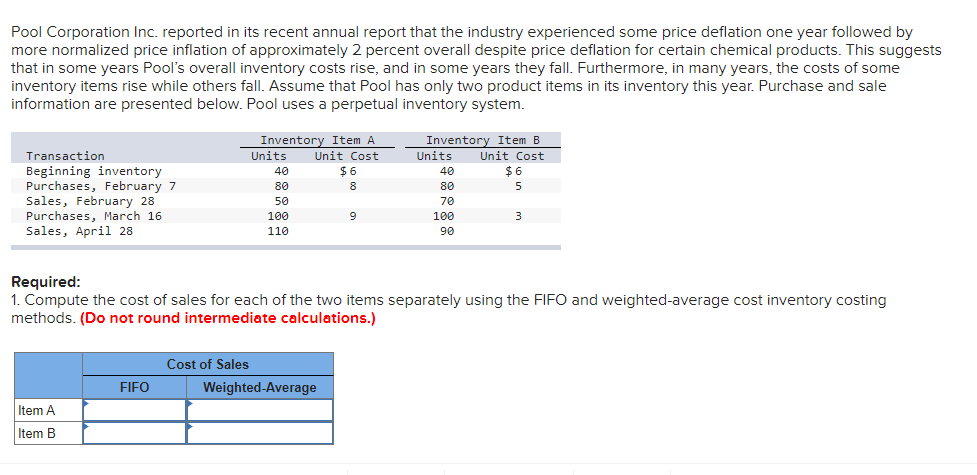
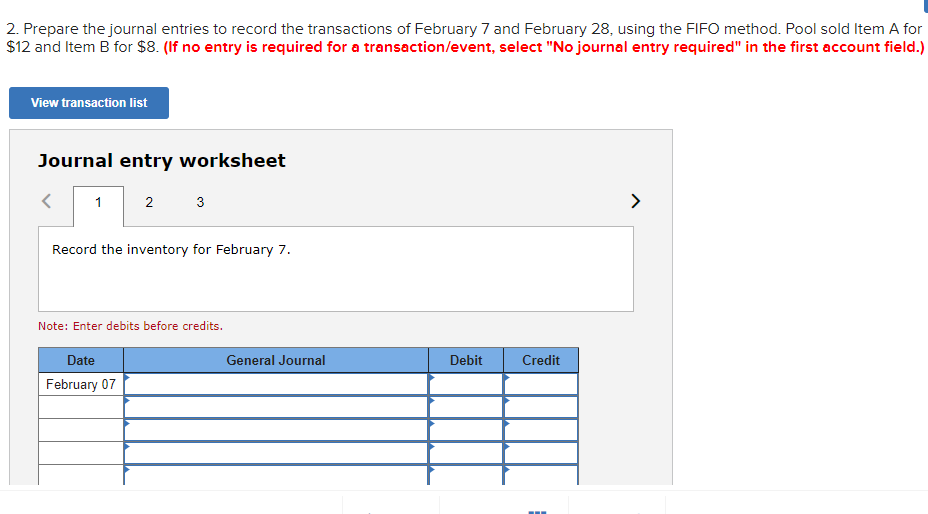
Pool Corporation Inc. reported in its recent annual report that the industry experienced some price deflation one year followed by more normalized price inflation of approximately 2 percent overall despite price deflation for certain chemical products. This suggests that in some years Pool's overall inventory costs rise, and in some years they fall. Furthermore, in many years, the costs of some inventory items rise while others fall. Assume that Pool has only two product items in its inventory this year. Purchase and sale information are presented below. Pool uses a perpetual inventory system. Transaction Beginning inventory Purchases, February 7 Sales, February 28 Purchases, March 16 Sales, April 28 Inventory Item A Units Unit Cost 40 $6 80 8 50 100 9 110 Inventory Item B Units Unit Cost 40 $ 6 80 5 70 100 3 90 Required: 1. Compute the cost of sales for each of the two items separately using the FIFO and weighted average cost inventory costing methods. (Do not round intermediate calculations.) Cost of Sales Weighted-Average FIFO Item A Item B 2. Prepare the journal entries to record the transactions of February 7 and February 28, using the FIFO method. Pool sold Item A for $12 and Item B for $8. (If no entry is required for a transaction/event, select "No journal entry required" in the first account field.) View transaction list Journal entry worksheet Record the inventory for February 7. Note: Enter debits before credits. General Journal Debit Credit Date February 07
Step by Step Solution
There are 3 Steps involved in it

Get step-by-step solutions from verified subject matter experts
 Study Help