







Question: TOPIC: Business Ethics Evaluate John Mackeys paradigm of conscious capitalism and his argument that, 'There is no inherent reason why business cannot be ethical, socially
TOPIC: Business Ethics Evaluate John Mackeys paradigm of conscious capitalism and his argument that, 'There is no inherent reason why business cannot be ethical, socially responsible, and profitable. To what extent does the evidence from the case concerning his management practices and the companys financial performance support or contradict his paradigm?
![[Wild Oats] still stinks and remains grossly overvalued based on very weak](https://dsd5zvtm8ll6.cloudfront.net/si.experts.images/questions/2024/10/671d874ab3497_425671d8749f0f29.jpg)
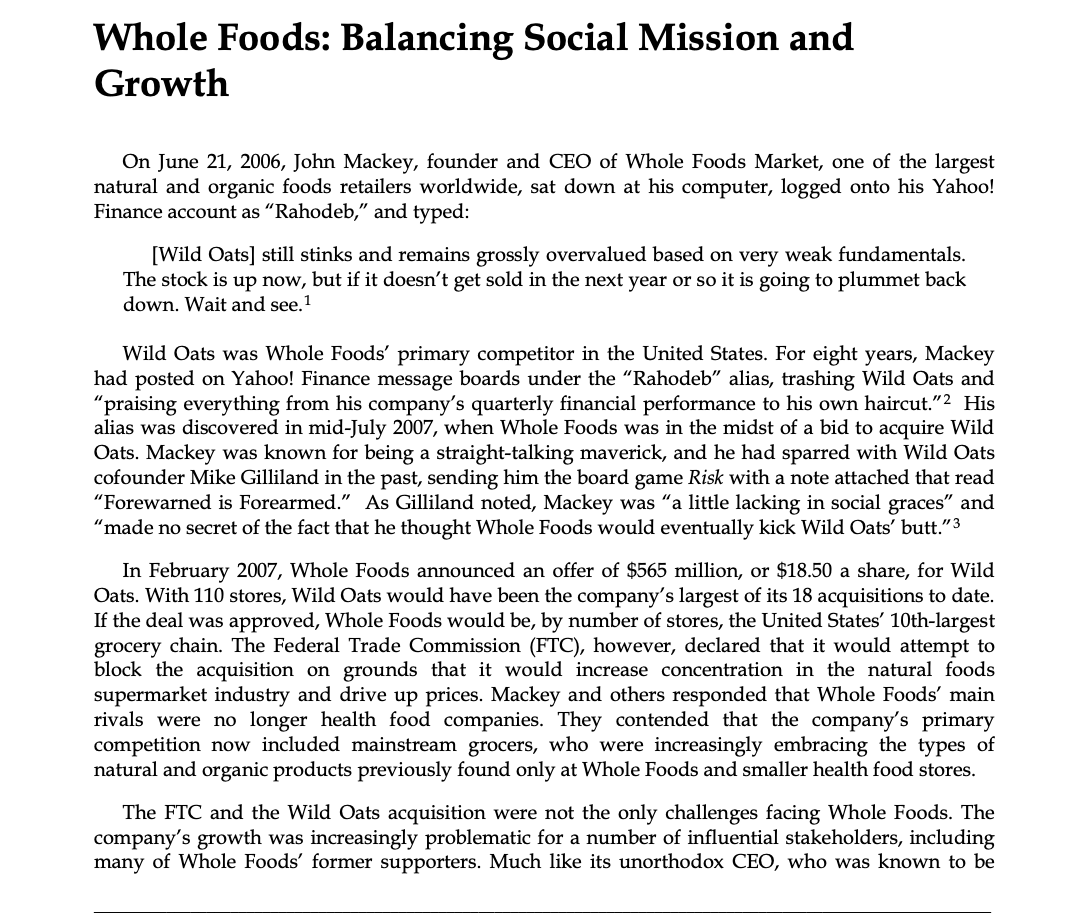
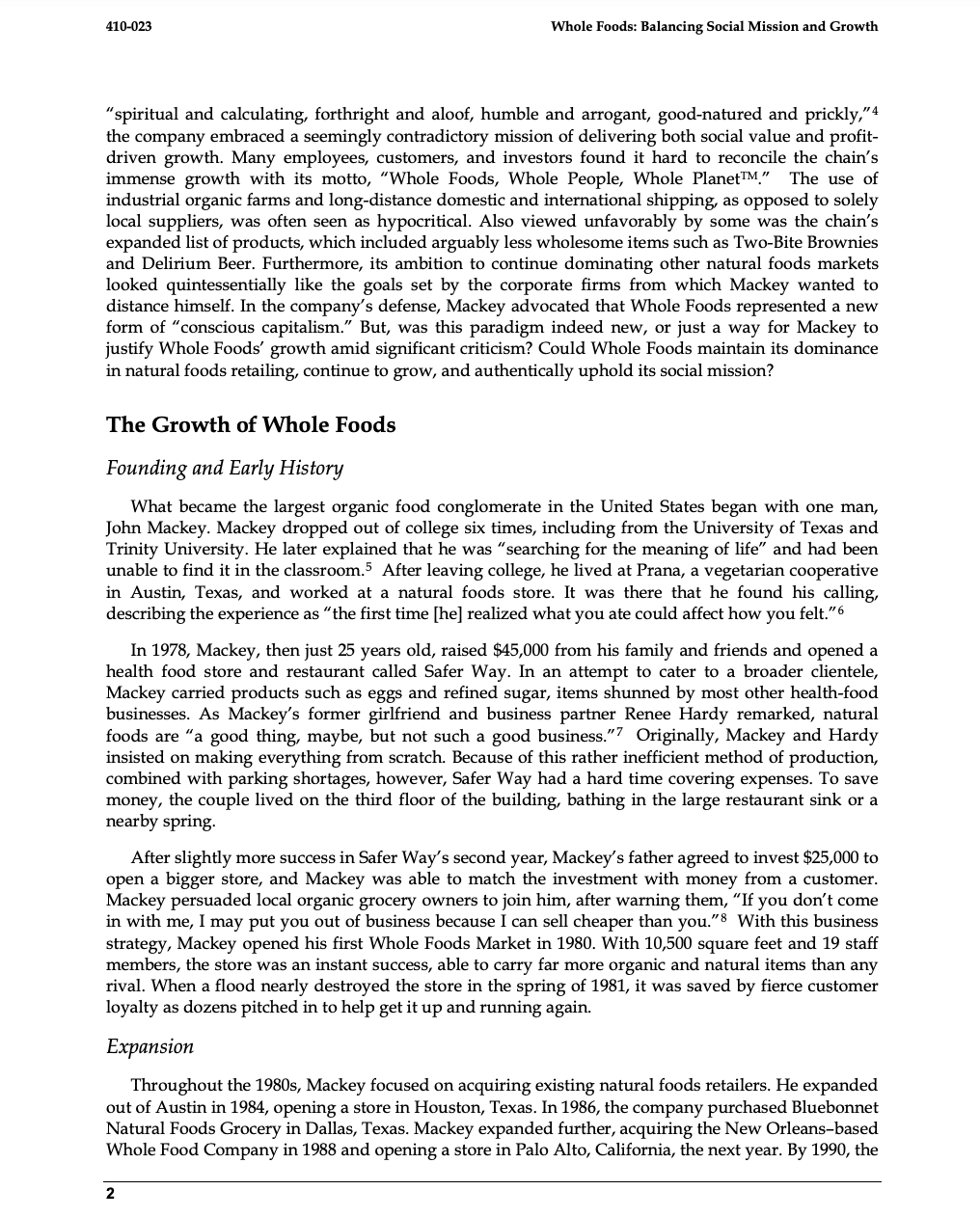
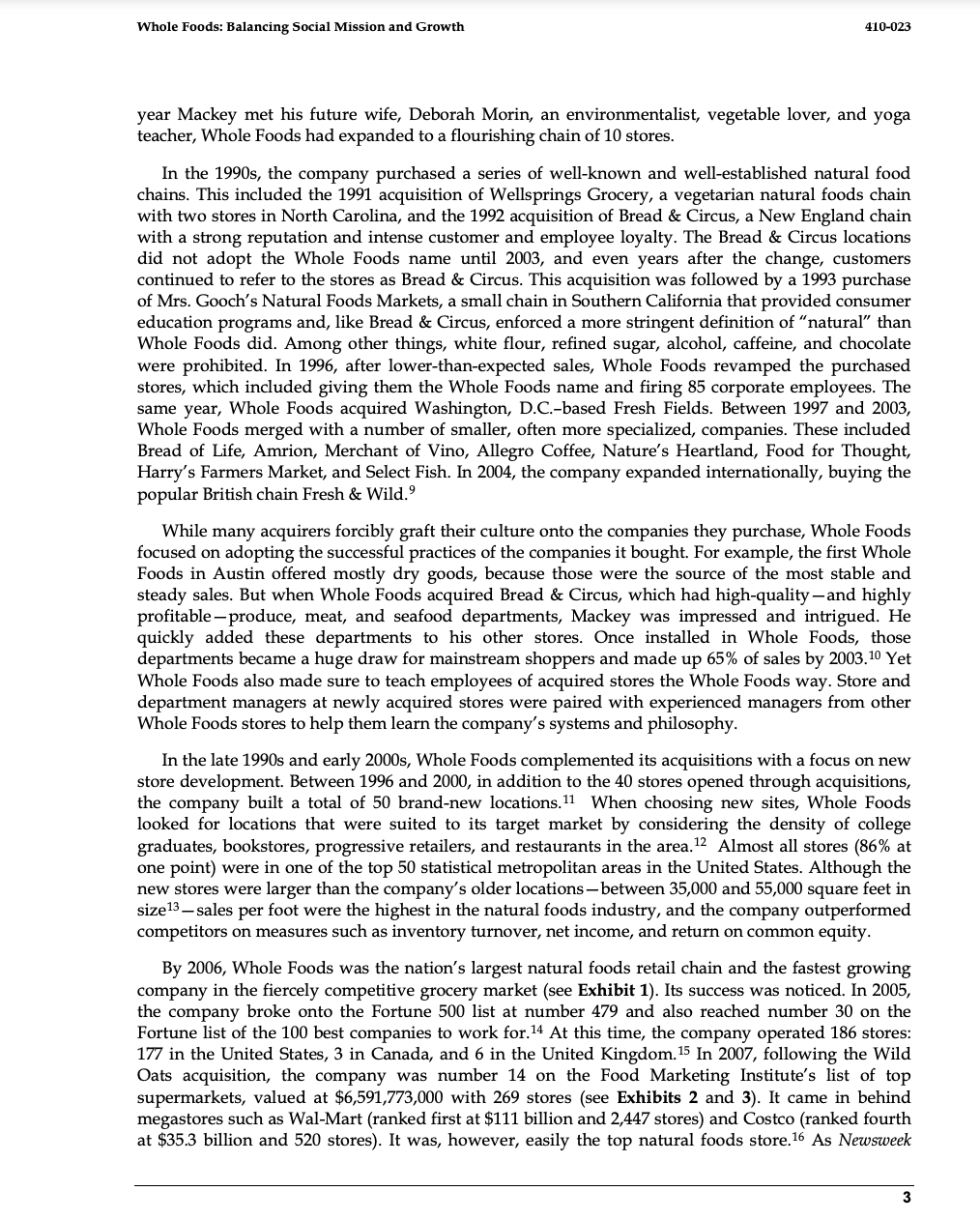
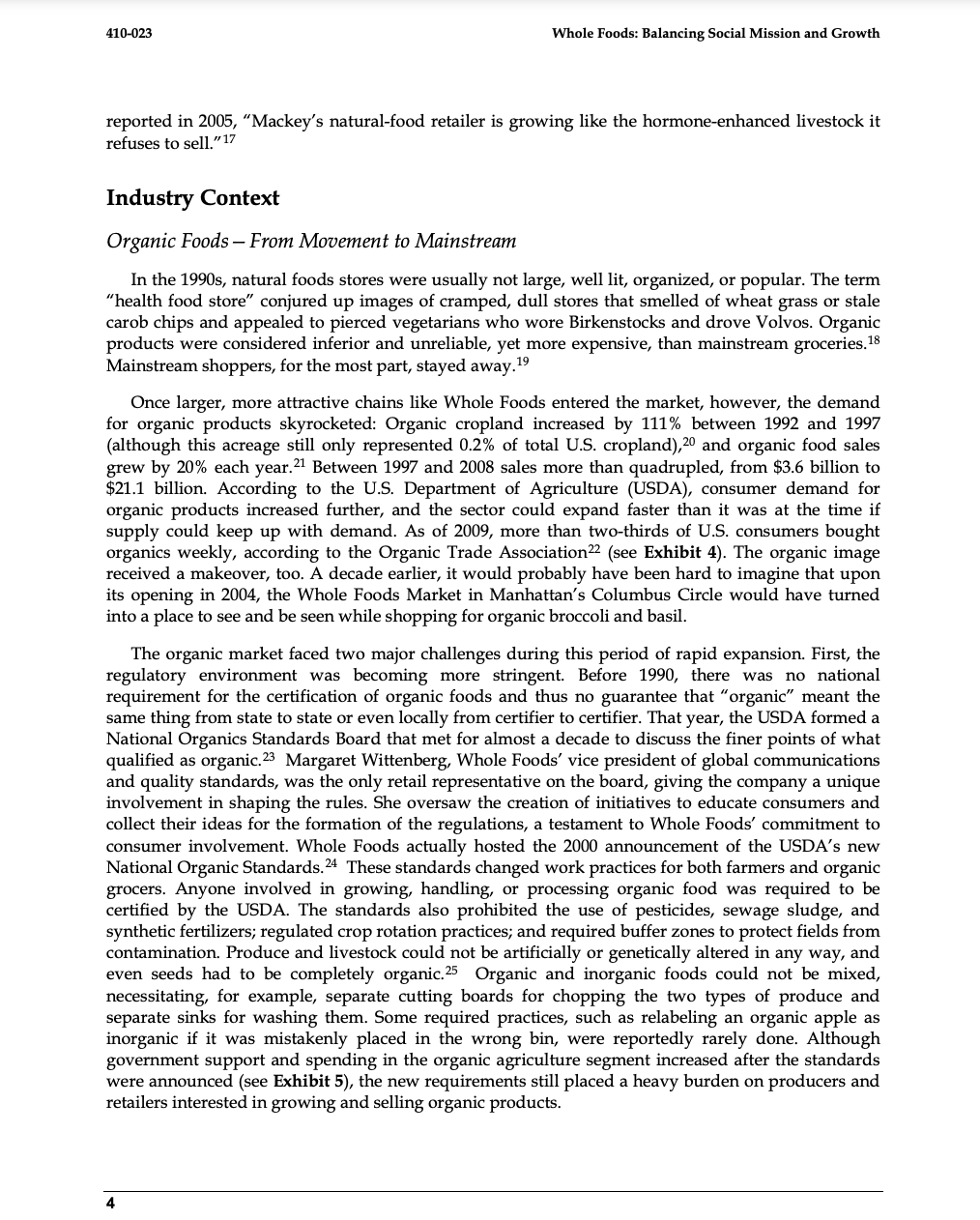
Whole Foods: Balancing Social Mission and Growth On June 21, 2006, John Mackey, founder and CEO of Whole Foods Market, one of the largest natural and organic foods retailers worldwide, sat down at his computer, logged onto his Yahoo! Finance account as "Rahodeb," and typed: [Wild Oats] still stinks and remains grossly overvalued based on very weak fundamentals. The stock is up now, but if it doesn't get sold in the next year or so it is going to plummet back down. Wait and see. 1 Wild Oats was Whole Foods' primary competitor in the United States. For eight years, Mackey had posted on Yahoo! Finance message boards under the "Rahodeb" alias, trashing Wild Oats and "praising everything from his company's quarterly financial performance to his own haircut." 2 His alias was discovered in mid-July 2007, when Whole Foods was in the midst of a bid to acquire Wild Oats. Mackey was known for being a straight-talking maverick, and he had sparred with Wild Oats cofounder Mike Gilliland in the past, sending him the board game Risk with a note attached that read "Forewarned is Forearmed." As Gilliland noted, Mackey was "a little lacking in social graces" and "made no secret of the fact that he thought Whole Foods would eventually kick Wild Oats' butt." 3 In February 2007, Whole Foods announced an offer of $565 million, or $18.50 a share, for Wild Oats. With 110 stores, Wild Oats would have been the company's largest of its 18 acquisitions to date. If the deal was approved, Whole Foods would be, by number of stores, the United States' 10th-largest grocery chain. The Federal Trade Commission (FTC), however, declared that it would attempt to block the acquisition on grounds that it would increase concentration in the natural foods supermarket industry and drive up prices. Mackey and others responded that Whole Foods' main rivals were no longer health food companies. They contended that the company's primary competition now included mainstream grocers, who were increasingly embracing the types of natural and organic products previously found only at Whole Foods and smaller health food stores. The FTC and the Wild Oats acquisition were not the only challenges facing Whole Foods. The company's growth was increasingly problematic for a number of influential stakeholders, including many of Whole Foods' former supporters. Much like its unorthodox CEO, who was known to be "spiritual and calculating, forthright and aloof, humble and arrogant, good-natured and prickly,"4 the company embraced a seemingly contradictory mission of delivering both social value and profitdriven growth. Many employees, customers, and investors found it hard to reconcile the chain's industrial organic farms and long-distance domestic and international shipping, as opposed to solely local suppliers, was often seen as hypocritical. Also viewed unfavorably by some was the chain's expanded list of products, which included arguably less wholesome items such as Two-Bite Brownies and Delirium Beer. Furthermore, its ambition to continue dominating other natural foods markets looked quintessentially like the goals set by the corporate firms from which Mackey wanted to distance himself. In the company's defense, Mackey advocated that Whole Foods represented a new form of "conscious capitalism." But, was this paradigm indeed new, or just a way for Mackey to justify Whole Foods' growth amid significant criticism? Could Whole Foods maintain its dominance in natural foods retailing, continue to grow, and authentically uphold its social mission? The Growth of Whole Foods Founding and Early History What became the largest organic food conglomerate in the United States began with one man, John Mackey. Mackey dropped out of college six times, including from the University of Texas and Trinity University. He later explained that he was "searching for the meaning of life" and had been unable to find it in the classroom. 5 After leaving college, he lived at Prana, a vegetarian cooperative in Austin, Texas, and worked at a natural foods store. It was there that he found his calling, describing the experience as "the first time [he] realized what you ate could affect how you felt." 6 In 1978, Mackey, then just 25 years old, raised $45,000 from his family and friends and opened a health food store and restaurant called Safer Way. In an attempt to cater to a broader clientele, Mackey carried products such as eggs and refined sugar, items shunned by most other health-food businesses. As Mackey's former girlfriend and business partner Renee Hardy remarked, natural foods are "a good thing, maybe, but not such a good business." 7 Originally, Mackey and Hardy insisted on making everything from scratch. Because of this rather inefficient method of production, combined with parking shortages, however, Safer Way had a hard time covering expenses. To save money, the couple lived on the third floor of the building, bathing in the large restaurant sink or a nearby spring. After slightly more success in Safer Way's second year, Mackey's father agreed to invest $25,000 to open a bigger store, and Mackey was able to match the investment with money from a customer. Mackey persuaded local organic grocery owners to join him, after warning them, "If you don't come in with me, I may put you out of business because I can sell cheaper than you." 8 With this business strategy, Mackey opened his first Whole Foods Market in 1980. With 10,500 square feet and 19 staff members, the store was an instant success, able to carry far more organic and natural items than any rival. When a flood nearly destroyed the store in the spring of 1981, it was saved by fierce customer loyalty as dozens pitched in to help get it up and running again. Expansion Throughout the 1980s, Mackey focused on acquiring existing natural foods retailers. He expanded out of Austin in 1984, opening a store in Houston, Texas. In 1986, the company purchased Bluebonnet Natural Foods Grocery in Dallas, Texas. Mackey expanded further, acquiring the New Orleans-based Whole Food Company in 1988 and opening a store in Palo Alto, California, the next year. By 1990, the 2 year Mackey met his future wife, Deborah Morin, an environmentalist, vegetable lover, and yoga teacher, Whole Foods had expanded to a flourishing chain of 10 stores. In the 1990s, the company purchased a series of well-known and well-established natural food chains. This included the 1991 acquisition of Wellsprings Grocery, a vegetarian natural foods chain with two stores in North Carolina, and the 1992 acquisition of Bread \& Circus, a New England chain with a strong reputation and intense customer and employee loyalty. The Bread \& Circus locations did not adopt the Whole Foods name until 2003, and even years after the change, customers continued to refer to the stores as Bread \& Circus. This acquisition was followed by a 1993 purchase of Mrs. Gooch's Natural Foods Markets, a small chain in Southern California that provided consumer education programs and, like Bread \& Circus, enforced a more stringent definition of "natural" than Whole Foods did. Among other things, white flour, refined sugar, alcohol, caffeine, and chocolate were prohibited. In 1996, after lower-than-expected sales, Whole Foods revamped the purchased stores, which included giving them the Whole Foods name and firing 85 corporate employees. The same year, Whole Foods acquired Washington, D.C.-based Fresh Fields. Between 1997 and 2003, Whole Foods merged with a number of smaller, often more specialized, companies. These included Bread of Life, Amrion, Merchant of Vino, Allegro Coffee, Nature's Heartland, Food for Thought, Harry's Farmers Market, and Select Fish. In 2004, the company expanded internationally, buying the popular British chain Fresh \& Wild. 9 While many acquirers forcibly graft their culture onto the companies they purchase, Whole Foods focused on adopting the successful practices of the companies it bought. For example, the first Whole Foods in Austin offered mostly dry goods, because those were the source of the most stable and steady sales. But when Whole Foods acquired Bread \& Circus, which had high-quality - and highly profitable-produce, meat, and seafood departments, Mackey was impressed and intrigued. He quickly added these departments to his other stores. Once installed in Whole Foods, those departments became a huge draw for mainstream shoppers and made up 65% of sales by 2003.10 Yet Whole Foods also made sure to teach employees of acquired stores the Whole Foods way. Store and department managers at newly acquired stores were paired with experienced managers from other Whole Foods stores to help them learn the company's systems and philosophy. In the late 1990s and early 2000s, Whole Foods complemented its acquisitions with a focus on new store development. Between 1996 and 2000, in addition to the 40 stores opened through acquisitions, the company built a total of 50 brand-new locations. 11 When choosing new sites, Whole Foods looked for locations that were suited to its target market by considering the density of college graduates, bookstores, progressive retailers, and restaurants in the area. 12 Almost all stores ( 86% at one point) were in one of the top 50 statistical metropolitan areas in the United States. Although the new stores were larger than the company's older locations-between 35,000 and 55,000 square feet in size 13 - sales per foot were the highest in the natural foods industry, and the company outperformed competitors on measures such as inventory turnover, net income, and return on common equity. By 2006, Whole Foods was the nation's largest natural foods retail chain and the fastest growing company in the fiercely competitive grocery market (see Exhibit 1). Its success was noticed. In 2005, the company broke onto the Fortune 500 list at number 479 and also reached number 30 on the Fortune list of the 100 best companies to work for. 14 At this time, the company operated 186 stores: 177 in the United States, 3 in Canada, and 6 in the United Kingdom. 15 In 2007, following the Wild Oats acquisition, the company was number 14 on the Food Marketing Institute's list of top supermarkets, valued at \$6,591,773,000 with 269 stores (see Exhibits 2 and 3). It came in behind megastores such as Wal-Mart (ranked first at $111 billion and 2,447 stores) and Costco (ranked fourth at $35.3 billion and 520 stores). It was, however, easily the top natural foods store. 16 As Newsweek 410023 Whole Foods: Balancing Social Mission and Growth reported in 2005, "Mackey's natural-food retailer is growing like the hormone-enhanced livestock it refuses to sell."17 Industry Context Organic Foods - From Movement to Mainstream In the 1990s, natural foods stores were usually not large, well lit, organized, or popular. The term "health food store" conjured up images of cramped, dull stores that smelled of wheat grass or stale carob chips and appealed to pierced vegetarians who wore Birkenstocks and drove Volvos. Organic products were considered inferior and unreliable, yet more expensive, than mainstream groceries. 18 Mainstream shoppers, for the most part, stayed away. 19 Once larger, more attractive chains like Whole Foods entered the market, however, the demand for organic products skyrocketed: Organic cropland increased by 111% between 1992 and 1997 (although this acreage still only represented 0.2% of total U.S. cropland), 20 and organic food sales grew by 20% each year. 21 Between 1997 and 2008 sales more than quadrupled, from $3.6 billion to $21.1 billion. According to the U.S. Department of Agriculture (USDA), consumer demand for organic products increased further, and the sector could expand faster than it was at the time if supply could keep up with demand. As of 2009, more than two-thirds of U.S. consumers bought organics weekly, according to the Organic Trade Association 22 (see Exhibit 4). The organic image received a makeover, too. A decade earlier, it would probably have been hard to imagine that upon its opening in 2004, the Whole Foods Market in Manhattan's Columbus Circle would have turned into a place to see and be seen while shopping for organic broccoli and basil. The organic market faced two major challenges during this period of rapid expansion. First, the regulatory environment was becoming more stringent. Before 1990, there was no national requirement for the certification of organic foods and thus no guarantee that "organic" meant the same thing from state to state or even locally from certifier to certifier. That year, the USDA formed a National Organics Standards Board that met for almost a decade to discuss the finer points of what qualified as organic. 23 Margaret Wittenberg, Whole Foods' vice president of global communications and quality standards, was the only retail representative on the board, giving the company a unique involvement in shaping the rules. She oversaw the creation of initiatives to educate consumers and collect their ideas for the formation of the regulations, a testament to Whole Foods' commitment to consumer involvement. Whole Foods actually hosted the 2000 announcement of the USDA's new National Organic Standards. 24 These standards changed work practices for both farmers and organic grocers. Anyone involved in growing, handling, or processing organic food was required to be certified by the USDA. The standards also prohibited the use of pesticides, sewage sludge, and synthetic fertilizers; regulated crop rotation practices; and required buffer zones to protect fields from contamination. Produce and livestock could not be artificially or genetically altered in any way, and even seeds had to be completely organic. 25 Organic and inorganic foods could not be mixed, necessitating, for example, separate cutting boards for chopping the two types of produce and separate sinks for washing them. Some required practices, such as relabeling an organic apple as inorganic if it was mistakenly placed in the wrong bin, were reportedly rarely done. Although government support and spending in the organic agriculture segment increased after the standards were announced (see Exhibit 5), the new requirements still placed a heavy burden on producers and retailers interested in growing and selling organic products. Whole Foods: Balancing Social Mission and Growth 410-023 The organic industry's second challenge involved distribution. Because it was inefficient for farmers and other small producers to deal personally with large retail chains or to personally transport their goods to stores, producers typically sold to distributors rather than directly to retail outlets. In 2002, about two-thirds of organic products were sold through distributor warehouses in the U.S. The distribution market was highly concentrated, after years of consolidation through bankruptcies and acquisitions. By 2003, just two players, United Natural Foods (UNF) and Tree of Life, handled about 80% of the U.S. organic market. UNF alone sold 30,000 different products a year, and posted over $3.3 billion in sales in 2008. Whole Foods was UNF's biggest buyer. Only organic produce was still handled exclusively by regional rather than national distributors. While conventional produce was treated with pesticides, organic produce was pesticide free and therefore much more perishable. This made even regional distribution somewhat of a challenge. 26 Competition Mackey wanted Whole Foods to be more than a supermarket; he wanted it to be a transformative shopping experience. "Shopping for groceries for most people is like a chore," he explained. "It's like doing the laundry or taking out the garbage. [But Whole Foods strives] to make shopping engaging, fun and interactive. Most Americans are in a kind of eating rut." 27 By offering natural versions of popular, conventional foods, and by having attractive, exciting layouts, Whole Foods stores attracted mainstream customers and helped to popularize the natural foods industry. 28 Eventually, competition came from three sources: lower cost alternative markets, conventional supermarkets, and small sellers such as co-ops and farmers' markets. The primary competitor among the alternative markets was Trader Joe's, a company that made low prices the center of its strategy. 29 Joseph Coulombe founded Trader Joe's in 1967 in the midst of two social trends: rising levels of sophistication and education, and a boom in international travel, due to the advent of jumbo jets and discount airfares. Coulombe figured that these well-educated and well-traveled people would have been exposed to exotic, exciting foods and would be ready to impress their neighbors and friends with their newly acquired palates. 30 In 1979 , the company was purchased by the Albrecht family, whose other holdings included the discount giant Aldi. 31 Trader Joe's, affectionately referred to as TJ's by loyal customers, adopted a "less is more" philosophy. The cozy and sometimes cramped stores averaged 7,500 to 10,000 square feet-much smaller than most supermarkets - and they usually carried 2,500 products, as opposed to 25,000 at a conventional supermarket. Trader Joe's aimed to stock only those products that it could buy and sell at competitive prices. This meant that the selection changed from week to week, and the store did not carry many staples, like flour and sugar, which shoppers often expected at a grocery store. The priority placed on competitive pricing was part of why Trader Joe's was not an explicit provider of organic foods. As vice president of marketing at the East Coast headquarters, Audrey Dumper, told the New York Times, "We don't have a dictate saying we only have organic meats, but if we can get it organic at a great price, we're happy as little clams about it." 32 To attract frugal food lovers (who often referred to themselves as "foodies"), Trader Joe's used low-price suppliers; by 2003, about 80% of its products were private label, 33 including Trader Joe's, Trader Jacques', Trader Jose, Baker Josef, and Trader Giotto's. The unique personality of this chain was not just on their sassy labels: each location was decorated in a Polynesian theme and staffed with employees who wore Hawaiian shirts and had a reputation for sharing their recommendations and preferences. The store's loyal clientele overlapped with many of the circles that flocked to Whole Foods: foodies, intellectuals, and health nuts. But while Trader Joe's emphasized low prices, Whole Foods 410023 Whole Foods: Balancing Social Mission and Growth had earned the nickname "Whole Paycheck." So the possibility that this Polynesian-themed grocery store would eat a chunk of Whole Foods' market was clear, and Mackey himself had singled out Trader Joe's as a particularly strong competitor. 34 The chain posted sales of $4.5 billion in 2005, closing in on Whole Foods, with sales of $4.7 billion. 35 Additionally, in Trader Joe's smaller store space, annual revenue was $1,440 per square foot, compared with $783 at Whole Foods and $600 at the average conventional grocery store. 36 Whole Foods eventually responded to the threat from Trader Joe's. In 2006, the company ran a 12-week full-page advertising campaign in the New York Times that attempted to dispel the "Whole Paycheck" image with the slogan, "More of the good stuff. For less than you think." 37 Whole Foods also introduced its own private-label brands, such as 365 Organic Everyday Value TM.38 Even with these measures, however, same-store sales growth in 2007 was under 8%, down from 11% in 2006 and from its 2004 peak of 14.9%39 The competitive landscape also changed with the arrival of organic products in conventional supermarkets. With rising consumer demand, many chains that had once ignored natural foods began offering them. Safeway, one of the nation's largest supermarket chains with 1,775 stores, had created almost 500 "Lifestyle" stores nationwide by the end of 2005 . These stores offered 600 organic items as well as a sushi bar and a hot-roasted-nut bar. 40 In 2006, retail giant Wal-Mart announced that it would double its organic product offerings, making it a direct competitor of Whole Foods. A few years earlier, other chains such as The Kroger Co., Hannaford, Shaw's, and SuperTarget secured organic certification from the government. 41 These competitors were acutely tuned into the buzzwords that consumers associated, and perhaps confused, with organic. For example, in 2008, Wal-Mart announced a commitment to purchase and sell $400 million worth of produce grown by local farmers. Wal-Mart defined "locally grown" as anything farmed within a state's boundary; the term did not necessarily denote organic. 42 Moreover, like Trader Joe's, Wal-Mart and other conventional supermarkets advertised bargain prices that were likely to appeal to customers who might regard Whole Foods as an expensive place to shop. 43 Yet Mackey was quick to dismiss competition from these conventional stores. "[Customers] don't really want to buy [health foods] at Safeway," he said. "They want to make a statement about who they are by where they shop." 44 Whole Foods also faced pressure from the persistence of smaller competitors. Farmers' markets grew in number substantially while Whole Foods expanded, from 1,755 in 1994 to 4,685 in 200845 (see Exhibit 6). Many consumers viewed these produce stands as more appealing than Whole Foods because products were bought directly from local farmers rather than through distribution centers, and the produce was often fresher as a result. Natural foods cooperatives, organizations of any number of members and owners who bought food together to form a warehouse, represented another form of small-scale competition. In 2008, there were over 400 such co-ops in the United States. 46 Implementing the Whole Foods Mission John Mackey's Mission and the Declaration of Interdependence CEO John Mackey was known for, among other things, his casual personal style, avid book reading, and sponsorship of a unique workplace environment. Employees described the diverse workforce as fun, friendly, and accepting. One of Mackey's primary goals was "to help create an organization which manifests love, joy, and happiness." In the employee handbook, he declared, "Just as we are dedicated to providing excellent products and services to our customers, we are also dedicated to creating a positive, productive, and enjoyable work environment." 47 To this end, employees were encouraged to think of themselves as "team members" and to take an active role in 6 Whole Foods: Balancing Social Mission and Growth store operations and policy. As Mackey explained, "Our leadership is decentralized. Each store is divided into teams, and team members are like people in a band within a tribe-they are empowered to do what needs to get done. They don't waste time waiting for the chief back at headquarters to give them orders." 48 In 1985, Mackey and a group of 60 team members developed the "Declaration of Interdependence," a document that articulated five core values for the company. 49 (The Declaration was modified in 1988, 1992, and 1997.) The first of these values was to "sell the highest quality natural and organic products available." This meant not only having high standards for quality but also being "inclusive and open minded, and not overly restrictive or dogmatic" about what products the company was willing to sell. The second core value was to "satisfy and delight .. customers." Customers were declared the company's most important stakeholder and the motivation for the business. To this end, the company made stores exciting, educational, and inclusive. Third, the declaration vowed to "support team member excellence and happiness." This included providing fair wages and benefits, building trust between team members, and valuing diversity. The fourth value was to "create wealth through profits and growth." Yet the company intended to grow only at a pace at which productivity and customer satisfaction would remain high. Finally, the company promised to "support . . communities and encourage local involvement," including donating 5% of after-tax profits to nonprofit organizations, and to "promote environmental stewardship" by supporting sustainable agriculture, reducing waste, and encouraging environmentally friendly store maintenance programs. The declaration also acknowledged the company's other stakeholders and trade partners, describing them as allies and calling for relationships of respect and fairness. Focusing on Food Quality Whole Foods' primary focus was, of course, on the food itself. This was reflected in the company's mission to "promote the vitality and well-being of all individuals by supplying the highest quality, most wholesome foods available." 50 To this end, Whole Foods had a set of "Quality Standards" that it promised to maintain. These standards represented the company's definition of "natural," and they regulated which ingredients could (and could not) be used in products sold at Whole Foods stores. For example, the Quality Standards prohibited foods with artificial colorings, flavorings, sweeteners, preservatives, trans fats, or hydrogenated oils. 51 At the same time, Whole Foods strove to offer a large variety of foods, enabling people to use its stores for one-stop food shopping, as one would use a conventional supermarket. The emphasis on food was evident throughout the company's stores. At the flagship store in Austin, Texas, for example, the meat cases had special lights that gave the store "an otherworldly glow." 52 Expansive la carte sections and heaping produce displays added to each store's attractiveness. Additionally, pamphlets and signs explained concepts such as sustainable, free range, and certified organic, attempting to educate customers and make them feel comfortable with their purchases. 53 Storyboards were hung above produce bins with personal anecdotes and colorful pictures of local farmers and their offerings. Some "high mission valence" employees and customers - people who were strongly attached to the mission of providing only the highest quality natural and organic foods - protested that the quality standards at Whole Foods decreased as the company grew. 54 They believed the company had become less strict about what ingredients were permitted, and they noted that the company had started stocking sugary snacks, beer and wine, specialty cheeses and chocolates, and other items that may have met the technical requirements of the Quality Standards but violated their spirit. Yet while 7 410023 Whole Foods: Balancing Social Mission and Growth these changes may have cost Whole Foods the loyalty of a small group of employees and customers, the expanded selection opened the door to a much larger group of consumers. Management of Stores and Labor Relations Each Whole Foods store employed between 40 and 650 employees, known as "team members," organized into self-directed teams. 55 A prospective team member was allowed to apply to any one of up to 13 teams. Existing team members interviewed and voted on potential colleagues, and positions were filled only after a two-thirds vote of the workers in a department. Team members were chosen and trained for knowledgeable, friendly service, and they regularly participated in operational decisions, having the power to decide what products to stock in their section. 56 Teams also elected representatives to an advisory group and were encouraged to share thoughts and concerns with store managers and regional executives. This participative approach seemed to generate high morale among Whole Foods employees. In 1997, an employee survey showed that 82% of workers surveyed (about half of Whole Foods employees) reported enjoying their work. 57 However, not all was warm and fuzzy between teams. The company made available detailed information on the performance of each department on a product-by-product basis. Each team received a daily report that measured sales, product costs, and operating profits. They also received comparative data on how their team measured up to other teams within their store and other stores within their region (usually 20 or more stores). This information was reviewed in public, including at bimonthly manager meetings when department managers were asked to account for their performance and explain any variance relative to budget and to past periods. As a result, teams could be highly competitive and intensely focused on financial performance. Financial performance data was also used as a basis for compensation. Store team leaders were eligible for an economic valueadded bonus based on the extent to which the store delivered a higher return than the corporate cost of capital. At the team level, productivity was evaluated monthly and those with the best performance shared in the company's profits, 58 a practice known as "gainsharing." Teams were eligible for a gainsharing payout if they spent less on labor than they had budgeted for a given period. Yet employees attested that as budgets got tighter and tighter, gainsharing became less frequent. Whole Foods' open-book policy extended to morale and compensation data as well. Employees had access to compensation information for every company employee, including the CEO. 59 Executive salaries were capped at 19 times the pay of an average employee (up from 8 when the cap was first instituted), and Mackey permanently reduced his own annual salary to $1 in 2007.60 Results of the company's annual morale survey were published in its annual reports. 61 The open-book policy fostered competition within and between stores. While some employees believed that this competition lowered overall store cooperation, Mackey defended it. "If you're trying to create a high-trust organization, an organization where people are all-for-one and one-forall, you can't have secrets," he explained. 62 "In most companies, management controls information and therefore controls people. By sharing information, we stay aligned to the vision of shared fate." 63 In addition to participative, open-book management, another important element of Mackey's vision was that each employee would be committed to working for the company's mission. In reality, though, there was variation in the extent to which employees actually cared about this mission. 64 While a strong core of high mission valence employees could be found at each store, Whole Foods appealed to workers for a variety of reasons beyond its commitment to natural and organic foods. In urban areas, many employees were recent immigrants attracted to the company because it offered 8 full-time jobs with health insurance and other benefits that were particularly generous in comparison with most conventional supermarket positions, which were usually part time and offered no benefits. In suburban areas, employees included high school students or graduates who did not necessarily know much about the company's social mission, but wanted a steady part- or full-time job close to home. The company also attracted a number of employees who had previously worked in conventional supermarkets. Indeed, these employees were pivotal in helping the company to grow, as they had operational expertise that some of the dedicated natural foodies lacked. The conventional supermarket hires often found the company's approach to labor relations quite appealing, but they tended to be less familiar with the company's commitment to natural foods, at least initially. A staunch libertarian and capitalist, Mackey was an opponent of labor unions. He believed that very few of his "team members" would want to join a union, given how well they were treated at Whole Foods. Employee satisfaction and unity was ensured under the company's Declaration of Interdependence, he argued. 65 Over the years, the company had had several tussles with union organizers. The first conflict occurred in 1990, when Whole Foods acquired a co-op in Berkeley, California, and was picketed by the United Food and Commercial Workers local. 66 In 1998, Whole Foods failed to honor a United Farm Workers' grape boycott at its Austin store and had union picketers arrested. But as of 2008, only one Whole Foods store-in Madison, Wisconsin-had successfully unionized. The company attributed this to problems with the store's manager, who was subsequently removed. Whole Foods undertook a number of measures to give back to the communities in which it operated. Team members were paid for up to 20 hours per year of community service. 67 Some employees noted that very few people took advantage of this policy, but for the most part employees viewed the policy as a signal that the company genuinely cared about its employees and the local communities in which it had stores. There were also "five-percent days" when 5% of sales were donated to a local charity. 68 In addition, 5% of after-tax company profits was donated to charity each year. 69 Each store was able to select the charity to which it contributed. Finally, methods for reducing the amount of virgin material used and toxic waste produced were implemented whenever possible. 70 Whole Foods was the first retailer to build a supermarket that met the environmental standards of the LEED (Leadership in Energy and Environmental Design) Green Building Rating System. 71 External organizations acknowledged and applauded Whole Foods' efforts. The company made the Forbes "100 Best Companies to Work For" list every year from 1998 to 2009 . Whole Foods was also awarded the EPA Green Power Leadership Award in 2004 and 2005 and the Partner of the Year award in 2006 and 2007, and was a member of the Green Power Leadership Club. Additionally, in 2009, Whole Foods won a first annual Green Choice Award from Natural Health magazine for its earth-friendly initiatives and the "Socially Responsible Retailer Award" from the Natural Products Association. Logistics and Distribution While decision making, managing, and profit sharing were highly decentralized, logistics and distribution were becoming increasingly centralized. As Whole Foods grew, the company moved away from local, customized distribution facilities and systems, opting for regional and national standards, procedures, and centers. Fresh produce presented the greatest challenge to centralized distribution, due to its limited shelf life and the costliness of spoilage. At first, the company leased space from regional distributors. Then, in the early 2000 s, the company started building its own stateof-the art distribution centers. The descriptions of these centers were impressive; they were designed to service 50 to 60 stores, be organically certified, and built with specific areas for dry goods, a variety of freezer spaces, including one for vegetables and another for meat and seafood, and space for tropical products, as well as rooms for video conferencing. 72 In 2003, the company built its own seafood distribution facility in order to control the quality of products from boat to shopping cart. 73 By 2005, the company's centralized facilities included 10 regional distribution centers in the U.S. and the U.K., three seafood processing and distribution centers, a specialty coffee operation, five regional commissaries, 12 bake-houses, and a national meat purchasing office. That year, United National Foods (UNF) was the company's largest third-party distributor, accounting for around 22% of total purchases. 74 In 2006, the two signed a seven-year primary distribution agreement, which stated that UNF would continue to serve as the primary distributor in regions where it already served as such. 75 Concerned that workers would feel disenfranchised and that stakeholders would see this as a cold-hearted, corporate decision, Whole Foods developed a policy to allow stores to select at least 10% of their products without national approval, as long as those sources met the company's Quality Standards. 76 Still, there were often trade-offs between the company's ethical ideals and consumers' desires. For example, Jason Duran, produce team leader for the chain's Southwest region, explained that while he believed that people in northern climates shouldn't eat grapes in December, he didn't feel it was Whole Foods' prerogative to stop them. 77 The company did not want to be seen as "Holy Foods" and, as a result, was willing to fly in seasonal items, such as grapes or asparagus, as well as international products, such as Italian sparkling water, to satisfy customer demand. Nonetheless, Whole Foods was working hard to address the complaints over the miles that its food traveled. The Local Producer Loan Program was a prime example of these efforts. The program began in 2006 and awarded its first loan in 2007. The purpose was to provide loans to small, local producers who would have otherwise had a difficult time getting their products onto Whole Foods' shelves. Interest rates ranged from 5% to 9%, with an average of approximately 6%. Unlike traditional loans, there were no closing fees, no fees for repaying the loan early, and no application fees. The maximum loan amount was $100,000, and there was no minimum. According to the program administrator, Jenny Brown, Whole Foods was committed to funding up to $10 million through the program. Loan recipients had to meet Whole Foods' Quality Standards, use the funds for expansion, and have a viable business plan. As of June 2009, 40 recipients had received these low-interest loans. 78 Laughing Girafee Organics, based in Phoenix, Arizona, for instance, planned to use its loan to purchase new equipment and expand its offering of raw, vegan, gluten-free macaroons and granola. Full Circle farms in Colorado, a long-time Whole Foods supplier, intended to use the funds to build a refrigerated produce-packing room and a concrete loading area with new material-handling equipment. 79 Challenges of Growth Since going public in 1992, Whole Foods' stock had returned more than 2,700\%. But in order to maintain such growth and also fulfill its social mission, the company needed to address two issues. The first involved the perceived authenticity of the social mission in a changing marketplace. The second was the supply of suitable acquisition candidates to continue the upward growth trend. Increasing Resistance to "Industrial Organic" Whole Foods in the 21st century provided idealists with an unusual dilemma. The company had unquestionably brought the organic movement to millions of consumers, introducing a vision and a 10 Whole Foods: Balancing Social Mission and Growth 410-023 lifestyle to mainstream America. In doing so, however, it had adopted practices that proved problematic for many of its erstwhile supporters. As the company grew, it faced mounting criticism from customers and employees. Critics labeled the company "corporate organic," and a headline in the New York Times asked, "Is Whole Foods Straying from Its Roots?"80 Some employees believed that the company had become too big and viewed its scale as inconsistent with its social mission. Their cynicism grew as the company did. In addition, employees, customers, and critics who viewed the store's all-natural mission as part of a social and political agenda or who held a romanticized ideal of the small, local farmer as the prototypical organic supplier increasingly felt that their priorities were inconsistent with Mackey's opposition to unions, the size and decadence of new stores, and the company's use of large-scale suppliers. This last issue, the rise of the industrial organic farm, was the most controversial. In a 2006 book called The Omnivore's Dilemma, Michael Pollan, an influential critique of America's food system, took Whole Foods and businesses like it to task for contributing to the rise of industrial organic farms. "The word organic has been stretched and twisted to admit the very sort of industrial practices for which it once offered a critique and alternative," he wrote. 81 Pollan noted that Whole Foods purchased from natural foods farming giants such as Earthbound Farm and Cascadian Farm, a subsidiary of General Mills, and he accused the company of ignoring the locally focused, sustainable values that it supposedly extolled. According to Pollan, while these large-scale operations did adhere to the organic standards outlined by the U.S. government, they did not match the image of a small, local farm that many shoppers thought they were supporting when buying organic produce. 82 Instead, Pollan argued, industrialized organic farms replicated many troublesome elements of the nonorganic food supply, including shipping products over long distances, prepackaging food, and operating through large distribution networks. According to Cornell ecologist David Pimental, it took 57 calories of fuel energy per every 1 calorie of produce to ship an organic salad from California to the East Coast. 83 Mackey and others had answers to Pollan's criticisms. Mackey defended the company in an open letter to Pollan. He explained the company's reliance on its regional distribution centers as an irreplaceable means of meeting consumer demand: 84 Regional distribution helps suppliers gain access to all stores within the region, a benefit to their bottom line that otherwise would not occur in a conventional grocery operation. Whole Foods Market continues to build distribution centers, which increases our ability to support regional and local production. Our individual stores are not prohibited from purchasing from local farmers, and, in fact, all of our 184 stores purchase regularly from local growers. 85 And Mackey noted that while 22% of the company's top produce suppliers were corporate farms in 2005, 78% were independent or family run. 86He also countered claims that he was selling out. "America has a romance with small businesses. And it has mistrust of the large businesses," he wrote. "Whole Foods is out to prove that wrong. I don't see any inherent reason why corporations cannot be just as caring and responsible as small businesses." 87 Further, Mackey pointed out that his company was in large part responsible for the increased demand for organics: Whole Foods Market has supported the growth of, and driven significant demand for, organic agriculture for more than 27 years. Throughout this time Whole Foods Market stores have supported local growers and food producers in store market areas. Because of our unique, mission-driven business model, our success has allowed expansion throughout the hemisphere and into Europe, where we can offer healthy and environmentally sustainable 11 410-023 Whole Foods: Balancing Social Mission and Growth food options to an ever increasing customer base in store environments that celebrate good food and an abundance of choice. 88 In addition to the rhetoric, Mackey had announced several initiatives since 2006 to counter Pollan's critiques. These included farmers' markets that would be held in the parking lots of Whole Foods stores, loans to local farmers, and the establishment of a "local forager" in each region whose job it would be to seek out locally produced items and promote them in the stores. In August 2009, Mackey announced a plan for his stores to return to their roots and to put more emphasis on healthy eating. "We sell a bunch of junk," Mackey told the Wall Street Journal. "We' ve decided if Whole Foods doesn't take a leadership role in educating people about a healthy diet, who the heck is going to do it?" ?8 Acquiring Wild Oats On February 21, 2007, Whole Foods announced plans to buy one of its biggest rivals, Wild Oats, for $565 million. 90 Wild Oats, a natural foods grocery company founded in 1987 in Boulder, Colorado, had a strong presence in markets where Whole Foods was less established: the Pacific Northwest, the Rocky Mountain region, and Florida. 91 As the second-largest natural foods supermarket in the nation, Wild Oats would have added 110 units to the Whole Foods chain, which, at that point, had 193 stores. Mackey maintained that the merger - the 18th in the chain's history would bolster the company's position in an increasingly competitive market. "We need each other," he said. 92 The acquisition faced a number of challenges. First, it came at a time when the company was already struggling financially. Financial performance had deteriorated in 2006, with shares plummeting 30% even as the company lowered prices and offered more of its higher-margin prepared foods. 93 The FTC attempted to stop the acquisition, fearful of the organic supermarket industry being monopolized by Whole Foods. At one point Mackey himself even told his board of directors, "By buying [Wild Oats] we will ... avoid nasty price wars in cities which will harm our gross margins and profitability .... That is one of the reasons we are willing to pay $18.50 [per share] for a company that has lost $60 million in the last six years." 94As mentioned above, however, Mackey also claimed that Whole Foods competed primarily with nonorganic supermarkets rather than just other natural foods companies. In August 2007, the district court decided that "the FTC [had] not met its burden to prove that 'premium natural and organic supermarkets' is the relevant product market in this case for antitrust purposes," 95 clearing the way for the acquisition to close later that month. This ruling, however, was not the end of Whole Foods' struggle to digest Wild Oats. In March 2009, the FTC challenged again, this time more successfully. Whole Foods and the FTC finally reached a settlement on March 6, 2009, after more than two years of legal sparring. Whole Foods was forced to divest itself of 31 Wild Oats stores-19 that had been closed and 12 that were still operating - and it also lost one Whole Foods store. In addition, the company agreed to divest its right to the Wild Oats intellectual property, including the brand. But the Wild Oats stores would not necessarily be sold to a major chain, and there was no guarantee that the buyer of the Wild Oats brand name would be a substantial threat. For Whole Foods, then, the potential of a future competitor emerging from this transaction was a small yet lingering concern. A larger concern was the reaction of the investment community and the broader public to the company's drop in profits and stock price that resulted in part from high merger integration costs. 96 In 2008, Whole Foods slipped from double-digit profit growth due to the costs associated with opening new stores, cutting jobs at Wild Oats stores, and increasing compensation and training for 12 those Wild Oats employees who transitioned to Whole Foods. For example, in the quarter ended April 13, 2008, profits fell 13% to $40.0 million, or 29 cents per share, a penny below the consensus estimate of analysts polled by Thomson Financial. 97 The company also cut back on its expansion plans and thus did not open as many stores in 2009 as it had planned. 98 Another public relations concern was the Wild Oats jobs that were cut: at Wild Oats headquarters more than 100 people were laid off, and only a few dozen were hired to fill regional positions at Whole Foods. 99 Whole Foods Looking Forward: Growth and Social Value? Many of Whole Foods' critics remain unsatisfied and continue questioning the intentions of its management. In headlines, online magazine Slate asked, "Is Whole Foods Wholesome?" while The New Yorker stated its conclusion more bluntly in the title of its 2006 feature article: "Paradise Sold." The New Yorker article went on to explain that for many, the "history [of organic farming] is a story of paradise lost-or, worse, sold-in which cherished ideals have simply become part of the sales pitch."100 But while such onlookers observed a tension between financial growth and social value, Mackey saw a synergy. According to the Whole Foods CEO, this synergy could exist within a new paradigm he called "conscious capitalism." Mackey described this system as based on the pursuit of a deeper purpose beyond making profits, and on an acknowledgment of the interdependencies among all the major stakeholder groups-customers, employees, investors, suppliers, communities, and the natural environment. Mackey saw a harmony of interests between these parties and believed that by working together and remaining mindful of one another, greater value could be created for all. 101 According to Mackey, this holistic, interdependent system was represented in Whole Foods' business model (see Exhibit 7). When explaining the paradigm of conscious capitalism, Mackey often referenced a related paradox: that the best way to maximize profits is to not make them a primary goal of a business. Instead of focusing on maximizing profits, he proposed pursuing objectives from the philosophical ideals of Plato-the good, the true, and the beautiful-and he added a fourth of his own, the heroic. Focusing on such ideals, Mackey argued, is the most efficient route to achieving profit. In support of this argument, he referenced a study of 30 companies that were managed to optimize total stakeholder value and did not exclusively focus on profits and stock performance. These firms did indeed have robust returns over the short and long term compared with the S\&P 500. 102 Since Whole Foods' IPO in 1992, its stock, too, had been outperforming the S\&P 500 far more often than not. 103 As Mackey liked to say, "There's no inherent reason why business cannot be ethical, socially responsible, and profitable." 104
Step by Step Solution
There are 3 Steps involved in it

Get step-by-step solutions from verified subject matter experts
 Study Help