







Question: Topic= Dynamics tick and write only answers, No profound explanation. Materials Needed: 1|}N Newton scale - 34 dinner plates {or equal-sized hardcover books. or any
Topic= Dynamics tick and write only answers, No profound explanation.
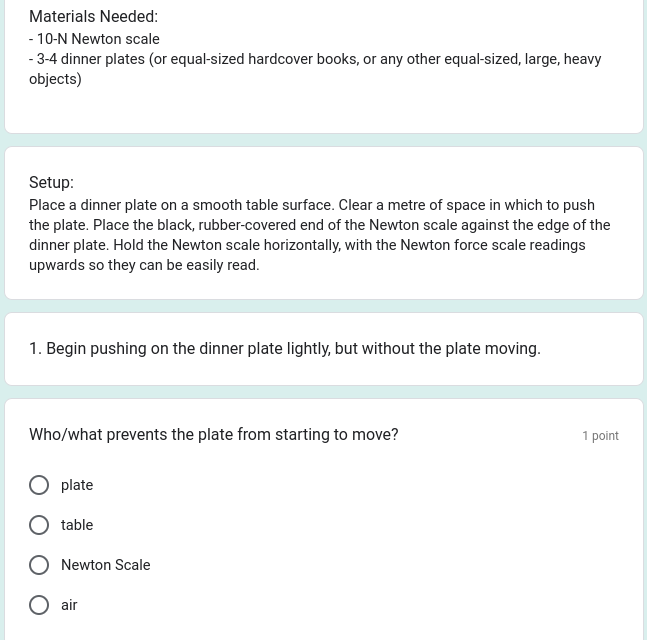
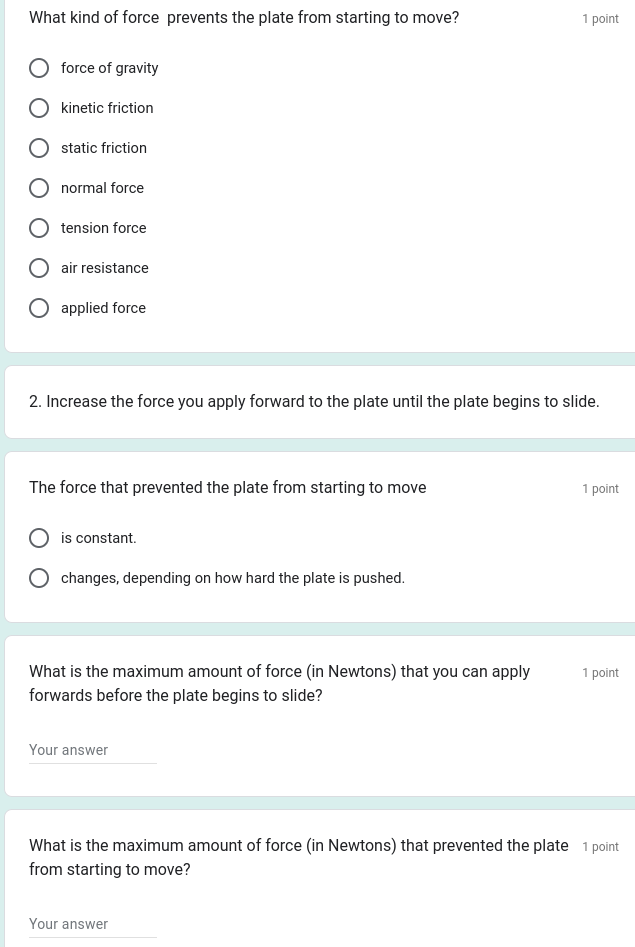
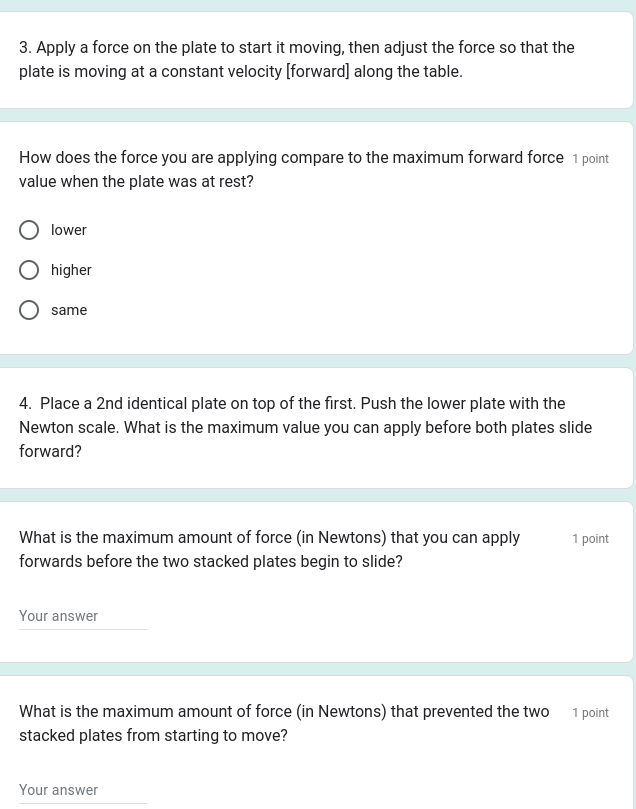
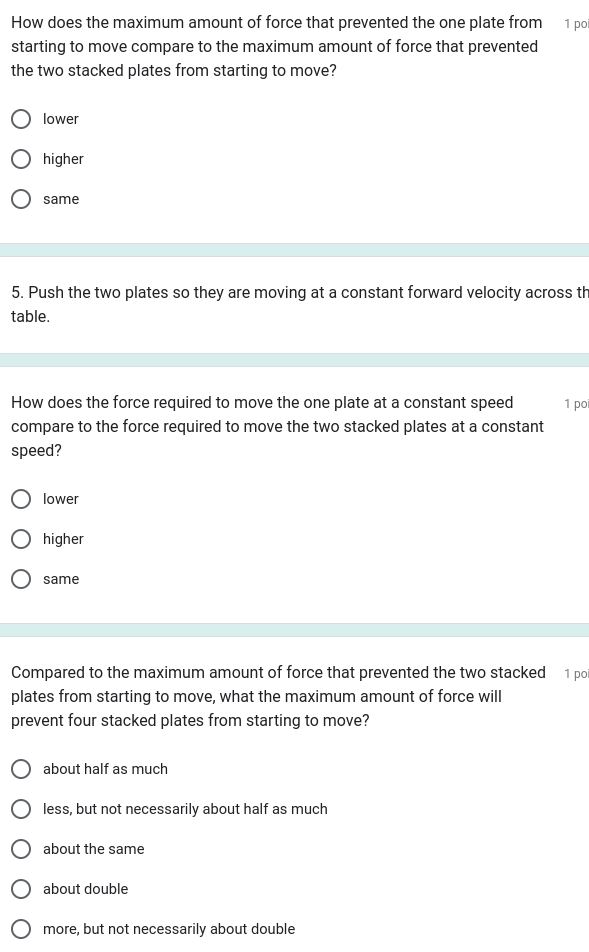
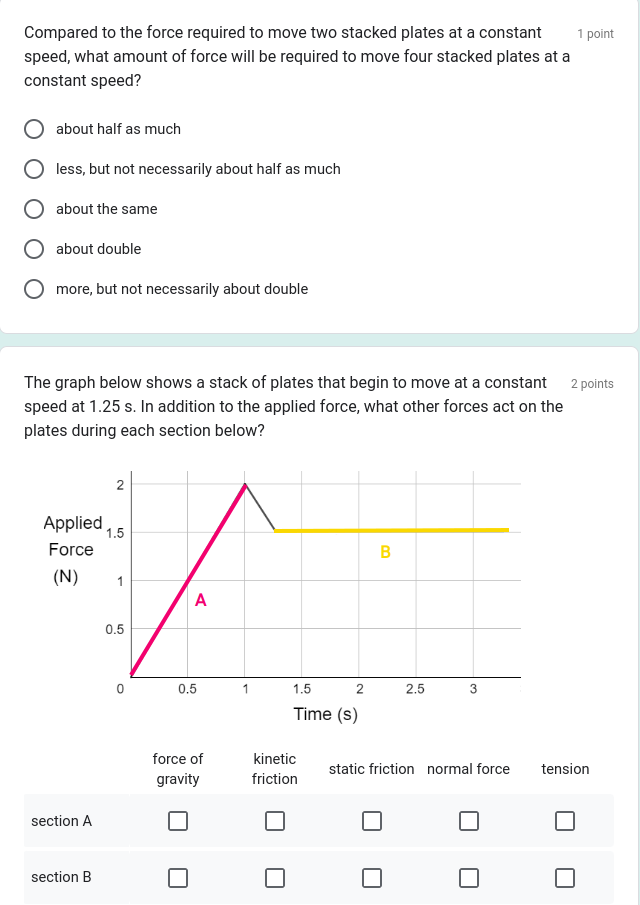
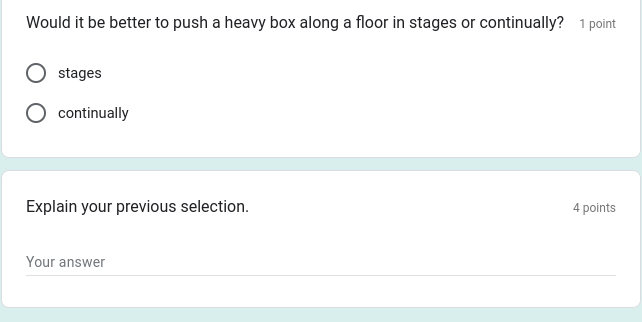
Materials Needed: 1|}N Newton scale - 34 dinner plates {or equal-sized hardcover books. or any other equal-sized, larger heavy objects) Setup: Place a dinner plate on a smooth table surface. Clear a metre of space in which to push the plate. Place the black, rubbercoyered end of the Newton scale against the edge of the dinner plate. Hold the Newton scale horizontally, with the Newton force scale readings upwards so they can be easily read. 1. Begin pushing on the dinner plate lightly. but without the plate moving. Wholr'what prevents the plate from starting to move\"? 1 point 0 Newton Scale 0 air What ltind of force prevents the plate from starting to move? 1 point 0 force of gravity 0 kineticfn'ction 0 static friction 0 normal force 0 tension force 0 air resistance 0 applied force 2. Increase the force you apply forward to the plate until the plate begins to slide. The force that prevented the plate from starting to move 1 point 0 is constant. 0 changes, depending on how hard the plate is pushed. What is the maximum amount of force [in Newtons) that you can apply 1 point forwards before the plate begins to slide? 'four answer What is the maximum amount of force (in Newtons) that prevented the plate 1 point from starting to move? 'four answer 3. Apply a force on the plate to start it moving, then adjust the force so that the plate is moving at a constant velocity [forward] along the table. How does the force you are applying compare to the maximum forward force 1 point value when the plate was at rest? lower higher O same 4. Place a 2nd identical plate on top of the first. Push the lower plate with the Newton scale. What is the maximum value you can apply before both plates slide forward? What is the maximum amount of force (in Newtons) that you can apply 1 point forwards before the two stacked plates begin to slide? Your answer What is the maximum amount of force (in Newtons) that prevented the two 1 point stacked plates from starting to move? Your answerHow does the maximum amount of force that prevented the one plate from 1 poi starting to move compare to the maximum amount of force that prevented the two stacked plates from starting to move? 5. Push the two plates so they are moving at a constant forward velocity across th table. How does the force required to move the one plate at a constant speed 1 poi compare to the force required to move the two stacked plates at a constant speed? Compared to the maximum amount of force that prevented the two stacked 1 poi plates from starting to move, what the maximum amount of force will prevent four stacked plates from starting to move? about half as much les s. but not necossarilvr about half as much about the same about double 00000 more. but not mercessariliir about double Compared to the force required to move two stacked plates at a constant 1 point speed, what amount of force will be required to move four stacked plates at a constant speed? O about half as much O less, but not necessarily about half as much O about the same O about double O more, but not necessarily about double The graph below shows a stack of plates that begin to move at a constant 2 points speed at 1.25 s. In addition to the applied force, what other forces act on the plates during each section below? 2 Applied 1.5 Force B (N) 1 A 0.5 0 0.5 1 1.5 2 2.5 3 Time (s) force of kinetic gravity friction static friction normal force tension section A section B O 0 O O OWould it be better to push a heavy box along a floor in stages or continually? 1 point O stages O continually Explain your previous selection. 4 points Your
Step by Step Solution
There are 3 Steps involved in it

Get step-by-step solutions from verified subject matter experts
 Study Help