







Question: Question 72 2 pts A machine, acquired for a cash cost of $15,000, is being depreciated on a straight-line basis of $2,250 per year. The
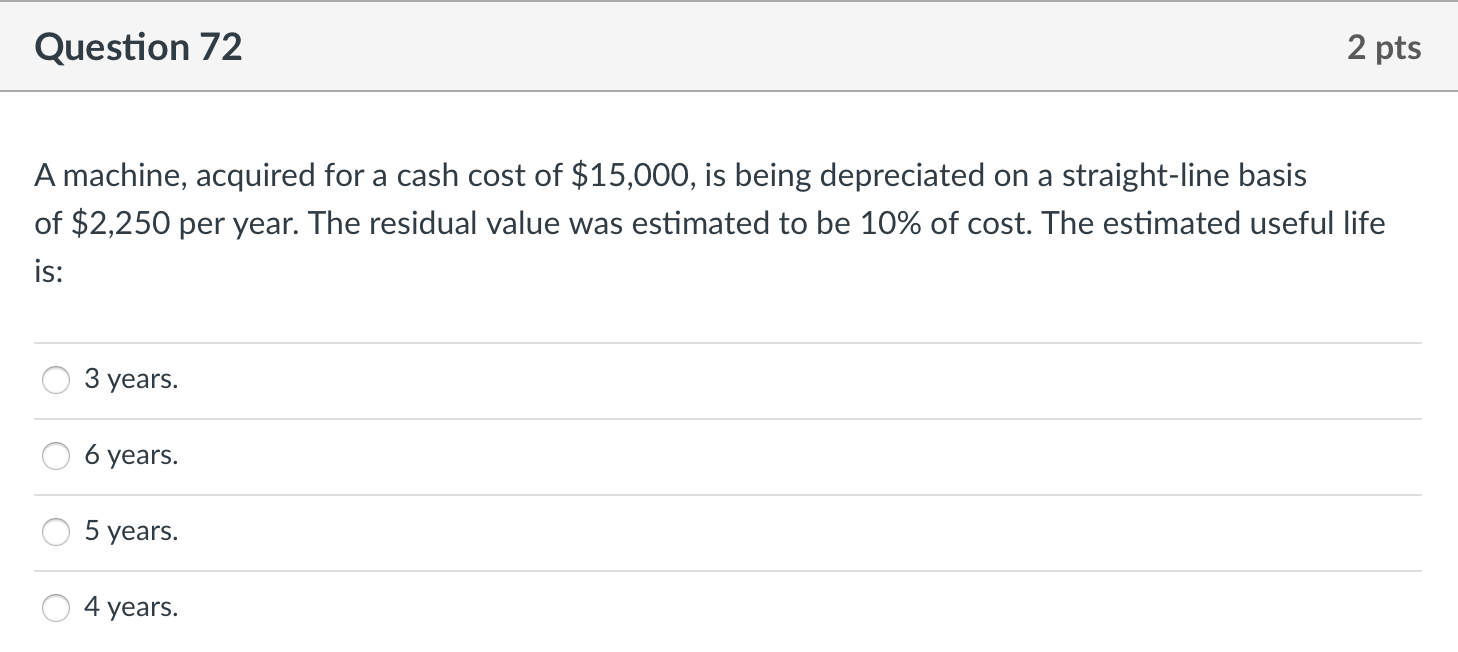
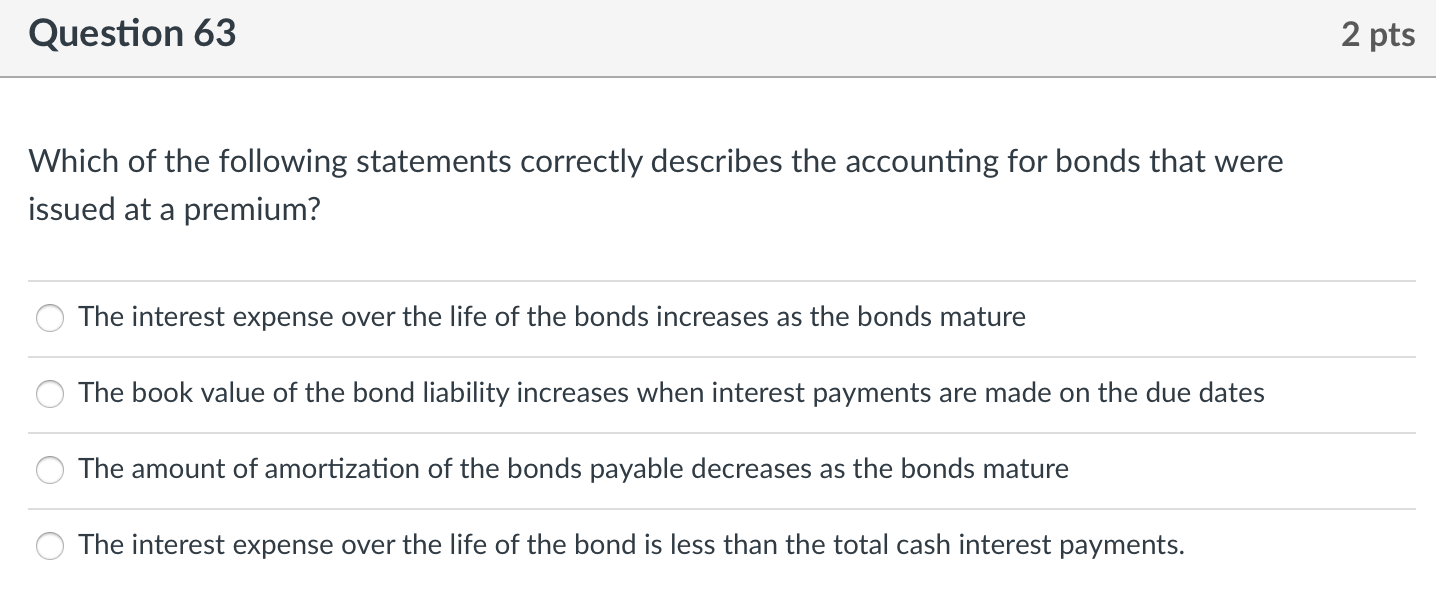
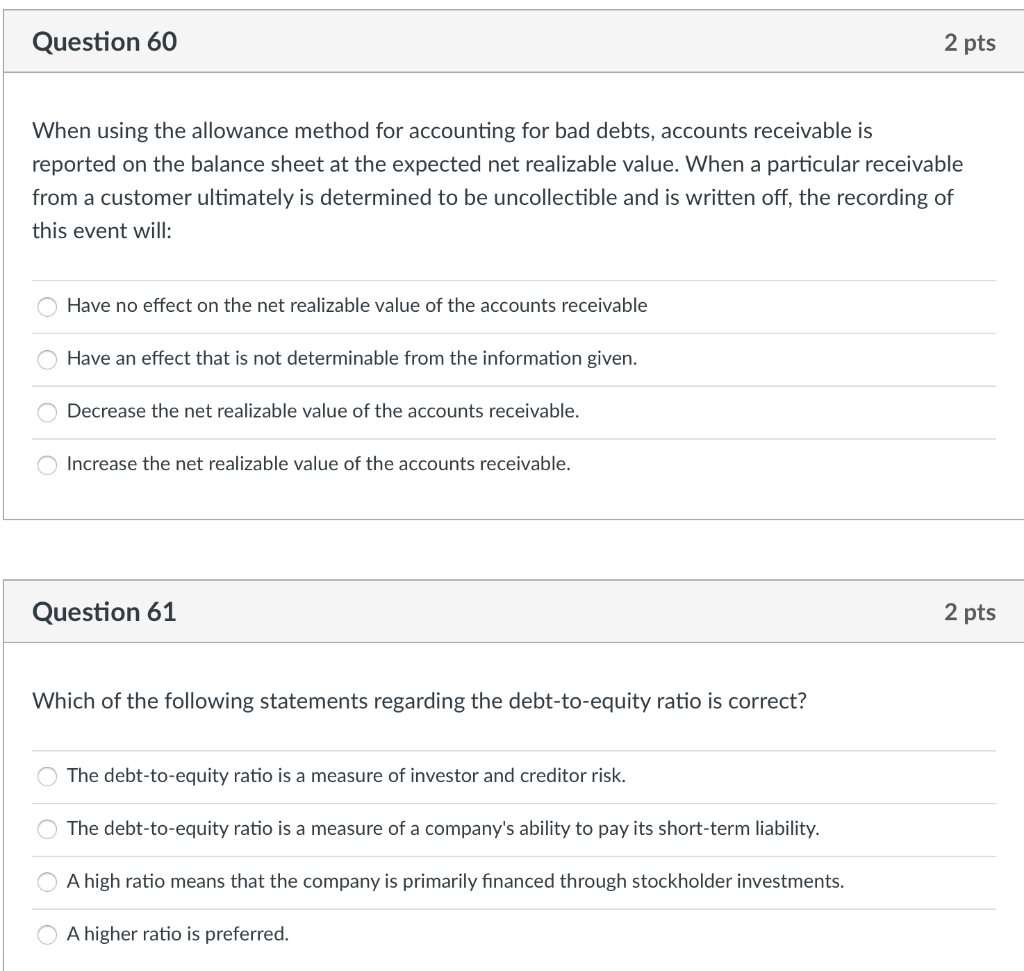
Question 72 2 pts A machine, acquired for a cash cost of $15,000, is being depreciated on a straight-line basis of $2,250 per year. The residual value was estimated to be 10% of cost. The estimated useful life is: 3 years. 6 years. 5 years. 4 years. Question 63 2 pts Which of the following statements correctly describes the accounting for bonds that were issued at a premium? The interest expense over the life of the bonds increases as the bonds mature The book value of the bond liability increases when interest payments are made on the due dates The amount of amortization of the bonds payable decreases as the bonds mature The interest expense over the life of the bond is less than the total cash interest payments. Question 60 2 pts When using the allowance method for accounting for bad debts, accounts receivable is reported on the balance sheet at the expected net realizable value. When a particular receivable from a customer ultimately is determined to be uncollectible and is written off, the recording of this event will: Have no effect on the net realizable value of the accounts receivable Have an effect that is not determinable from the information given. Decrease the net realizable value of the accounts receivable. Increase the net realizable value of the accounts receivable Question 61 2 pts Which of the following statements regarding the debt-to-equity ratio is correct? The debt-to-equity ratio is a measure of investor and creditor risk. The debt-to-equity ratio is a measure of a company's ability to pay its short-term liability. A high ratio means that the company is primarily financed through stockholder investments. A higher ratio is preferred
Step by Step Solution
There are 3 Steps involved in it

Get step-by-step solutions from verified subject matter experts
 Study Help