







Question: true false False section (please highlight your selected response) - potential of The terma diversity and culture mean the same thing. True False A culture
true false
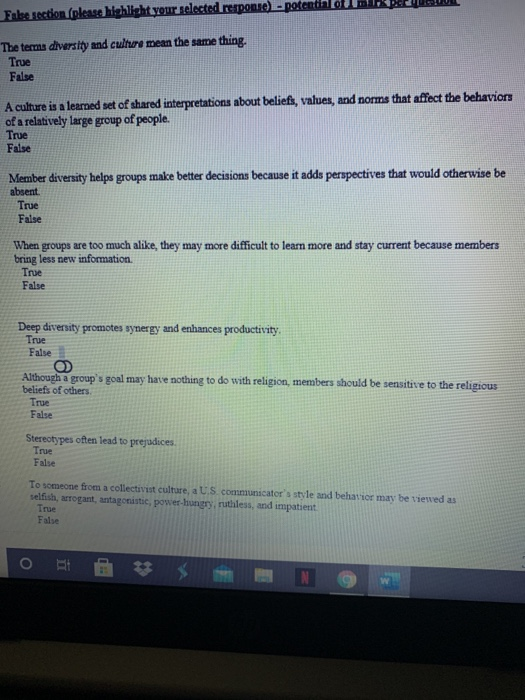
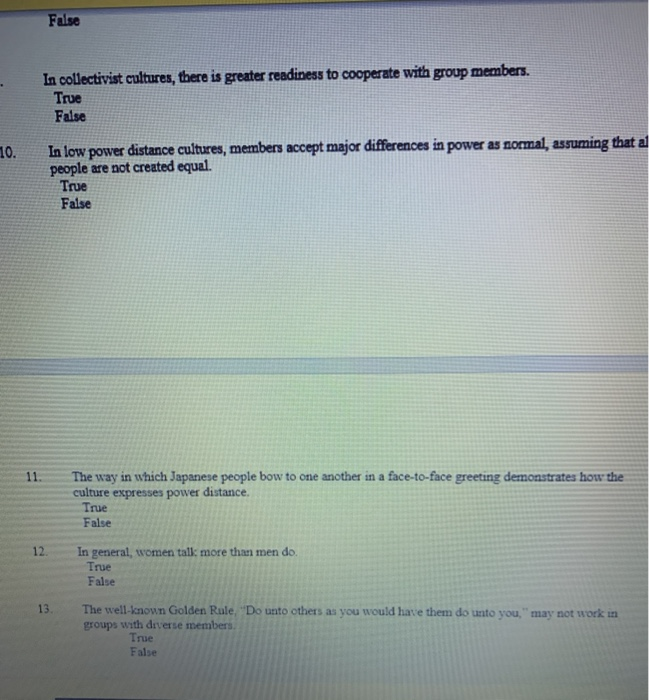
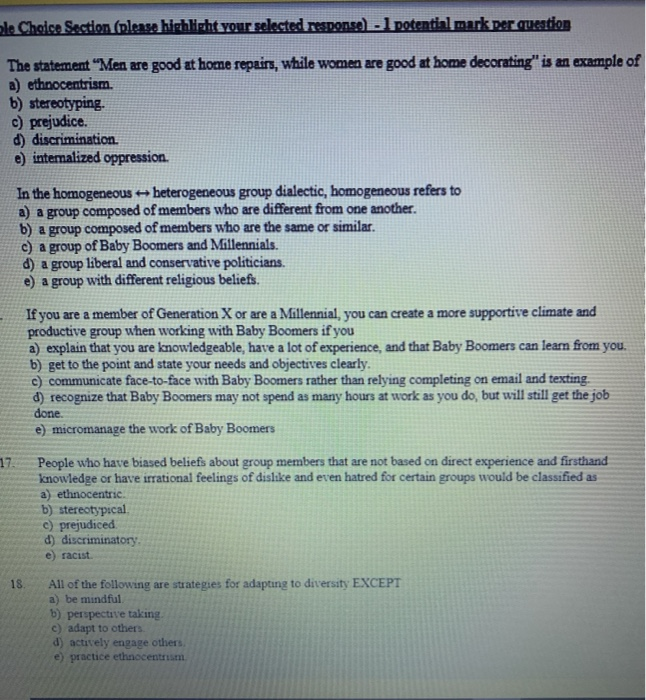
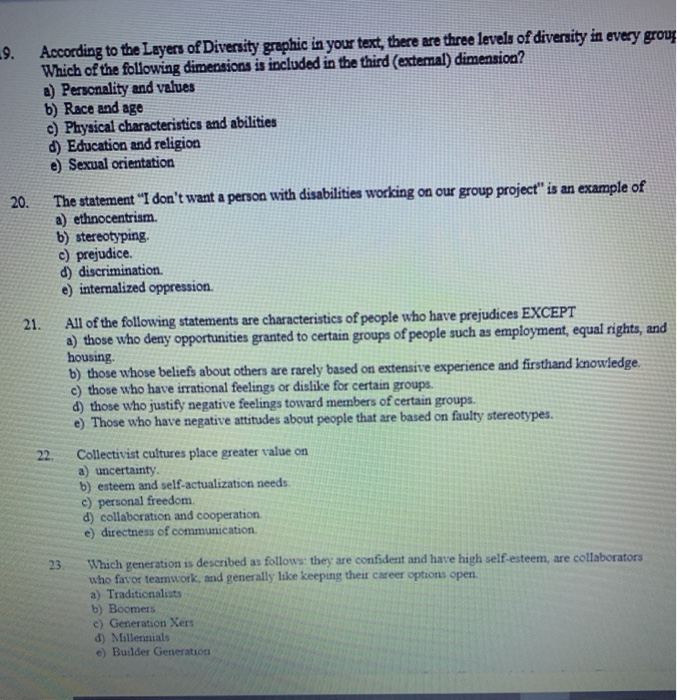
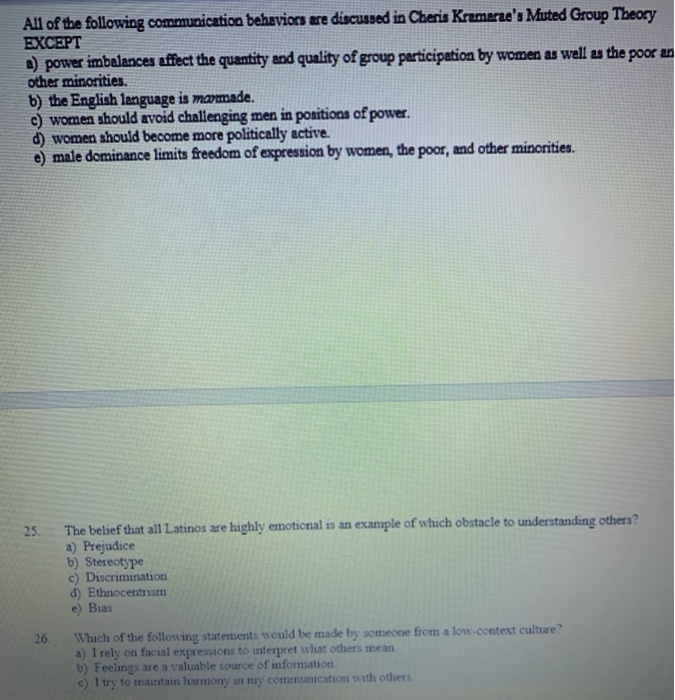
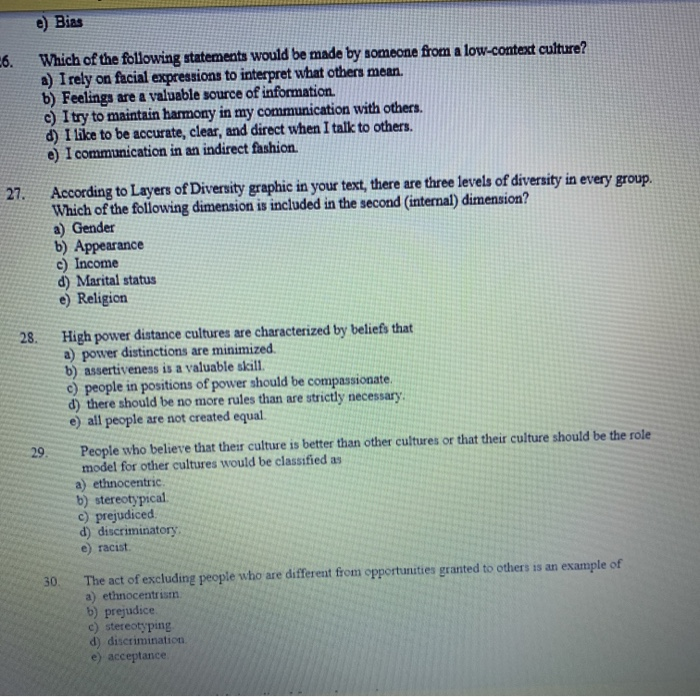
False section (please highlight your selected response) - potential of The terma diversity and culture mean the same thing. True False A culture is a learned set of shared interpretations about beliefs, values, and norms that affect the behaviors of a relatively large group of people. True False Member diversity helps groups make better decisions because it adds perspectives that would otherwise be absent True False When groups are too much alike, they may more difficult to learn more and stay current because members bring less new information True False Deep diversity promotes synergy and enhances productivity True False Although a group's goal may have nothing to do with religion, members should be sensitive to the religious beliefs of others True False Stereotypes often lead to prejudices. True False To someone from a collectivist culture, a US communicator's style and behavior may be viewed as selfish, arrogant, antagonistie, power-hungry, ruthless, and impatient False False In collectivist cultures, there is greater readiness to cooperate with group members. True False In low power distance cultures, members accept major differences in power as normal, assuming that al people are not created equal. True False 10. 11. The way in which Japanese people bow to one another in a face-to-face greeting demonstrates how the culture expresses power distance. True False 12 In general, women tall: more than men do. True False 13 The well-known Golden Rule "Do unto others as you would have them do unto you," may not work in groups with diverse members. True False ble Choice Section (please highlight your selected response) - 1 potential mark per question The statement "Men are good at home repairs, while women are good at home decorating" is an example of a) ethnocentrism. b) stereotyping. c) prejudice. d) discrimination. e) intemalized oppression. In the homogeneous heterogeneous group dialectic, homogeneous refers to a) a group composed of members who are different from one another. b) a group composed of members who are the same or similar. c) a group of Baby Boomers and Millennials. d) a group liberal and conservative politicians. e) a group with different religious beliefs. If you are a member of Generation X or are a Millennial, you can create a more supportive climate and productive group when working with Baby Boomers if you a) explain that you are knowledgeable, have a lot of experience, and that Baby Boomers can learn from you. b) get to the point and state your needs and objectives clearly. c) communicate face-to-face with Baby Boomers rather than relying completing on email and texting. d) recognize that Baby Boomers may not spend as many hours at work as you do, but will still get the job done e) micromanage the work of Baby Boomers 17 People who have biased beliefs about group members that are not based on direct experience and firsthand knowledge or have irrational feelings of dislike and even hatred for certain groups would be classified as a) ethnocentric b) stereotypical c) prejudiced d) discriminatory. e) racist. 18 All of the following are strategies for adapting to diversity EXCEPT a) be mindful b) perspective taking c) adapt to others d) actively engage others e) practice ethnocentrism 9. According to the Layers of Diversity graphic in your text, there are three levels of diversity in every grouz Which of the following dimensions is included in the third (external) dimension? a) Personality and values b) Race and age c) Physical characteristics and abilities d) Education and religion e) Sexual orientation 20. The statement "I don't want a person with disabilities working on our group project" is an example of a) ethnocentrism. b) stereotyping c) prejudice. d) discrimination e) internalized oppression. 21. All of the following statements are characteristics of people who have prejudices EXCEPT a) those who deny opportunities granted to certain groups of people such as employment, equal rights, and housing. b) those whose beliefs about others are rarely based on extensive experience and firsthand knowledge. c) those who have irrational feelings or dislike for certain groups. d) those who justify negative feelings toward members of certain groups. e) Those who have negative attitudes about people that are based on faulty stereotypes. 22 Collectivist cultures place greater value on a) uncertainty b) esteem and self-actualization needs c) personal freedom d) collaboration and cooperation e) directness of communication 23 Which generation is described as follows: they are confident and have high self-esteem, are collaborators who favor teamwork, and generally like keeping their career options open a) Traditionalists b) Boomers c) Generation Xers d) Millennials e) Builder Generation All of the following communication behaviors are discussed in Cheris Kramarse's Muted Group Theory EXCEPT a) power imbalances affect the quantity and quality of group participation by women as well as the poor an other minorities. b) the English language is mormade. c) women should avoid challenging men in positions of power. d) women should become more politically active. e) male dominance limits freedom of expression by women, the poor, and other minorities. 25. The belief that all Latinos are highly emotional is an example of which obstacle to understanding others? a) Prejudice b) Stereotype c) Discrimination d) Ethnocentrism e) Bias 26. Which of the following statements would be made by someone from a low.context culture? a) Irely on facial expressions to interpret what others mean b) Feelings are a valuable source of information c) I try to maintain harmony in my communication with others e) Bias 26. Which of the following statements would be made by someone from a low-context culture? a) I rely on facial expressions to interpret what others mean. b) Feelings are a valuable source of information. c) I try to maintain harmony in my communication with others. d) I like to be accurate, clear, and direct when I talk to others. e) I communication in an indirect fashion. 27. According to Layers of Diversity graphic in your text, there are three levels of diversity in every group. Which of the following dimension is included in the second internal) dimension? a) Gender b) Appearance c) Income d) Marital status e) Religion 28. High power distance cultures are characterized by beliefs that a) power distinctions are minimized. b) assertiveness is a valuable skill c) people in positions of power should be compassionate d) there should be no more rules than are strictly necessary. e) all people are not created equal. People who believe that their culture is better than other cultures or that their culture should be the role model for other cultures would be classified as a) ethnocentric b) stereotypical c) prejudiced d) discriminatory e) racist 29. 30 The act of excluding people who are different from opportunities granted to others is an example of a) ethnocentrism b) prejudice c) stereotyping d) discrimination e) acceptance Step by Step Solution
There are 3 Steps involved in it
1 Expert Approved Answer
Step: 1 Unlock

Question Has Been Solved by an Expert!
Get step-by-step solutions from verified subject matter experts
Step: 2 Unlock
Step: 3 Unlock
 Study Help