



Question: True False The sum() function returns the number of columns in a relation A one-to-many relationship exists when each record in one table matches exactly
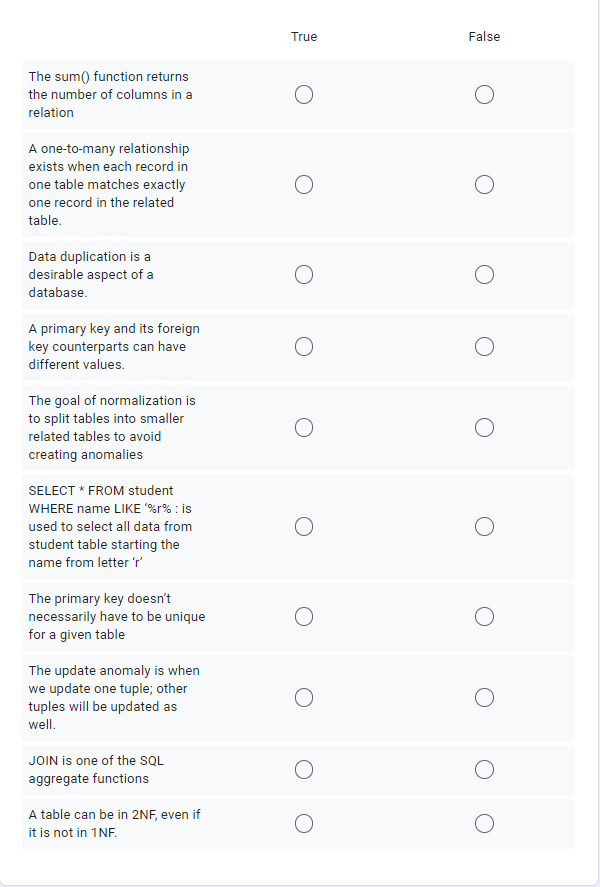
True False The sum() function returns the number of columns in a relation A one-to-many relationship exists when each record in one table matches exactly one record in the related table. Data duplication is a desirable aspect of a database A primary key and its foreign key counterparts can have different values. The goal of normalization is to split tables into smaller related tables to avoid creating anomalies SELECT * FROM student WHERE name LIKE '%r%: is used to select all data from student table starting the name from letter The primary key doesn't necessarily have to be unique for a given table The update anomaly is when We update one tuple; other tuples will be updated as well. JOIN is one of the SQL aggregate functions A table can be in 2NF, even if it is not in 1NF
Step by Step Solution
There are 3 Steps involved in it

Get step-by-step solutions from verified subject matter experts