Question: True & False type of question. True / False (2 Points each) True= A False =B (On Scantron form) 1.) Today's effective managers integrates solid,
True & False type of question.
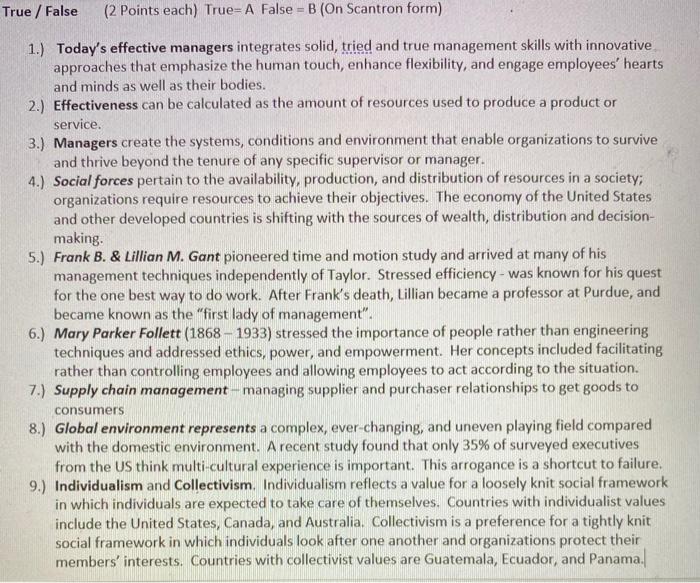
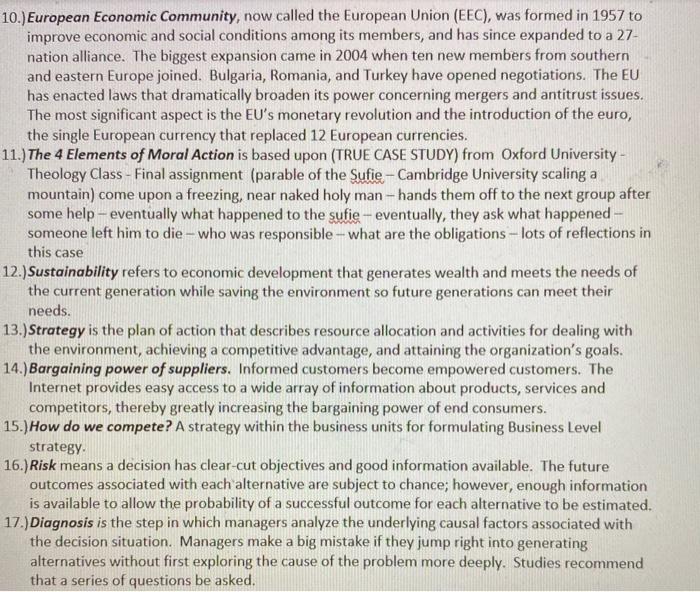
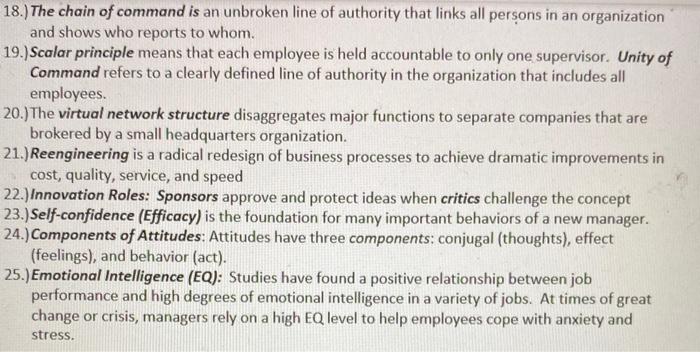
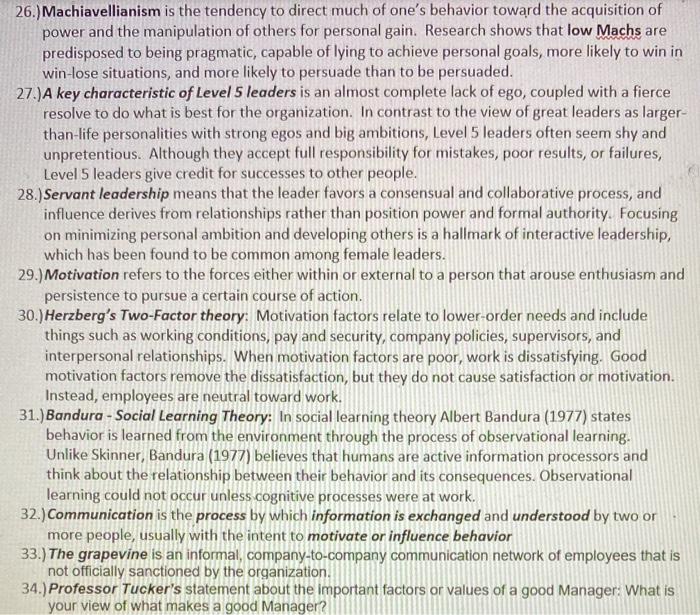
True / False (2 Points each) True= A False =B (On Scantron form) 1.) Today's effective managers integrates solid, tried and true management skills with innovative approaches that emphasize the human touch, enhance flexibility, and engage employees' hearts and minds as well as their bodies. 2.) Effectiveness can be calculated as the amount of resources used to produce a product or service. 3.) Managers create the systems, conditions and environment that enable organizations to survive and thrive beyond the tenure of any specific supervisor or manager. 4.) Social forces pertain to the availability, production, and distribution of resources in a society; organizations require resources to achieve their objectives. The economy of the United States and other developed countries is shifting with the sources of wealth, distribution and decision- making 5.) Frank B. & Lillian M. Gant pioneered time and motion study and arrived at many of his management techniques independently of Taylor. Stressed efficiency - was known for his quest for the one best way to do work. After Frank's death, Lillian became a professor at Purdue, and became known as the "first lady of management". 6.) Mary Parker Follett (1868-1933) stressed the importance of people rather than engineering techniques and addressed ethics, power, and empowerment. Her concepts included facilitating rather than controlling employees and allowing employees to act according to the situation. 7.) Supply chain management-managing supplier and purchaser relationships to get goods to consumers 8.) Global environment represents a complex, ever-changing, and uneven playing field compared with the domestic environment. A recent study found that only 35% of surveyed executives from the US think multi-cultural experience is important. This arrogance is a shortcut to failure. 9.) Individualism and Collectivism. Individualism reflects a value for a loosely knit social framework in which individuals are expected to take care of themselves. Countries with individualist values include the United States, Canada, and Australia. Collectivism is a preference for a tightly knit social framework in which individuals look after one another and organizations protect their members' interests. Countries with collectivist values are Guatemala, Ecuador, and Panama. 10.)European Economic Community, now called the European Union (EEC), was formed in 1957 to improve economic and social conditions among its members, and has since expanded to a 27- nation alliance. The biggest expansion came in 2004 when ten new members from southern and eastern Europe joined. Bulgaria, Romania, and Turkey have opened negotiations. The EU has enacted laws that dramatically broaden its power concerning mergers and antitrust issues. The most significant aspect is the EU's monetary revolution and the introduction of the euro, the single European currency that replaced 12 European currencies. 11.) The 4 Elements of Moral Action is based upon (TRUE CASE STUDY) from Oxford University - Theology Class - Final assignment (parable of the Sufie - Cambridge University scaling a mountain) come upon a freezing, near naked holy man-hands them off to the next group after some help - eventually what happened to the sufie - eventually, they ask what happened - someone left him to die - who was responsible - what are the obligations lots of reflections in this case 12.) Sustainability refers to economic development that generates wealth and meets the needs of the current generation while saving the environment so future generations can meet their needs. 13.)Strategy is the plan of action that describes resource allocation and activities for dealing with the environment, achieving a competitive advantage, and attaining the organization's goals. 14.) Bargaining power of suppliers. Informed customers become empowered customers. The Internet provides easy access to a wide array of information about products, services and competitors, thereby greatly increasing the bargaining power of end consumers. 15.) How do we compete? A strategy within the business units for formulating Business Level strategy 16.) Risk means a decision has clear-cut objectives and good information available. The future outcomes associated with each alternative are subject to chance; however, enough information is available to allow the probability of a successful outcome for each alternative to be estimated. 17.) Diagnosis is the step in which managers analyze the underlying causal factors associated with the decision situation. Managers make a big mistake if they jump right into generating alternatives without first exploring the cause of the problem more deeply. Studies recommend that a series of questions be asked. 18.) The chain of command is an unbroken line of authority that links all persons in an organization and shows who reports to whom. 19.) Scalar principle means that each employee is held accountable to only one supervisor. Unity of Command refers to a clearly defined line of authority in the organization that includes all employees. 20.) The virtual network structure disaggregates major functions to separate companies that are brokered by a small headquarters organization. 21.) Reengineering is a radical redesign of business processes to achieve dramatic improvements in cost, quality, service, and speed 22.) Innovation Roles: Sponsors approve and protect ideas when critics challenge the concept 23.) Self-confidence (Efficacy) is the foundation for many important behaviors of a new manager. 24.) Components of Attitudes: Attitudes have three components: conjugal (thoughts), effect (feelings), and behavior (act). 25.) Emotional Intelligence (EQ): Studies have found a positive relationship between job performance and high degrees of emotional intelligence in a variety of jobs. At times of great change or crisis, managers rely on a high EQ level to help employees cope with anxiety and stress. 26.) Machiavellianism is the tendency to direct much of one's behavior toward the acquisition of power and the manipulation of others for personal gain. Research shows that low Machs are predisposed to being pragmatic, capable of lying to achieve personal goals, more likely to win in win-lose situations, and more likely to persuade than to be persuaded. 27.) A key characteristic of Level 5 leaders is an almost complete lack of ego, coupled with a fierce resolve to do what is best for the organization. In contrast to the view of great leaders as larger- than-life personalities with strong egos and big ambitions, Level 5 leaders often seem shy and unpretentious. Although they accept full responsibility for mistakes, poor results, or failures, Level 5 leaders give credit for successes to other people. 28.) Servant leadership means that the leader favors a consensual and collaborative process, and influence derives from relationships rather than position power and formal authority. Focusing on minimizing personal ambition and developing others is a hallmark of interactive leadership, which has been found to be common among female leaders. 29.) Motivation refers to the forces either within or external to a person that arouse enthusiasm and persistence to pursue a certain course of action. 30.) Herzberg's Two-Factor theory: Motivation factors relate to lower-order needs and include things such as working conditions, pay and security, company policies, supervisors, and interpersonal relationships. When motivation factors are poor, work is dissatisfying. Good motivation factors remove the dissatisfaction, but they do not cause satisfaction or motivation. Instead, employees are neutral toward work. 31.) Bandura - Social Learning Theory: In social learning theory Albert Bandura (1977) states behavior is learned from the environment through the process of observational learning. Unlike Skinner, Bandura (1977) believes that humans are active information processors and think about the relationship between their behavior and its consequences. Observational learning could not occur unless cognitive processes were at work. 32.) Communication is the process by which information is exchanged and understood by two or more people, usually with the intent to motivate or influence behavior 33.) The grapevine is an informal, company-to-company communication network of employees that is not officially sanctioned by the organization. 34.) Professor Tucker's statement about the important factors or values of a good Manager: What is your view of what makes a good Manager? 35.)TQM: Six Sigma is a highly ambitious quality standard that specifies a goal of no more than 3.4 defects per million parts. Six Sigma has become a generic term for a quality control approach that takes nothing for granted and emphasizes higher quality and lower costs. The discipline is based on DMAIC (Define, Measure, Analyze, Improve, and Control). This methodology provides a structured way for solving problems. Effectively implementing Six Sigma requires a major commitment from top management because widespread change is required. True / False (2 Points each) True= A False =B (On Scantron form) 1.) Today's effective managers integrates solid, tried and true management skills with innovative approaches that emphasize the human touch, enhance flexibility, and engage employees' hearts and minds as well as their bodies. 2.) Effectiveness can be calculated as the amount of resources used to produce a product or service. 3.) Managers create the systems, conditions and environment that enable organizations to survive and thrive beyond the tenure of any specific supervisor or manager. 4.) Social forces pertain to the availability, production, and distribution of resources in a society; organizations require resources to achieve their objectives. The economy of the United States and other developed countries is shifting with the sources of wealth, distribution and decision- making 5.) Frank B. & Lillian M. Gant pioneered time and motion study and arrived at many of his management techniques independently of Taylor. Stressed efficiency - was known for his quest for the one best way to do work. After Frank's death, Lillian became a professor at Purdue, and became known as the "first lady of management". 6.) Mary Parker Follett (1868-1933) stressed the importance of people rather than engineering techniques and addressed ethics, power, and empowerment. Her concepts included facilitating rather than controlling employees and allowing employees to act according to the situation. 7.) Supply chain management-managing supplier and purchaser relationships to get goods to consumers 8.) Global environment represents a complex, ever-changing, and uneven playing field compared with the domestic environment. A recent study found that only 35% of surveyed executives from the US think multi-cultural experience is important. This arrogance is a shortcut to failure. 9.) Individualism and Collectivism. Individualism reflects a value for a loosely knit social framework in which individuals are expected to take care of themselves. Countries with individualist values include the United States, Canada, and Australia. Collectivism is a preference for a tightly knit social framework in which individuals look after one another and organizations protect their members' interests. Countries with collectivist values are Guatemala, Ecuador, and Panama. 10.)European Economic Community, now called the European Union (EEC), was formed in 1957 to improve economic and social conditions among its members, and has since expanded to a 27- nation alliance. The biggest expansion came in 2004 when ten new members from southern and eastern Europe joined. Bulgaria, Romania, and Turkey have opened negotiations. The EU has enacted laws that dramatically broaden its power concerning mergers and antitrust issues. The most significant aspect is the EU's monetary revolution and the introduction of the euro, the single European currency that replaced 12 European currencies. 11.) The 4 Elements of Moral Action is based upon (TRUE CASE STUDY) from Oxford University - Theology Class - Final assignment (parable of the Sufie - Cambridge University scaling a mountain) come upon a freezing, near naked holy man-hands them off to the next group after some help - eventually what happened to the sufie - eventually, they ask what happened - someone left him to die - who was responsible - what are the obligations lots of reflections in this case 12.) Sustainability refers to economic development that generates wealth and meets the needs of the current generation while saving the environment so future generations can meet their needs. 13.)Strategy is the plan of action that describes resource allocation and activities for dealing with the environment, achieving a competitive advantage, and attaining the organization's goals. 14.) Bargaining power of suppliers. Informed customers become empowered customers. The Internet provides easy access to a wide array of information about products, services and competitors, thereby greatly increasing the bargaining power of end consumers. 15.) How do we compete? A strategy within the business units for formulating Business Level strategy 16.) Risk means a decision has clear-cut objectives and good information available. The future outcomes associated with each alternative are subject to chance; however, enough information is available to allow the probability of a successful outcome for each alternative to be estimated. 17.) Diagnosis is the step in which managers analyze the underlying causal factors associated with the decision situation. Managers make a big mistake if they jump right into generating alternatives without first exploring the cause of the problem more deeply. Studies recommend that a series of questions be asked. 18.) The chain of command is an unbroken line of authority that links all persons in an organization and shows who reports to whom. 19.) Scalar principle means that each employee is held accountable to only one supervisor. Unity of Command refers to a clearly defined line of authority in the organization that includes all employees. 20.) The virtual network structure disaggregates major functions to separate companies that are brokered by a small headquarters organization. 21.) Reengineering is a radical redesign of business processes to achieve dramatic improvements in cost, quality, service, and speed 22.) Innovation Roles: Sponsors approve and protect ideas when critics challenge the concept 23.) Self-confidence (Efficacy) is the foundation for many important behaviors of a new manager. 24.) Components of Attitudes: Attitudes have three components: conjugal (thoughts), effect (feelings), and behavior (act). 25.) Emotional Intelligence (EQ): Studies have found a positive relationship between job performance and high degrees of emotional intelligence in a variety of jobs. At times of great change or crisis, managers rely on a high EQ level to help employees cope with anxiety and stress. 26.) Machiavellianism is the tendency to direct much of one's behavior toward the acquisition of power and the manipulation of others for personal gain. Research shows that low Machs are predisposed to being pragmatic, capable of lying to achieve personal goals, more likely to win in win-lose situations, and more likely to persuade than to be persuaded. 27.) A key characteristic of Level 5 leaders is an almost complete lack of ego, coupled with a fierce resolve to do what is best for the organization. In contrast to the view of great leaders as larger- than-life personalities with strong egos and big ambitions, Level 5 leaders often seem shy and unpretentious. Although they accept full responsibility for mistakes, poor results, or failures, Level 5 leaders give credit for successes to other people. 28.) Servant leadership means that the leader favors a consensual and collaborative process, and influence derives from relationships rather than position power and formal authority. Focusing on minimizing personal ambition and developing others is a hallmark of interactive leadership, which has been found to be common among female leaders. 29.) Motivation refers to the forces either within or external to a person that arouse enthusiasm and persistence to pursue a certain course of action. 30.) Herzberg's Two-Factor theory: Motivation factors relate to lower-order needs and include things such as working conditions, pay and security, company policies, supervisors, and interpersonal relationships. When motivation factors are poor, work is dissatisfying. Good motivation factors remove the dissatisfaction, but they do not cause satisfaction or motivation. Instead, employees are neutral toward work. 31.) Bandura - Social Learning Theory: In social learning theory Albert Bandura (1977) states behavior is learned from the environment through the process of observational learning. Unlike Skinner, Bandura (1977) believes that humans are active information processors and think about the relationship between their behavior and its consequences. Observational learning could not occur unless cognitive processes were at work. 32.) Communication is the process by which information is exchanged and understood by two or more people, usually with the intent to motivate or influence behavior 33.) The grapevine is an informal, company-to-company communication network of employees that is not officially sanctioned by the organization. 34.) Professor Tucker's statement about the important factors or values of a good Manager: What is your view of what makes a good Manager? 35.)TQM: Six Sigma is a highly ambitious quality standard that specifies a goal of no more than 3.4 defects per million parts. Six Sigma has become a generic term for a quality control approach that takes nothing for granted and emphasizes higher quality and lower costs. The discipline is based on DMAIC (Define, Measure, Analyze, Improve, and Control). This methodology provides a structured way for solving problems. Effectively implementing Six Sigma requires a major commitment from top management because widespread change is required










 Study Help