







Question: True or false questions PART I : True or false (2' x10=20 marks) Mark T if you think the statement is true, or F if
True or false questions
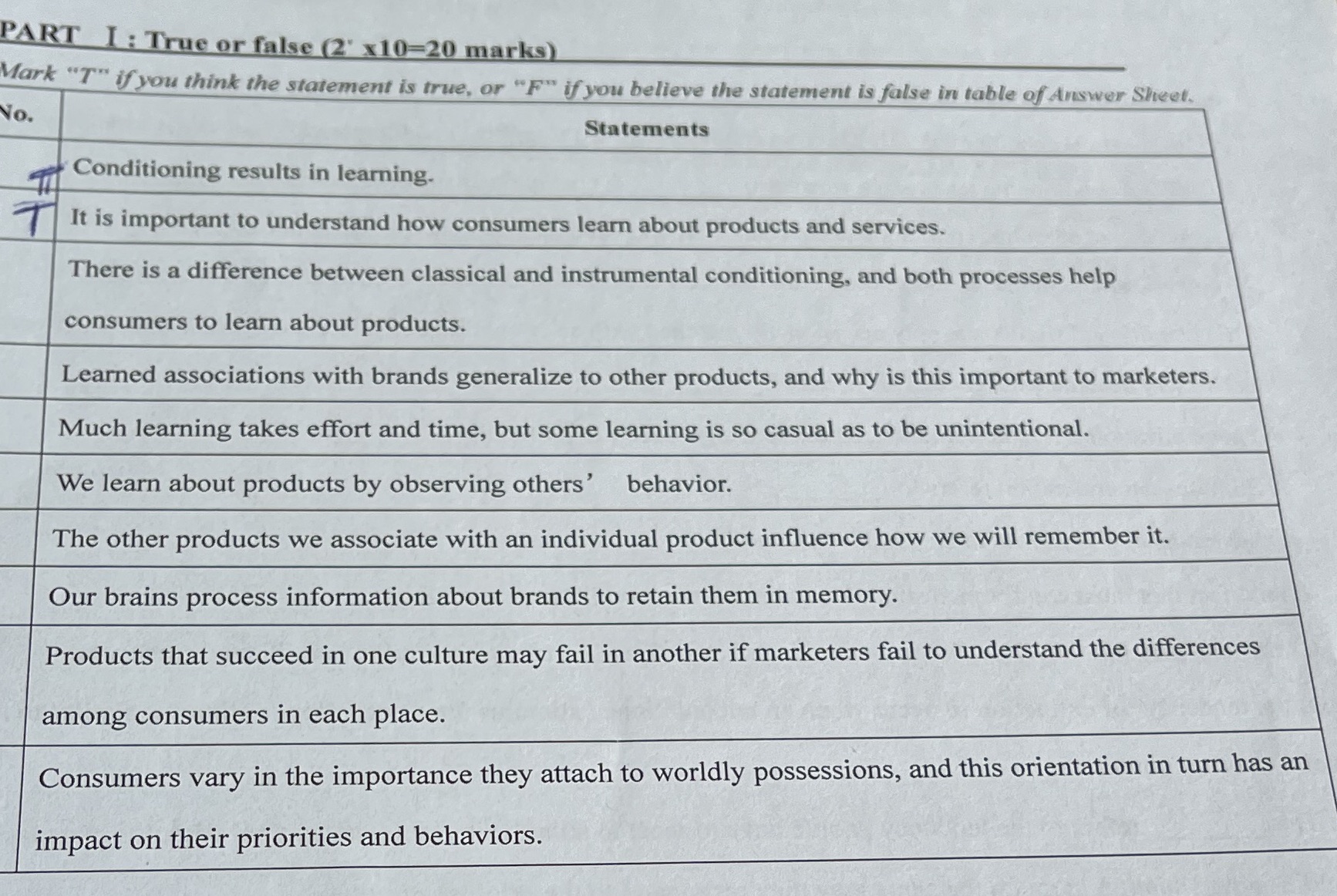
PART I : True or false (2' x10=20 marks) Mark "T" if you think the statement is true, or "F" if you believe the statement is false in table of Answer Sheet. No. Statements Conditioning results in learning. It is important to understand how consumers learn about products and services. There is a difference between classical and instrumental conditioning, and both processes help consumers to learn about products. Learned associations with brands generalize to other products, and why is this important to marketers. Much learning takes effort and time, but some learning is so casual as to be unintentional. We learn about products by observing others' behavior. The other products we associate with an individual product influence how we will remember it. Our brains process information about brands to retain them in memory. Products that succeed in one culture may fail in another if marketers fail to understand the differences among consumers in each place. Consumers vary in the importance they attach to worldly possessions, and this orientation in turn has an impact on their priorities and behaviors
Step by Step Solution
There are 3 Steps involved in it

Get step-by-step solutions from verified subject matter experts
 Study Help