







Question: True/False: Circle either True or False. 1.True / False understands *(ptr) 2 to mean move two integers down and retrieve that memory location. Suppose you
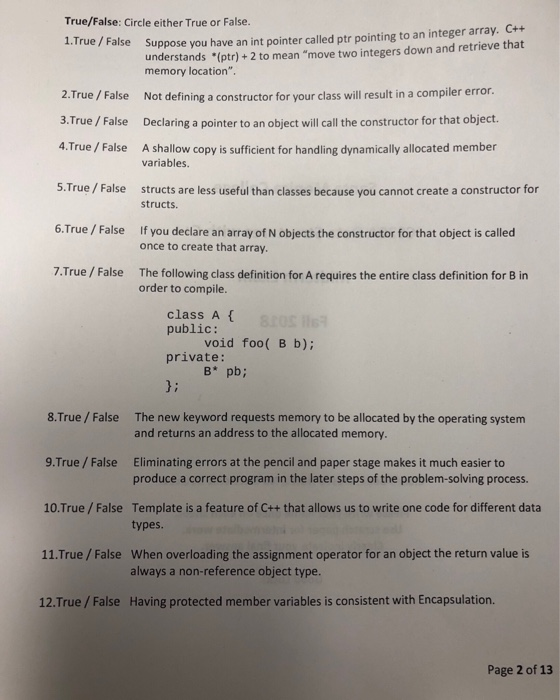
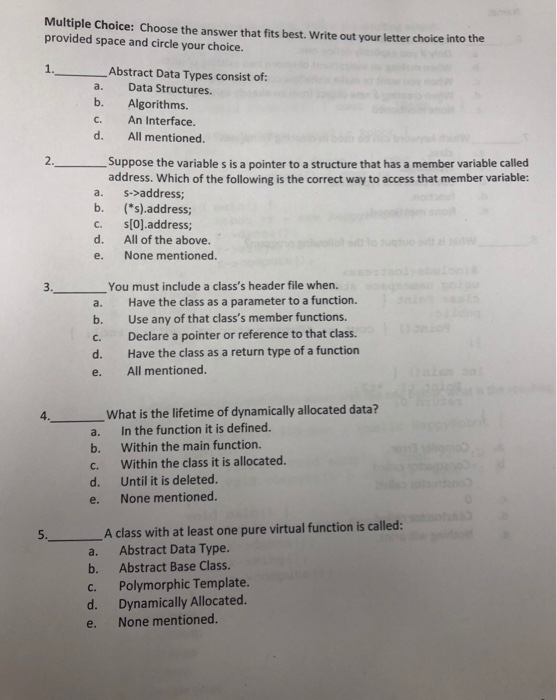
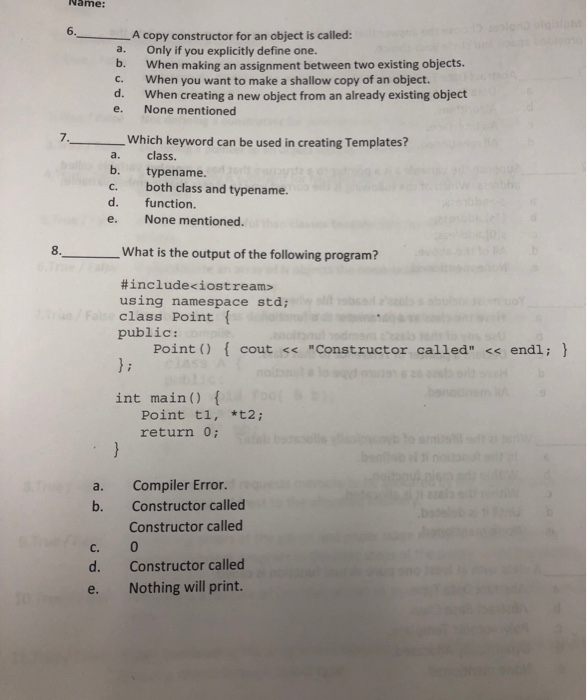
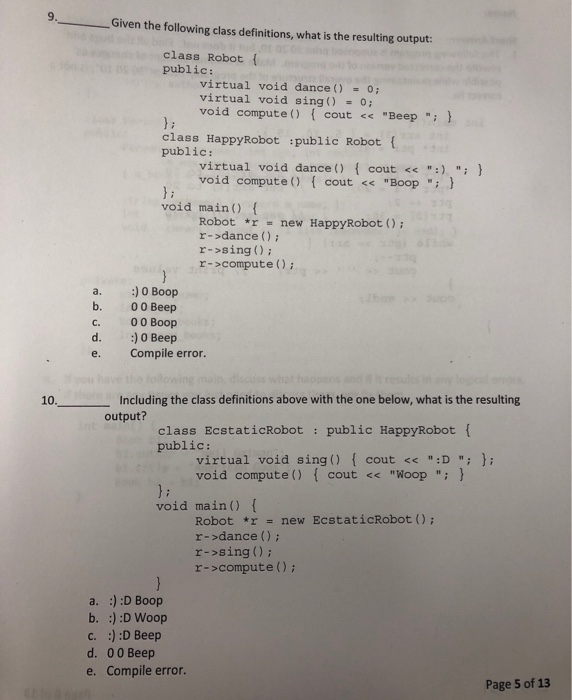
True/False: Circle either True or False. 1.True / False understands *(ptr) 2 to mean "move two integers down and retrieve that memory location". Suppose you have an int pointer called ptr pointing to an integer array. C++ 2.True/ False Not defining a constructor for your class will result in a compiler error 3.True/False Declaring a pointer to an object will call the constructor for that object. 4. True/ False A shallow copy is sufficient for handling dynamically allocated member variables. S.True / False structs are less useful than classes because you cannot create a constructor for 6.True/ False If you declare an array of N objects the constructor for that object is called 7.True/False The following class definition for A requires the entire class definition for B in structs. once to create that array. order to compile. class A public: void foo( B b); private B* pb; 8.True /False The new keyword requests memory to be allocated by the operating system 9.True/False Eliminating errors at the pencil and paper stage makes it much easier to 10.True/False Template is a feature of C++ that allows us to write one code for different data and returns an address to the allocated memory. produce a correct program in the later steps of the problem-solving process. types. 11.True/ False When overloading the assignment operator for an object the return value is always a non-reference object type. 12.True/False Having protected member variables is consistent with Encapsulation. Page 2 of 13
Step by Step Solution
There are 3 Steps involved in it

Get step-by-step solutions from verified subject matter experts
 Study Help