



Question: Two stones are dropped simultaneously into a pond 1.1 m apart and 20.7 m away from the straight edge of the pond. They produce waves
Two stones are dropped simultaneously into a pond 1.1 m apart and 20.7 m away from the straight edge of the pond. They produce waves of wavelength 0.23 m. The two waves meet and interfere along the pond's edge. At the symmetric middle point P0 the interference is constructive. The next three constructive interference sites are denoted P1, P2, and P3. Refer to figure. This is not a small-angle situation, although you may still assume that the stones are dropped close together relative to the distance of the edge of the pond.
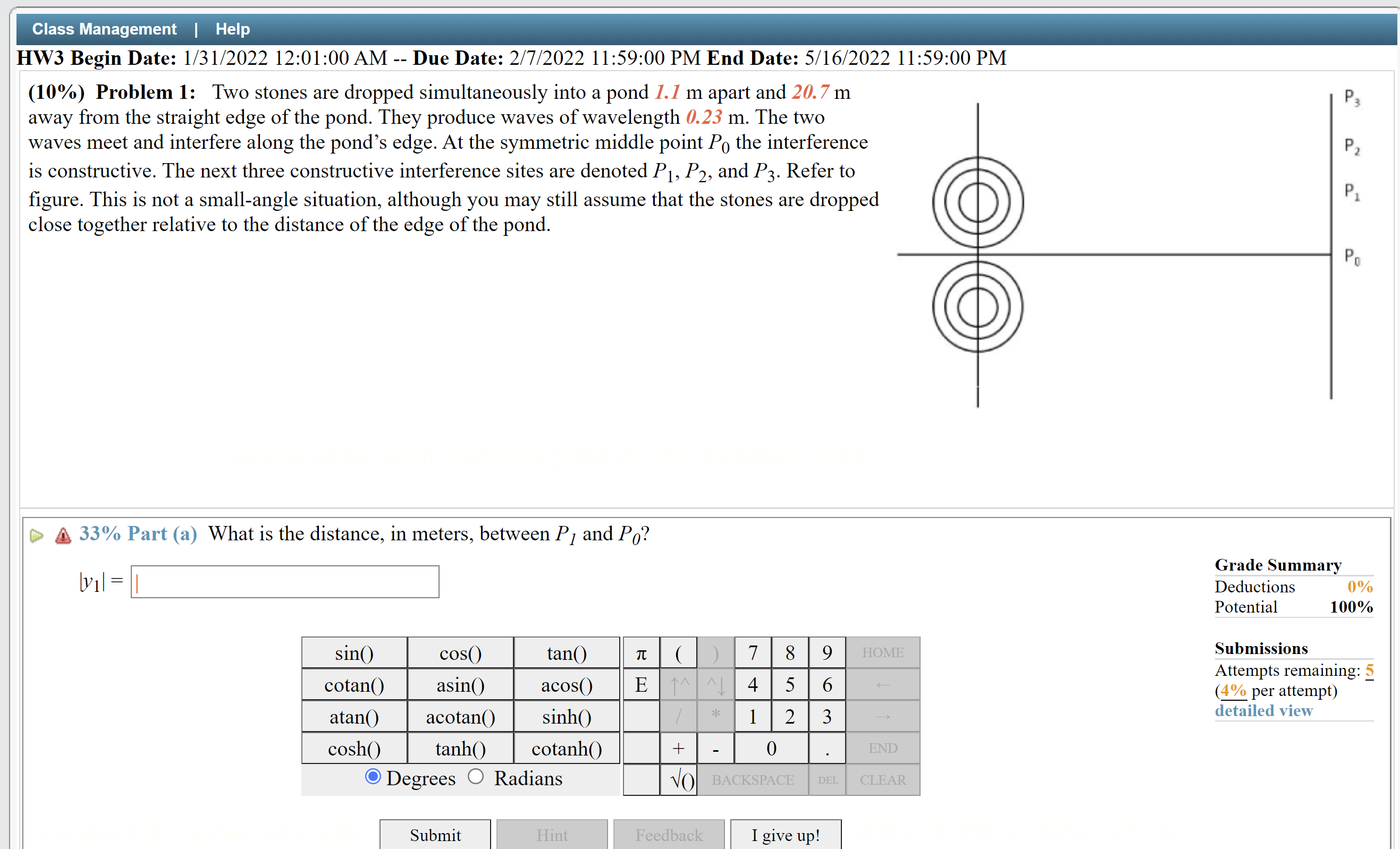
, Class Management | Help HW3 Begin Date: 1/31/2022 12:01:00 AM -- Due Date: 2/7/2022 11:59:00 PM End Date: 5/16/2022 11:59:00 PM (10%) Problem 1: Two stones are dropped simultaneously into a pond 1.1 m apart and 20. 7 m P; away from the straight edge of the pond. They produce waves of wavelength 0.23 m. The two waves meet and interfere along the pond's edge. At the symmetric middle point Po the interference p) is constructive. The next three constructive interference sites are denoted P1, P2, and P3. Refer to gure. This is not a small-angle situation, although you may still assume that the stones are dropped P1 close together relative to the distance of the edge of the pond. Po [> A 33% Part (a) What is the distance, in meters, between P1 and P0? Grade Summary [VII = i Deductions 0% Potential 100% Submissions , Attempts remaining: (4%peranempt) detailed view tanh() Degrees O Radians I Submit ll Hint H Feedback ll Igive up
Step by Step Solution
There are 3 Steps involved in it

Get step-by-step solutions from verified subject matter experts