







Question: two technology models: 1. Perceived usefulness (PU) is defined as the degree to which a person believes that using a system would enhance job performance
two technology models:
1. Perceived usefulness (PU) is defined as the degree to which a person believes that using a system would enhance job performance
2.Perceived ease of use (PEOU) refers to the degree to which a person believes that using a system would be free of effort
two technology acceptance models that can explain individual users technology adoption behavior. In your opinion, which one is a better one? Please elaborate your answer in detail (20%)
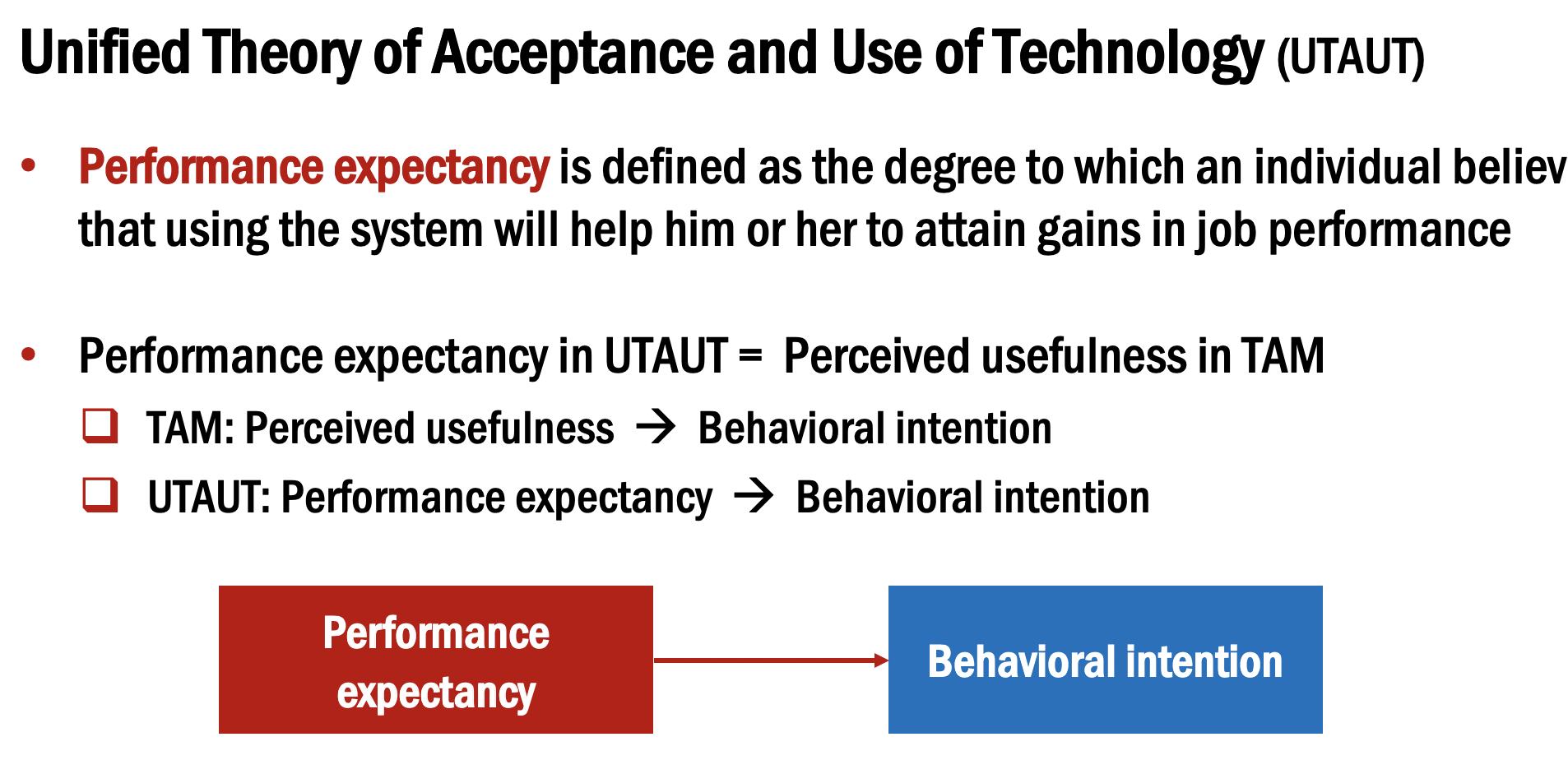
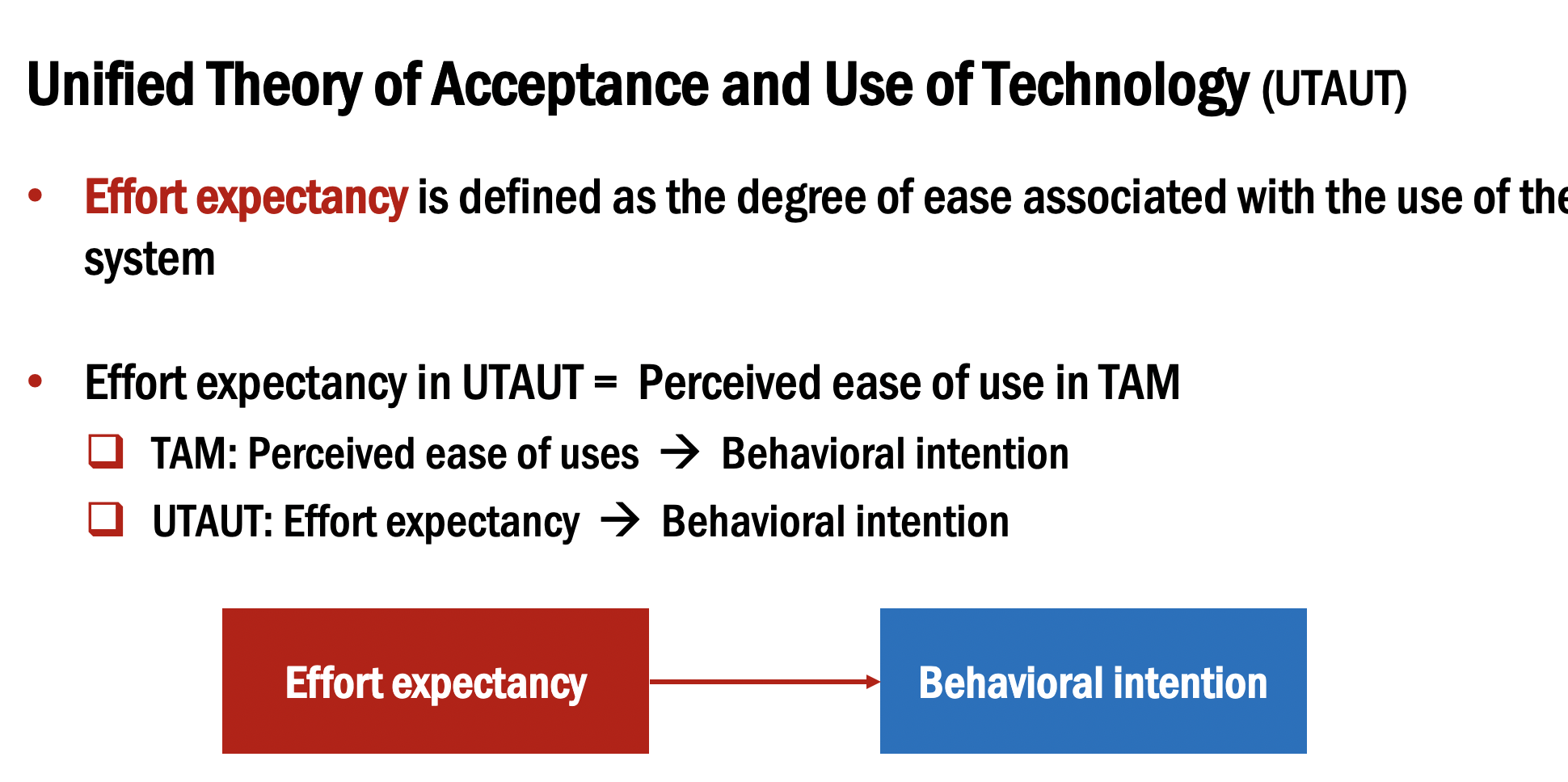
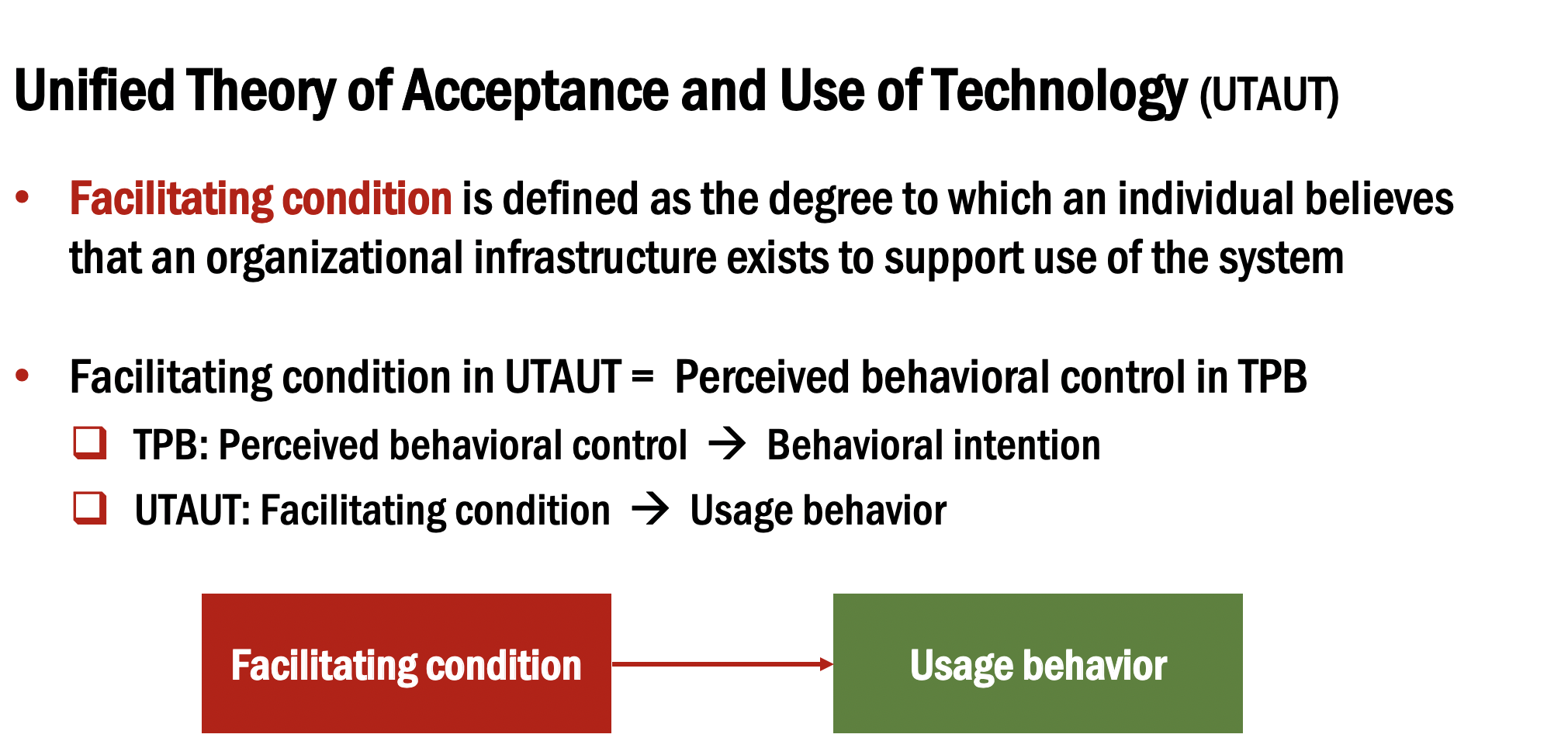
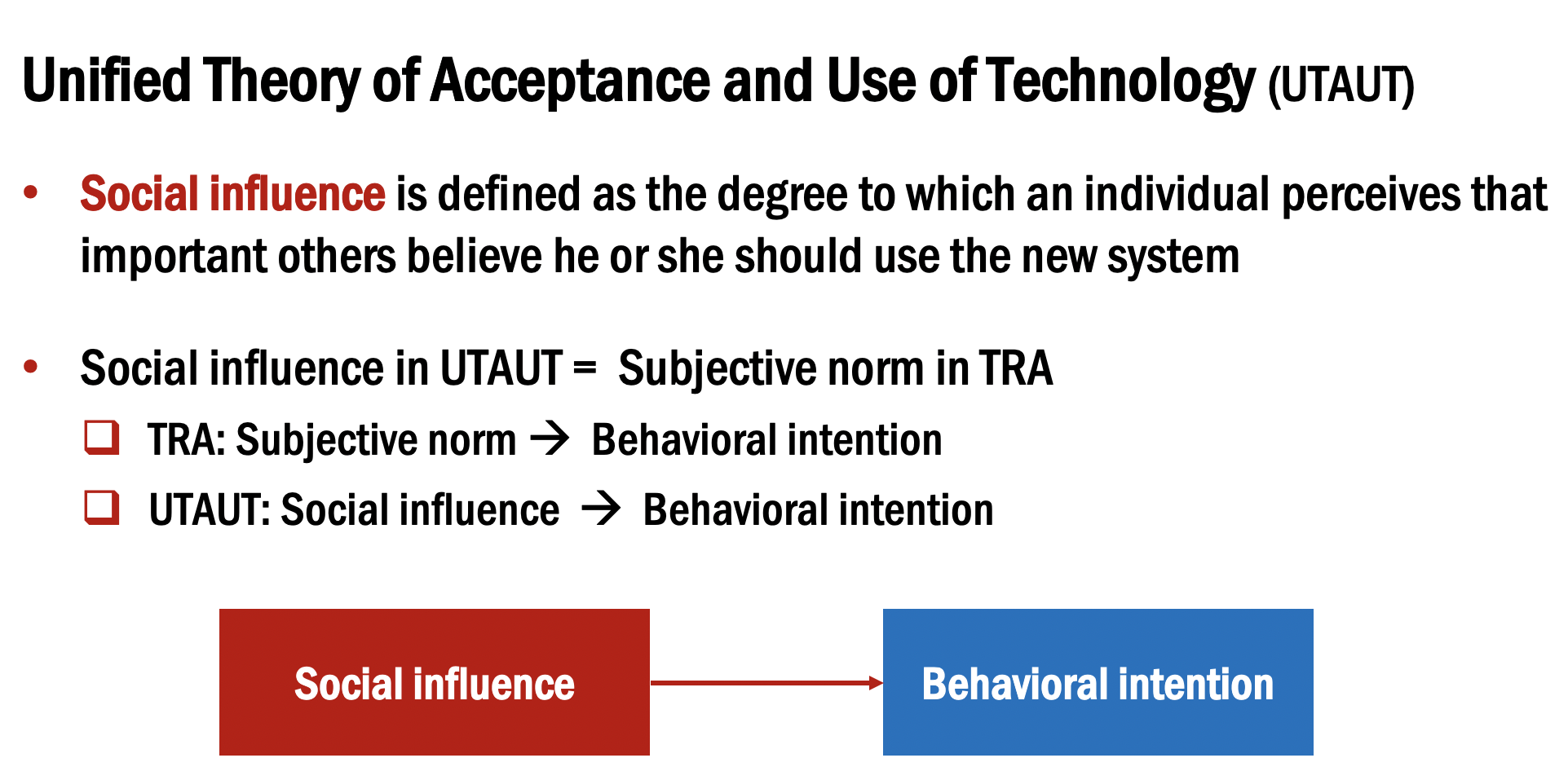
Unified Theory of Acceptance and Use of Technology (UTAUT) Performance expectancy is defined as the degree to which an individual believ that using the system will help him or her to attain gains in job performance Performance expectancy in UTAUT = Perceived usefulness in TAM O TAM: Perceived usefulness > Behavioral intention UTAUT: Performance expectancy Behavioral intention Performance expectancy Behavioral intention Unified Theory of Acceptance and Use of Technology (UTAUT) Effort expectancy is defined as the degree of ease associated with the use of the system Effort expectancy in UTAUT = Perceived ease of use in TAM TAM: Perceived ease of uses Behavioral intention UTAUT: Effort expectancy Behavioral intention Effort expectancy Behavioral intention Unified Theory of Acceptance and Use of Technology (UTAUT) Facilitating condition is defined as the degree to which an individual believes that an organizational infrastructure exists to support use of the system Facilitating condition in UTAUT = Perceived behavioral control in TPB OTPB: Perceived behavioral control Behavioral intention UTAUT: Facilitating condition Usage behavior Facilitating condition Usage behavior Unified Theory of Acceptance and Use of Technology (UTAUT) . Social influence is defined as the degree to which an individual perceives that important others believe he or she should use the new system Social influence in UTAUT = Subjective norm in TRA TRA: Subjective norm Behavioral intention UTAUT: Social influence Behavioral intention Social influence Behavioral intention
Step by Step Solution
There are 3 Steps involved in it
1 Expert Approved Answer
Step: 1 Unlock

Question Has Been Solved by an Expert!
Get step-by-step solutions from verified subject matter experts
Step: 2 Unlock
Step: 3 Unlock
 Study Help