







Question: Two-Period Life-Cycle Model With a Borrowing Constraint 0 Individual maximization problem: mania; 111(11, (:1) + uz(12, c2) subject to: I1 = T h1 I2 =
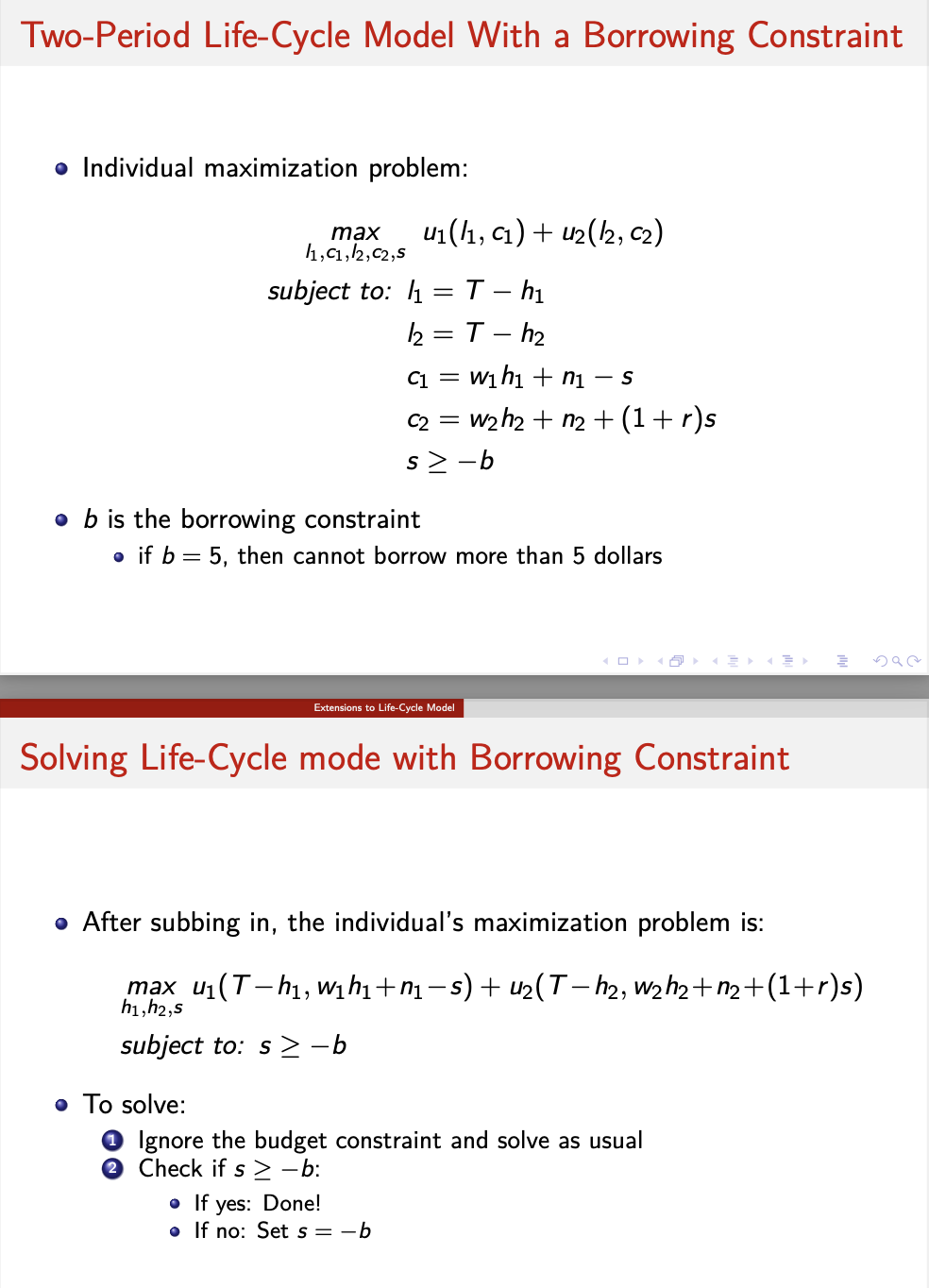
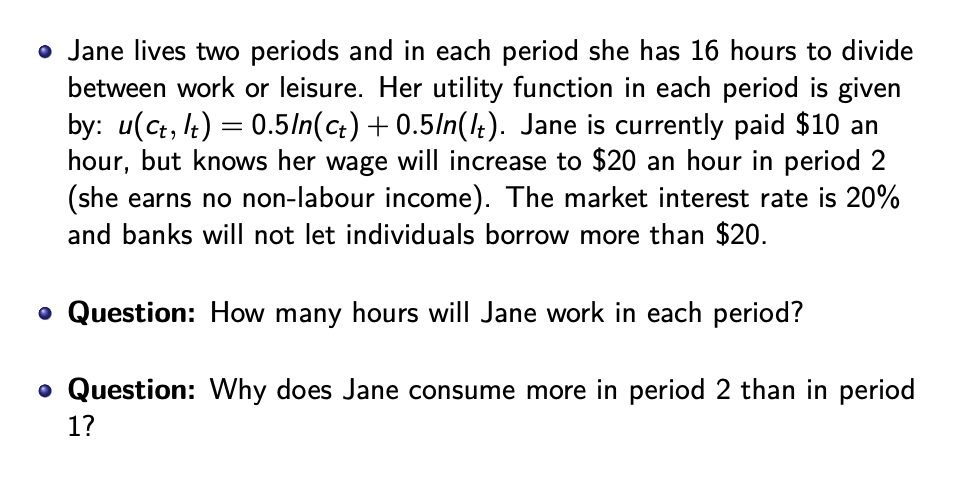
Two-Period Life-Cycle Model With a Borrowing Constraint 0 Individual maximization problem: mania; 111(11, (:1) + uz(12, c2) subject to: I1 = T h1 I2 = T [12 C1 = w1h1+n1s 2=W2h2+n2+(1+r)s s 2 b o b is the borrowing constraint 0 if b : 5, then cannot borrow more than 5 dollars [are nsiuns to Life-Cycle Model Solving LifeCycle mode with Borrowing Constraint 0 After subbing in, the individual's maximization problem is: hmfax u1(Th1,w1h1+n1s)+ u2(Th2, w2h2+n2+(1+r)s) l: 2:5 subject to: s 2 b 0 To solve: o Ignore the budget constraint and solve as usual 9 Check ifs 2 b: o If yes: Done! 0 If no: Set 5: b 0 Jane lives two periods and in each period she has 16 hours to divide between work or leisure. Her utility function in each period is given by: u(ct, It) : 0.5In(ct) + 0.5In(lt). Jane is currently paid $10 an hour, but knows her wage will increase to $20 an hour in period 2 (she earns no nonlabour income). The market interest rate is 20% and banks will not let individuals borrow more than $20. 0 Question: How many hours will Jane work in each period? a Question: Why does Jane consume more in period 2 than in period 1
Step by Step Solution
There are 3 Steps involved in it

Get step-by-step solutions from verified subject matter experts
 Study Help