







Question: UDP 1. UDP stands for a. User-Device Protocol b. Usage Description Protocol c. Utilization Dependent Processing d. User Datagram Protocol 2. UDP is commonly used
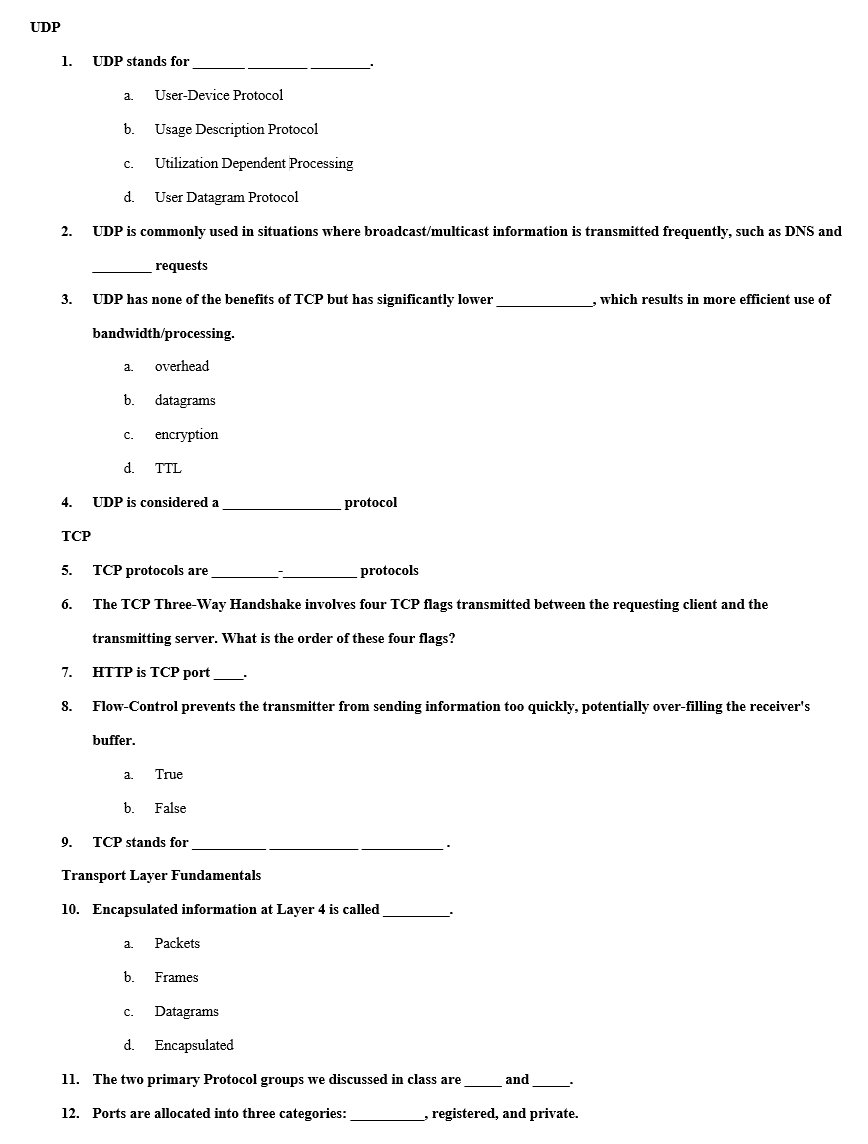
UDP 1. UDP stands for a. User-Device Protocol b. Usage Description Protocol c. Utilization Dependent Processing d. User Datagram Protocol 2. UDP is commonly used in situations where broadcast/multicast information is transmitted frequently, such as DNS and requests 3. UDP has none of the benefits of TCP but has significantly lower which results in more efficient use of bandwidth/processing. a. overhead b. datagrams encryption d. TTL 4. UDP is considered a protocol TCP 5. TCP protocols are protocols 6. The TCP Three-Way Handshake involves four TCP flags transmitted between the requesting client and the transmitting server. What is the order of these four flags? 7. HTTP is TCP port_ 8. Flow-Control prevents the transmitter from sending information too quickly, potentially over-filling the receiver's buffer. a True b. False 9. TCP stands for Transport Layer Fundament 10. Encapsulated information at Layer 4 is called a Packets b. Frames c. Datagrams d. Encapsulated 11. The two primary Protocol groups we discussed in class are and 12. Ports are allocated into three categories: registered, and private
Step by Step Solution
There are 3 Steps involved in it

Get step-by-step solutions from verified subject matter experts
 Study Help