







Question: UNIT #0 - LESSON 0 Getting Back to the Basics {subtitled) - The Things You Should Already Know 1. 0 INTRODUCTION Physics is an empirical
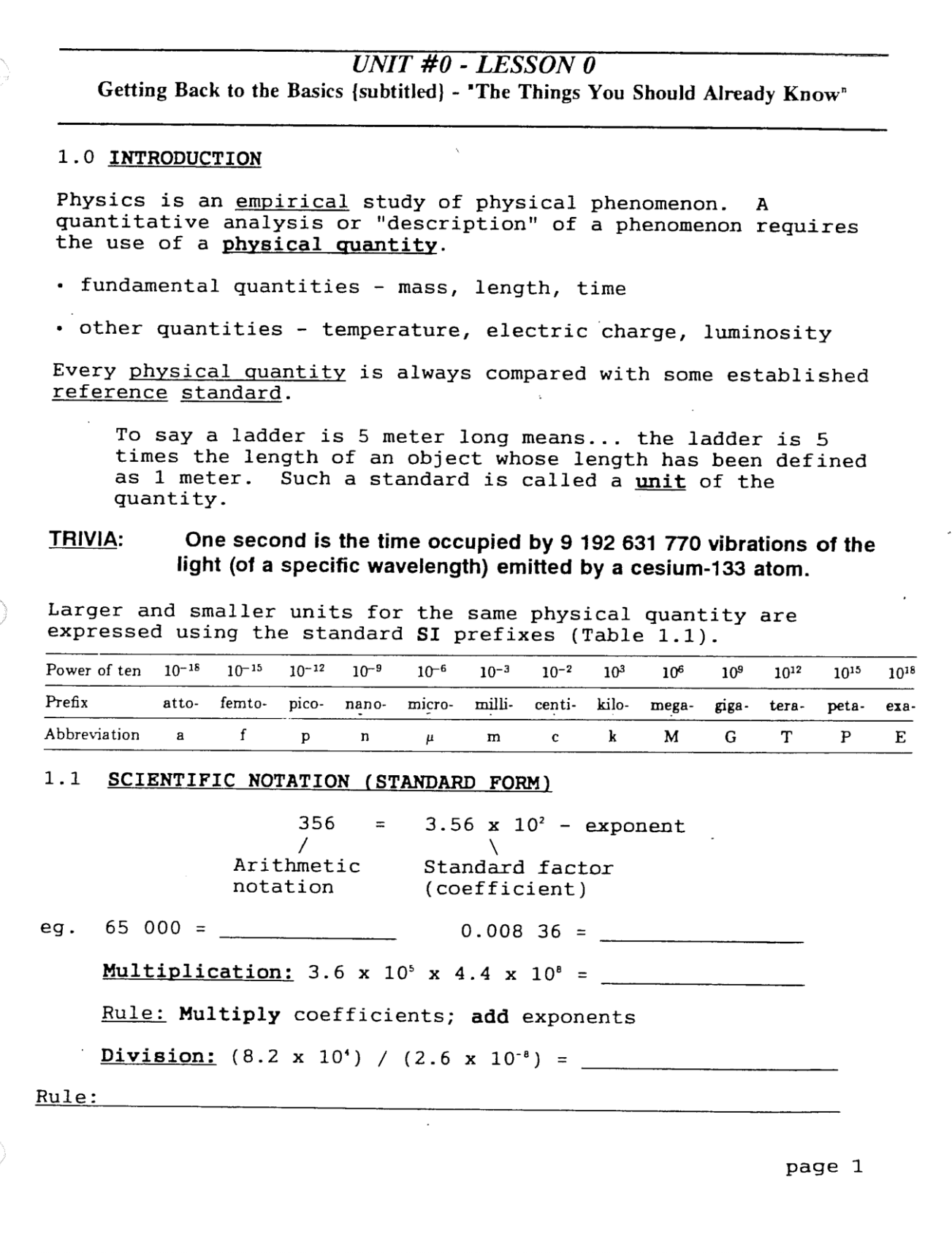
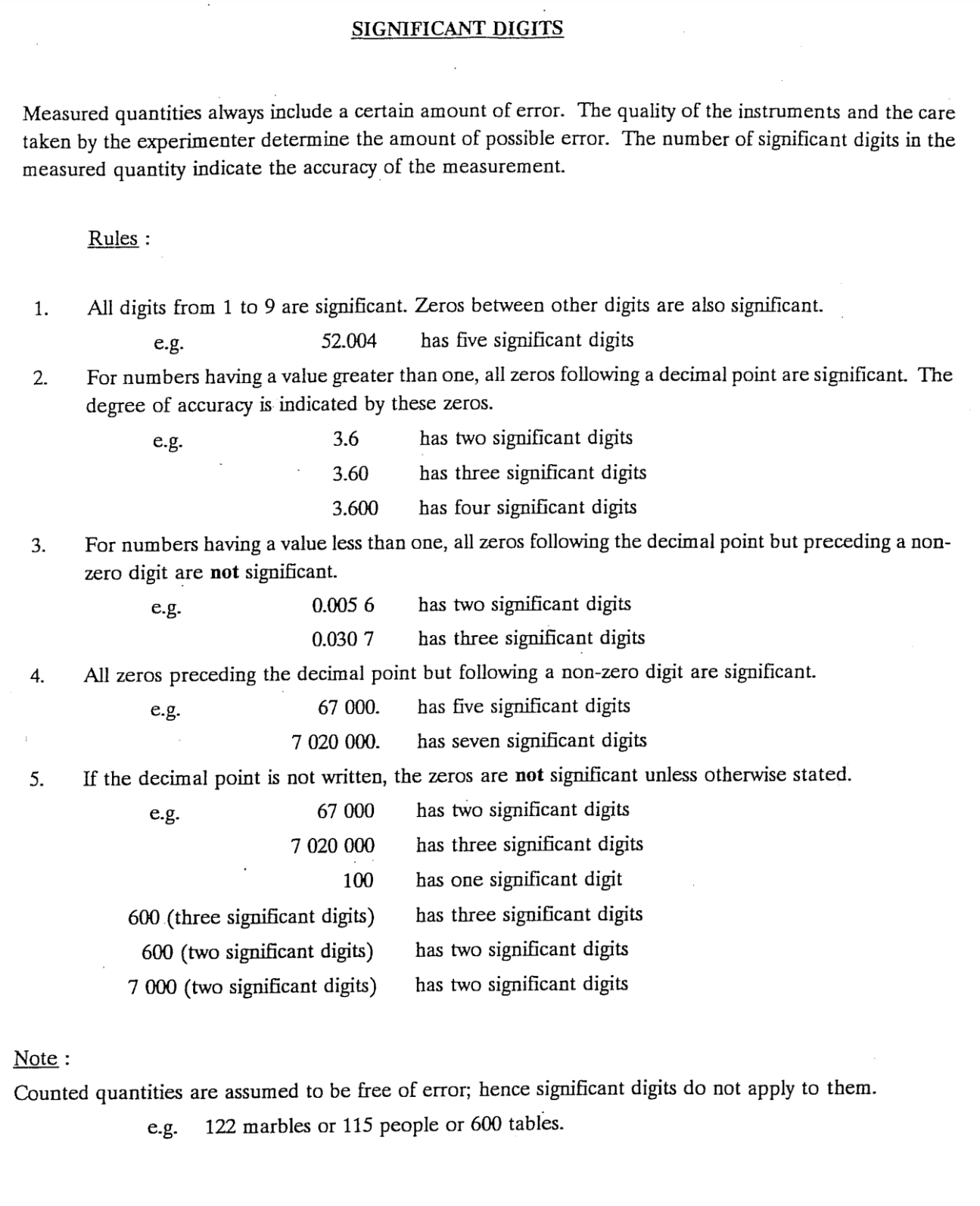
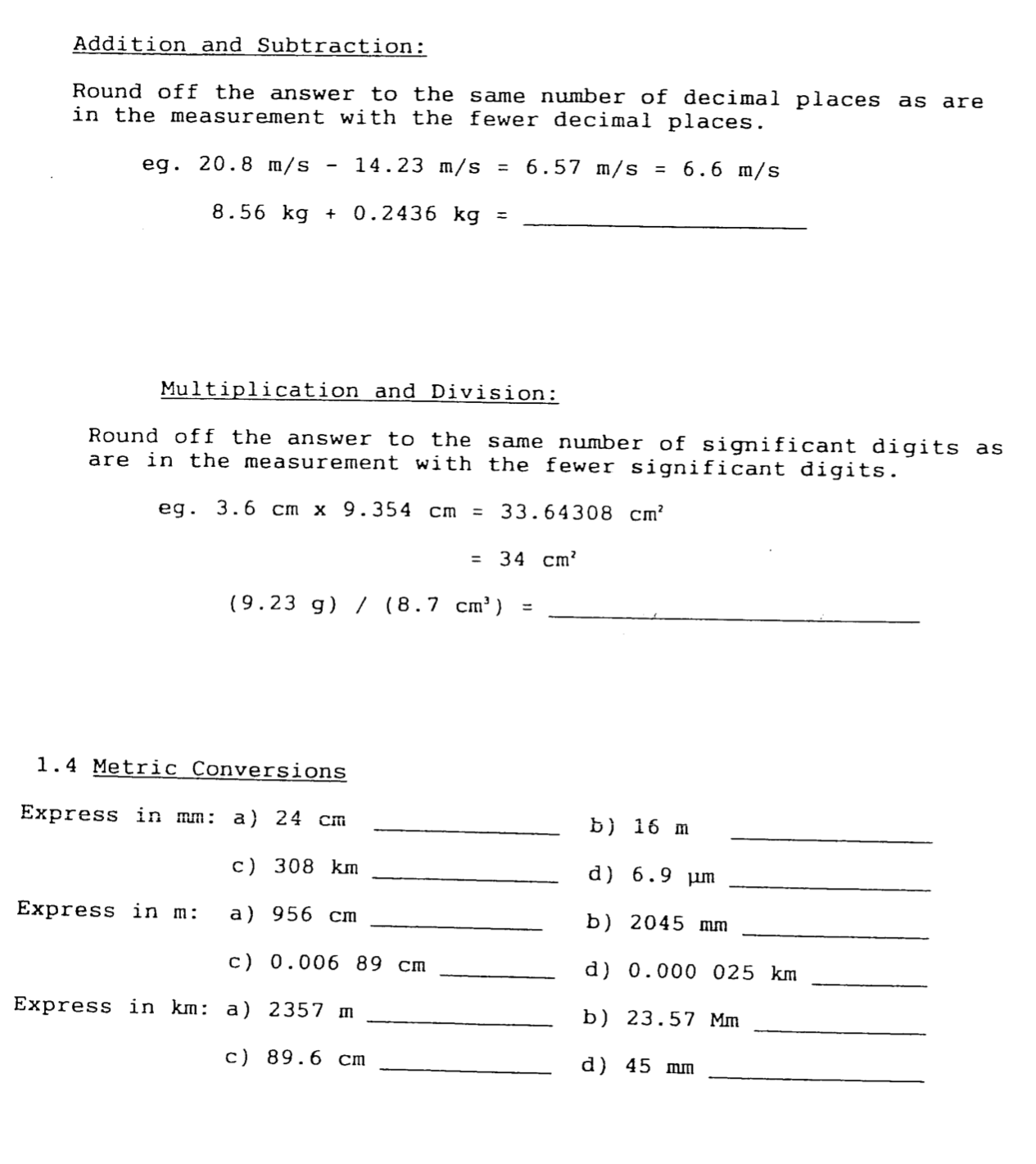
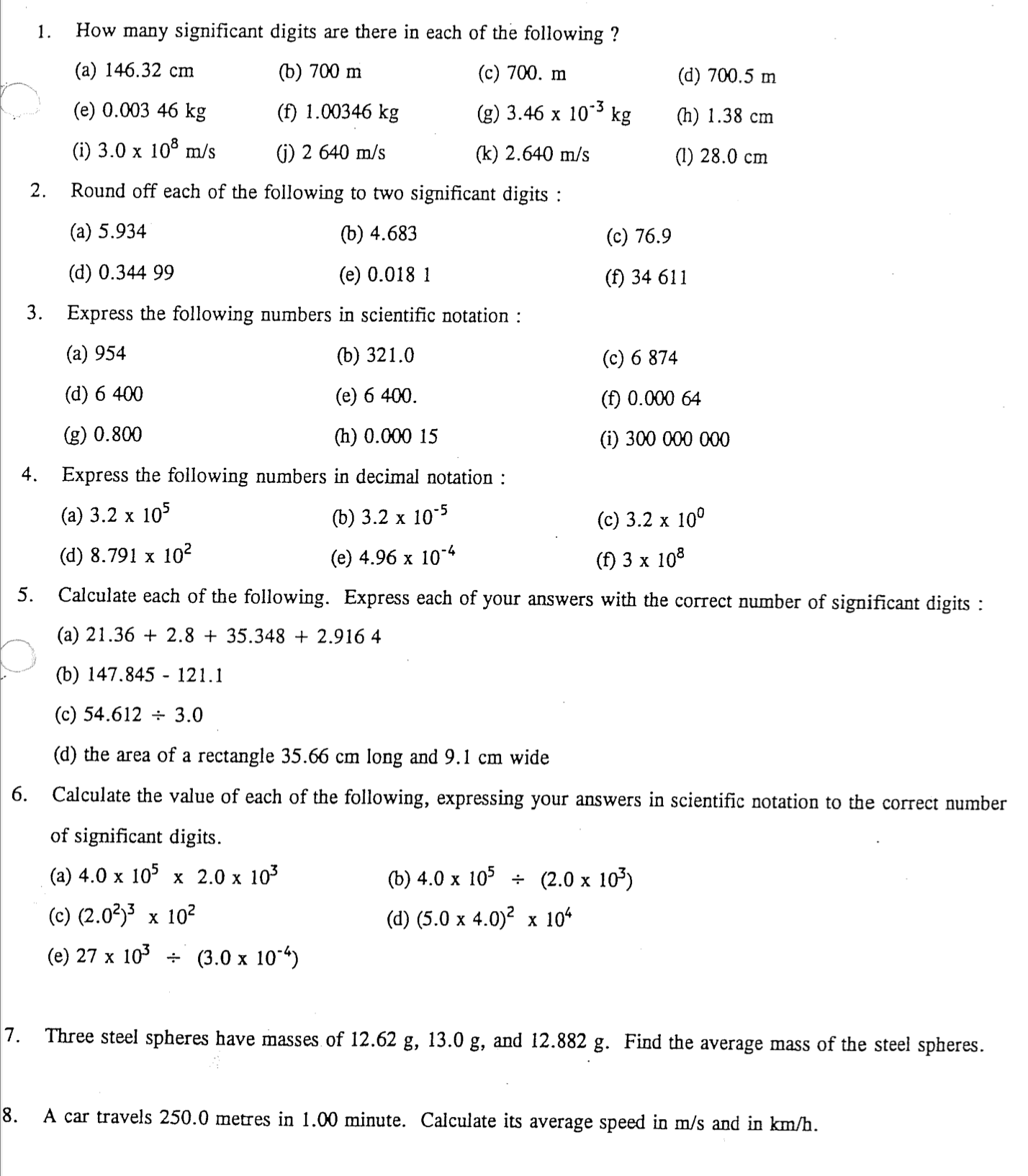
UNIT #0 - LESSON 0 Getting Back to the Basics {subtitled) - "The Things You Should Already Know" 1. 0 INTRODUCTION Physics is an empirical study of physical phenomenon. A quantitative analysis or "description" of a phenomenon requires the use of a physical quantity. fundamental quantities - mass, length, time . other quantities - temperature, electric charge, luminosity Every physical quantity is always compared with some established reference standard. To say a ladder is 5 meter long means. . . the ladder is 5 times the length of an object whose length has been defined as 1 meter. Such a standard is called a unit of the quantity. TRIVIA: One second is the time occupied by 9 192 631 770 vibrations of the light (of a specific wavelength) emitted by a cesium-133 atom. Larger and smaller units for the same physical quantity are expressed using the standard SI prefixes (Table 1.1). Power of ten 10-18 10-15 10-12 10-9 10-6 10-3 10-2 103 106 109 1012 1015 1018 Prefix atto- femto- pico- nano- micro- milli- centi- kilo- mega- giga - tera- peta- exa- Abbreviation f p n m k M G T P E 1. 1 SCIENTIFIC NOTATION ( STANDARD FORM) 356 = 3.56 x 10' - exponent Arithmetic Standard factor notation ( coefficient ) eg . 65 000 = 0 . 008 36 = Multiplication: 3.6 x 105 x 4. 4 x 10 = Rule: Multiply coefficients; add exponents Division: (8.2 x 10') / (2.6 x 10⁻⁸) = Rule : page 1SIGNIFICANT DIGITS Measured quantities always include a certain amount of error. The quality of the instruments and the care taken by the experimenter determine the amount of possible error. The number of significant digits in the measured quantity indicate the accuracy of the measurement. Rules : 1. All digits from 1 to 9 are significant. Zeros between other digits are also significant. e.g. 52.004 has five significant digits 2. For numbers having a value greater than one, all zeros following a decimal point are significant. The degree of accuracy is indicated by these zeros. e.g 3.6 has two significant digits 3.60 has three significant digits 3.600 has four significant digits 3. For numbers having a value less than one, all zeros following the decimal point but preceding a non- zero digit are not significant. e.g. 0.005 6 has two significant digits 0.030 7 has three significant digits 4. All zeros preceding the decimal point but following a non-zero digit are significant. e.g. 67 000. has five significant digits 7 020 000. has seven significant digits 5. If the decimal point is not written, the zeros are not significant unless otherwise stated. e.g. 67 000 has two significant digits 7 020 000 has three significant digits 100 has one significant digit 600 (three significant digits) has three significant digits 600 (two significant digits) has two significant digits 7 000 (two significant digits) has two significant digits Note : Counted quantities are assumed to be free of error; hence significant digits do not apply to them. 122 marbles or 115 people or 600 tables.Addition and Subtraction: Round off the answer to the same number of decimal places as are in the measurement with the fewer decimal places. eg. 20.8 m/s 14.23 m/s 2 6.57 m/s = 6.6 m/s H 8.56 kg + 0.2436 kg Multiplication and Division: = 34 cm' (9.23 g} / (8.7 cm') I 1.4 Metric Conversions Express in mm: a) 24 cm b) 16 m d) 6.9 um C) 308 km Express in m: a) 956 cm b) 2045 mm C) 0.006 89 cm d} 0-000 025 km b] 23.57 Mm Express in km: a) 235? m d) 45 mm c) 89.6 cm 1. How many significant digits are there in each of the following ? (a) 146.32 cm (b) 700 m (c) 700. m (d) 700.5 m (e) 0.003 46 kg (f) 1.00346 kg (g) 3.46 x 10" kg (h) 1.38 cm (i) 3.0 x 10 m/s (i) 2 640 m/s (k) 2.640 m/s (1) 28.0 cm 2. Round off each of the following to two significant digits : (a) 5.934 (b) 4.683 (c) 76.9 (d) 0.344 99 (e) 0.018 1 (f) 34 611 3. Express the following numbers in scientific notation : (a) 954 (b) 321.0 (c) 6 874 (d) 6 400 (e) 6 400. (f) 0.000 64 (g) 0.800 (h) 0.000 15 (i) 300 000 000 4. Express the following numbers in decimal notation : (a) 3.2 x 10⁵ (b) 3.2 x 10⁻⁵ (c) 3.2 x 100 (d) 8.791 x 10² (e) 4.96 x 10⁻⁴ (f) 3 x 10⁸ 5. Calculate each of the following. Express each of your answers with the correct number of significant digits : (a) 21.36 + 2.8 + 35.348 + 2.916 4 (b) 147.845 - 121.1 (c) 54.612 + 3.0 (d) the area of a rectangle 35.66 cm long and 9.1 cm wide 6. Calculate the value of each of the following, expressing your answers in scientific notation to the correct number of significant digits. (a) 4.0 x 10' x 2.0 x 10³ (b) 4.0 x 10' : (2.0 x 10⁵) (c) (2.02)3 x 10² (d) (5.0 x 4.0)2 x 10" (e) 27 x 10' = (3.0 x 10⁻⁴) 7. Three steel spheres have masses of 12.62 g, 13.0 g, and 12.882 g. Find the average mass of the steel spheres. 8. A car travels 250.0 metres in 1.00 minute. Calculate its average speed in m/s and in km/h
Step by Step Solution
There are 3 Steps involved in it

Get step-by-step solutions from verified subject matter experts
 Study Help