







Question: Unit Two Data Case Paper Complete a three-page, APA-formatted paper based on the Data Case assignment located at the end of chapter 2 in your
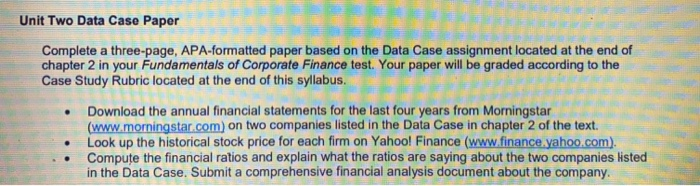
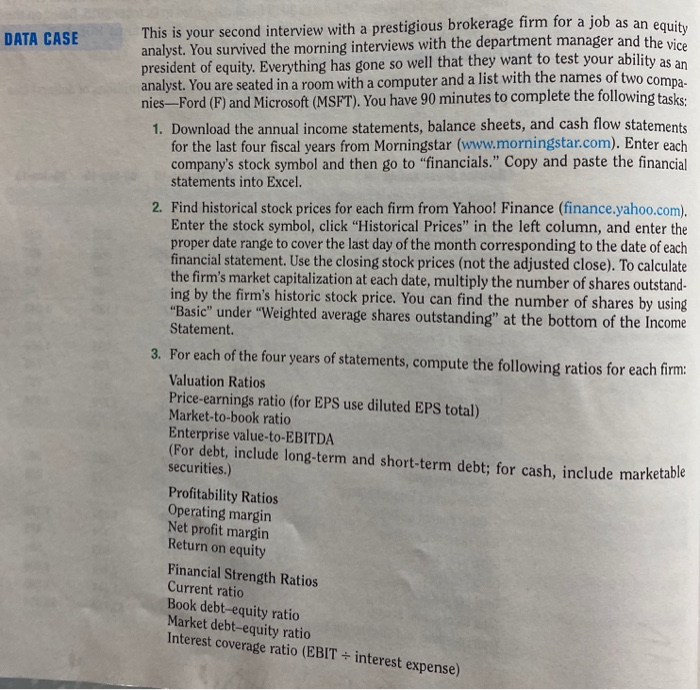
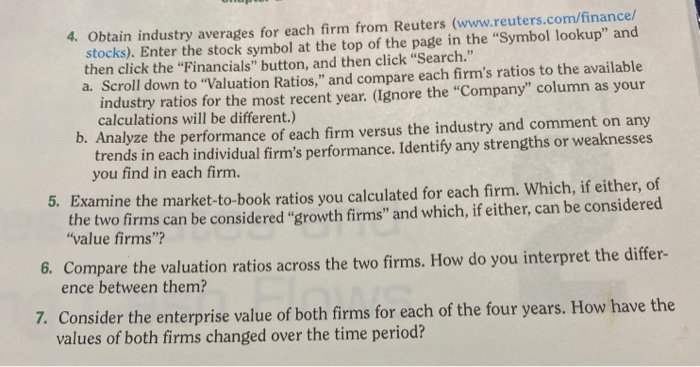
Unit Two Data Case Paper Complete a three-page, APA-formatted paper based on the Data Case assignment located at the end of chapter 2 in your Fundamentals of Corporate Finance test. Your paper will be graded according to the Case Study Rubric located at the end of this syllabus. Download the annual financial statements for the last four years from Morningstar (www.morningstar.com) on two companies listed in the Data Case in chapter 2 of the text. Look up the historical stock price for each firm on Yahoo! Finance (www.finance.yahoo.com). Compute the financial ratios and explain what the ratios are saying about the two companies listed in the Data Case. Submit a comprehensive financial analysis document about the company. . DATA CASE This is your second interview with a prestigious brokerage firm for a job as an equity analyst. You survived the morning interviews with the department manager and the vice president of equity. Everything has gone so well that they want to test your ability as an analyst. You are seated in a room with a computer and a list with the names of two compa- nies-Ford (F) and Microsoft (MSFT). You have 90 minutes to complete the following tasks: 1. Download the annual income statements, balance sheets, and cash flow statements for the last four fiscal years from Morningstar (www.morningstar.com). Enter each company's stock symbol and then go to "financials." Copy and paste the financial statements into Excel. 2. Find historical stock prices for each firm from Yahoo! Finance (finance.yahoo.com). Enter the stock symbol, click "Historical Prices" in the left column, and enter the proper date range to cover the last day of the month corresponding to the date of each financial statement. Use the closing stock prices (not the adjusted close). To calculate the firm's market capitalization at each date, multiply the number of shares outstand- ing by the firm's historic stock price. You can find the number of shares by using "Basic" under "Weighted average shares outstanding" at the bottom of the Income Statement. 3. For each of the four years of statements, compute the following ratios for each firm: Valuation Ratios Price-earnings ratio (for EPS use diluted EPS total) Market-to-book ratio Enterprise value-to-EBITDA (For debt, include long-term and short-term debt; for cash, include marketable securities.) Profitability Ratios Operating margin Net profit margin Return on equity Financial Strength Ratios Current ratio Book debt equity ratio Market debt-equity ratio Interest coverage ratio (EBIT + interest expense) 4. Obtain industry averages for each firm from Reuters (www.reuters.com/finance/ stocks). Enter the stock symbol at the top of the page in the "Symbol lookup" and then click the "Financials" button, and then click "Search." a. Scroll down to "Valuation Ratios," and compare each firm's ratios to the available industry ratios for the most recent year. (Ignore the "Company column as your calculations will be different.) b. Analyze the performance of each firm versus the industry and comment on any trends in each individual firm's performance. Identify any strengths or weaknesses you find in each firm. 5. Examine the market-to-book ratios you calculated for each firm. Which, if either, of the two firms can be considered growth firms and which, if either, can be considered "value firms"? 6. Compare the valuation ratios across the two firms. How do you interpret the differ- ence between them? 7. Consider the enterprise value of both firms for each of the four years. How have the values of both firms changed over the time period? Unit Two Data Case Paper Complete a three-page, APA-formatted paper based on the Data Case assignment located at the end of chapter 2 in your Fundamentals of Corporate Finance test. Your paper will be graded according to the Case Study Rubric located at the end of this syllabus. Download the annual financial statements for the last four years from Morningstar (www.morningstar.com) on two companies listed in the Data Case in chapter 2 of the text. Look up the historical stock price for each firm on Yahoo! Finance (www.finance.yahoo.com). Compute the financial ratios and explain what the ratios are saying about the two companies listed in the Data Case. Submit a comprehensive financial analysis document about the company. . DATA CASE This is your second interview with a prestigious brokerage firm for a job as an equity analyst. You survived the morning interviews with the department manager and the vice president of equity. Everything has gone so well that they want to test your ability as an analyst. You are seated in a room with a computer and a list with the names of two compa- nies-Ford (F) and Microsoft (MSFT). You have 90 minutes to complete the following tasks: 1. Download the annual income statements, balance sheets, and cash flow statements for the last four fiscal years from Morningstar (www.morningstar.com). Enter each company's stock symbol and then go to "financials." Copy and paste the financial statements into Excel. 2. Find historical stock prices for each firm from Yahoo! Finance (finance.yahoo.com). Enter the stock symbol, click "Historical Prices" in the left column, and enter the proper date range to cover the last day of the month corresponding to the date of each financial statement. Use the closing stock prices (not the adjusted close). To calculate the firm's market capitalization at each date, multiply the number of shares outstand- ing by the firm's historic stock price. You can find the number of shares by using "Basic" under "Weighted average shares outstanding" at the bottom of the Income Statement. 3. For each of the four years of statements, compute the following ratios for each firm: Valuation Ratios Price-earnings ratio (for EPS use diluted EPS total) Market-to-book ratio Enterprise value-to-EBITDA (For debt, include long-term and short-term debt; for cash, include marketable securities.) Profitability Ratios Operating margin Net profit margin Return on equity Financial Strength Ratios Current ratio Book debt equity ratio Market debt-equity ratio Interest coverage ratio (EBIT + interest expense) 4. Obtain industry averages for each firm from Reuters (www.reuters.com/finance/ stocks). Enter the stock symbol at the top of the page in the "Symbol lookup" and then click the "Financials" button, and then click "Search." a. Scroll down to "Valuation Ratios," and compare each firm's ratios to the available industry ratios for the most recent year. (Ignore the "Company column as your calculations will be different.) b. Analyze the performance of each firm versus the industry and comment on any trends in each individual firm's performance. Identify any strengths or weaknesses you find in each firm. 5. Examine the market-to-book ratios you calculated for each firm. Which, if either, of the two firms can be considered growth firms and which, if either, can be considered "value firms"? 6. Compare the valuation ratios across the two firms. How do you interpret the differ- ence between them? 7. Consider the enterprise value of both firms for each of the four years. How have the values of both firms changed over the time period
Step by Step Solution
There are 3 Steps involved in it

Get step-by-step solutions from verified subject matter experts
 Study Help