



Question: Unread replies 3 1 Replies When the Titanic struck the iceberg, the weather was bad, the lookouts were not properly equipped, the radio operator was
Unread replies
Replies
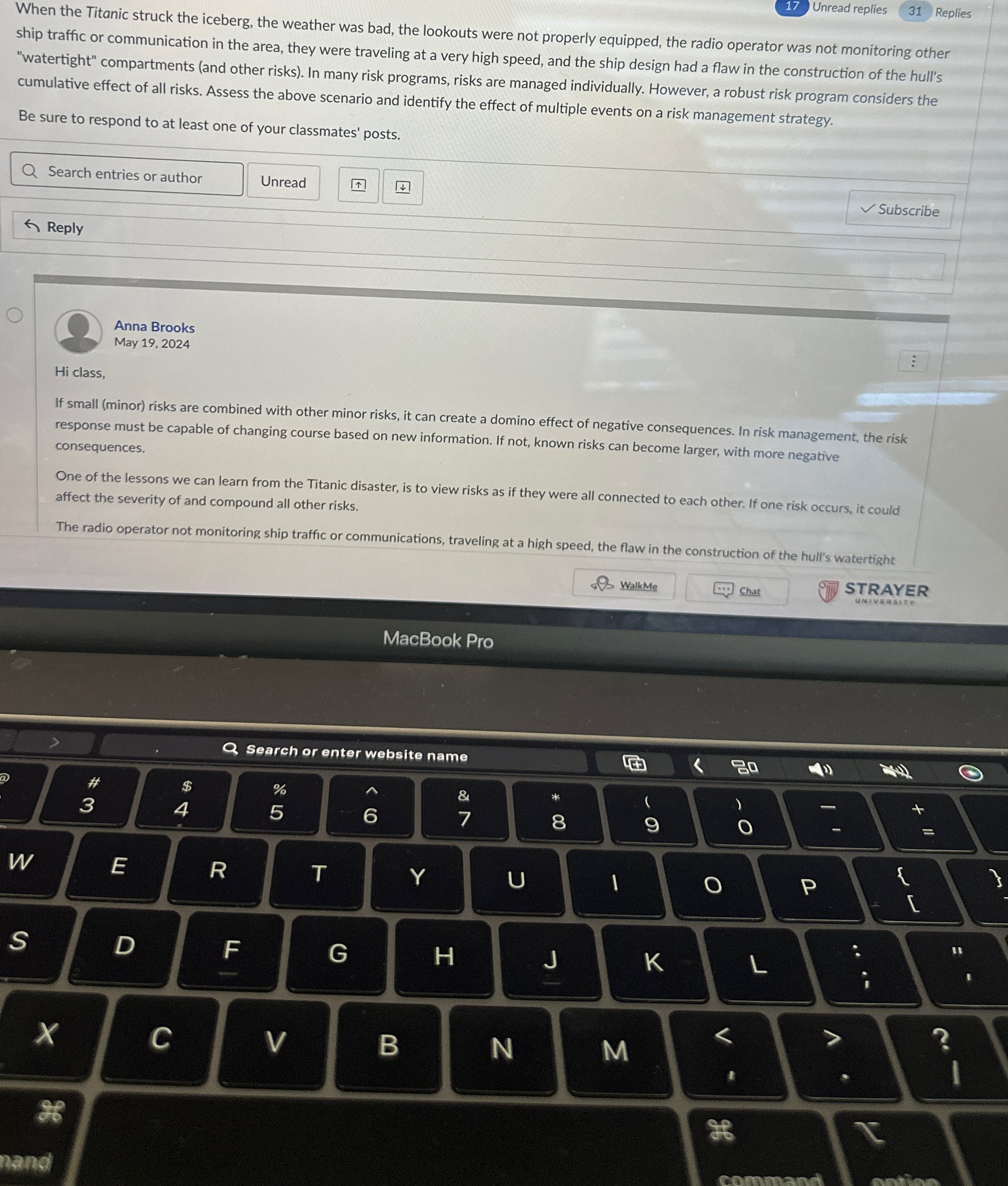
When the Titanic struck the iceberg, the weather was bad, the lookouts were not properly equipped, the radio operator was not monitoring other ship traffic or communication in the area, they were traveling at a very high speed, and the ship design had a flaw in the construction of the hull's "watertight" compartments and other risks In many risk programs, risks are managed individually. However, a robust risk program considers the cumulative effect of all risks. Assess the above scenario and identify the effect of multiple events on a risk management strategy.
Be sure to respond to at least one of your classmates' posts.
Search entries or author
Unread
Reply
Anna Brooks
May
Hi class,
If small minor risks are combined with other minor risks, it can create a domino effect of negative consequences. In risk management, the risk response must be capable of changing course based on new information. If not, known risks can become larger, with more negative consequences.
One of the lessons we can learn from the Titanic disaster, is to view risks as if they were all connected to each other. If one risk occurs, it could affect the severity of and compound all other risks.
The radio operator not monitoring ship traffic or communications, traveling at a high speed, the flaw in the construction of the hull's watertight
MacBook Pro
Search or enter website name
Step by Step Solution
There are 3 Steps involved in it
1 Expert Approved Answer
Step: 1 Unlock

Question Has Been Solved by an Expert!
Get step-by-step solutions from verified subject matter experts
Step: 2 Unlock
Step: 3 Unlock