Question: URGENT ANSWER PLEASE QUESTION 3 Location is a significant cost driver as it affects both fixed and variable costs in product or service distribution. In

URGENT ANSWER PLEASE
URGENT ANSWER PLEASE QUESTION 3 Location is aURGENT ANSWER PLEASE QUESTION 3 Location is aURGENT ANSWER PLEASE QUESTION 3 Location is aURGENT ANSWER PLEASE QUESTION 3 Location is a

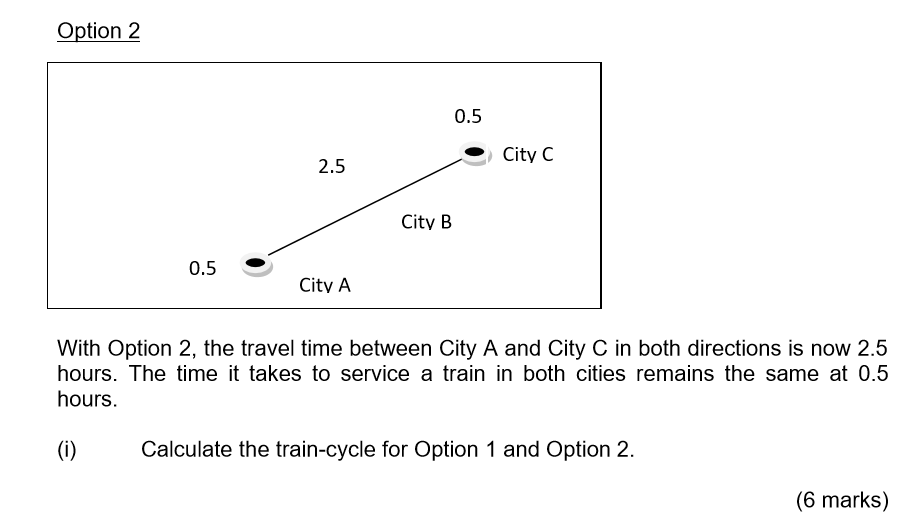
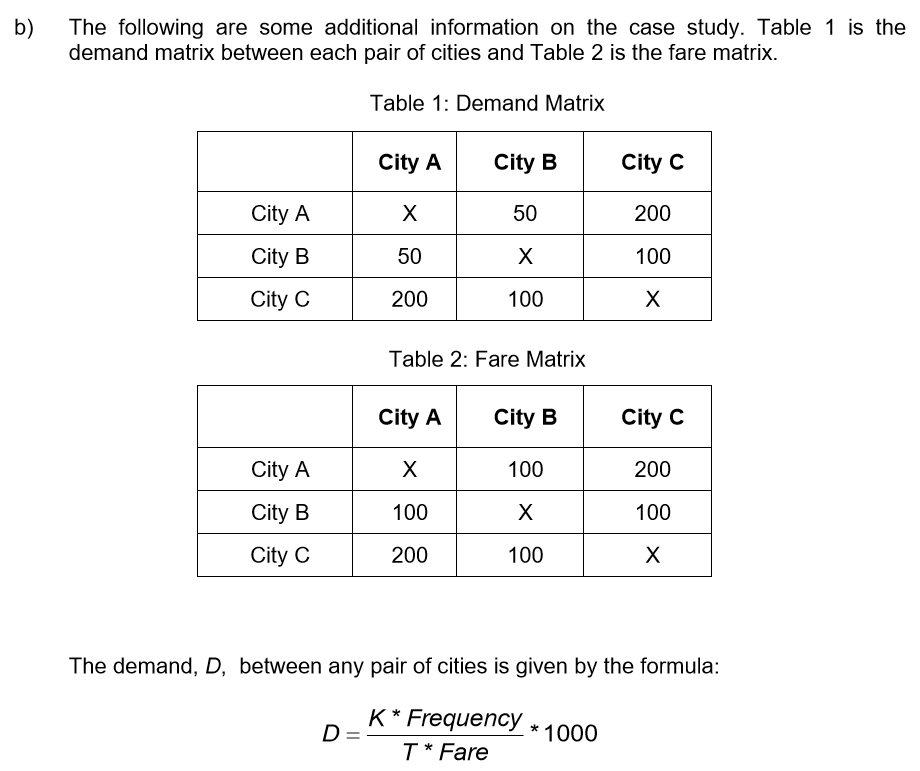
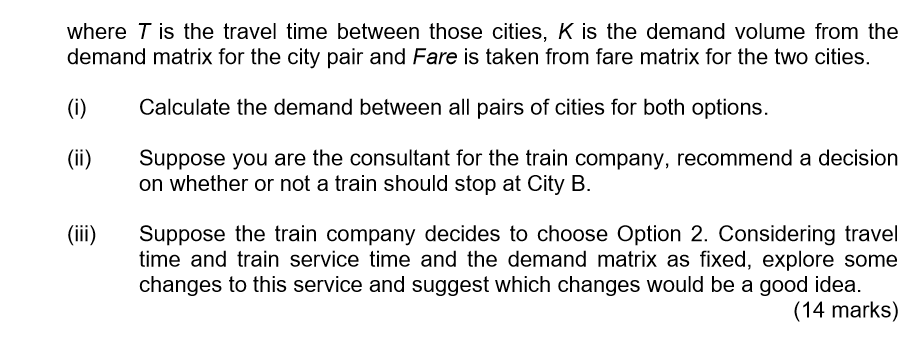
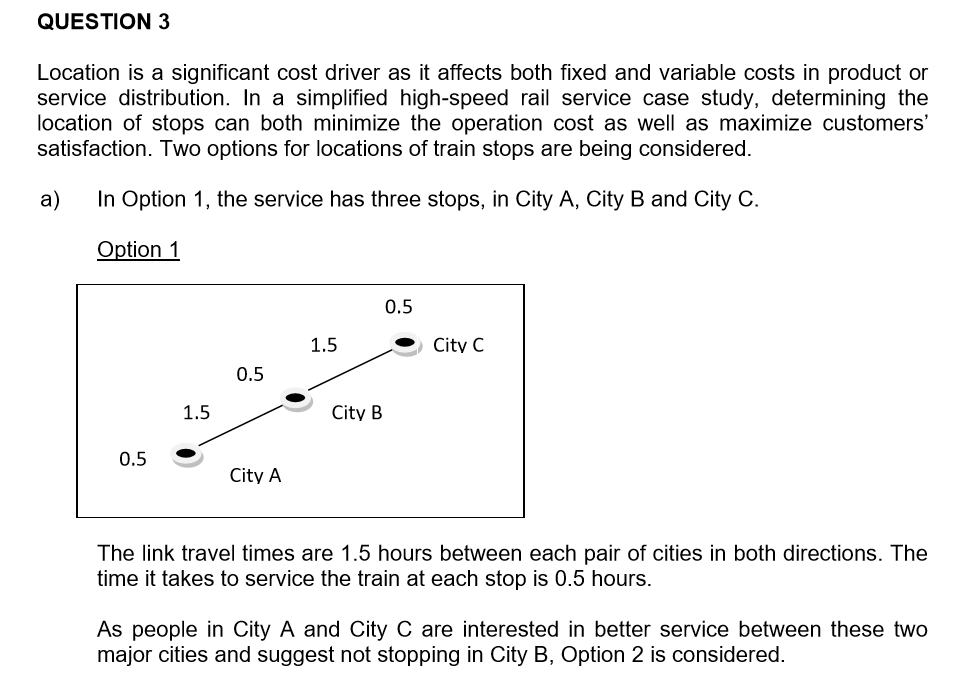
QUESTION 3 Location is a significant cost driver as it affects both fixed and variable costs in product or service distribution. In a simplified high-speed rail service case study, determining the location of stops can both minimize the operation cost as well as maximize customers' satisfaction. Two options for locations of train stops are being considered. a) In Option 1, the service has three stops, in City A, City B and City C. Option 1 0.5 1.5 City C 0.5 1.5 City B 0.5 City A The link travel times are 1.5 hours between each pair of cities in both directions. The time it takes to service the train at each stop is 0.5 hours. As people in City A and City C are interested in better service between these two major cities and suggest not stopping in City B, Option 2 is considered. Option 2 0.5 City C 2.5 City B 0.5 City A With Option 2, the travel time between City A and City C in both directions is now 2.5 hours. The time it takes to service a train in both cities remains the same at 0.5 hours. () Calculate the train-cycle for Option 1 and Option 2. (6 marks) b) The following are some additional information on the case study. Table 1 is the demand matrix between each pair of cities and Table 2 is the fare matrix. Table 1: Demand Matrix City A City B City C City A X 50 200 City B 50 100 City C 200 100 Table 2: Fare Matrix City A City B City C City A 100 200 100 100 City B City C 200 100 X The demand, D, between any pair of cities is given by the formula: * D K* Frequency T* Fare 1000 where I is the travel time between those cities, K is the demand volume from the demand matrix for the city pair and Fare is taken from fare matrix for the two cities. (1) Calculate the demand between all pairs of cities for both options. (ii) Suppose you are the consultant for the train company, recommend a decision on whether or not a train should stop at City B. (iii) Suppose the train company decides to choose Option 2. Considering travel time and train service time and the demand matrix as fixed, explore some changes to this service and suggest which changes would be a good idea. (14 marks)

Step by Step Solution

There are 3 Steps involved in it

1 Expert Approved Answer
Step: 1 Unlock blur-text-image

Question Has Been Solved by an Expert!

Get step-by-step solutions from verified subject matter experts

Step: 2 Unlock
Step: 3 Unlock

Students Have Also Explored These Related General Management Questions!