







Question: URGENT HELP NEEDED PROVIDE MULTISIM SCREENSHOT & SHOW WORK By utilizing Multisim simulation, measure the r m s values of the phasor ? b a
URGENT HELP NEEDED PROVIDE MULTISIM SCREENSHOT & SHOW WORK By utilizing Multisim simulation, measure the values of the phasor representing the voltage across the load and the phasor representing the current through the load Remove the load and measure the value of the Thevenin equivalent voltage across the opencircuited terminals A and B
Calculate the Thevenin equivalent phasor representing the voltage at the opencircuited terminals A and B Confirm the correctness of the calculated value of with that obtained with Multisim simulation.
Calculate the Thevenin equivalent impedance observed at the opencircuited terminals A and B
Using the calculated values of and and the load conduct a Multisim simulation of the Thevenin equivalent circuit. Measure the values for the current and the voltage across the load Compare these simulation readings with the corresponding values measured in the original circuit.
Using Multisim simulation, evaluate magnitude and argument of in the original circuit. By analyzing the simulation results, compare these values with the calculated value of
Include Multisim files
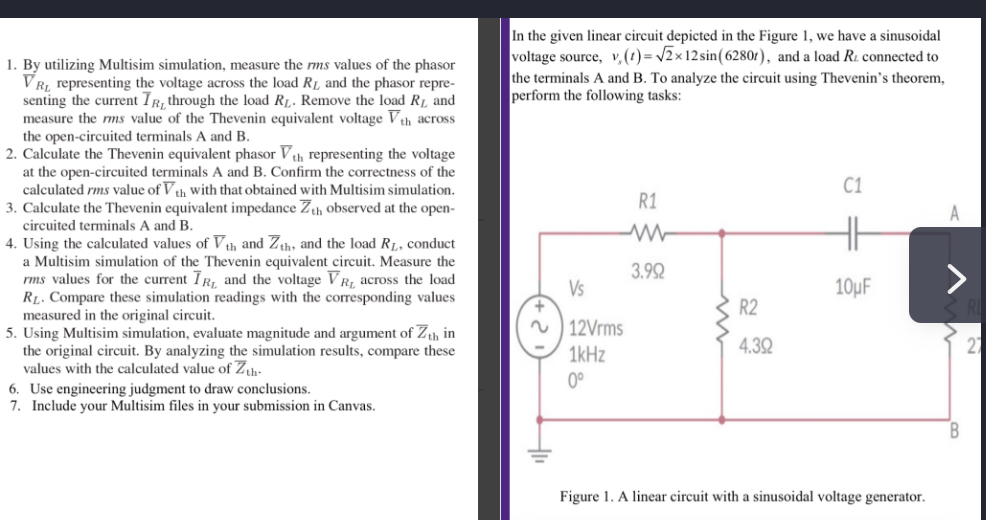
In the given linear circuit depicted in the Figure we have a sinusoidal voltage source, and a load connected to the terminals A and B To analyze the circuit using Thevenin's theorem, perform the following tasks:
Figure A linear circuit with a sinusoidal voltage generator.
Step by Step Solution
There are 3 Steps involved in it
1 Expert Approved Answer
Step: 1 Unlock

Question Has Been Solved by an Expert!
Get step-by-step solutions from verified subject matter experts
Step: 2 Unlock
Step: 3 Unlock
 Study Help