







Question: Use a correlated subquery to return one row per vendor, representing the vendor's oldest invoice (the one with the earliest date). Each row should include
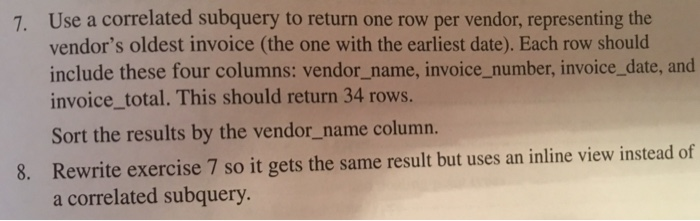
Use a correlated subquery to return one row per vendor, representing the vendor's oldest invoice (the one with the earliest date). Each row should include these four columns: vendor_name, invoice_number, invoice_date, and invoice_total. This should return 34 rows. Sort the results by the vendor_ name column. Rewrite exercise 7 so it gets the same result but uses an inline view instead of a correlated subquery 7. 8. Use a correlated subquery to return one row per vendor, representing the vendor's oldest invoice (the one with the earliest date). Each row should include these four columns: vendor_name, invoice_number, invoice_date, and invoice_total. This should return 34 rows. Sort the results by the vendor_ name column. Rewrite exercise 7 so it gets the same result but uses an inline view instead of a correlated subquery 7. 8
Step by Step Solution
There are 3 Steps involved in it

Get step-by-step solutions from verified subject matter experts
 Study Help