



Question: Use PESTEL ANALYSIS to analyze the 'BEYOND MEAT' case. What is the strategic planning process for BEYOND MEAT? Page 2 - (Whole Foods), Target Corporation,
Use PESTEL ANALYSIS to analyze the 'BEYOND MEAT' case.
What is the strategic planning process for BEYOND MEAT?
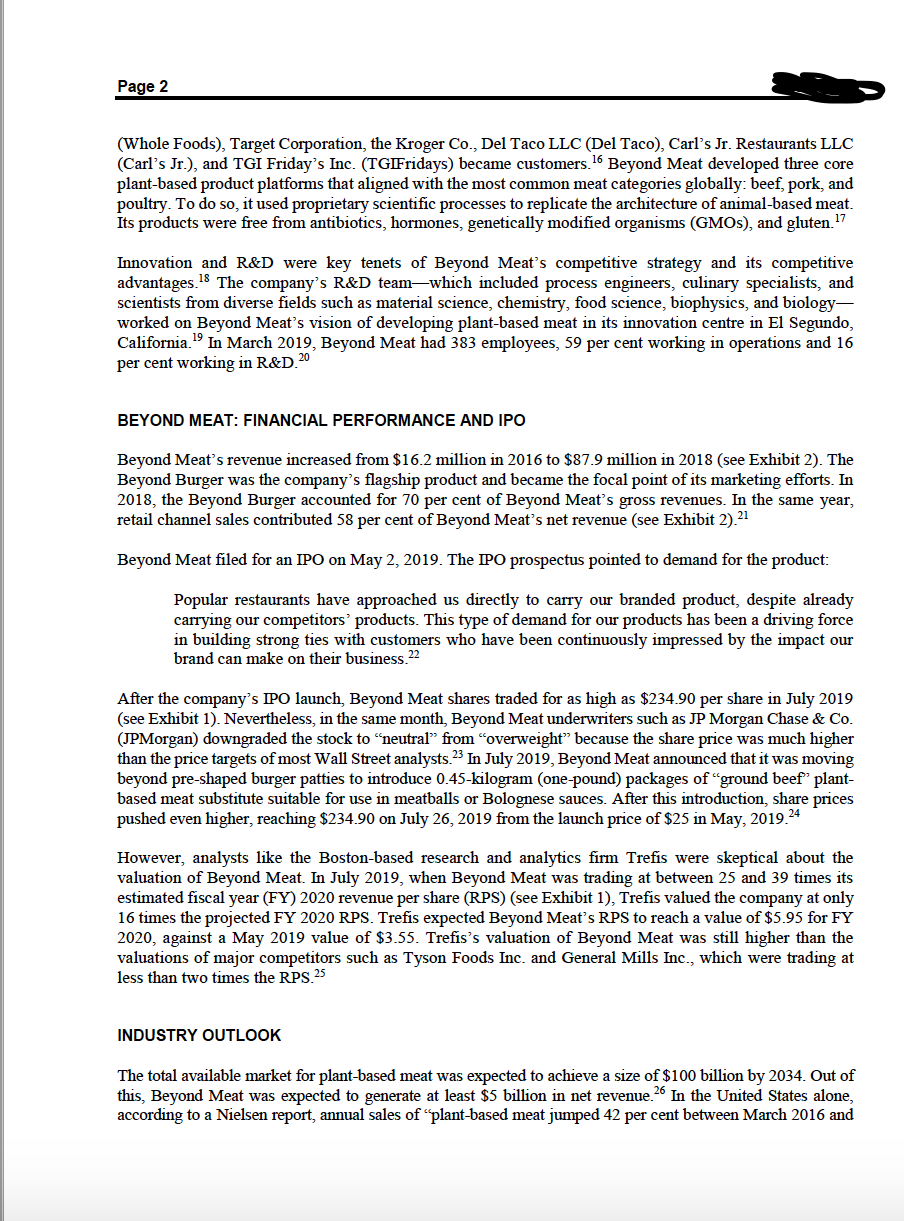
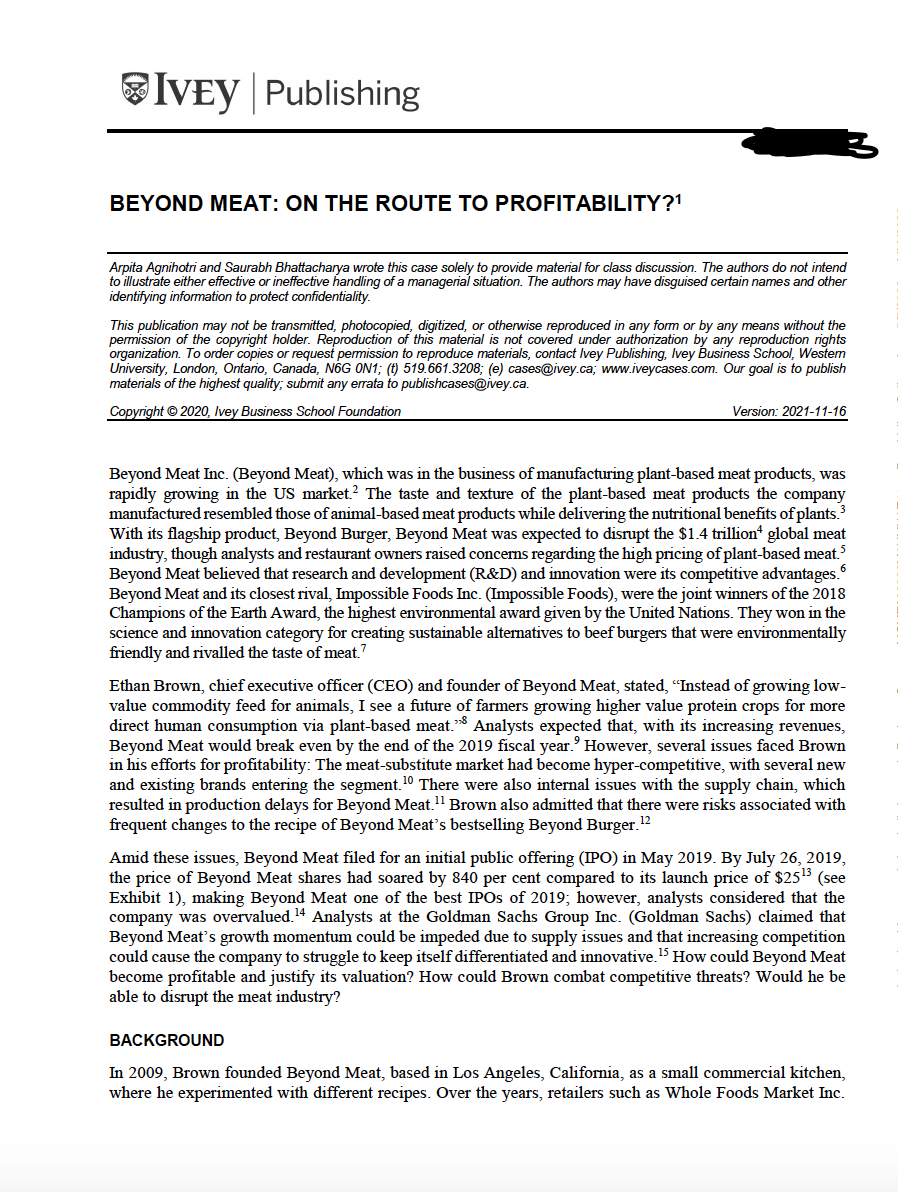
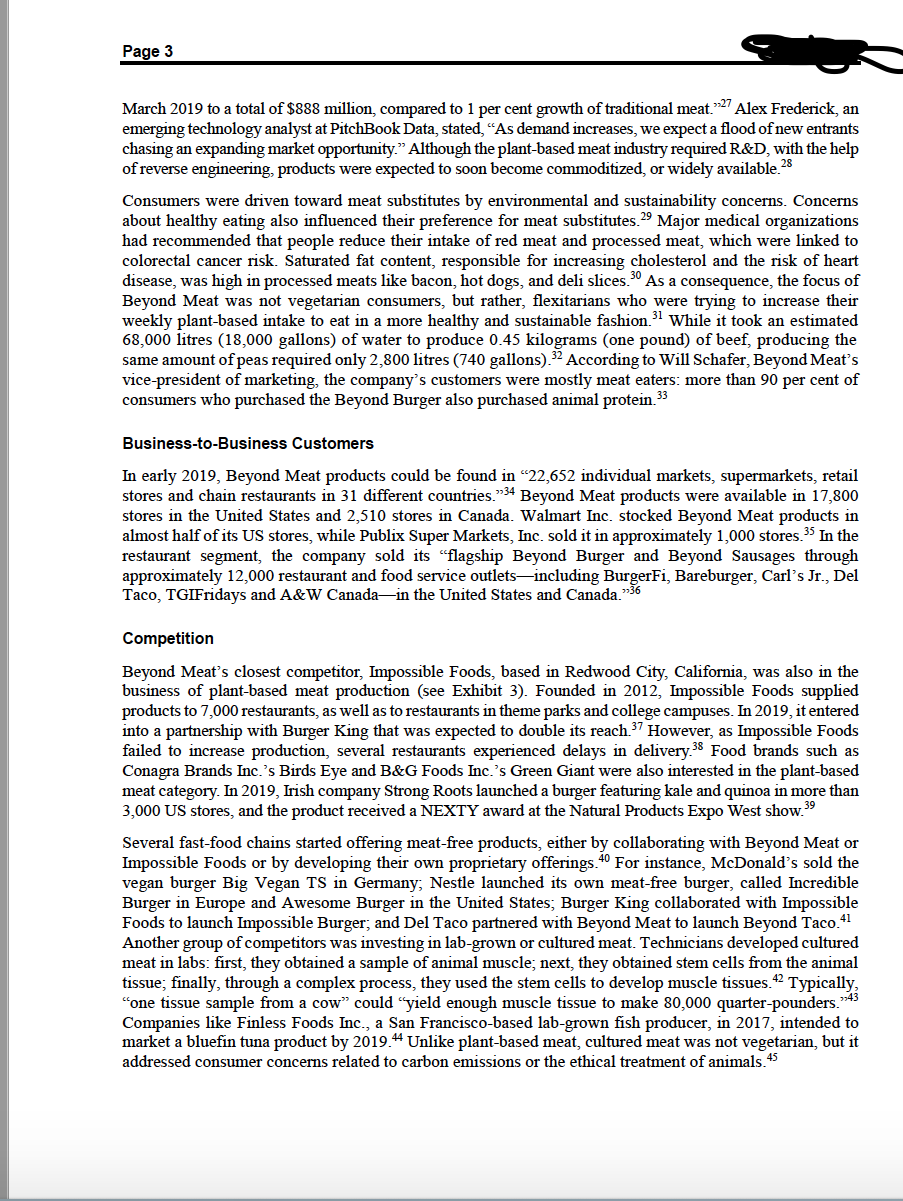
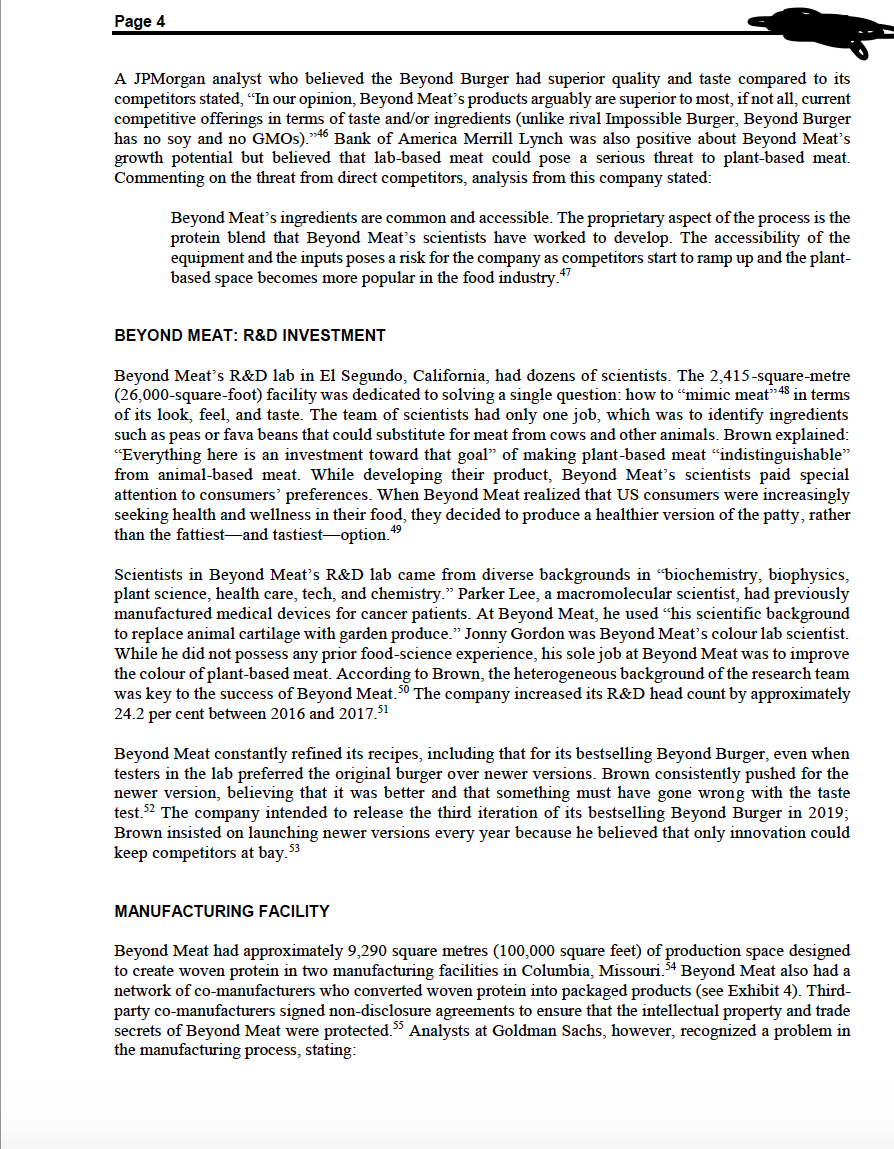
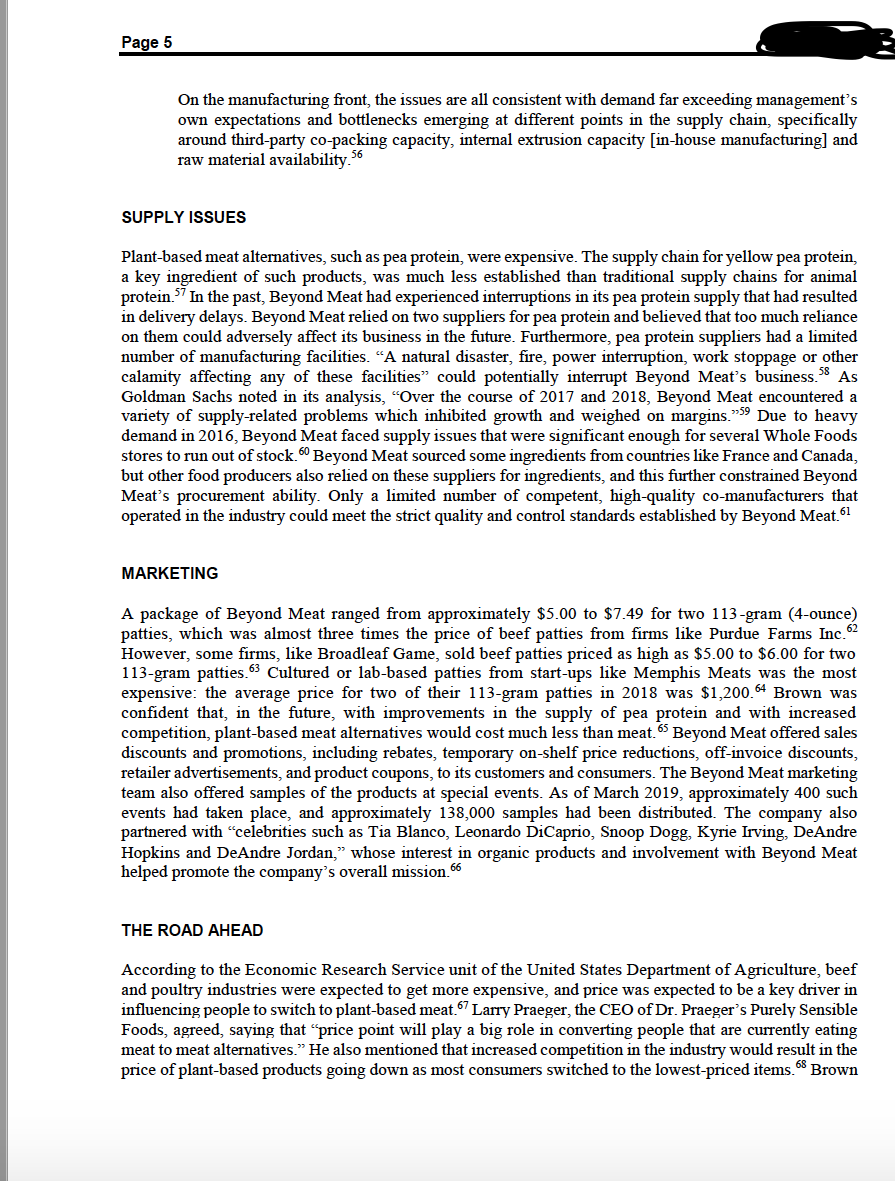
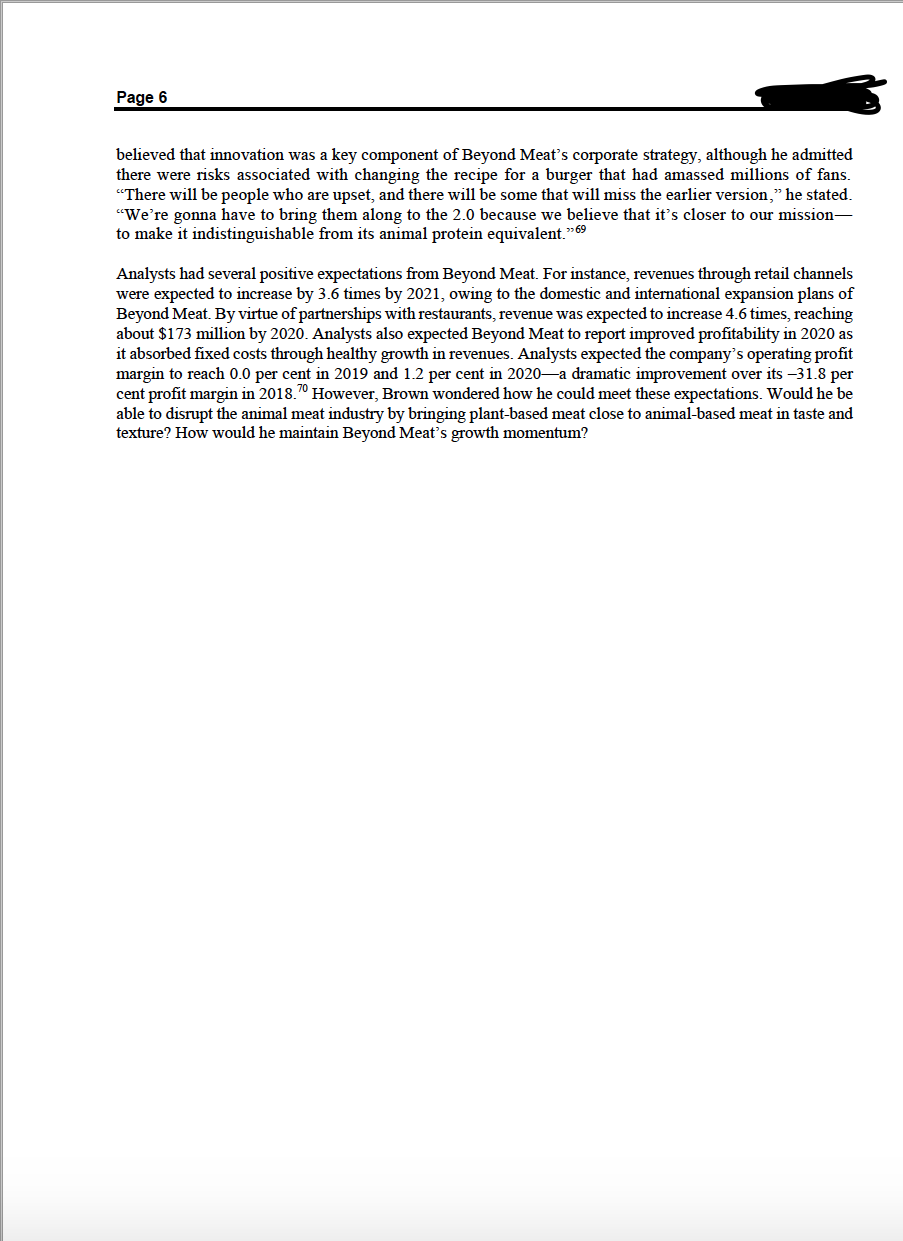
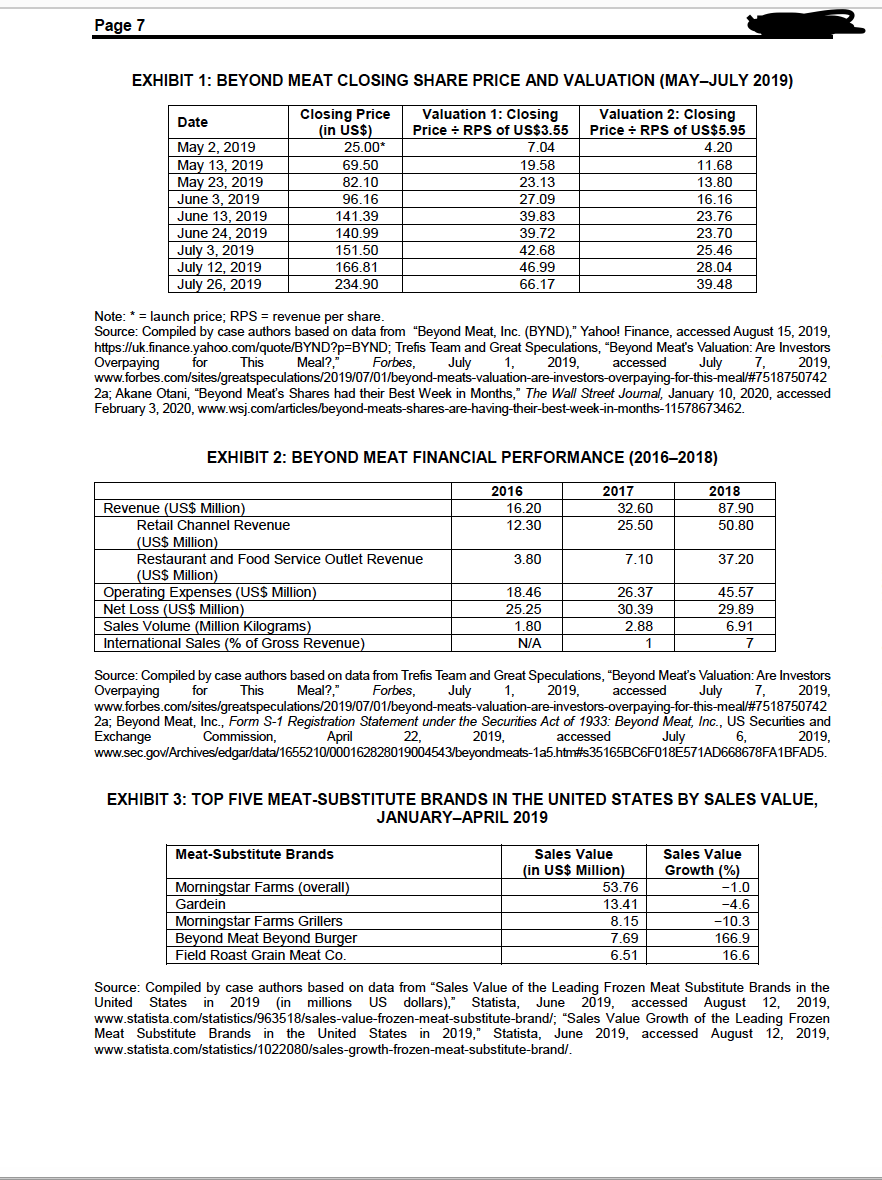
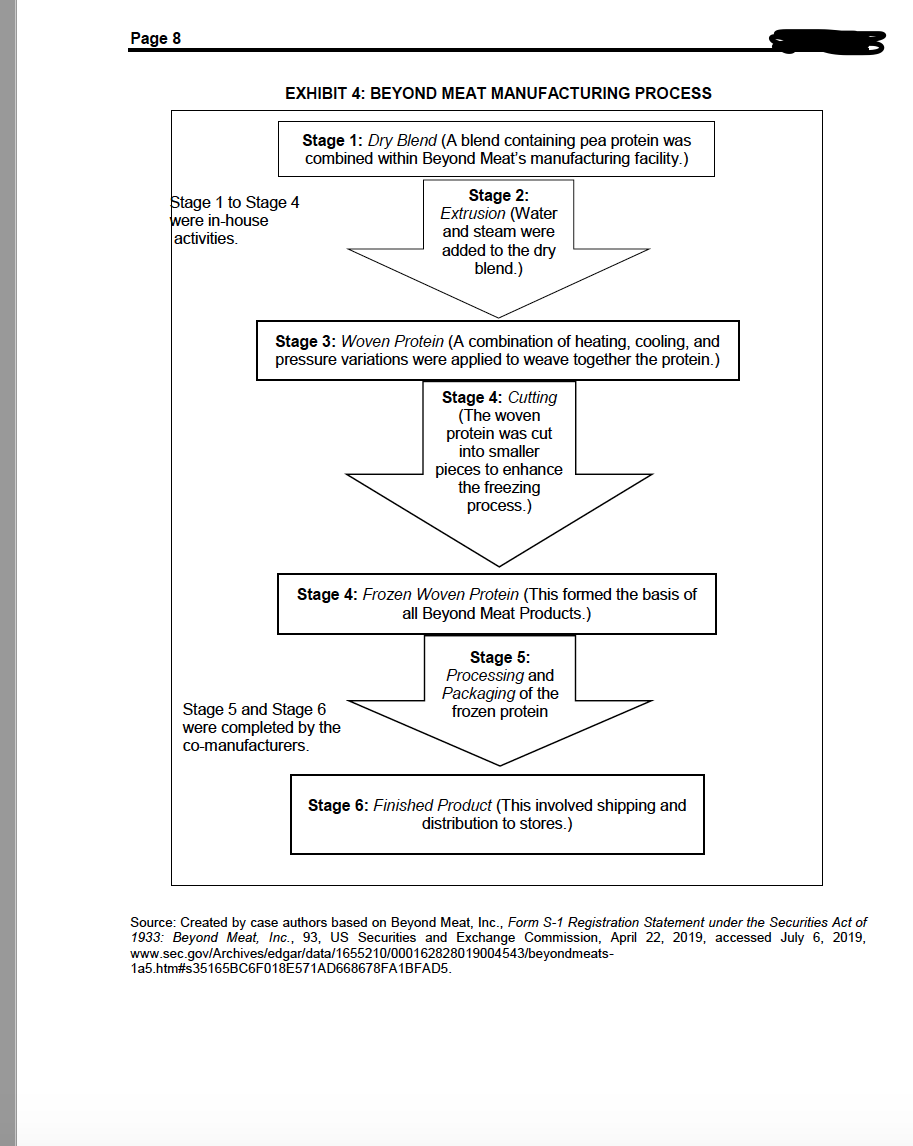
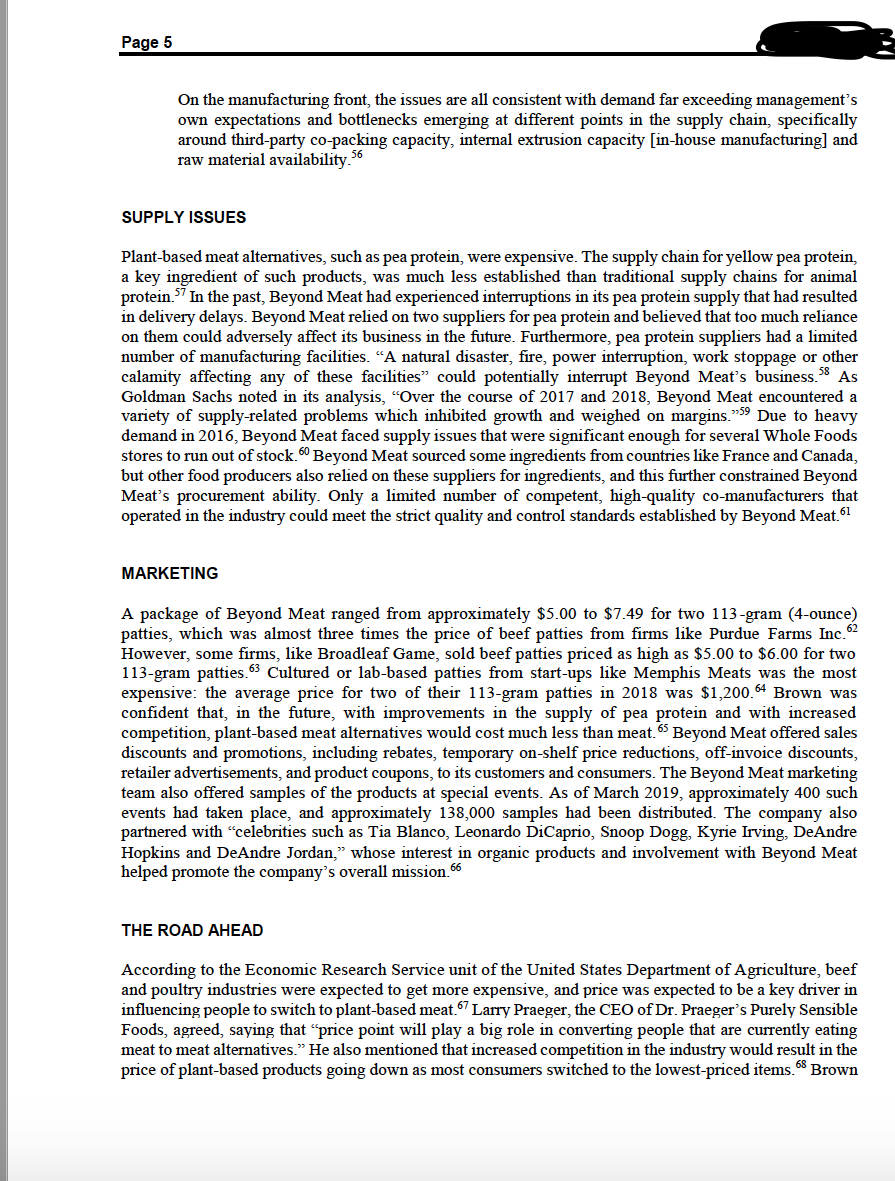
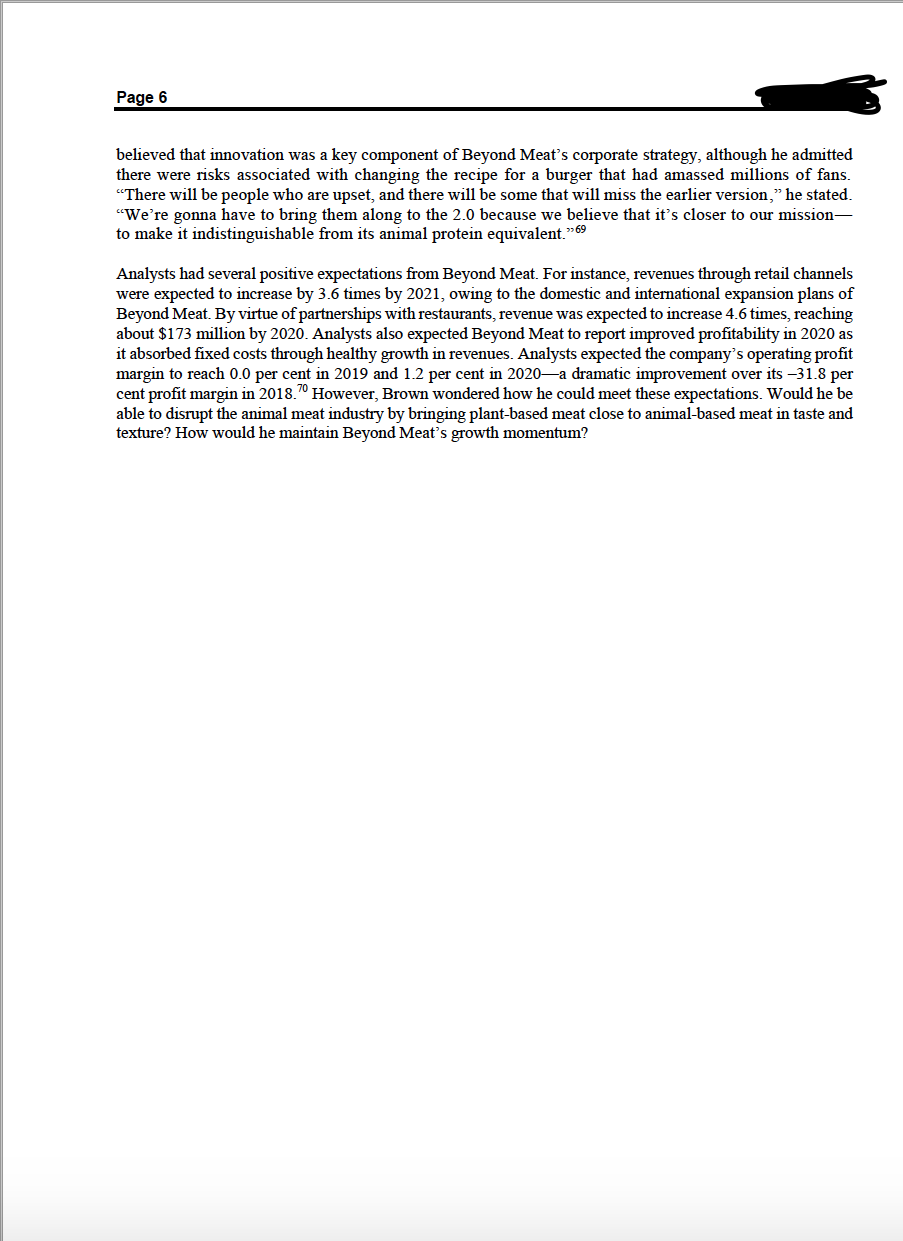
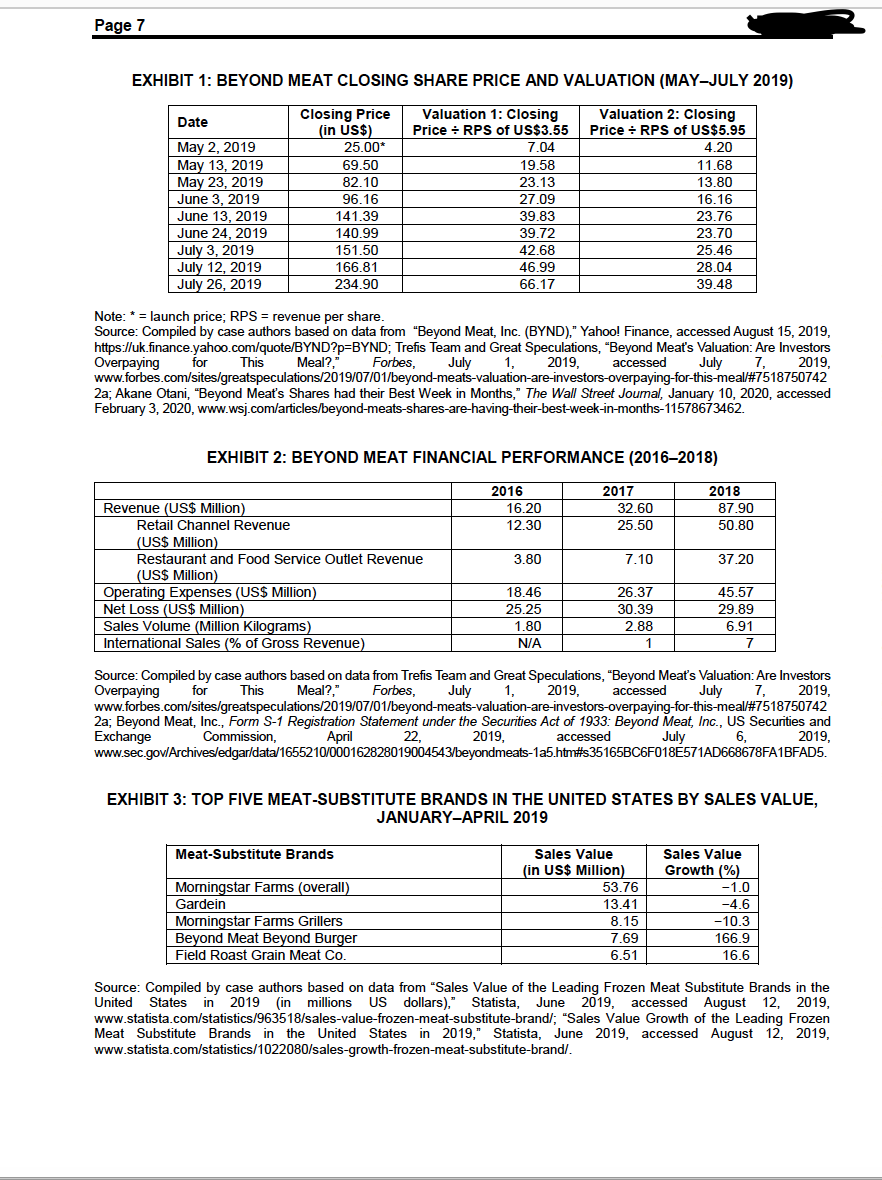
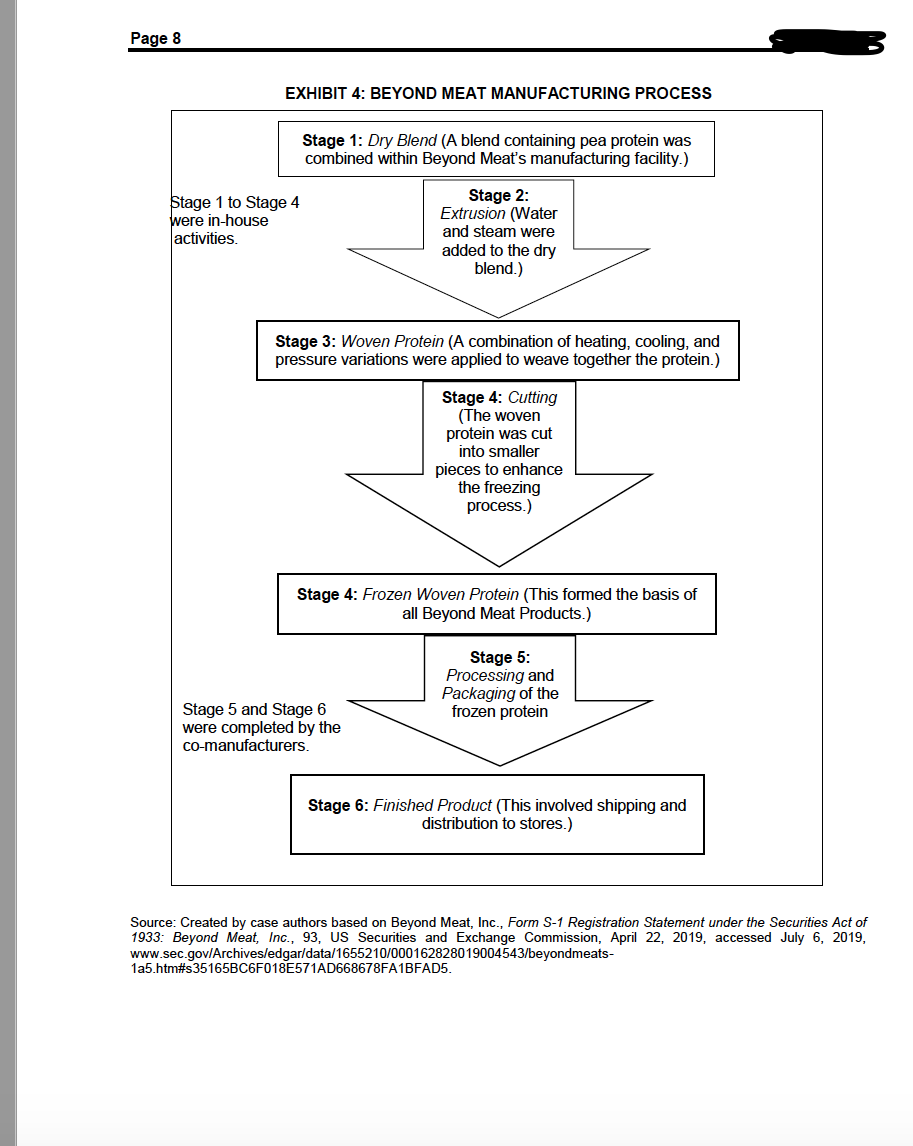
Page 2 - (Whole Foods), Target Corporation, the Kroger 60., Del Taco LLIC (Del Taco), Carl's Jr. Restaurants LLC (Carl's Jr), and TGI Friday's Inc. (TGIFridays) became customers. 1\" Beyond Meat developed three core plantbased product platforms that aligned with the most common meat categories globally: beef, pork, and poultry. To do so, it used proprietary scientic processes to replicate the architecture of animalbased meat. Its products were 'ee 'om antibiotics, hormones, genetically modied organisms (GMOs), and gluten.\" Innovation and R.&D were key tenets of Beyond Meat's competitive strategy and its competitive advantages.18 The company's MD teamwhich included process engineers, culinary specialists, and scientists from diverse elds such as material science, chemistry, food science, biophysics, and biology worked on Beyond Meat's vision of developing plantbased meat in its innovation centre in El Segundo, California.\" In March 2019, Beyond Meat had 383 employees, 59 per cent working in operations and 16 per cent working in MD.\" BEYOND MEAT: FINANCIAL PERFORMANCE AND IPO Beyond Meat's revenue increased from $16.2 million in 2016 to $82.9 million in 2018 (see Exhibit 2). The Beyond Burger was the company's agship product andbecame the focal point of its marketing eorts. In 2018, the Beyond Burger accounted for TO per cent of Beyond Meat's gross revenues. In the same year, retail channel sales contributed 58 per cent of Beyond Meat's net revenue (see Exhibit 2 .21 Beyond Meat led for an [P0 on May 2, 2019. The [P0 prospectus pointed to demand for the product: Popular restaurants have approached us directly to carry our branded product, despite already carrying our competitors' products. This type of demand for our products has been a driving force in building strong ties with customers who have been continuously impressed by the impact our brand can make on their business.22 Aer the company's IPO launch, Beyond Meat shares traded for as high as $234.90 per share in July 2019 (see Exhibit 1). Nevertheless, in the same month, Beyond Meat underwriters such as JP Morgan Chase & Co. (JPMorgan) downgraded the stock to \"neutral\" 'om \"overweight" because the share price was much higher than the price targets of most Wall Street analysts.13 In July 2019, Beyond Meat announced that it was moving beyond preshaped burger patties to introduce 0.45kilogram (onepound) packages of \"ground beef\" plant based meat substitute suitable for use in meatballs or Bolognese sauces. After this introduction, share prices pushed even higher, reaching $234.90 on July 26, 2019 'om the launch price of $25 in May, 2019.24 However, analysts like the Boston-based research and analytics rm Tres were skeptical about the valuation of Beyond Meat In July 2019, when Beyond Meat was trading at between 25 and 39 times its estimated scal year (FY) 2020 revenue per share (RPS) (see Exhibit 1), Tres valued the company at only 16 times the projected FY 2020 RPS. Tres expected Beyond Meat\" 5 RPS to reach a value of $5.95 for FY 2020, against a May 2019 value of $3.55. Tres's valuation of Beyond Meat was still higher than the valuations of major competitors such as Tyson Foods Inc. and General Mills Inc., which were trading at less than two times the RPS.\" INDUSTRY OUTLOOK The total available market for plantbased meat was expecmdto achieve a size of $100 billion by 2034. Out of this, Beyond Meat was expecmd to generate at least $5 billion in net revenue.\"5 In the Unimd States alone, according to a Nielsen report, annual sales of \"plantbased meat jumped 42 per cent between March 2016 and IVEY | Publishing BEYOND MEAT: ON THE ROUTE TO PROFITABILITY?1 Arpita Agnihotri and Saurabh Bhattacharya wrote this case solely to provide material for class discussion. The authors do not intend to illustrate either effective or ineffective handling of a managenal situation. The authors may have disguised certain names and other identifying information to protect confidentiality This publication may not be transmitted, photocopied, digitized, or otherwise reproduced in any form or by any means without the permission of the copyright holder. Reproduction of this material is not covered under authorization by any reproduction rights organization. To order copies or request permission to reproduce materials, contact Ivey Publishing, Ivey Business School, Westem University, London, Ontano, Canada, N6G ON1; (t) 519.661.3208; (e) cases@ivey.ca; www.iveycases.com. Our goal is to publish materials of the highest quality; submit any errata to publishcases@ivey.ca. Copyright @ 2020, Ivey Business School Foundation Version: 2021-11-16 Beyond Meat Inc. (Beyond Meat), which was in the business of manufacturing plant-based meat products, was rapidly growing in the US market. The taste and texture of the plant-based meat products the company manufactured resembled those of animal-based meat products while delivering the nutritional benefits of plants.' With its flagship product, Beyond Burger, Beyond Meat was expected to disrupt the $1.4 trillion* global meat industry, though analysts and restaurant owners raised concerns regarding the high pricing of plant-based meat. Beyond Meat believed that research and development (R&D) and innovation were its competitive advantages. Beyond Meat and its closest rival, Impossible Foods Inc. (Impossible Foods), were the joint winners of the 2018 Champions of the Earth Award, the highest environmental award given by the United Nations. They won in the science and innovation category for creating sustainable alternatives to beef burgers that were environmentally friendly and rivalled the taste of meat.' Ethan Brown, chief executive officer (CEO) and founder of Beyond Meat, stated, "Instead of growing low- value commodity feed for animals, I see a future of farmers growing higher value protein crops for more direct human consumption via plant-based meat." Analysts expected that, with its increasing revenues, Beyond Meat would break even by the end of the 2019 fiscal year.' However, several issues faced Brown in his efforts for profitability: The meat-substitute market had become hyper-competitive, with several new and existing brands entering the segment. There were also internal issues with the supply chain, which resulted in production delays for Beyond Meat." Brown also admitted that there were risks associated with frequent changes to the recipe of Beyond Meat's bestselling Beyond Burger.2 Amid these issues, Beyond Meat filed for an initial public offering (IPO) in May 2019. By July 26, 2019, the price of Beyond Meat shares had soared by 840 per cent compared to its launch price of $25 (see Exhibit 1), making Beyond Meat one of the best IPOs of 2019; however, analysts considered that the company was overvalued. Analysts at the Goldman Sachs Group Inc. (Goldman Sachs) claimed that Beyond Meat's growth momentum could be impeded due to supply issues and that increasing competition could cause the company to struggle to keep itself differentiated and innovative. How could Beyond Meat become profitable and justify its valuation? How could Brown combat competitive threats? Would he be able to disrupt the meat industry? BACKGROUND In 2009, Brown founded Beyond Meat, based in Los Angeles, California, as a small commercial kitchen, where he experimented with different recipes. Over the years, retailers such as Whole Foods Market Inc.Page 3 % March 2019 to a total of $883 million, compared to 1 per cent growth of traditional meat?\" Alex Frederick, an emerging technology analyst at PitchBookData, stated, \"As demand increases, we expect a ood ofnew entrants chasing an expanding market opportunity.\" Although the plantbased meat industry required R&D, with the help of reverse engineering, products were expected to soon become oommoditized, or widely available.28 Consumers were driven toward meat substitutes by environmental and sustainability concerns. Concerns about healthy eating also inuenced their preference for meat substitutes.\" Major medical organizations had recommended that people reduce their intake of red meat and processed meat, which were linked to colorectal cancer risk. Saturated t content, responsible for increasing cholesterol and the risk of heart disease, was high in processed meats like bacon, hot dogs, and deli slices." As a consequence, the focus of Beyond Meat was not vegetarian consumers, but rather, exitarians who were trying to increase their weekly plantbased intake to eat in a more healthy and sustainable fashion.31 While it took an estimated 68,000 litres (18,000 gallons) of water to produce 0.45 kilograms (one pound) of beef, producing the same amount of peas required only 2,800 litres (T40 gallons)?\"2 According to Will Schafer, Beyond Meat's vice-president of marketing, the company's customers were mostly meat eaters: more than 90 per cent of consumers who purchased the Beyond Burger also purchased animal protein.33 Business-to-Business Customers In early 2019, Beyond Meat products could be found in \"22,652 individual markets, supermarkets, retail stores and chain restaurants in 31 different countries?\" Beyond Meat products were available in 12,800 stores in the United States and 2,510 stores in Canada. 1Walmart Inc. stocked Beyond Meat products in almost half of its US stores, while Publix Super Markets, Inc. sold it in approximately 1,000 stores?5 In the restaurant segment, the company sold its \"agship Beyond Burger and Beyond Sausages through approximately 12,000 restaurant and food service outletsincluding BurgerFi, Bareburger, Carl's Jr., Del Taco, TGIFridays and A&W Canadain the United States and Canada?\" Competition Beyond Meat's closest competitor, Impossible Foods, based in Redwood City, California, was also in the business of plantbased meat production (see Exhibit 3). Founded in 2012, Impossible Foods supplied products to 2,000 restaurants, as well as to restaurants in theme parks and college campuses. In 2019, it entered into a partnership with Burger King that was expected to double its reach.\" However, as Impossible Foods failed to increase production, several restaurants experienced delays in delivery.38 Food brands such as Conagra Brands Inc.'s Birds Eye and B&G Foods Inc.'s Green Giant were also interested in the plantbased meat category. In 2019, Irish company Strong Roots launchedaburger featuring kale and quinoa inmorethan 3,000 us stores, and the product received a NEXTY award at the Natural Products Expo West show.\" Several fastfood chains started offering meatfree products, either by collaborating with Beyond Meat or Impossible Foods or by developing their own proprietary offerings."'O For instance, McDonald's sold the vegan burger Big Vegan TS in Germany; Nestle launched its own meat'ee burger, called Incredible Burger in Europe and Awesome Burger in the United States, Burger King collaborated with Impossible Foods to launch Impossible Burger; and Del Taco partnered with Beyond Meat to launch Beyond Taco.\" Another group of competitors was investing in labgrown or cultured meat. Technicians developed cultured meat in labs: rst, they obtained a sample of animal muscle, next, they obtained stem cells 'om the animal tissue; nally, through a complex process, they used the stem cells to develop muscle tissues. 42 Typically, \"one tissue sample 'om a cow\" could \"yield enough muscle tissue to make 80,000 quarterpounders.\"43 Companies like Finless Foods Inc., a San Franciscobased labgrown sh producer, in 2017, intended to market a bluefm tuna product by 2019.\" Unlike plantbased meat, cultured meat was not vegetarian, but it addressed consumer concerns related to carbon emissions or the ethical treatment of animals.45 Page 4 ~ A J'PMorgan analyst who believed the Beyond Burger had superior quality and taste compared to its competitors stated, \"In our opinion, Beyond Meat's products arguably are superior to most, if not all, current competitive offerings in terms of taste anda'or ingredients (unlike rival Impossible Burger, Beyond Burger has no soy and no GMOs).\"\" Bank of America Merrill Lynch was also positive about Beyond Meat's growth potential but believed that labbased meat could pose a serious threat to plantbased meat Commenting on the threat from direct competitors, analysis 'om this company stated: Beyond Meat's ingredients are common and accessible. The proprietary aspect of the process is the protein blend that Beyond Meat's scientists have worked to develop. The accessibility of the equipment and the inputs poses a risk for the company as competitors start to ramp up and the plant- based space becomes more popular in the food industry.4T BEYOND MEAT: R&D INVESTMENT Beyond Meat's R&D lab in El Segundo, California, had dozens of scientists. The 2,415squaremetre (2 6,000squarefoot) facility was dedicated to solving a single question: how to \"mimic meat\"43 in terms of its look, feel, and taste. The team of scientists had only one job, which was to identify ingredients such as peas or fava beans that could substitute for meat from cows and other animals. Brown explained: L'Everything here is an investment toward that goal\" of making plantbased meat \"indistinguishable\" from animalbased meat. While developing their product, Beyond Meat's scientists paid special attention to consumers' preferences. When Beyond Meat realized that US consumers were increasingly seeking health and wellness in their food, they decided to produce a healthier version of the patty, rather than the fattie stand tastiestoption.r49 Scientists in Beyond Meat\"s R&D lab came from diverse backgrounds in \"biochemistry, biophysics, plant science, health care, tech, and chemistry." Parker Lee, a macromolecular scientist, had previously manufactured medical devices for cancer patients. At Beyond Meat, he used \"his scientic background to replace animal cartilage with garden produce.\" Jonny Gordon was Beyond Meat\" s colour lab scientist. While he did not possess any prior food-science experience, his sole job at Beyond Meat was to improve the colour of plantbased meat. According to Brown, the heterogeneous background of the re search team was key to the success of Beyond Meat.\" The company increased its R&D head count by approximately 24.2 per cent between 2016 and 201151 Beyond Meat constantly rened its recipes, including that for its bestselling Beyond Burger, even when testers in the lab preferred the original burger over newer versions. Brown consistently pushed for the newer version, believing that it was better and that something must have gone wrong with the taste test.52 The company intended to release the third iteration of its bestselling Beyond Burger in 2019; Brown insisted on launching newer versions every year because he believed that only innovation could keep competitors at bay.53 MANUFACTURING FACILITY Beyond Meat had approximately 9,290 square metres (100,000 square feet) of production space designed to create woven protein in two manufacturing facilities in Columbia, Missouri.54 Beyond Meat also had a network of comanufacturers who converted woven protein into packaged products (see Exhibit 4). Third party comanufacturers signed nondisclosure agreements to ensure that the intellectual property and trade secrets of Beyond Meat were protected.55 Analysts at Goldman Sachs, however, recognized a problem in the manufacturing process, stating: Page 5 a On the manufacturing front, the issues are all consistent with demand far exceeding management's own expectations and bottlenecks emerging at different points in the supply chain, specically around thirdparty copacking capacity, internal extrusion capacity [inhouse manufacturing] and raw material availability.56 SUPPLY ISSUES Plantbased meat alternatives, such as pea protein, were expensive. The supply chain for yellow pea protein, a key ingredient of such products, was much less established than traditional supply chains for animal protein.\" In the past, Beyond Meat had experienced interruptions in its pea protein supply that had resulted in delivery delays. Beyond Meat relied on two suppliers for pea protein and believed that too much reliance on them could adversely aect its business in the Jture. Furthermore, pea protein suppliers had a limited number of manufacturing facilities. \"A natural disaster, re, power interruption, work stoppage or other calamity affecting any of these facilities\" could potentially interrupt Beyond Meat's business.\" As Goldman Sachs noted in its analysis, \"Over the course of 201'}Ir and 2018, Beyond Meat encountered a variety of supplyrelated problems which inhibited growth and. weighed on margins.\"59 Due to heavy demand in 2016, Beyond Meat faced supply issues that were signicant enough for several 1Whole Foods stores to run out of stocks\" Beyond Meat sourced some ingredients from countries like France and Canada, but other food producers also relied on these suppliers for ingredients, and this further constrained Beyond Meat's procurement ability. Only a limited number of competent, hi ghquality comanufacturers that operated in the industry could meet the strict quality and control standards established by Beyond Meat.'s1 MARKETING A package of Beyond Meat ranged from approximately $5.00 to $149 for two 113 gram (4ounce) patties, which was almost three times the price of beef patties 'om firms like Purdue Farms Inca2 However, some rms, like Broadleaf Game, sold beef patties priced as high as $5.00 to $6.00 for two 113gram patties.63 Cultured or labbased patties from startups like Memphis Meats was the most expensive: the average price for two of their 113gram patties in 2018 was $1,200.\" Brown was condent that, in the future, with improvements in the supply of pea protein and with increased competition, plantbased meat alternatives would cost much less than meat.\" Beyond Meat offered sales discounts and promotions, including rebates, temporary onshelf price reductions, offinvoice discounts, retailer advertisements, and product coupons, to its customers and consumers. The Beyond Meat marketing team also offered samples of the products at special events. As of March 2019, approximately 400 such events had taken place, and approximately 138,000 samples had been distributed The company also partnered with \"celebrities such as Tia Blanco, Leonardo DiCaprio, Snoop Dogg, Kylie Irving, DeAndre Hopkins and DeAndre Jordan,\" whose interest in organic products and involvement with Beyond Meat helped promote the company's overall mission.66 THE ROAD AHEAD According to the Economic Research Service unit of the United States Department of Agriculture, beef and poultry industries were expected to get more expensive, and price was expected to be a key driver in inuencing people to switch to plantbased meat.m Larry Praeger, the CEO of Dr. Praeger's Purely Sensible Foods, agreed, saying that \"price point will play a big role in converting people that are currently eating meat to meat alternatives.\" He also mentioned that increased competition in the industry would result in the price of plantbased products going down as most consumers switched to the lowestpriced items.\" Brown believed that innovation was a key component of Beyond Meat's corporate strategy, although he admitted there were risks associated with changing the recipe for a burger that had amassed millions of fans. \"There will be people who are upset, and there will be some that will miss the earlier version,\" he stated. \"We're gonna have to bring them along to the 2.0 because we believe that it's closer to our mission to make it indistinguishable from its animal protein equivalent?\" Analysts had several positive expectations 'om Beyond Meat. For instance: revem1es through retail channels were expecmd to increase by 3.6 times by 2021, owing to the domestic and international expansion plans of Beyond Meat. By virtue of partnerships with restaurants, revenue was expected to increase 4.6 times, reaching about $123 million by 2020. Analysts also expected Beyond Meat to report improved protability in 2020 as it absorbed xed costs through healthy growth in revenues. Analysts expected. the company's operating prot margin to reach 0.0 per cent in 2019 and 1.2 per cent in 2020a dramatic improvement over its 31.8 per cent prot margin in 2018.70 However, Brown wondered how he could meet these expectations. Would he be able to disrupt the animal meat industry by bringing plantbased meat close to animalbased meat in taste and texture? How would he maintain Beyond Meat's growth momentum? Page 7 EXHIBIT 1: BEYOND MEAT CLOSING SHARE PRICE AND VALUATION (MAY-JULY 2019) Date Closing Price aluation 1: Closing Valuation 2: Closing (in US$) Price : RPS of US$3.55 Price : RPS of US$5.95 May 2, 2019 25.00* 7.04 4.20 May 13, 2019 69.50 19.58 11.68 May 23, 2019 82.10 23.13 13.80 June 3, 2019 96.16 27.09 16.16 June 13, 2019 141.39 39.83 23.76 June 24, 2019 140.99 39.72 23.70 July 3, 2019 151.50 42.68 25.46 July 12, 2019 166.81 46.99 28.04 July 26, 2019 234.90 66.17 39.48 Note: * = launch price; RPS = revenue per share. Source: Compiled by case authors based on data from "Beyond Meat, Inc. (BYND)," Yahoo! Finance, accessed August 15, 2019, https://uk.finance.yahoo.com/quote/BYND?p=BYND; Trefis Team and Great Speculations, "Beyond Meat's Valuation: Are Investors Overpaying for This Meal?," Forbes, July 1, 2019, accessed July 7, 2019, www.forbes.com/sites/greatspeculations/2019/07/01/beyond-meats-valuation-are-investors-overpaying-for-this-meal/#7518750742 2a; Akane Otani, "Beyond Meat's Shares had their Best Week in Months," The Wall Street Journal, January 10, 2020, accessed February 3, 2020, www.wsj.com/articles/beyond-meats-shares-are-having-their-best-week-in-months-11578673462. EXHIBIT 2: BEYOND MEAT FINANCIAL PERFORMANCE (2016-2018) 2016 2017 2018 Revenue (US$ Million) 16.20 32.60 87.90 Retail Channel Revenue 12.30 25.50 50.80 (US$ Million) Restaurant and Food Service Outlet Revenue 3.80 7.10 37.20 (US$ Million) Operating Expenses (US$ Million) 18.46 26.37 45.57 Net Loss (US$ Million 25.25 30.39 29.89 Sales Volume (Million Kilograms) 1.80 2.88 6.91 International Sales (% of Gross Revenue) N/A Source: Compiled by case authors based on data from Trefis Team and Great Speculations, "Beyond Meat's Valuation: Are Investors Overpaying for This Meal?," Forbes, July 1, 2019 accessed July 7, 2019, www.forbes.com/sites/greatspeculations/2019/07/01/beyond-meats-valuation-are-investors-overpaying-for-this-meal/#7518750742 2a; Beyond Meat, Inc., Form S-1 Registration Statement under the Securities Act of 1933: Beyond Meat, Inc., US Securities and Exchange Commission, April 22, 2019, accessed July 2019 www.sec.gov/Archives/edgar/data/1655210/000162828019004543/beyondmeats-1a5.htm#s35165BC6F018E571AD668678FA1BFAD5. EXHIBIT 3: TOP FIVE MEAT-SUBSTITUTE BRANDS IN THE UNITED STATES BY SALES VALUE, JANUARY-APRIL 2019 Meat-Substitute Brands Sales Value Sales Value (in US$ Million) Growth (%) Morningstar Farms (overall) 53.76 -1.0 Gardein 13.41 -4.6 Morningstar Farms Grillers 8.15 -10.3 Beyond Meat Beyond Burger 7.69 166.9 Field Roast Grain Meat Co 5.51 16.6 Source: Compiled by case authors based on data from "Sales Value of the Leading Frozen Meat Substitute Brands in the United States in 2019 (in millions US dollars)," Statista, June 2019, accessed August 12, 2019, www.statista.com/statistics/963518/sales-value-frozen-meat-substitute-brand/; "Sales Value Growth of the Leading Frozen Meat Substitute Brands in the United States in 2019," Statista, June 2019, accessed August 12, 2019, www.statista.com/statistics/1022080/sales-growth-frozen-meat-substitute-brand/.Page 8 EXHIBIT 4: BEYOND MEAT MANUFACTURING PROCESS Stage 1: Dry Blend (A blend containing pea protein was combined within Beyond Meat's manufacturing facility.) Stage 1 to Stage 4 Stage 2: were in-house Extrusion (Water activities. and steam were added to the dry blend.) Stage 3: Woven Protein (A combination of heating, cooling, and pressure variations were applied to weave together the protein.) Stage 4: Cutting (The woven protein was cut into smaller pieces to enhance the freezing process.) Stage 4: Frozen Woven Protein (This formed the basis of all Beyond Meat Products.) Stage 5: Processing and Packaging of the Stage 5 and Stage 6 frozen protein were completed by the co-manufacturers. Stage 6: Finished Product (This involved shipping and distribution to stores.) Source: Created by case authors based on Beyond Meat, Inc., Form S-1 Registration Statement under the Securities Act of 1933: Beyond Meat, Inc., 93, US Securities and Exchange Commission, April 22, 2019, accessed July 6, 2019, www.sec.gov/Archives/edgar/data/1655210/000162828019004543/beyondmeats- 1a5.htm#s35165BC6F018E571AD668678FA1BFAD5
Step by Step Solution
There are 3 Steps involved in it

Get step-by-step solutions from verified subject matter experts