







Question: USE PYTHON3; DO NOT IMPORT PACKAGES; FOLLOW THE REQUIREMENTS(IN RED) if you think the below function will help you solve the problem in some way,
USE PYTHON3; DO NOT IMPORT PACKAGES; FOLLOW THE REQUIREMENTS(IN RED)
if you think the below function will help you solve the problem in some way, you may use it
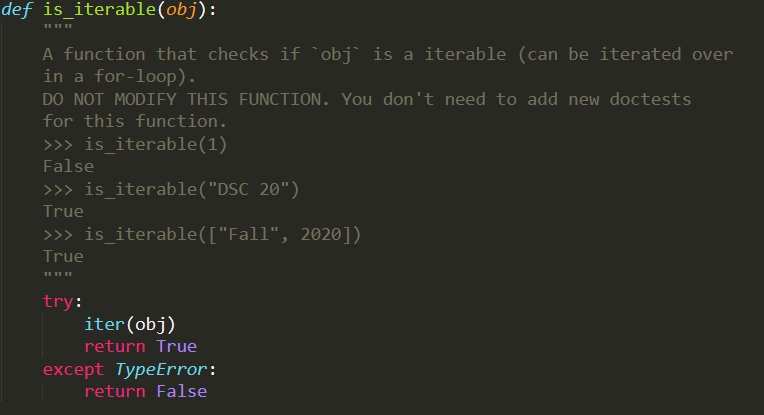
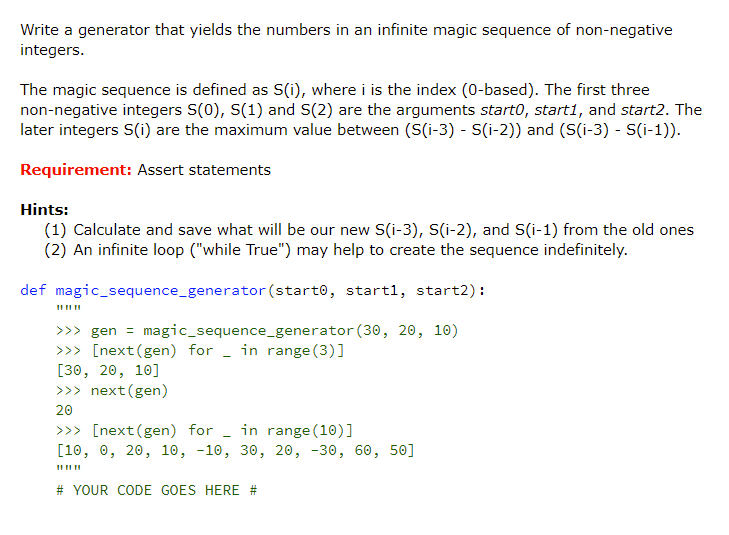
Write a generator that yields the numbers in an infinite magic sequence of non-negative integers. The magic sequence is defined as S(i), where i is the index (0-based). The first three non-negative integers S(0), 5(1) and S(2) are the arguments starto, start1, and start2. The later integers S(i) are the maximum value between (S(1-3) - S(1-2)) and (S(1-3) - S(i-1)). Requirement: Assert statements Hints: (1) Calculate and save what will be our new S(1-3), S(1-2), and S(i-1) from the old ones (2) An infinite loop ("while True") may help to create the sequence indefinitely. def magic_sequence_generator (starto, starti, start2): >>> gen = magic_sequence_generator (30, 20, 10) >>> [next(gen) for - in range (3)] [30, 20, 10] >>> next(gen) 20 >>> [next(gen) for in range (10)] [10, 0, 20, 10, -10, 30, 20, 30, 60, 50] # YOUR CODE GOES HERE # def is_iterable(obj): A function that checks if obj is a iterable (can be iterated over in a for-loop). DO NOT MODIFY THIS FUNCTION. You don't need to add new doctests for this function. >>> is_iterable(1) False >>> is_iterable("DSC_20") True >>> is_iterable(["Fall", 2020]) True try: iter(obj) return True except TypeError: return false
Step by Step Solution
There are 3 Steps involved in it

Get step-by-step solutions from verified subject matter experts
 Study Help