







Question: Use Rstudio for analysis Methodology : Build predictive models starting with Logistic Regression and Decision Trees for baseline results, followed by ensemble methods like Random
Use Rstudio for analysis
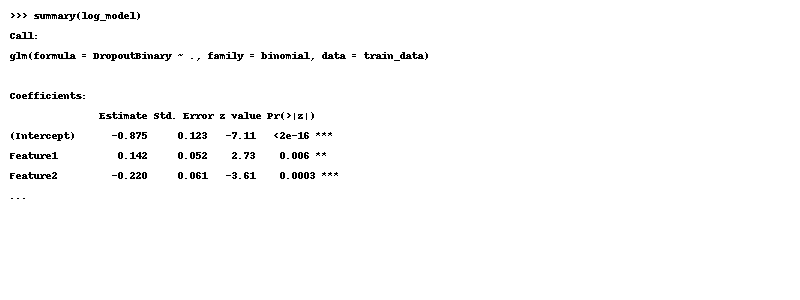
Methodology: Build predictive models starting with Logistic Regression and Decision Trees for baseline results, followed by ensemble methods like Random Forests and XGBoost, evaluating them with cross-validation and metrics such as accuracy, precision, recall, F1-score, and AUC-ROC. Finally, we will visualize and interpret the model outcomes?such as feature importance and confusion matrices?to identify key factors influencing student success or dropout
Guiding question: Which interventions can be implemented to improve students' retention and academic success?
Dataset info: https://archive.ics.uci.edu/dataset/697/predict+students+dropout+and+academic+success
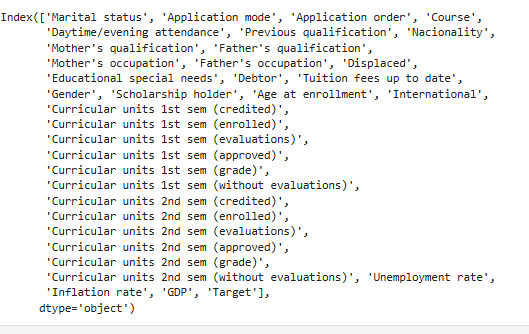
Columns:
Step by Step Solution
There are 3 Steps involved in it

Get step-by-step solutions from verified subject matter experts
 Study Help