







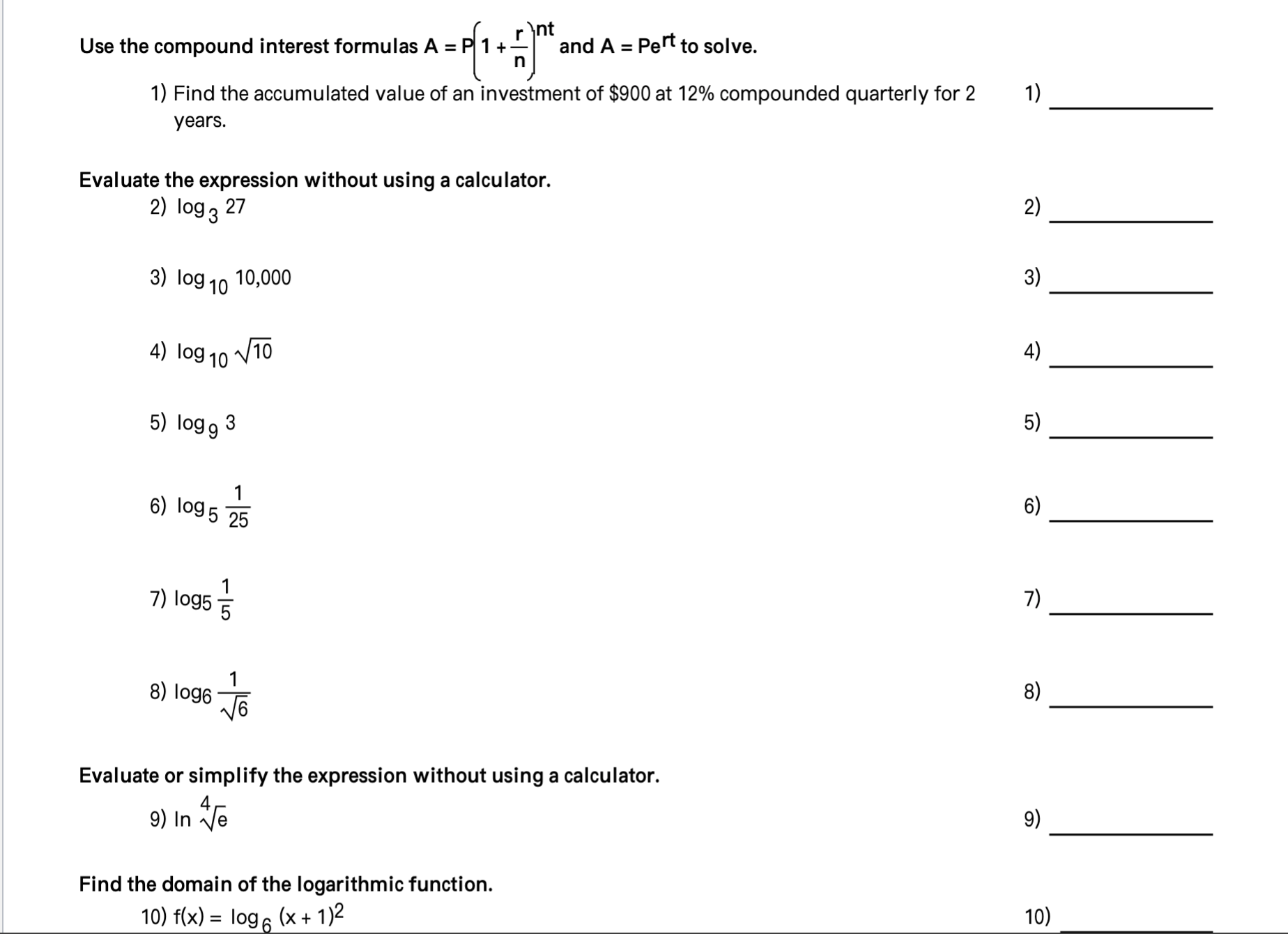
Question: Use the compound interest formulas A = P 1+ - rant and A = Pert to solve. 1) Find the accumulated value of an investment
![] 11) x+5 Solve the equation by expressing each side as a](https://s3.amazonaws.com/si.experts.images/answers/2024/06/667b0c6791293_135667b0c6765e1a.jpg)
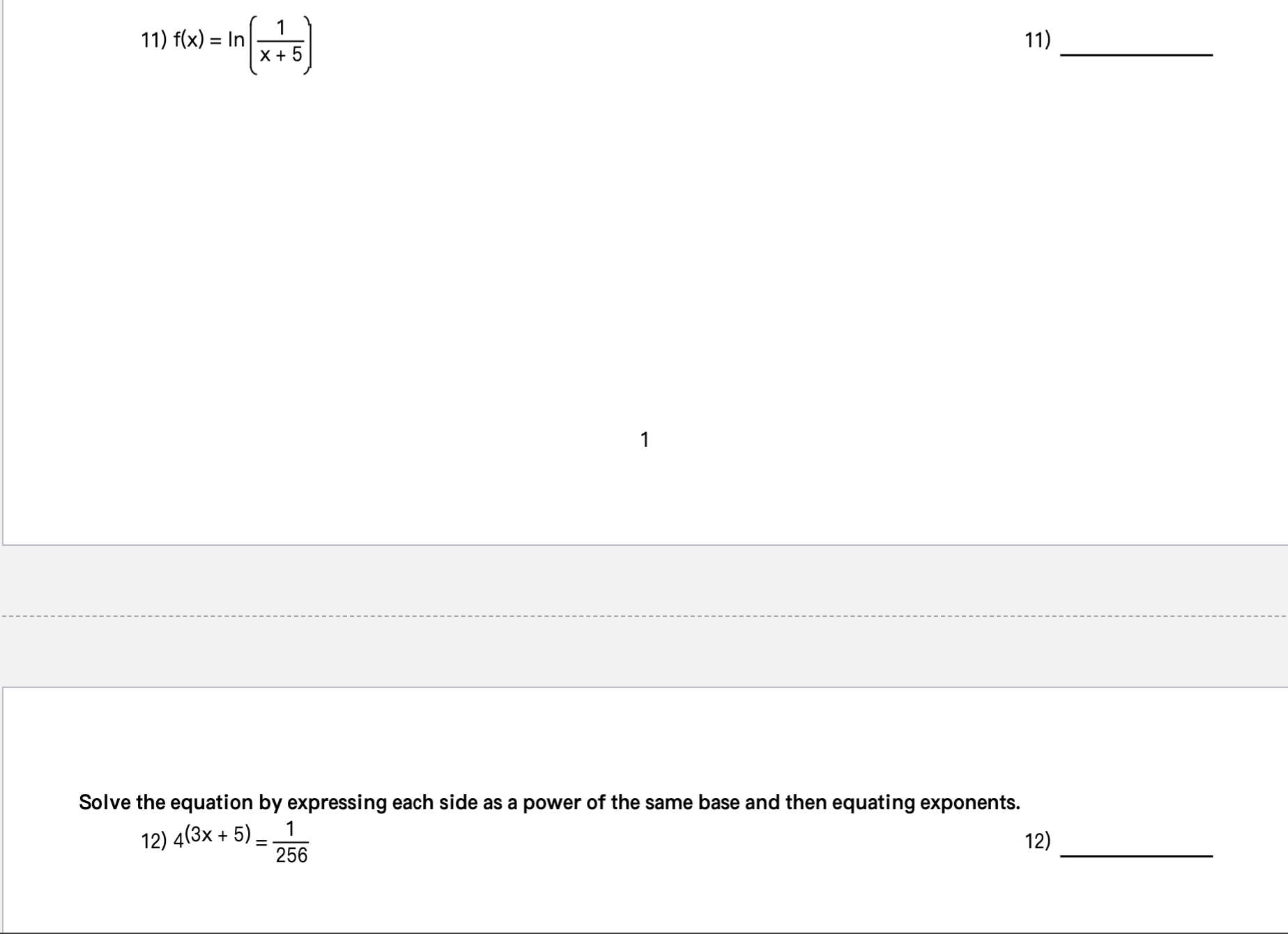
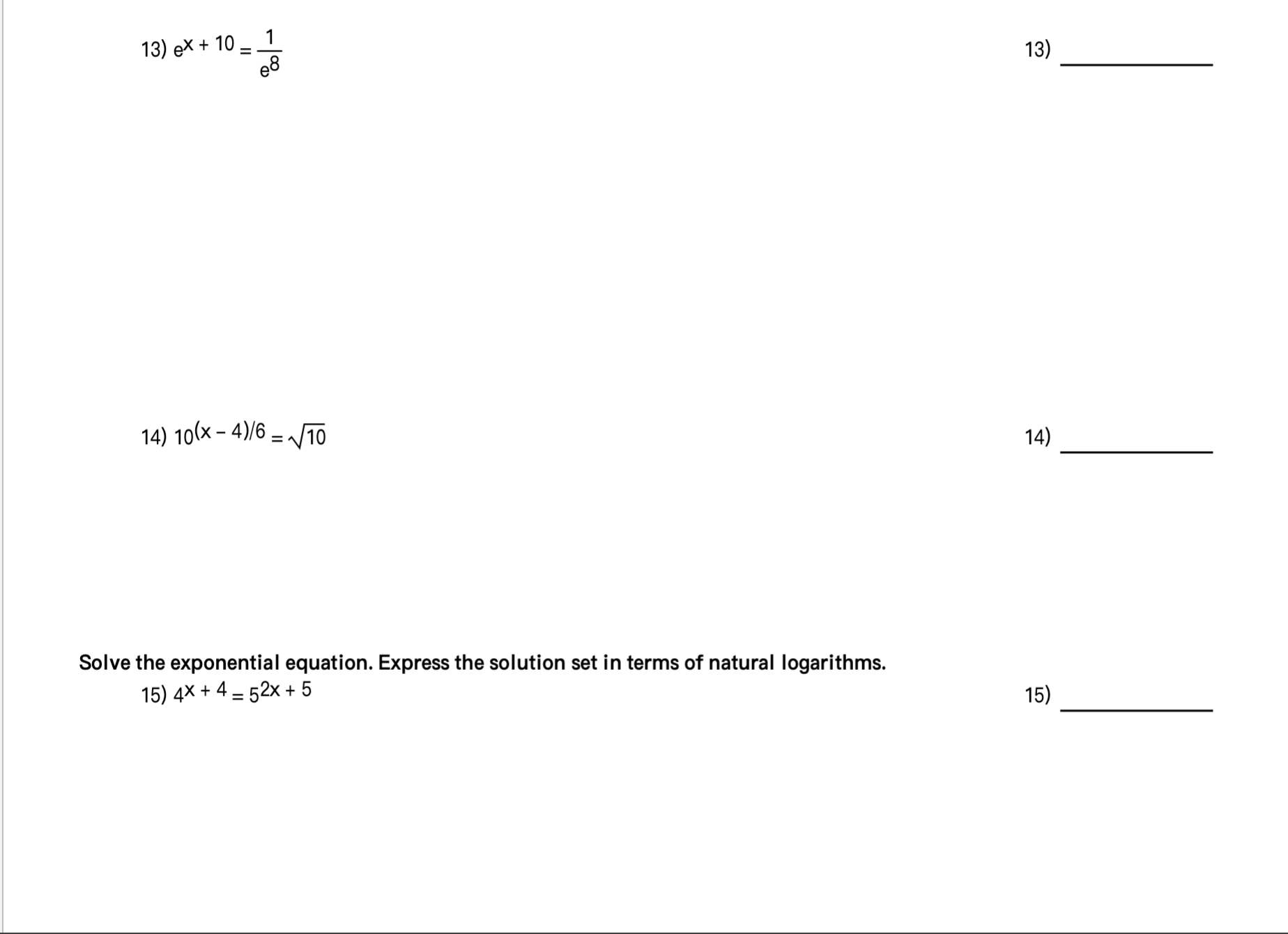
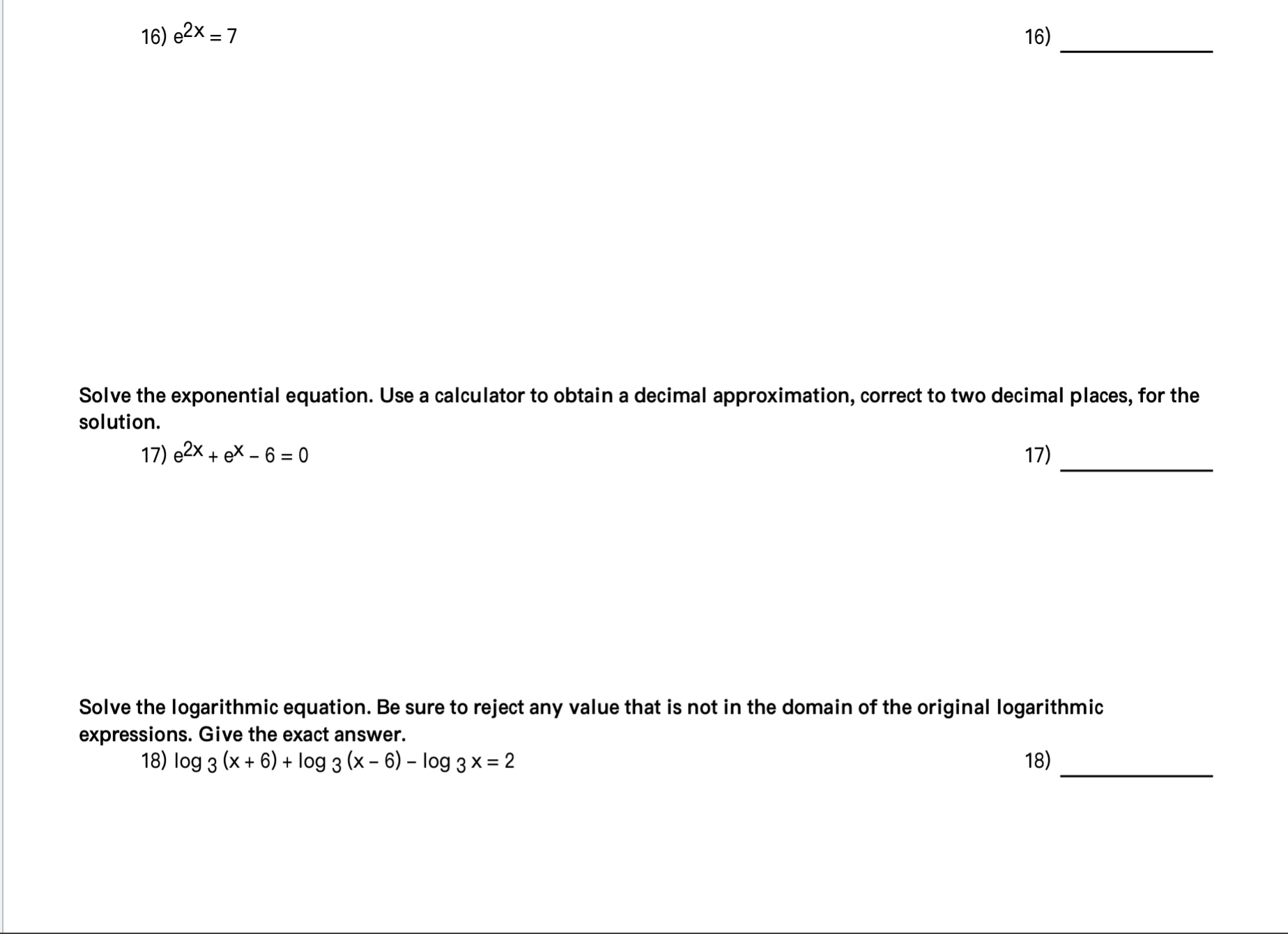
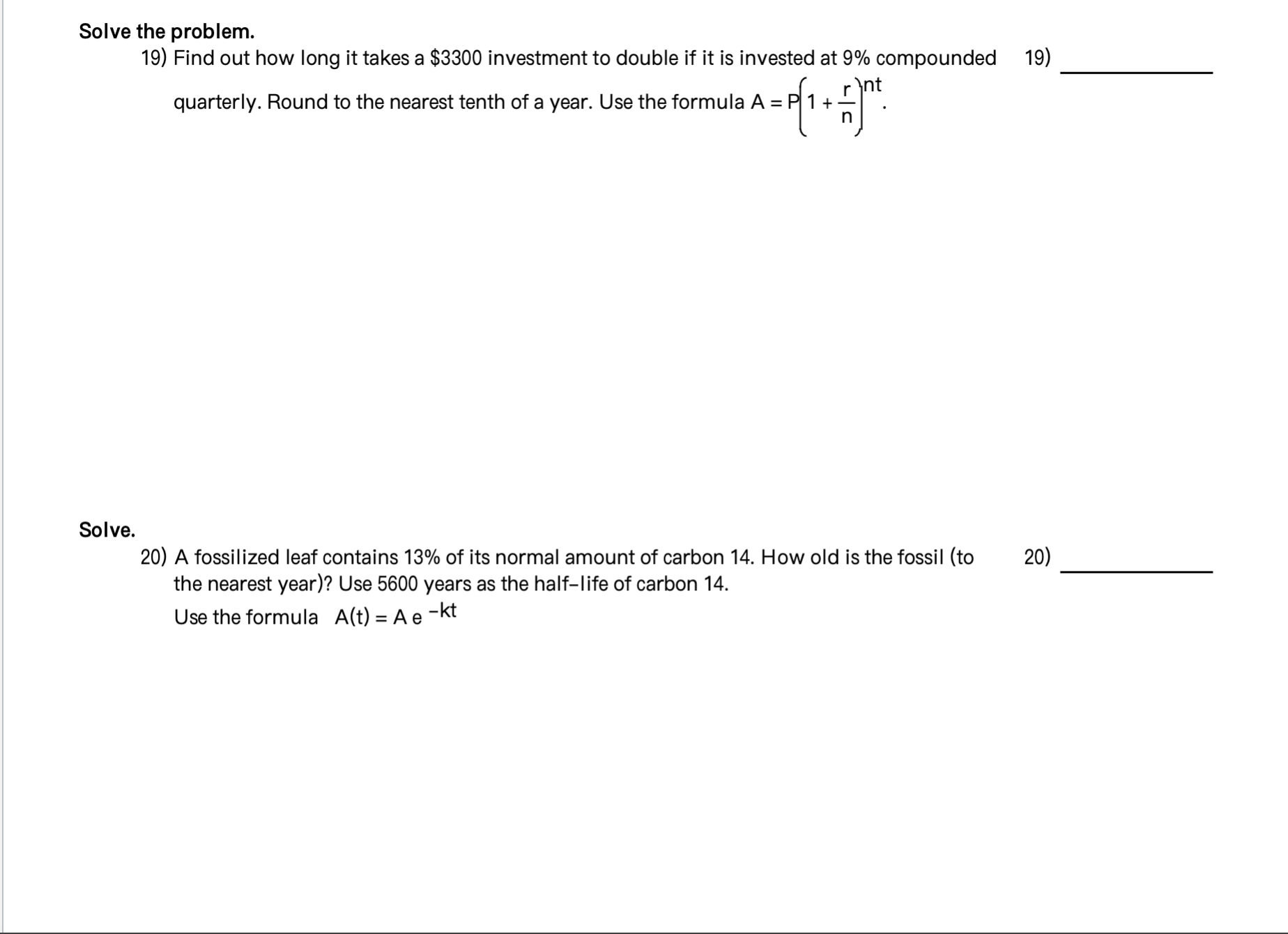
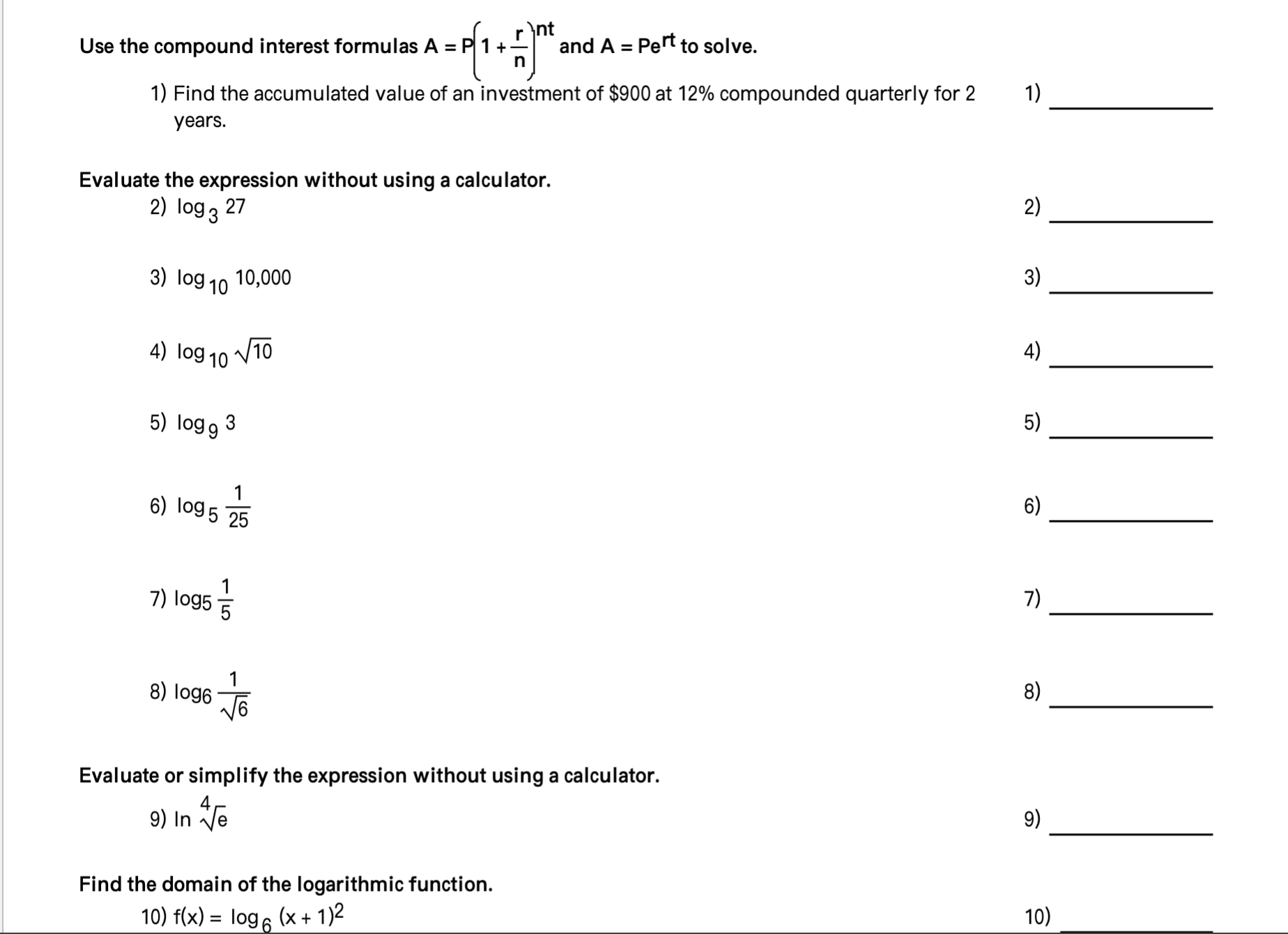
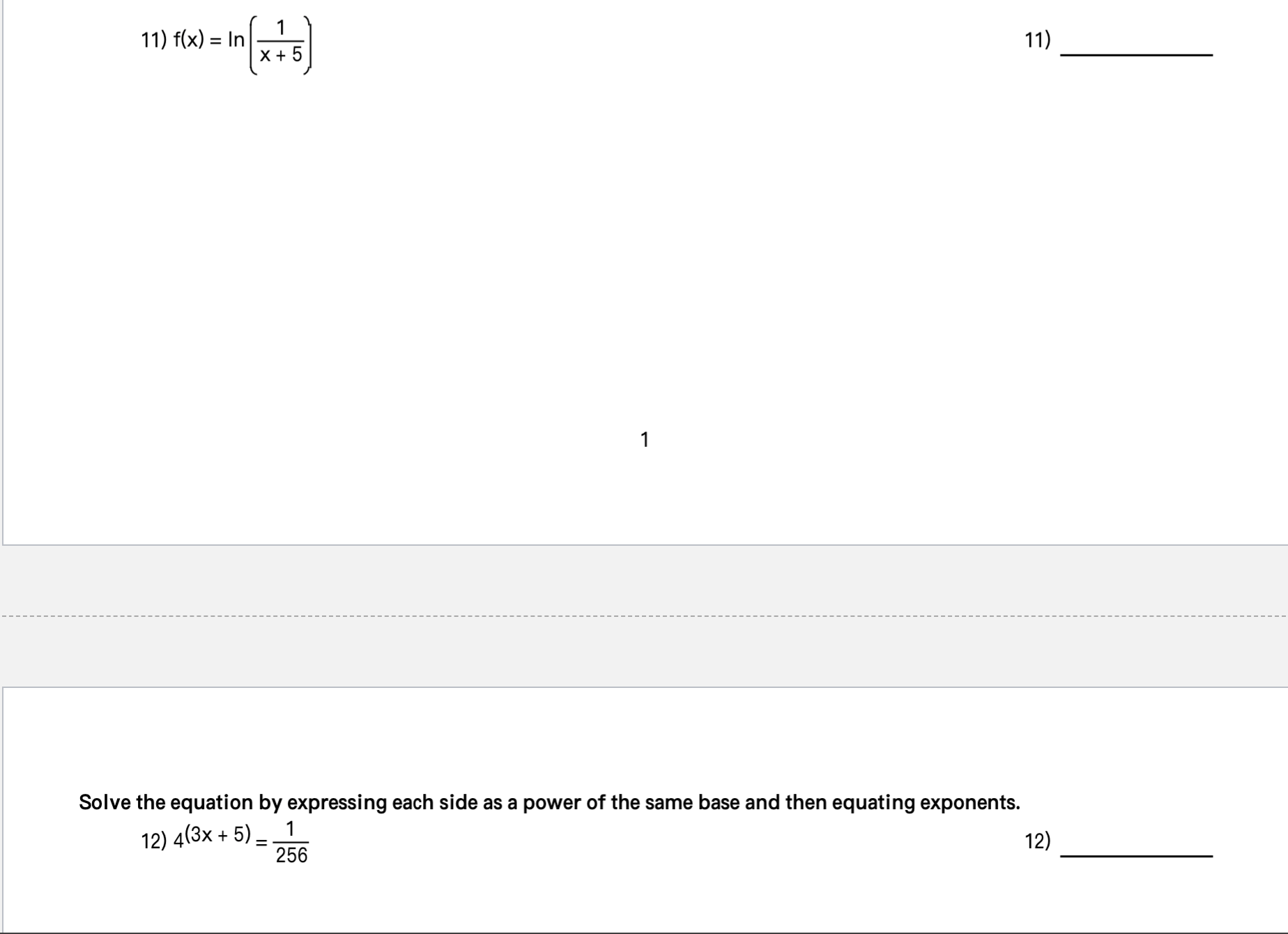
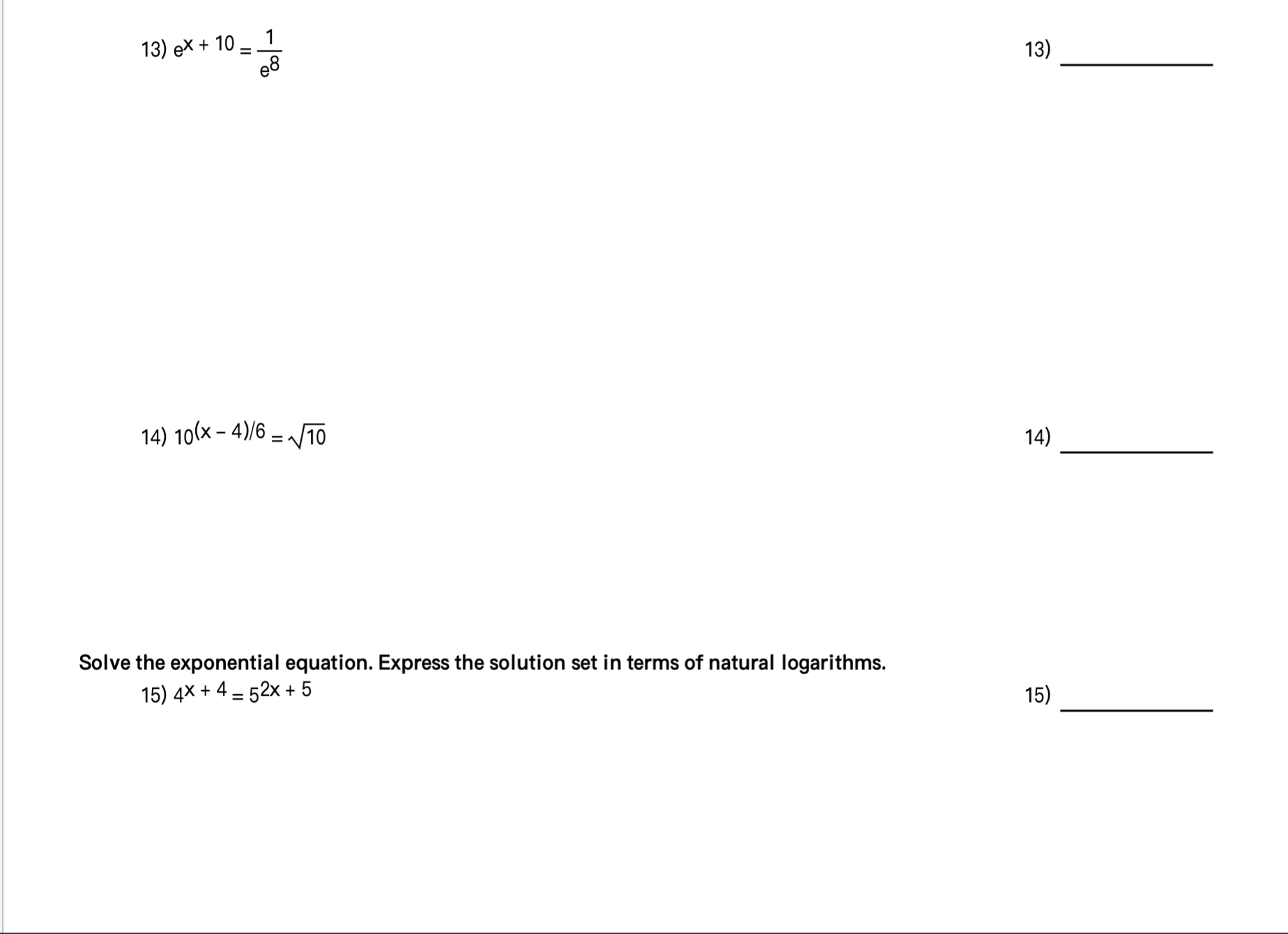
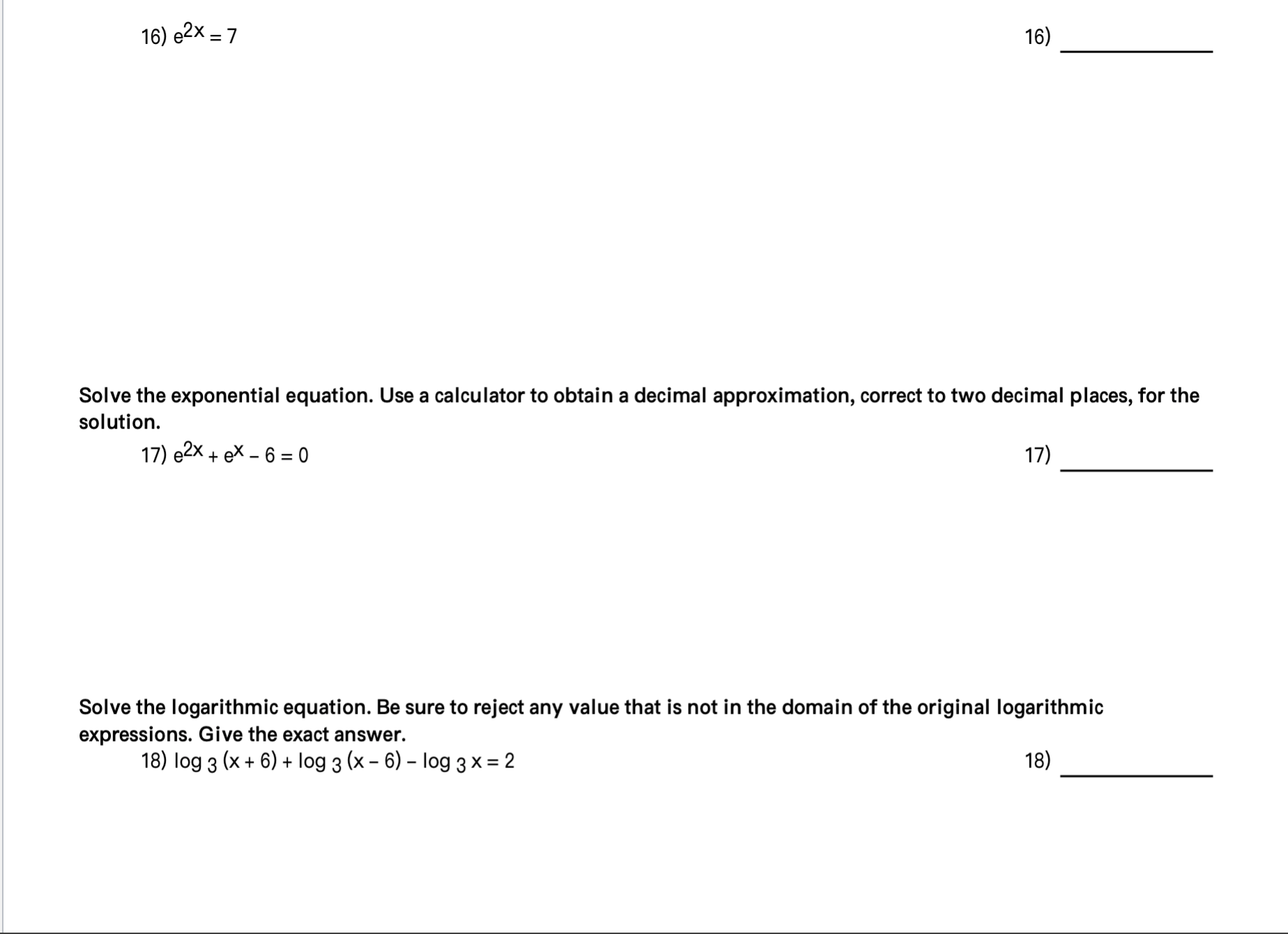
Use the compound interest formulas A = P 1+ - rant and A = Pert to solve. 1) Find the accumulated value of an investment of $900 at 12% compounded quarterly for 2 1) years. Evaluate the expression without using a calculator. 2) log 3 27 2) 3) log 10 10,000 3) 4) log 10 V10 5) logg 3 5) 6) 6) 109 5 25 1 - 7) 1095 5 7) 8) 1096 56 8) Evaluate or simplify the expression without using a calculator. 9 ) In Ve 9 ) Find the domain of the logarithmic function. 10) f(x) = log 6 (x + 1)2 10)11)f(x)=|n[ 1 ] 11) x+5 Solve the equation by expressing each side as a power of the same base and then equating exponents. (3x + 5) = L 12) 4 256 12) 13) ex+10=i 13) 14) 10(X - 4V6 =\\/To 14) Solve the exponential equation. Express the solution set in terms of natural logarithms. 15)4X+4=52X+5 15) 16) e2X = 7 16) Solve the exponential equation. Use a calculator to obtain a decimal approximation, correct to two decimal places, for the solution. 17) e2X + ex - 6 = 0 17) Solve the logarithmic equation. Be sure to reject any value that is not in the domain of the original logarithmic expressions. Give the exact answer. 18) log 3 (x + 6) + log 3 (x - 6) - log 3 X = 2 18)Solve the problem. 19) Find out how long it takes a $3300 investment to double if it is invested at 9% compounded 19) nt quarterly. Round to the nearest tenth of a year. Use the formula A =P[1 + %] . Solve. 20) A fossilized leaf contains 13% of its normal amount of carbon 14. How old is the fossil (to 20) the nearest year)? Use 5600 years as the half-life of carbon 14. Use the formula A(t) = A e 'kt
Step by Step Solution
There are 3 Steps involved in it

Get step-by-step solutions from verified subject matter experts
 Study Help