







Question: Use the dynamic aggregate demand-aggregate supply framework to show how a boom in equity prices might affect inflation and output in the short run. If
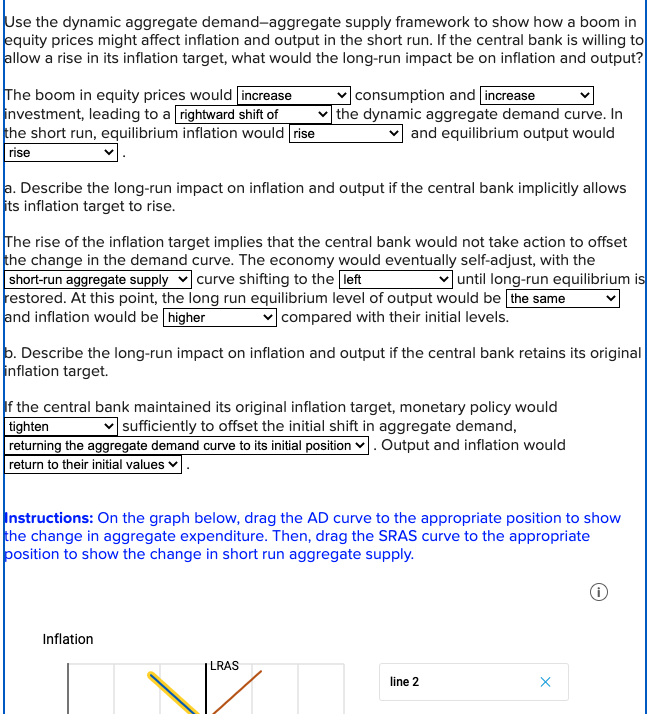
Use the dynamic aggregate demand-aggregate supply framework to show how a boom in equity prices might affect inflation and output in the short run. If the central bank is willing to allow a rise in its inflation target, what would the long-run impact be on inflation and output? The boom in equity prices would consumption and investment, leading to a the dynamic aggregate demand curve. In the short run, equilibrium inflation would and equilibrium output would a. Describe the long-run impact on inflation and output if the central bank implicitly allows its inflation target to rise. The rise of the inflation target implies that the central bank would not take action to offset the change in the demand curve. The economy would eventually self-adjust, with the curve shifting to the until long-run equilibrium is restored. At this point, the long run equilibrium level of output would be and inflation would be compared with their initial levels. b. Describe the long-run impact on inflation and output if the central bank retains its original inflation target. If the central bank maintained its original inflation target, monetary policy would returning the aggregate demand curve to its initial position . Output and inflation would Instructions: On the graph below, drag the AD curve to the appropriate position to show the change in aggregate expenditure. Then, drag the SRAS curve to the appropriate position to show the change in short run aggregate supply. (i) Inflation Use the dynamic aggregate demand-aggregate supply framework to show how a boom in equity prices might affect inflation and output in the short run. If the central bank is willing to allow a rise in its inflation target, what would the long-run impact be on inflation and output? The boom in equity prices would consumption and investment, leading to a the dynamic aggregate demand curve. In the short run, equilibrium inflation would and equilibrium output would a. Describe the long-run impact on inflation and output if the central bank implicitly allows its inflation target to rise. The rise of the inflation target implies that the central bank would not take action to offset the change in the demand curve. The economy would eventually self-adjust, with the curve shifting to the until long-run equilibrium is restored. At this point, the long run equilibrium level of output would be and inflation would be compared with their initial levels. b. Describe the long-run impact on inflation and output if the central bank retains its original inflation target. If the central bank maintained its original inflation target, monetary policy would returning the aggregate demand curve to its initial position . Output and inflation would Instructions: On the graph below, drag the AD curve to the appropriate position to show the change in aggregate expenditure. Then, drag the SRAS curve to the appropriate position to show the change in short run aggregate supply. (i) Inflation
Step by Step Solution
There are 3 Steps involved in it

Get step-by-step solutions from verified subject matter experts
 Study Help