Question: Use the information I shared above to SELECT the correct differentiated technique in Column B to the example activity in Column A. Column A: Example
Use the information I shared above to SELECT the correct differentiated technique in Column B to the example activity in Column A.
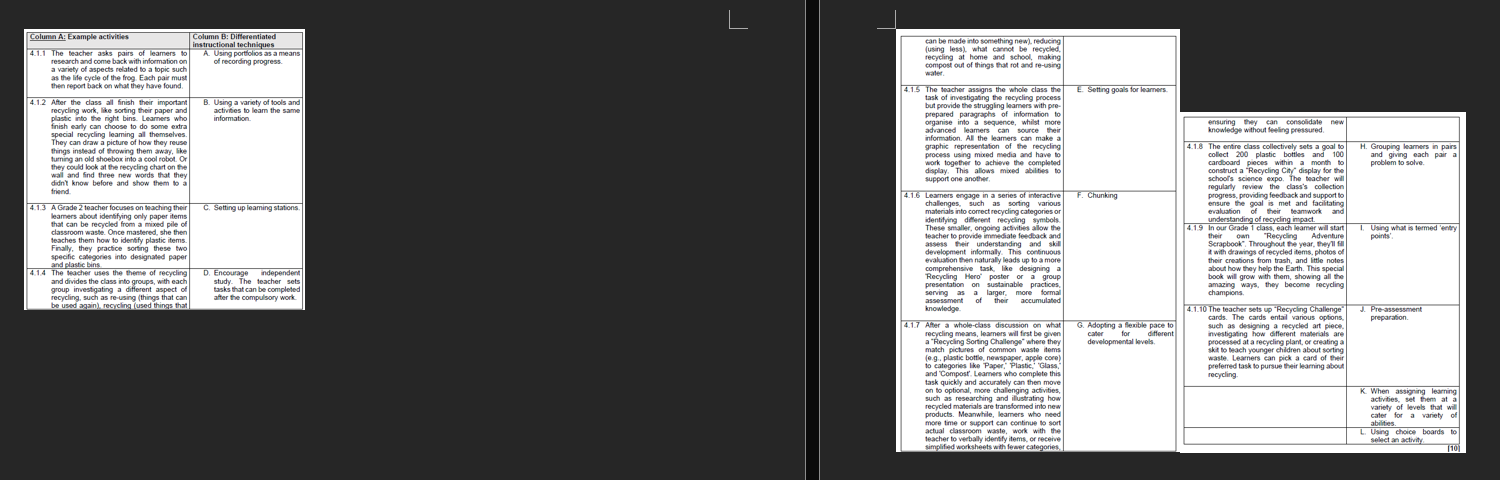
Column A: Example activities Column B: Differentiated "structional techniques 4.1.1 The teacher asks pairs of learners to A. Using portfolios as a means (using lesal what cannot be recycled . research and come back with information or of recording progress. a variety of aspects related to a topic such compost out of things that rot and re-using was the life cycle of the frog. Each pair must water. then report back on what they have found. 4.1.5 The teacher assigns the whole class the L. Setting goals for learners. 4.1.2 After the class all finish their important B. Using a variety of tools and task of investigating the recycling process recycling works, live soning their paper and activities to learn the same but provide the struggling learners with pro- pac Into the information. prepared paragraphs of information nish early can choose to do some cat opane inis a sequence, wf ensuring they can consolidate new ecial recycling learning all themselves. source information. All the learners can make a knowledge without feeling pressured They can draw a picture of how they r things instead of throwing then nem away, I graphic representation of the recycling ng mixed me 4.1.8 The entire class collectively sets a goal to collect 2 bottles 100 H. Grouping learners in pairs in old shoebox i a cool robot. O and giving each pair a hey could look at the recycli work together to achieve the completed cardboard pieces within and problem to solve. wall and lind three new words that the display. This allows mixed abilities construct a "Recycling City" display for didn't know before and show them to a support one another. school's science expo. The teacher will regularly review the class's collection 4.16 Learners engage in a series of interactive F. Chunking gress, providing feedback and support to 4.1.3 A Grade 2 teacher focuses on teaching the C. Setting up lgaming stations. challenges. 1 as various ensure the goal is met and camers about identifying only paper items materials info correct recycling cafegones or beamwork and at can be recycled from a mixed pile identifying drearent recycling symbol understanding of recycling impact. ssroom waste. Once mastered, she the These smaller, ongoing activities alow th 4.1.9 In our Grade 1 class, each learner will start Using what is termed 'entry ches them how to identify plastic item teacher to provide immediate feedback an understanding a their own "Recycling Adventure points' nally, they practice sorting these two and a dagalacment informally Scrapbook . Throughout the year, they'll f acific categories into designated paper andhisson then naturally leads up it with drawings of recycled items, photos of plastic bins their creations from trash, and little notes 4.1 4 The teacher uses the theme of recycling D. Encourage independent comprehensive task, like designing a bout how they help the Earth. This special and divides the class into groups, with each study. The teacher sets RuGoing poster book will grow with them, showing all the group investigating a different aspect of tasks that can be completed presentation sustainable amazing ways, they become recycling cycling, such as re-using (things that ca we used again). recycling (used things that after the compulsory work. serving of larger. their accumulated champions. knowledge. 4.1.10 The teacher sets up "Recycling Challenge J. Pre-assessment cards. The cards entail various options, preparation. 4.17 After a whole-class discussion on what G. Adopting a flexible pace to such as designing a recycled art piece. recycling means, loamors will first be given cafer different investigating how different materials are a "Recycling Sorting Challenge" where the developmental levels. processed at a recycling plant, or creating a match pictures of common waste ton whit to teach younger children about sorting [aug., plastic bottle, nowapaper, apple corr waste. Learners can pick a card of their to categories like 'Paper," Plastic* Glysy preferred task to pursue their learning about and "Compost'. Learners who complate thi recycling task quickly and accurately can bravely can then mow on to optional, more ch such as researching and illustrating h K. When recycled materials are transformed into new activities, set them at a products. Meanwhile, learners who me more time or support can continue to sort cater for a variety of abilities. actual classroom waste. work with the teacher to verbally identify items, or receive Thing choice boards to simplified worksheets with fewer cafegones 101









 Study Help