







Question: use the table to answer the questions c. Which group is more elastic in their demand for any dental care? [m d. Suppose that you
use the table to answer the questions
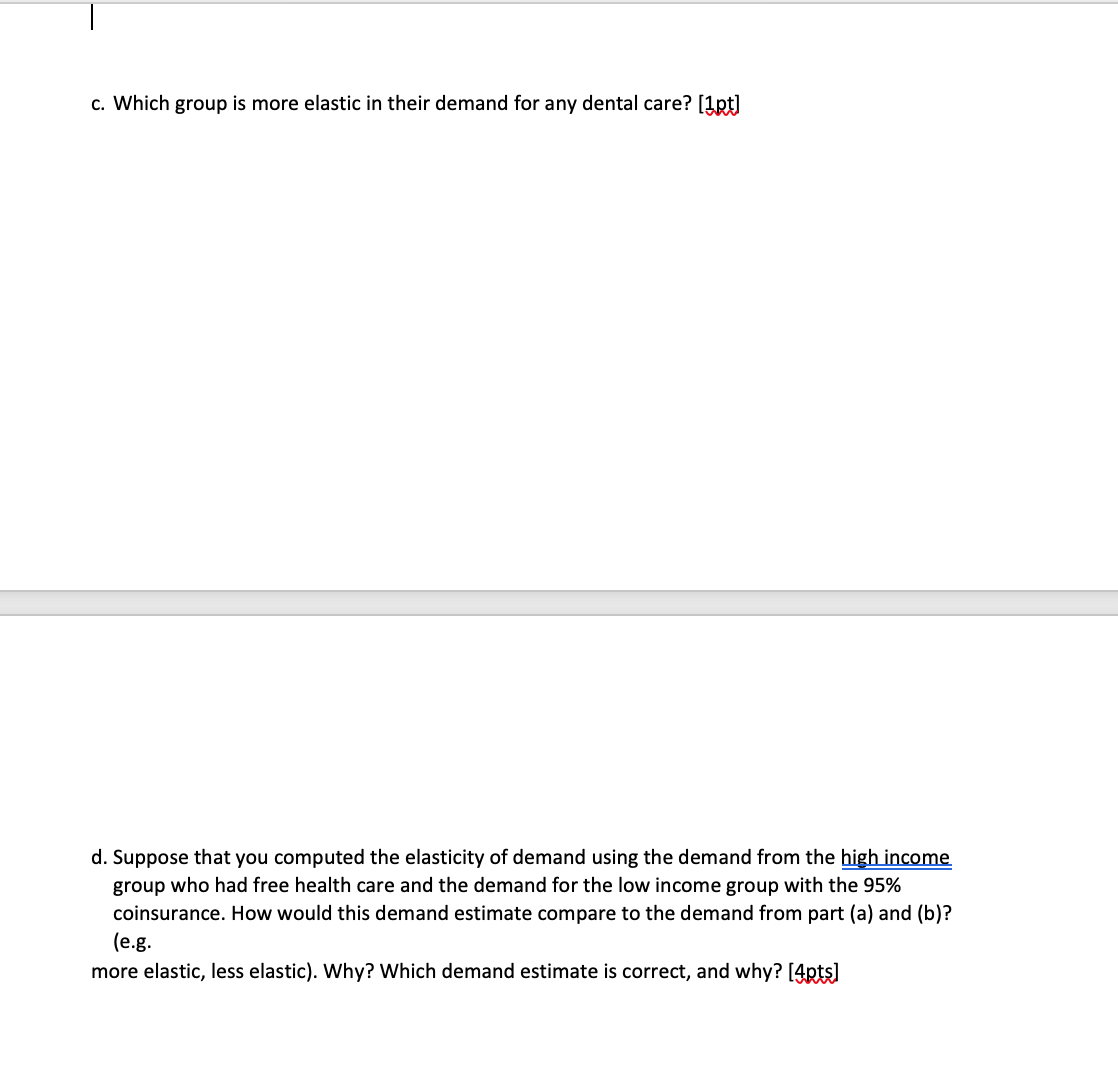
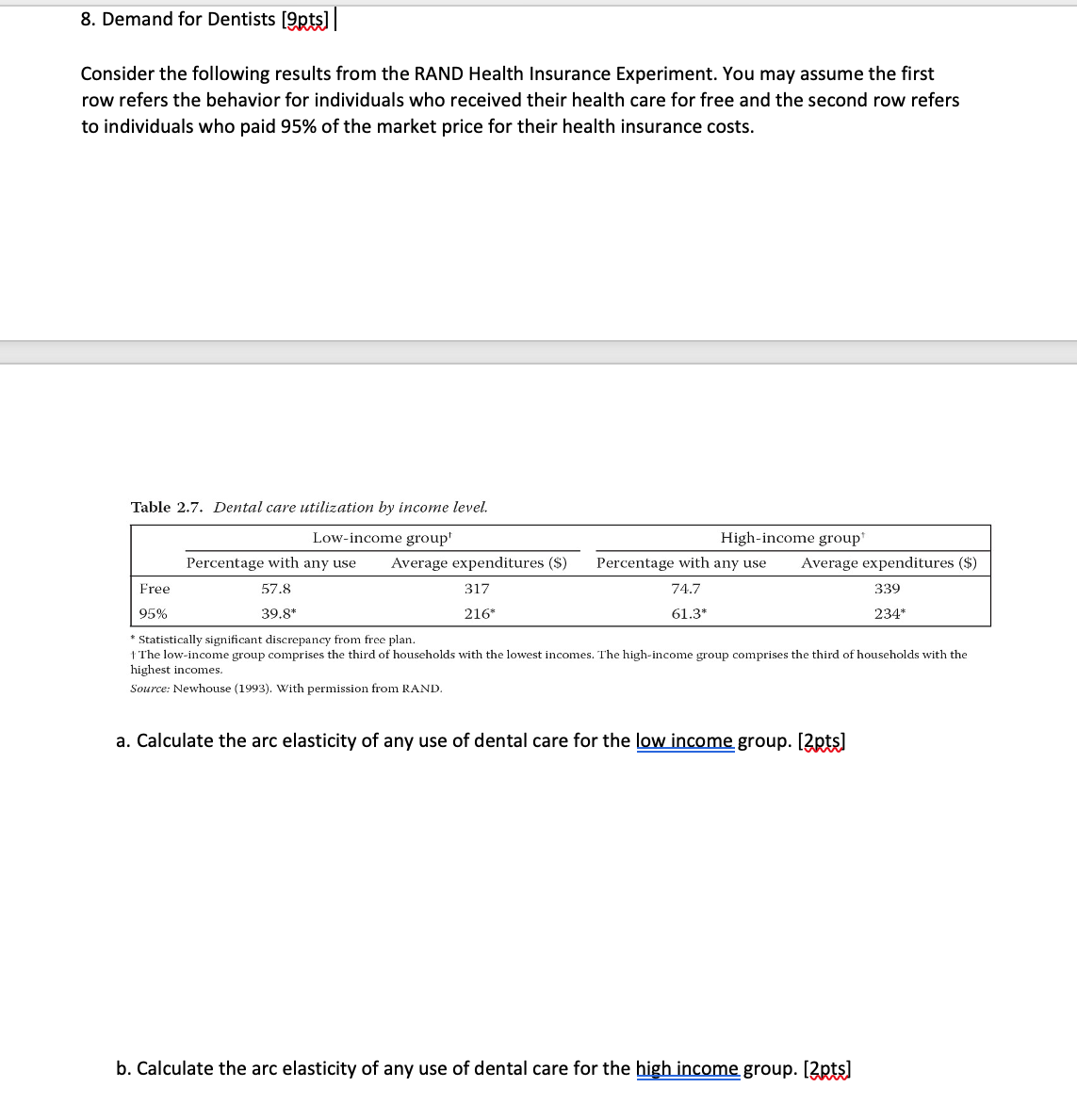
c. Which group is more elastic in their demand for any dental care? [m d. Suppose that you computed the elasticity of demand using the demand from the m group who had free health care and the demand for the low income group with the 95% coinsurance. How would this demand estimate compare to the demand from part (a) and (b)? (e.g. more elastic, less elastic}. Why? Which demand estimate is correct, and why? [9px;] 8. Demand for Dentists [gym] I Consider the following results from the RAND Health Insurance Experiment. You may assume the rst row refers the behavior for individuals who received their health care for free and the second row refers to individuals who paid 95% of the market price for their health insurance costs. Table 2.7. Dental care utilization by income level. Low-income groupr High-income group' m W Free 57.8 317 74.? 339 95% 39.8' 216' 61.3' 234' ' Statistically signicant discrepancy from free plan. 1' The low~income group comprises the third of households with the lowest incomes. The high-income group comprises the third of households with the highest incomes. 5mm: Newhouse (1993}. Wlth permission from RAND. a. Calculate the arc elasticity of any use of dental care for the Momegroup. [ants] b. Calculate the arc elasticity of any use of dental care for the Mgroup. [39H]
Step by Step Solution
There are 3 Steps involved in it

Get step-by-step solutions from verified subject matter experts
 Study Help