



Question: Use this case for the brief: Ratcliffe v. Pedersen due Jun 30 W2 Briefing a Case At 5 5 IRAC (Issue Rule Argument Conclusion) or
Use this case for the brief: Ratcliffe v. Pedersen
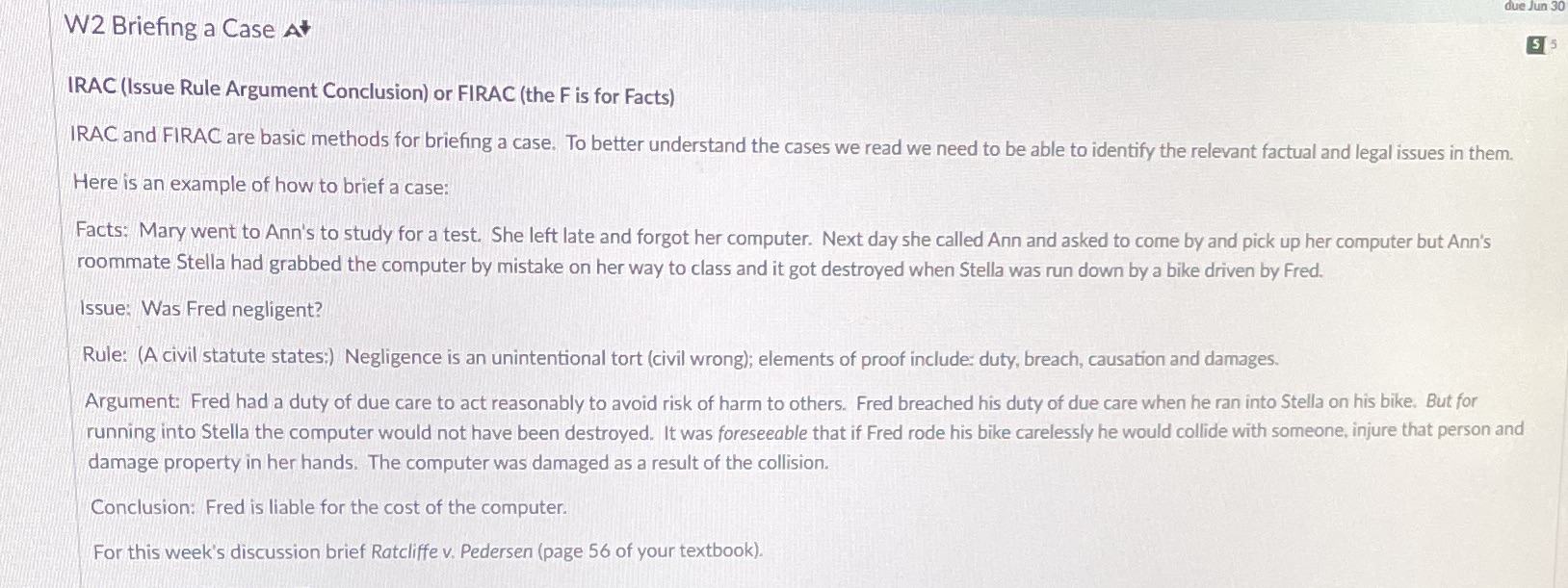
due Jun 30 W2 Briefing a Case At 5 5 IRAC (Issue Rule Argument Conclusion) or FIRAC (the F is for Facts) IRAC and FIRAC are basic methods for briefing a case. To better understand the cases we read we need to be able to identify the relevant factual and legal issues in them. Here is an example of how to brief a case: Facts: Mary went to Ann's to study for a test. She left late and forgot her computer. Next day she called Ann and asked to come by and pick up her computer but Ann's roommate Stella had grabbed the computer by mistake on her way to class and it got destroyed when Stella was run down by a bike driven by Fred. Issue: Was Fred negligent? Rule: (A civil statute states:) Negligence is an unintentional tort (civil wrong); elements of proof include: duty, breach, causation and damages. Argument: Fred had a duty of due care to act reasonably to avoid risk of harm to others. Fred breached his duty of due care when he ran into Stella on his bike. But for running into Stella the computer would not have been destroyed. It was foreseeable that if Fred rode his bike carelessly he would collide with someone, injure that person and damage property in her hands. The computer was damaged as a result of the collision. Conclusion: Fred is liable for the cost of the computer. For this week's discussion brief Ratcliffe v. Pedersen (page 56 of your textbook)
Step by Step Solution
There are 3 Steps involved in it

Get step-by-step solutions from verified subject matter experts