







Question: Using Approximate Yield with Mutual Funds The formula for approximate yield of an investment can look intimidating, but it's just a function of three things:
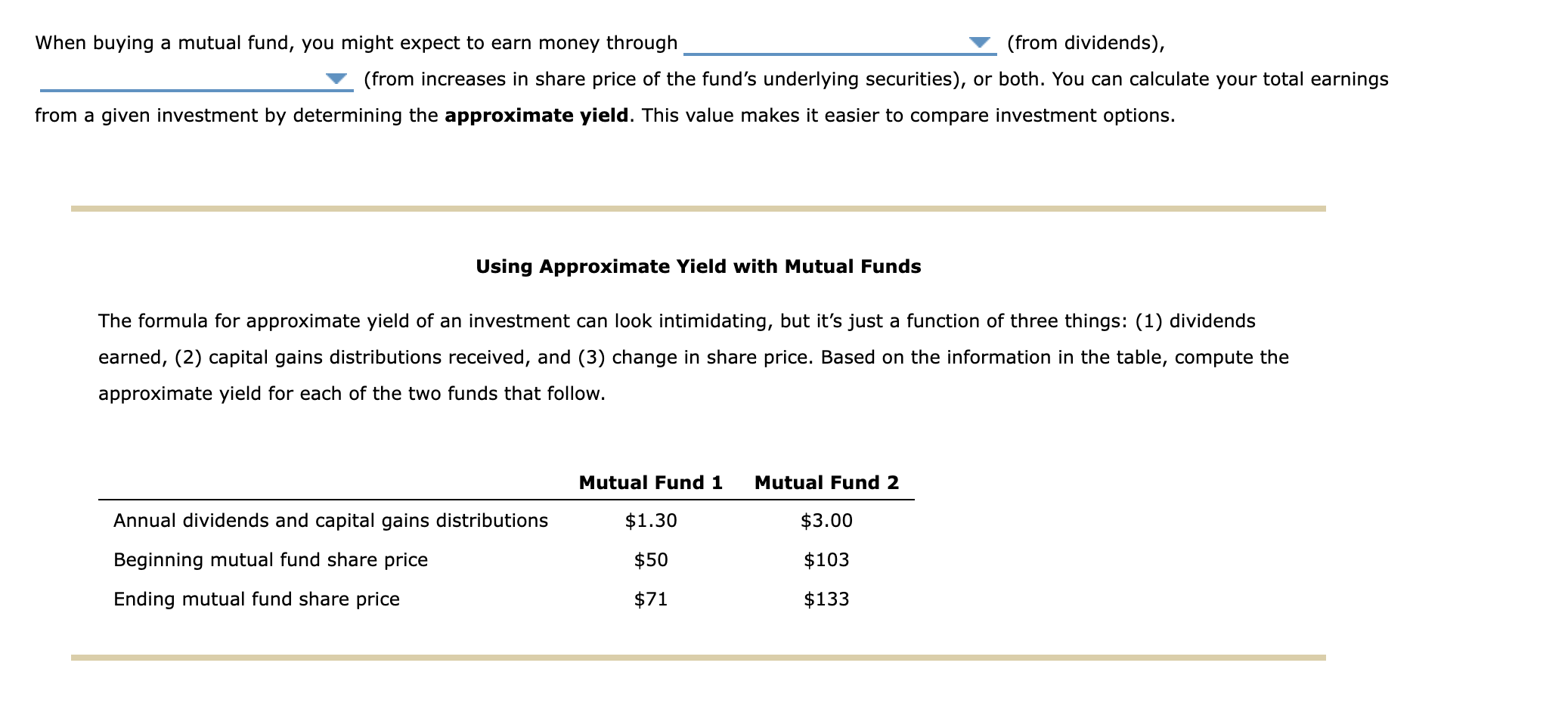


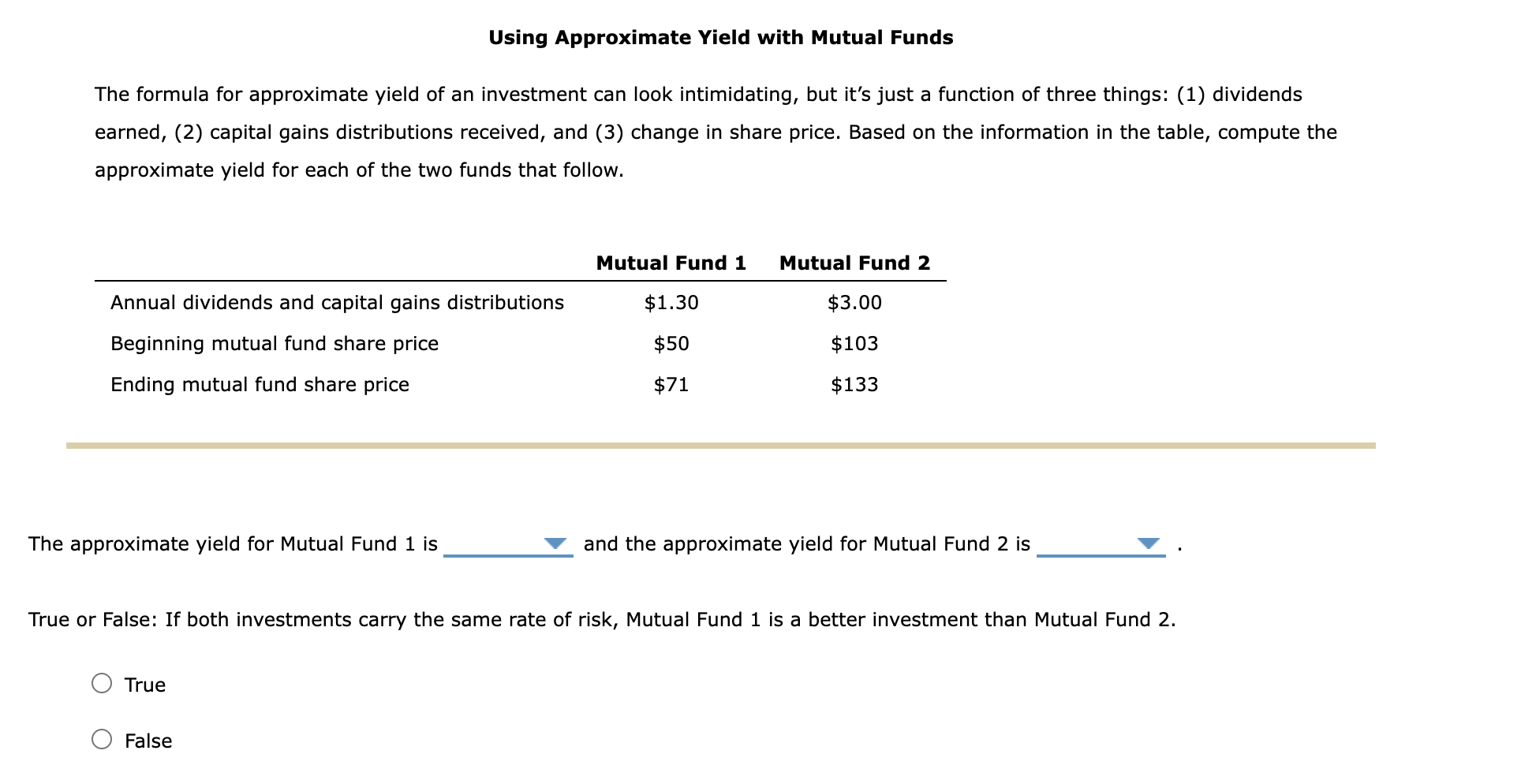
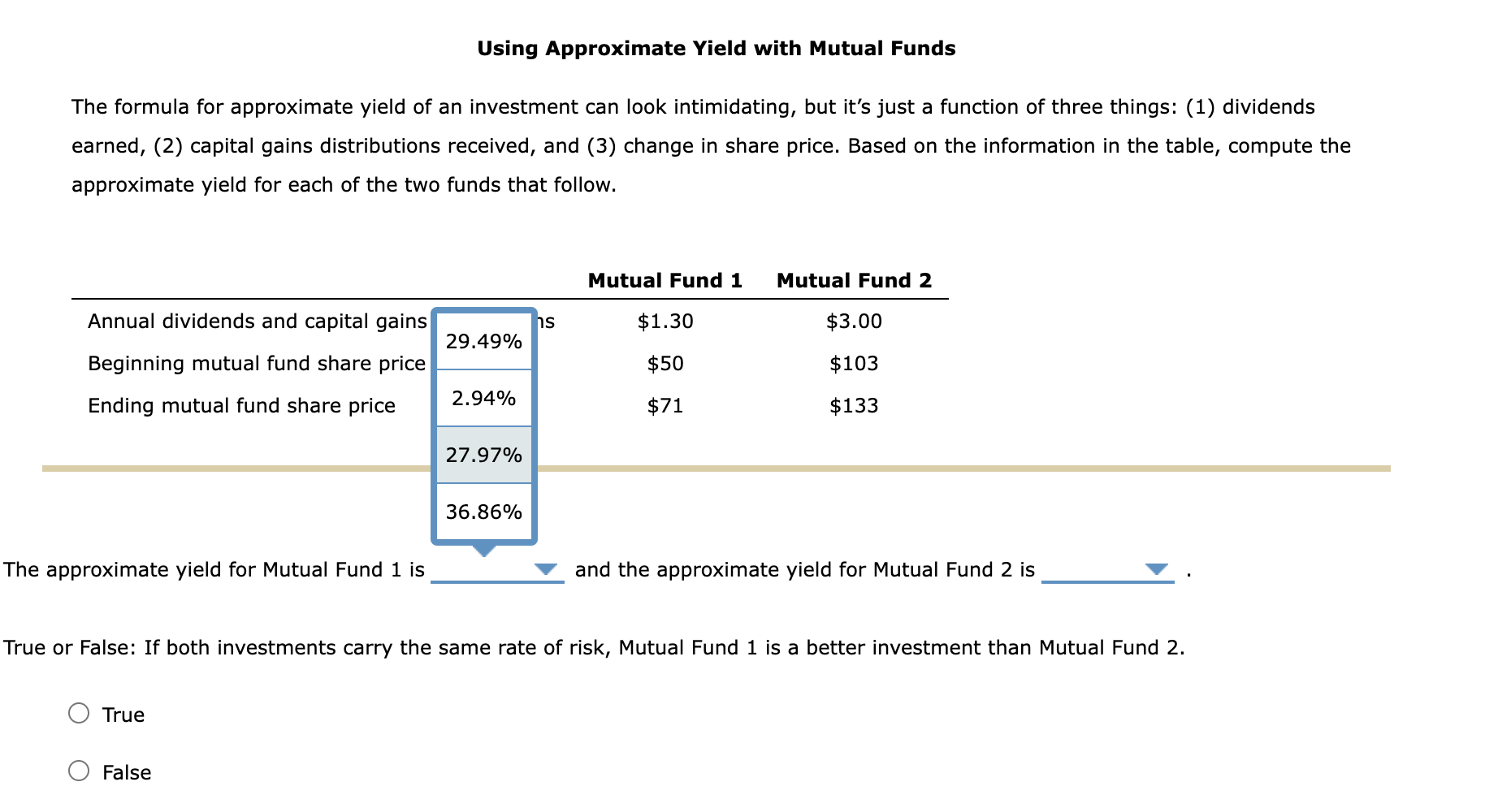
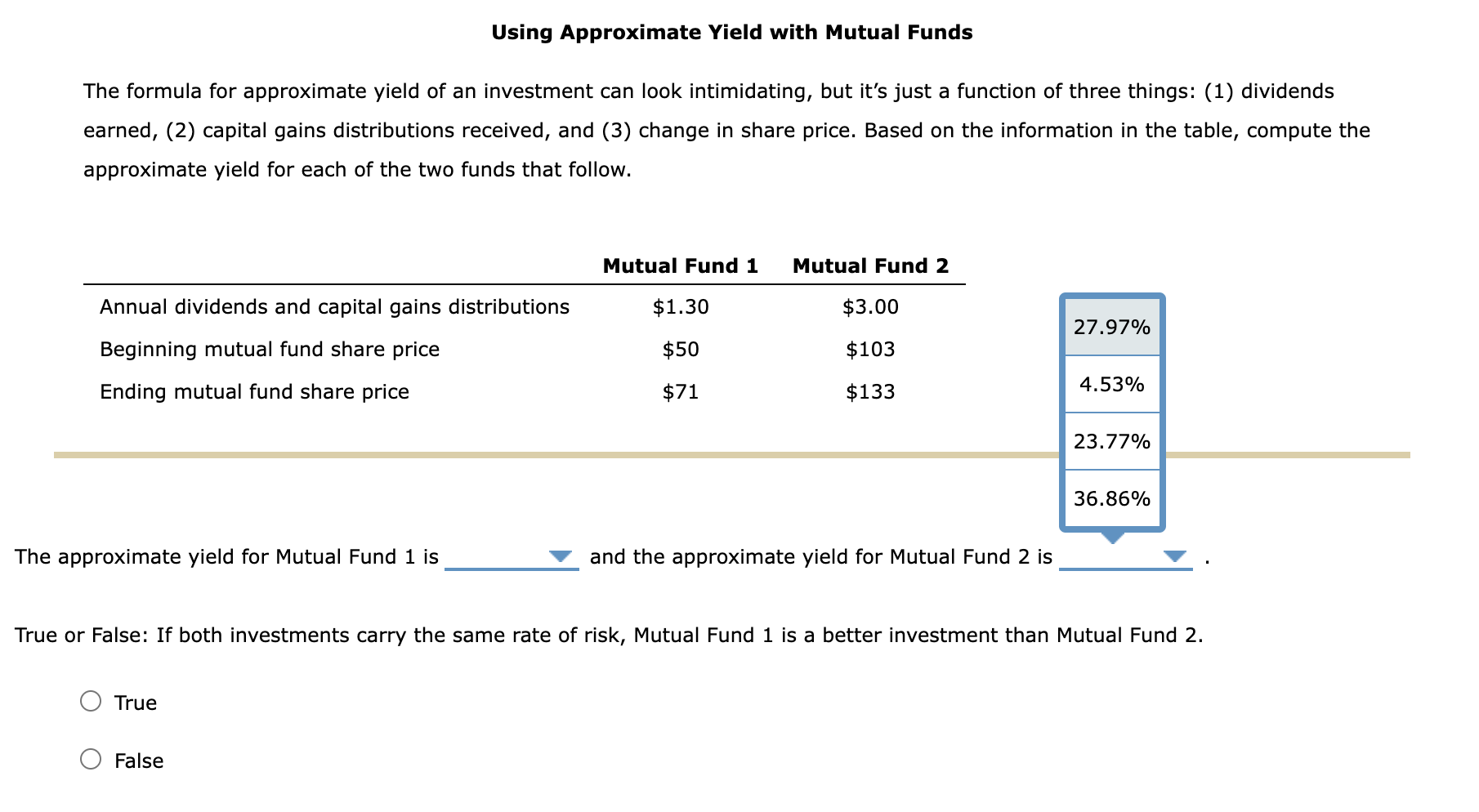
Using Approximate Yield with Mutual Funds The formula for approximate yield of an investment can look intimidating, but it's just a function of three things: (1) dividends earned, (2) capital gains distributions received, and (3) change in share price. Based on the information in the table, compute the approximate yield for each of the two funds that follow. The approximate yield for Mutual Fund 1 is and the approximate yield for Mutual Fund 2 is True or False: If both investments carry the same rate of risk, Mutual Fund 1 is a better investment than Mutual Fund 2. True False Using Approximate Yield with Mutual Funds The formula for approximate yield of an investment can look intimidating, but it's just a function of three things: (1) dividends earned, (2) capital gains distributions received, and (3) change in share price. Based on the information in the table, compute the approximate yield for each of the two funds that follow. The approximate yield for Mutual Fund 1 is and the approximate yield for Mutual Fund 2 is True or False: If both investments carry the same rate of risk, Mutual Fund 1 is a better investment than Mutual Fund 2. True False Using Approximate Yield with Mutual Funds The formula for approximate yield of an investment can look intimidating, but it's just a function of three things: (1) dividends earned, (2) capital gains distributions received, and (3) change in share price. Based on the information in the table, compute the approximate yield for each of the two funds that follow. The approximate yield for Mutual Fund 1 is and the approximate yield for Mutual Fund 2 is True or False: If both investments carry the same rate of risk, Mutual Fund 1 is a better investment than Mutual Fund 2. True False When buying a mutual fund, you might expect to earn money through (from dividends), (from increases in share price of the fund's underlying securities), or both. You can calculate your total earnings :termining the approximate yield. This value makes it easier to compare investment options. Using Approximate Yield with Mutual Funds When buying a mutual fund, you might expect to earn money through , (from dividends), (from increases in share price of the fund's underlying securities), or both. You can calculate your total earnings rom a given investment by determining the approximate yield. This value makes it easier to compare investment options. Using Approximate Yield with Mutual Funds The formula for approximate yield of an investment can look intimidating, but it's just a function of three things: (1) dividends earned, (2) capital gains distributions received, and (3) change in share price. Based on the information in the table, compute the approximate yield for each of the two funds that follow. When buying a mutual fund, you might expect to earn money through (from increases in share price of th from a given investment by determining the approximate yield. This (from dividends), ), or both. You can calculate your total earnings Jare investment options
Step by Step Solution
There are 3 Steps involved in it

Get step-by-step solutions from verified subject matter experts
 Study Help