







Question: using exapmles from the case study , analyse how Nestle creating shared value contributes to its coporate social responsibility activities. Corporate Social Responsibility In Business
using exapmles from the case study , analyse how Nestle creating shared value contributes to its coporate social responsibility activities. 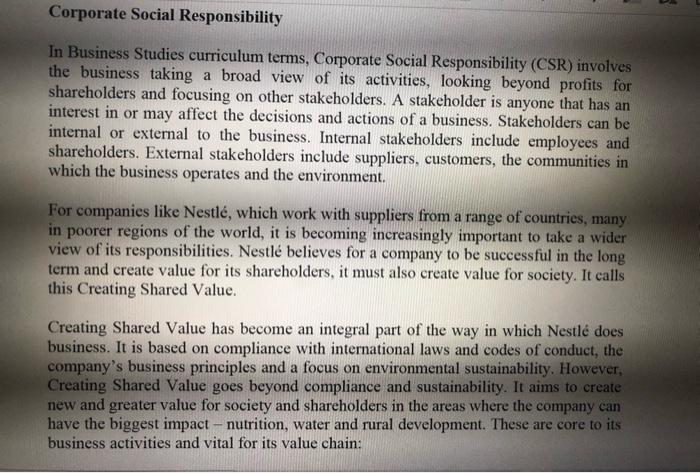

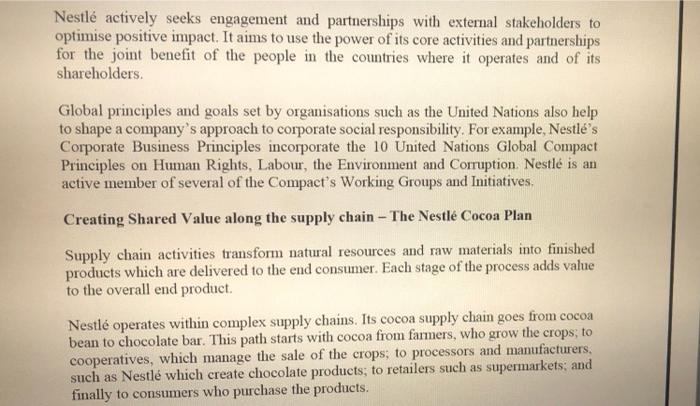
Corporate Social Responsibility In Business Studies curriculum terms, Corporate Social Responsibility (CSR) involves the business taking a broad view of its activities, looking beyond profits for shareholders and focusing on other stakeholders. A stakeholder is anyone that has an interest in or may affect the decisions and actions of a business. Stakeholders can be internal or external to the business. Internal stakeholders include employees and shareholders. External stakeholders include suppliers, customers, the communities in which the business operates and the environment. For companies like Nestl, which work with suppliers from a range of countries, many in poorer regions of the world, it is becoming increasingly important to take a wider view of its responsibilities. Nestl believes for a company to be successful in the long term and create value for its shareholders, it must also create value for society. It calls this Creating Shared Value. Creating Shared Value has become an integral part of the way in which Nestl does business. It is based on compliance with international laws and codes of conduct, the company's business principles and a focus on environmental sustainability. However, Creating Shared Value goes beyond compliance and sustainability. It aims to create new and greater value for society and shareholders in the areas where the company can have the biggest impact - nutrition, water and rural development. These are core to its business activities and vital for its value chain: . Water: because the ongoing quality and availability of it is critical to life, to the production of food and to Nestl's operations. Rural development: because the overall well-being of farmers, rural communities, workers and small businesses and suppliers is intrinsic to the long-term success of Nestl's business. Nestl actively seeks engagement and partnerships with external stakeholders to optimise positive impact. It aims to use the power of its core activities and partnerships for the joint benefit of the people in the countries where it operates and of its shareholders. Global principles and goals set by organisations such as the United Nations also help to shape a company's approach to corporate social responsibility. For example, Nestle's Corporate Business Principles incorporate the 10 United Nations Global Compact Principles on Human Rights, Labour, the Environment and Corruption Nestl is an active member of several of the Compact's Working Groups and Initiatives, Creating Shared Value along the supply chain - The Nestle Cocoa Plan Supply chain activities transform natural resources and raw materials into finished products which are delivered to the end consumer. Each stage of the process adds value to the overall end product. Nestl operates within complex supply chains. Its cocoa supply chain goes from cocoa bean to chocolate bar. This path starts with cocoa from farmers, who grow the crops; to cooperatives, which manage the sale of the crops; to processors and manufacturers, such as Nestl which create chocolate products; to retailers such as supermarkets; and finally to consumers who purchase the products Step by Step Solution
There are 3 Steps involved in it
1 Expert Approved Answer
Step: 1 Unlock

Question Has Been Solved by an Expert!
Get step-by-step solutions from verified subject matter experts
Step: 2 Unlock
Step: 3 Unlock
 Study Help