







Question: Using Java programming, synchronize the threads in the context of the problem Closely follow the implementation requirements. The symchronization should be implemented through Java semaphores
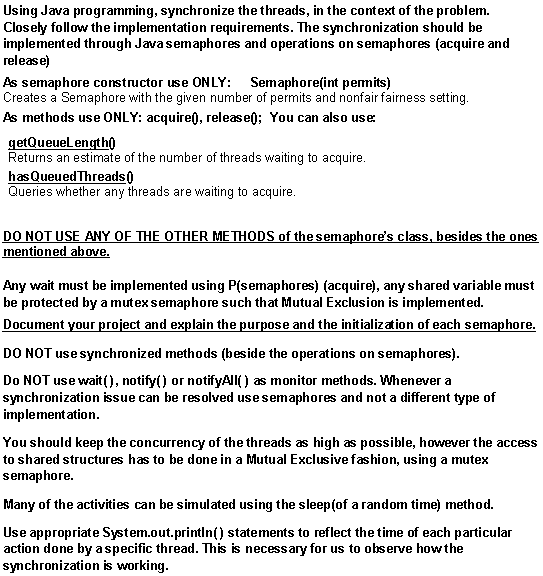
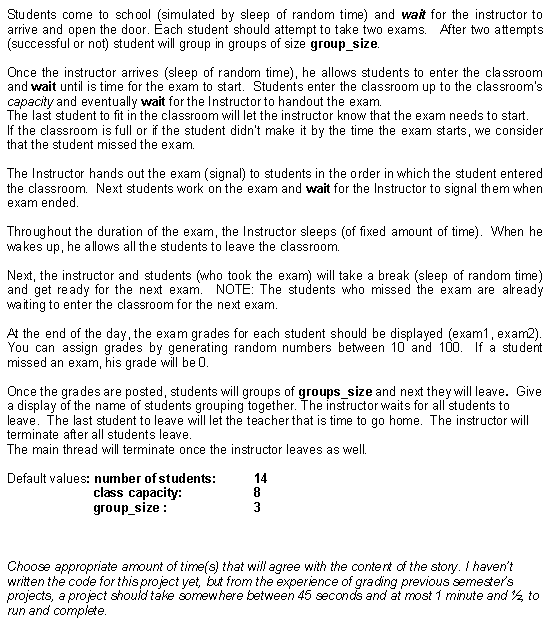
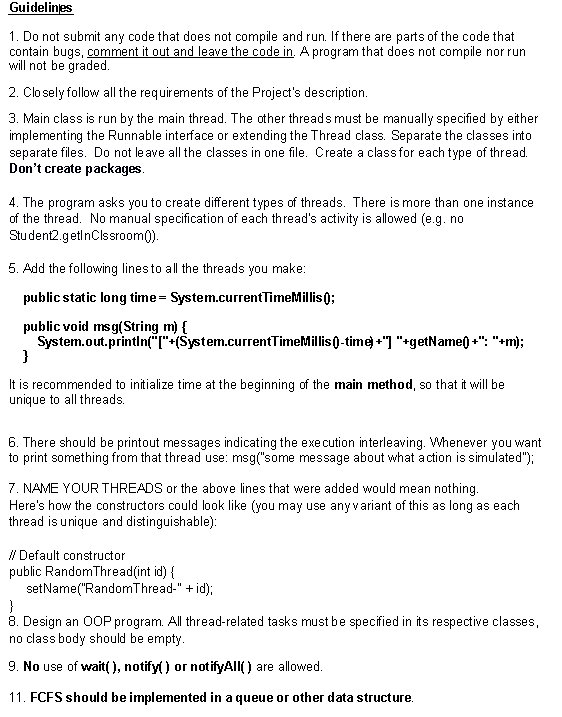
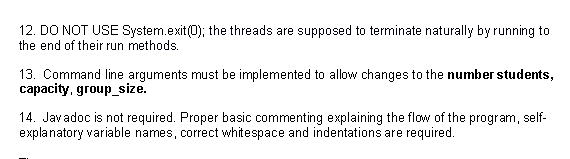
Using Java programming, synchronize the threads in the context of the problem Closely follow the implementation requirements. The symchronization should be implemented through Java semaphores and operations on semaphores (acquire and release) As semaphore constructor use ONLY Semaphore(int permits) Creates a Semaphore with the given number of permits and nonfair fairness setting As methods use ONLY: acquire0 release You can also use 0; etQueuel ength0 Returns an estimate of the number of threads waiting to acquire has Queued Threads0 Queries whether any threads are waiting to acquire DO NOTUSE ANY OE THE OTHER METH0DS of thesemaphores class, besides the ones mentioned above Any wait must be implemented using P(semaphores) (acquire a shared variable must be protected by a mutexsemaphore such that Mutual Exclusion is implemented Document your project and explain the purpose and the initialization of each semaphore. DO NOT se synchronized methods (beside the operations on semaphores) Do NOT use wait(), notify or notifyAll() as monitor methods. Whenever a e resolved use semaphores a implementation You should keep the concurrency of the threads as high as possible, however the access to shared structures has to be done in a Mutual Exclusive fashion, using a mutex semaphore Many of the activities can be simulated using the sleep (of a random time method Use appropriate System.out.println() statements to reflect the time of each particular action done by aspecific thread. This is necessary for us to observe howthe symchronization is working. Using Java programming, synchronize the threads in the context of the problem Closely follow the implementation requirements. The symchronization should be implemented through Java semaphores and operations on semaphores (acquire and release) As semaphore constructor use ONLY Semaphore(int permits) Creates a Semaphore with the given number of permits and nonfair fairness setting As methods use ONLY: acquire0 release You can also use 0; etQueuel ength0 Returns an estimate of the number of threads waiting to acquire has Queued Threads0 Queries whether any threads are waiting to acquire DO NOTUSE ANY OE THE OTHER METH0DS of thesemaphores class, besides the ones mentioned above Any wait must be implemented using P(semaphores) (acquire a shared variable must be protected by a mutexsemaphore such that Mutual Exclusion is implemented Document your project and explain the purpose and the initialization of each semaphore. DO NOT se synchronized methods (beside the operations on semaphores) Do NOT use wait(), notify or notifyAll() as monitor methods. Whenever a e resolved use semaphores a implementation You should keep the concurrency of the threads as high as possible, however the access to shared structures has to be done in a Mutual Exclusive fashion, using a mutex semaphore Many of the activities can be simulated using the sleep (of a random time method Use appropriate System.out.println() statements to reflect the time of each particular action done by aspecific thread. This is necessary for us to observe howthe symchronization is working
Step by Step Solution
There are 3 Steps involved in it

Get step-by-step solutions from verified subject matter experts
 Study Help