Question: Using Kotter's 8 step process for change, analyze the success and failures of this change effort. B) What would you recommend to the university president
Using Kotter's 8 step process for change, analyze the success and failures of this change effort. B) What would you recommend to the university president about how the change process could be sustained?
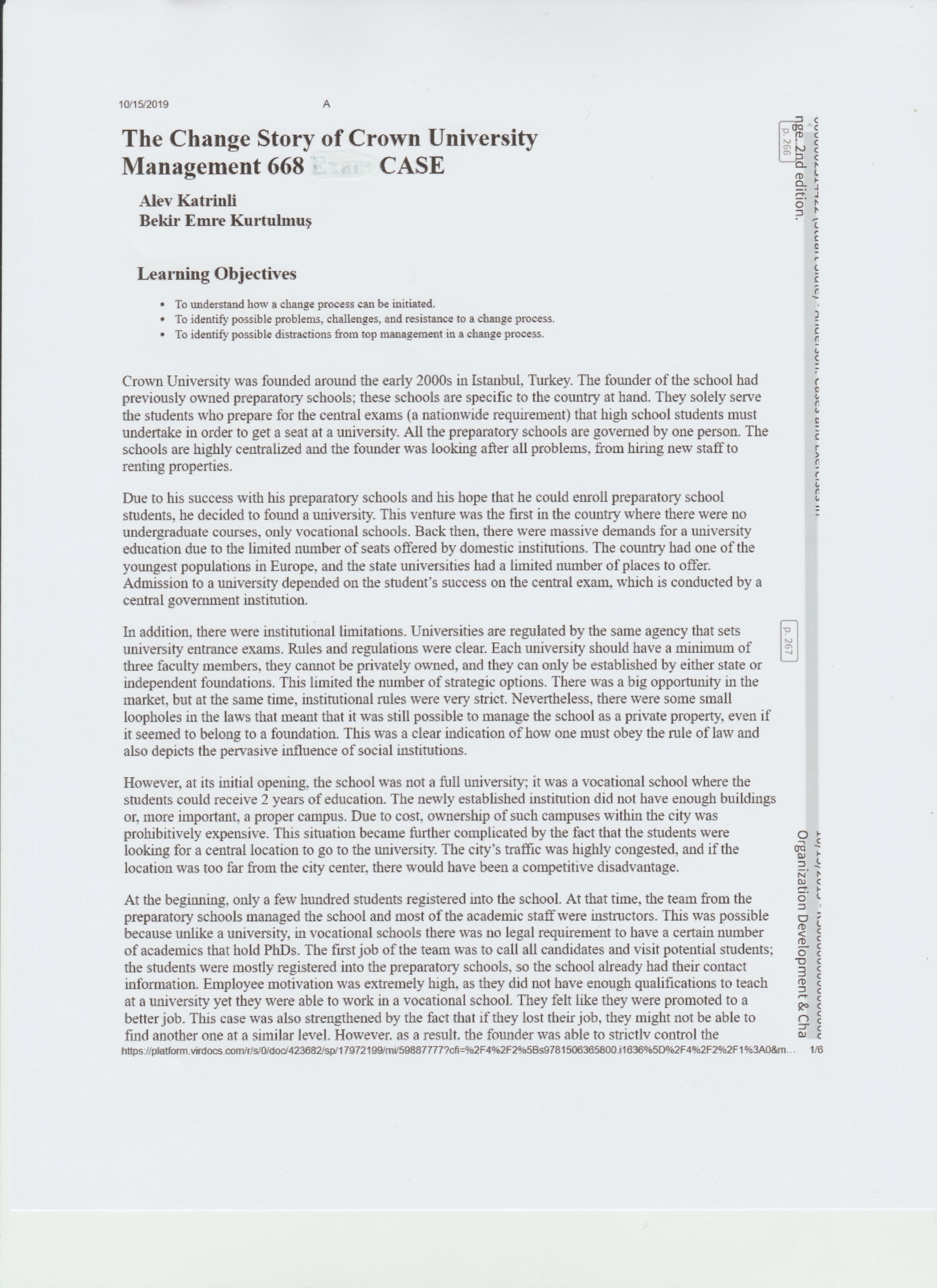
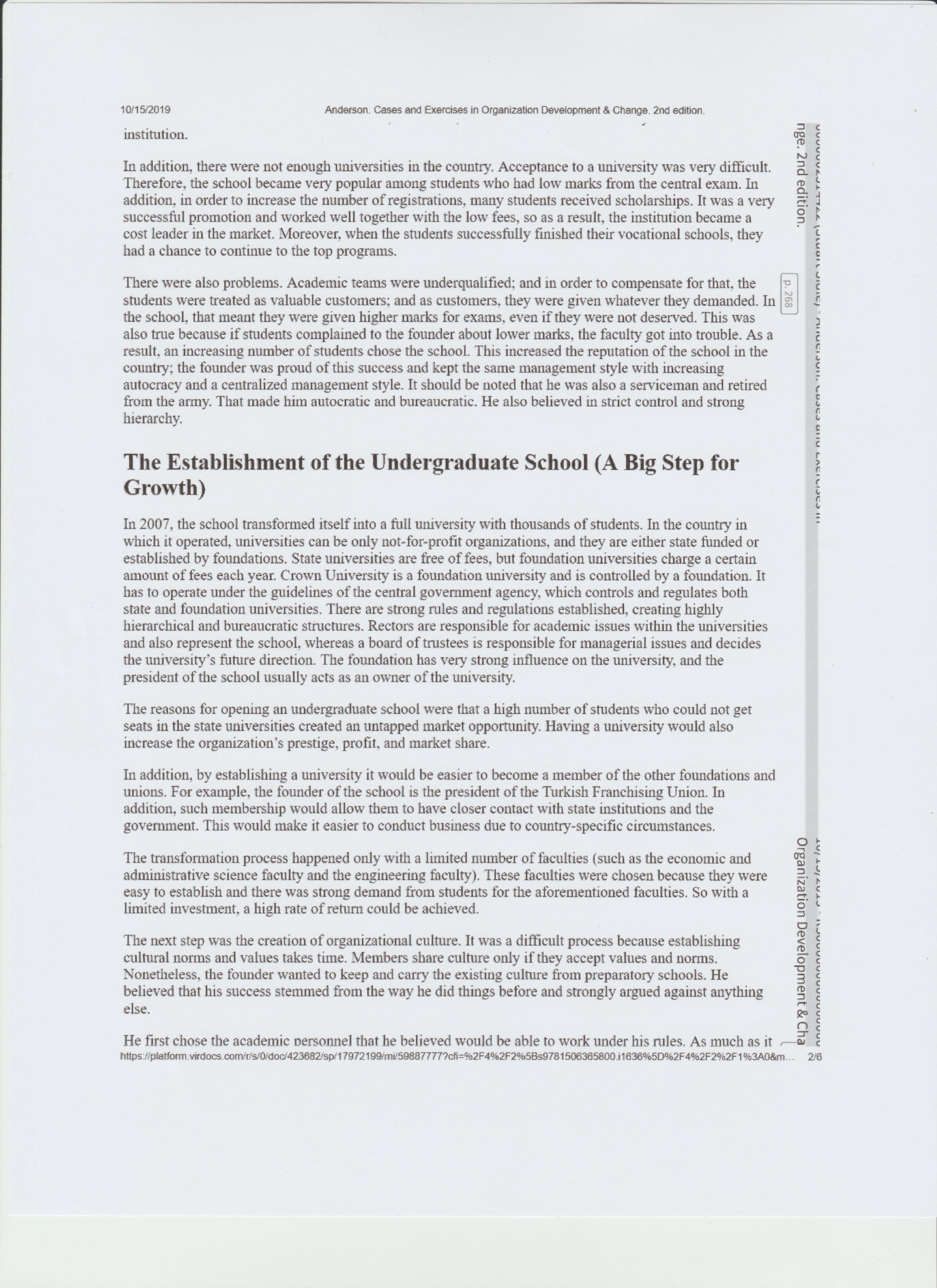
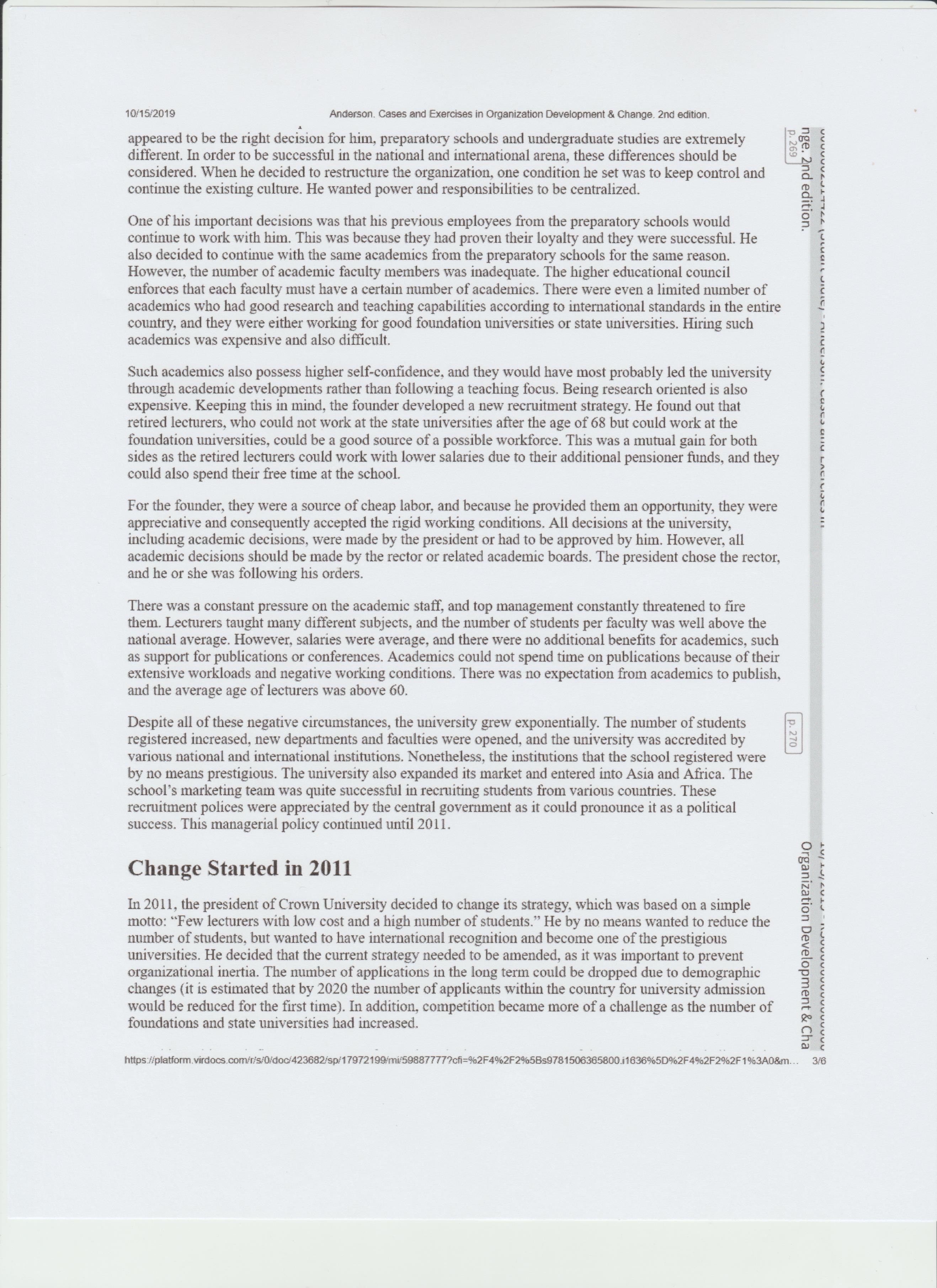
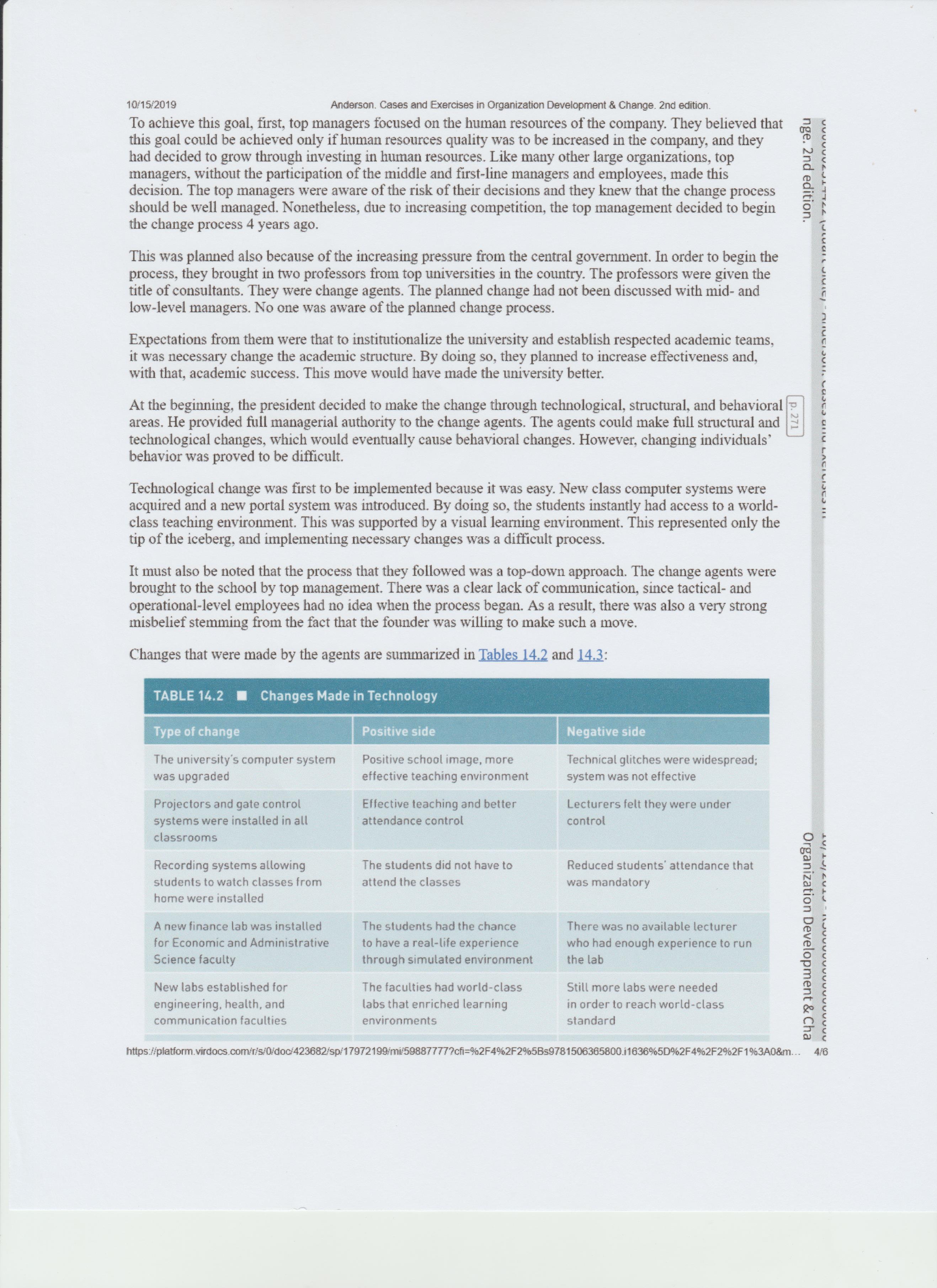
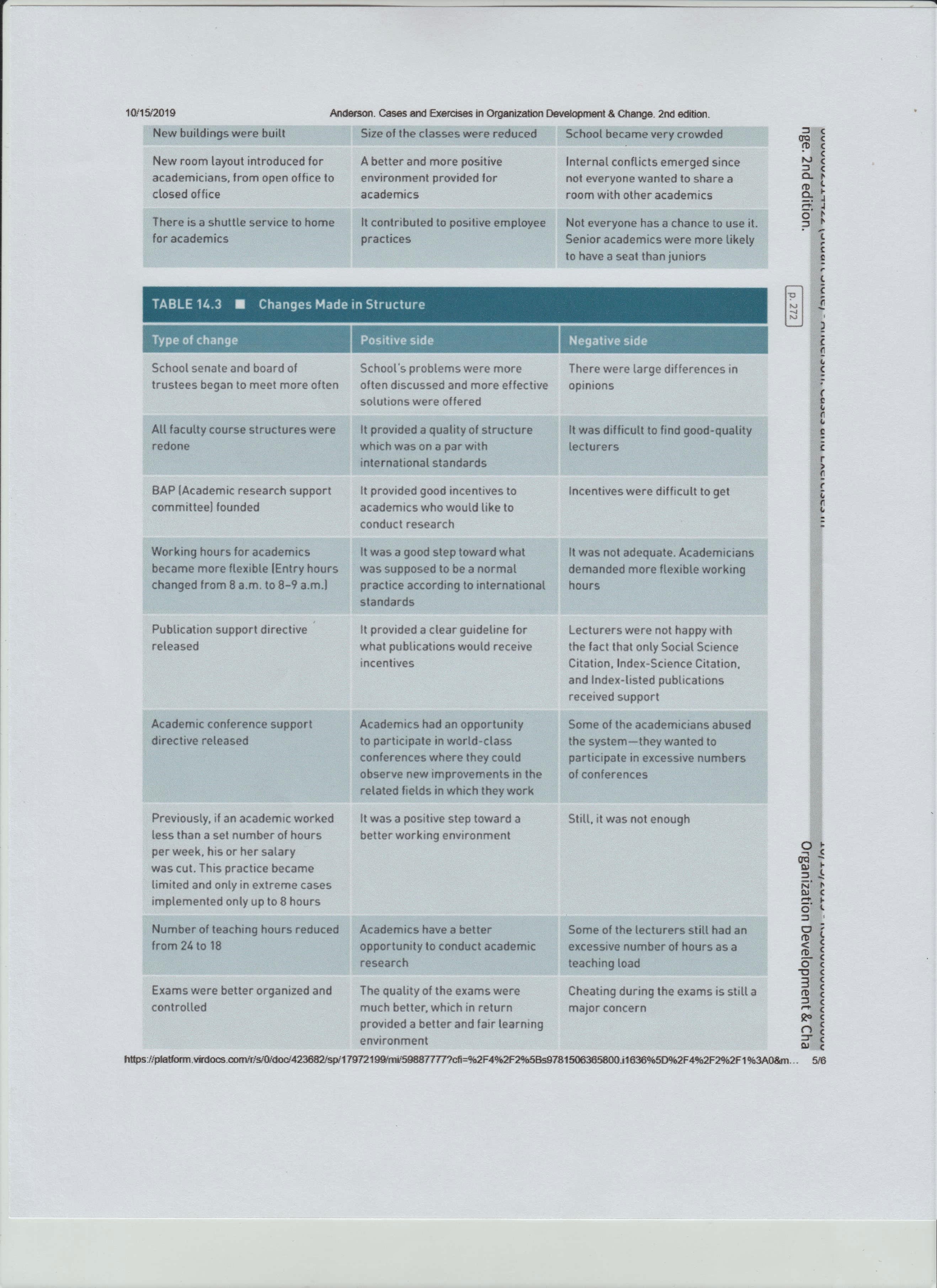
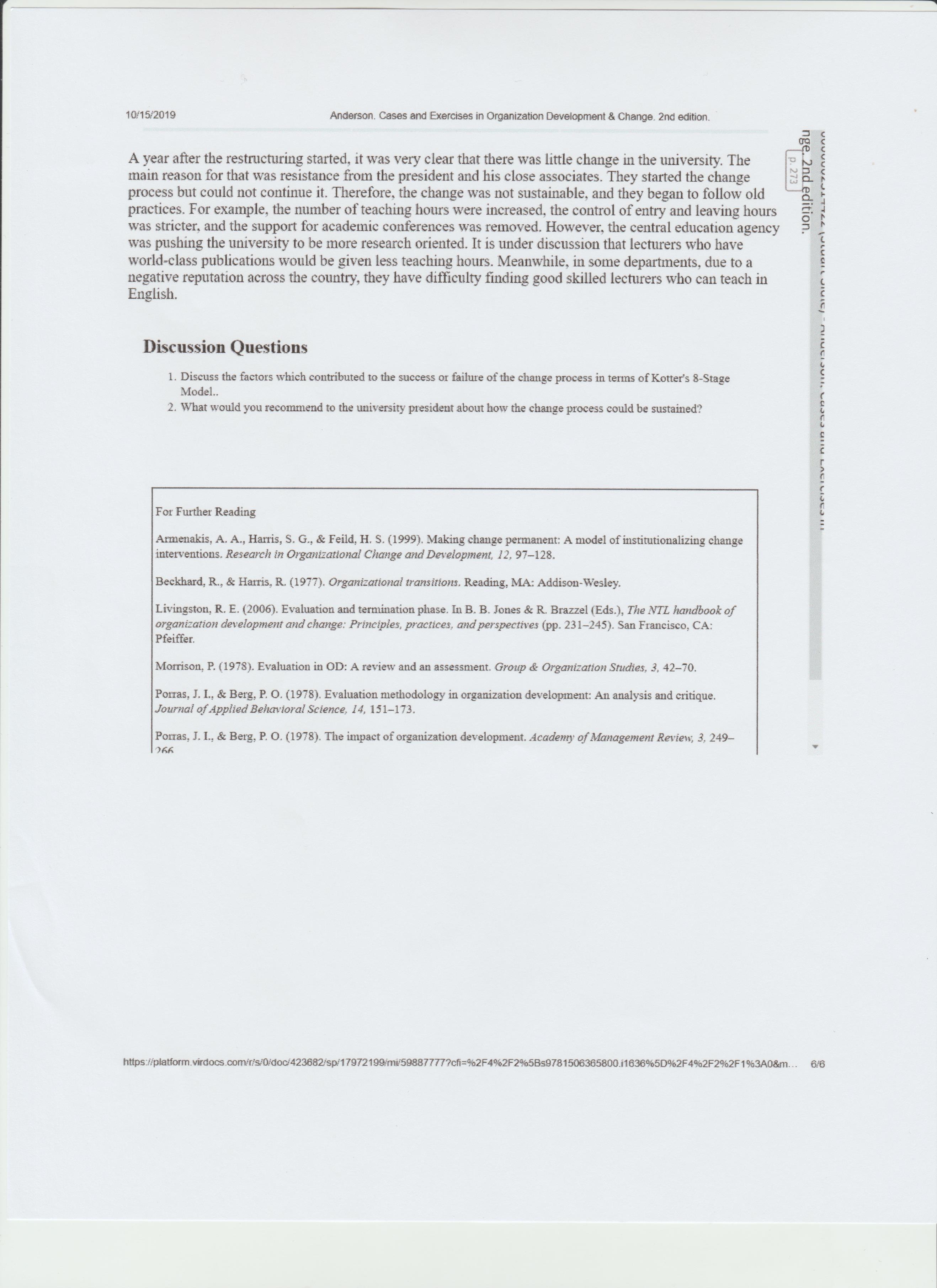
10/15/2019 A The Change Story of Crown University Management 668 . CASE Alev Katrinli Beklr Emre Kurtulmus l .- . am p' \"I minus\" null! earn-u \"snowman\": _ ISIHl 'I inn'u-i WLLmhnnnnn 'UOl Learning Objectives I To understand how a change process can be initiated. I To identify possible problems, challenges, and resistance to a change process. I To identify possible distractions from top management in a change process. Crown University was founded around the early 20005 in Istanbul, Turkey. The founder of the school had previously owned preparatory schools; these schools are specic to the country at hand. They solely serve the students who prepare for the central exams (a nationwide requirement) that high school students must undertake in order to get a seat at a university. All the preparatory schools are governed by one person. The schools are highly centralized and the founder was looking after all problems, from hiring new sta to renting properties. Due to his success with his preparatory schools and his hope that he could enroll preparatory school students, he decided to found a university. This venture was the rst in the country where there were no undergraduate courses, only vocational schools. Back then, there were massive demands for a university education due to the limited number of seats offered by domestic institutions. The country had one of the youngest populations in Europe, and the state universities had a limited number of places to offer. Admission to a university depended on the student's success on the central exam, which is conducted by a central government institution. university entrance exams. Rules and regulations were clear. Each university should have a minimum of three faculty members, they cannot be privately owned, and they can only be established by either state or independent foundations. This limited the number of strategic options. There was a big opportunity in the market, but at the same time, institutional rules were very strict. Nevertheless, there were some small loopholes in the laws that meant that it was still possible to manage the school as a private property, even if it seemed to belong to a foundation This was a clear indication of how one must obey the rule of law and also depicts the pervasive inuence of social institutions. In addition, there were institutional limitations. Universities are regulated by the same agency that sets 3 However, at its initial opening, the school was not a full university; it was a vocational school where the students could receive 2 years of education. The newly established institution did not have enough buildings or, more important, a proper campus. Due to cost, ownership of such campuses within the city was prohibitively expensive. This situation became further complicated by the fact that the students were looking for a central location to go to the university. The city's trafc was highly congested, and if the location was too far from the city center, there would have been a competitive disadvantage. - rvn-y h-r hw- At the beginning, only a few hundred students registered into the school. At that time, the team from the preparatory schools managed the school and most of the academic staff were instructors. This was possible because unlike a university, in vocational schools there was no legal requirement to have a certain number of academics that hold PhDs. The rst job of the team was to call all candidates and visit potential students; the students were mostly registered into the preparatory schools, so the school already had their contact information. Employee motivation was extremely high, as they did not have enough qualications to teach at a university yet they were able to work in a vocational school. They felt like they were promoted to a better job. This case was also strengthened by the fact that if they lost their job, they might not be able to nd another one at a similar level. However. as a result. the founder was able to strictlv control the mussjiuatfmmxidoosoornmywmdm/spl179721W5ms77mo=962F4962F2965559781515255800.i16$%5D%2F4%2F2%2F1%3A0&n... an; 19 Juawdmanaa uonezguelo a nunnnnnnnnnnnnr'rmr 10/15/2019 Nidelsm. CosssaMExerdseshOrgstzationDevebpmeMLthngelndedim. institution. In addition, there were not enough universities in the country. Acceptance to a university was very difcult. Therefore, the school became very popular among students who had low marks om the central exam. In addition, in order to increase the number of registrations, many students received scholarships. It was a very successful promotion and worked well together with the low fees, so as a result, the institution became a cost leader in the market. Moreover, when the students successfully nished their vocational schools, they had a chance to continue to the top programs. There were also problems. Academic teams were underqualified; and in order to compensate for that, the students were treated as valuable customers; and as customers, they were given whatever they demanded. In the school, that meant they were given higher marks for exams, even if they were not deserved. This was also true because if students complained to the founder about lower marks, the faculty got into trouble. As a result, an increasing number of students chose the school. This increased the reputation of the school in the country; the founder was proud of this success and kept the same management style with increasing autocracy and a centralized management style. It should be noted that he was also a serviceman and retired from the army. That made him autocratic and bureaucratic. He also believed in strict control and strong hierarchy. The Establishment of the Undergraduate School (A Big Step for Growth) In 2007, the school transformed itself into a full university with thousands of students. In the country in which it operated, universities can be only not-for-prot organizations, and they are either state funded or established by foundations. State universities are free of fees, but foundation universities charge a certain amount of fees each year. Crown University is a foundation university and is controlled by a foundation. It has to operate under the guidelines of the central government agency, which controls and regulates both state and foundation universities. There are strong rules and regulations established, creating highly hierarchical and bureaucratic structures. Rectors are responsible for academic issues within the universities and also represent the school, whereas a board of trustees is responsible for managerial issues and decides the university's future direction. The foundation has very strong inuence on the university, and the president of the school usually acts as an owner of the university. The reasons for opening an undergraduate school were that a high number of students who could not get seats in the state universities created an untapped market opportunity. Having a university would also increase the organization's prestige, prot, and market share. In addition, by establishing a university it would be aster to become a member of the other foundations and unions. For example, the founder of the school is the president of the Turkish Franchising Union. In addition, such membership would allow them to have closer contact with state institutions and the government. This would make it easier to conduct business due to country-specic circumstances. The transformation process happened only with a limited number of faculties (such as the economic and administrative science faculty and the engineering faculty). These faculties were chosen because they were easy to establish and there was strong demand from students for the aforementioned faculties. So with a limited investment, a high rate of return could be achieved. The next step was the creation of organizational culture. It was a difcult process because establishing cultural norms and values takes time. Members share culture only if they accept values and norms. Nonetheless, the founder wanted to keep and carry the existing culture from preparatory schools. He believed that his success stemmed from the way he did things before and strongly argued against anything else. He rst chose the academic personnel that he believed would be able to work under his rules. As much as it blips:ilplalform.virdorsmml'flsl/dod423682/spl179721WW7777011=962F4962F29653597815M36580M18369650962F4K12F29B2F1963A0m.._ 'uompa puz 'au m \"animus nnn' cam-u nine fantm . lama-6 \\ Inner-1 wavrknhnnnn 'p N m m LE) '8 )uawdolaaaa U0!]EZ!UEJQ annnnnhnnnnanm-u rum, in Inv- l g". 10/15/2019 Anderson. Cases and Exercises in Organization Development & Change. 2nd edition. appeared to be the right decision for him, preparatory schools and undergraduate studies are extremely different. In order to be successful in the national and international arena, these differences should be p. 269 considered. When he decided to restructure the organization, one condition he set was to keep control and continue the existing culture. He wanted power and responsibilities to be centralized. One of his important decisions was that his previous employees from the preparatory schools would continue to work with him. This was because they had proven their loyalty and they were successful. He nge. 2nd edition. also decided to continue with the same academics from the preparatory schools for the same reason. However, the number of academic faculty members was inadequate. The higher educational council enforces that each faculty must have a certain number of academics. There were even a limited number of academics who had good research and teaching capabilities according to international standards in the entire country, and they were either working for good foundation universities or state universities. Hiring such academics was expensive and also difficult. Such academics also possess higher self-confidence, and they would have most probably led the university through academic developments rather than following a teaching focus. Being research oriented is also expensive. Keeping this in mind, the founder developed a new recruitment strategy. He found out that retired lecturers, who could not work at the state universities after the age of 68 but could work at the foundation universities, could be a good source of a possible workforce. This was a mutual gain for both sides as the retired lecturers could work with lower salaries due to their additional pensioner funds, and they could also spend their free time at the school For the founder, they were a source of cheap labor, and because he provided them an opportunity, they were appreciative and consequently accepted the rigid working conditions. All decisions at the university, including academic decisions, were made by the president or had to be approved by him. However, all academic decisions should be made by the rector or related academic boards. The president chose the rector, and he or she was following his orders. There was a constant pressure on the academic staff, and top management constantly threatened to fire them. Lecturers taught many different subjects, and the number of students per faculty was well above the national average. However, salaries were average, and there were no additional benefits for academics, such as support for publications or conferences. Academics could not spend time on publications because of their extensive workloads and negative working conditions. There was no expectation from academics to publish, and the average age of lecturers was above 60. Despite all of these negative circumstances, the university grew exponentially. The number of students registered increased, new departments and faculties were opened, and the university was accredited by p. 270 various national and international institutions. Nonetheless, the institutions that the school registered were by no means prestigious. The university also expanded its market and entered into Asia and Africa. The school's marketing team was quite successful in recruiting students from various countries. These recruitment polices were appreciated by the central government as it could pronounce it as a political success. This managerial policy continued until 2011. Change Started in 2011 In 2011, the president of Crown University decided to change its strategy, which was based on a simple Organization Development & Cha STATINTINT motto: "Few lecturers with low cost and a high number of students." He by no means wanted to reduce the number of students, but wanted to have international recognition and become one of the prestigious universities. He decided that the current strategy needed to be amended, as it was important to prevent organizational inertia. The number of applications in the long term could be dropped due to demographic changes (it is estimated that by 2020 the number of applicants within the country for university admission would be reduced for the first time). In addition, competition became more of a challenge as the number of foundations and state universities had increased. https://platform. virdocs.com/r/s/0/doc/423682/sp/17972199/mi/59887777?cfi=%2F4%2F2%5Bs9781506365800.i1636%50%2F4%2F2%2F 1%3A0&m... 3 /610/15/2019 Anderson. Cases and Exercises in Organization Development & Change. 2nd edition. To achieve this goal, first, top managers focused on the human resources of the company. They believed that this goal could be achieved only if human resources quality was to be increased in the company, and they had decided to grow through investing in human resources. Like many other large organizations, top managers, without the participation of the middle and first-line managers and employees, made this decision. The top managers were aware of the risk of their decisions and they knew that the change process should be well managed. Nonetheless, due to increasing competition, the top management decided to begin the change process 4 years ago. nge. 2nd edition. This was planned also because of the increasing pressure from the central government. In order to begin the process, they brought in two professors from top universities in the country. The professors were given the title of consultants. They were change agents. The planned change had not been discussed with mid- and low-level managers. No one was aware of the planned change process. Expectations from them were that to institutionalize the university and establish respected academic teams, it was necessary change the academic structure. By doing so, they planned to increase effectiveness and, with that, academic success. This move would have made the university better. At the beginning, the president decided to make the change through technological, structural, and behavioral areas. He provided full managerial authority to the change agents. The agents could make full structural and technological changes, which would eventually cause behavioral changes. However, changing individuals' behavior was proved to be difficult. Technological change was first to be implemented because it was easy. New class computer systems were acquired and a new portal system was introduced. By doing so, the students instantly had access to a world- class teaching environment. This was supported by a visual learning environment. This represented only the tip of the iceberg, and implementing necessary changes was a difficult process. It must also be noted that the process that they followed was a top-down approach. The change agents were brought to the school by top management. There was a clear lack of communication, since tactical- and operational-level employees had no idea when the process began. As a result, there was also a very strong misbelief stemming from the fact that the founder was willing to make such a move. Changes that were made by the agents are summarized in Tables 14.2 and 14.3: TABLE 14.2 Changes Made in Technology Type of change Positive side Negative side The university's computer system Positive school image, more Technical glitches were widespread; was upgraded effective teaching environment system was not effective Projectors and gate control Effective teaching and better Lecturers felt they were under systems were installed in all attendance control control classrooms Recording systems allowing The students did not have to Reduced students attendance that students to watch classes from attend the classes was mandatory home were installed Organization Development & Cha runsinTint A new finance lab was installed The students had the chance There was no available lecturer for Economic and Administrative to have a real-life experience who had enough experience to run Science faculty through simulated environment the lab New labs established for The faculties had world-class Still more labs were needed engineering, health, and labs that enriched learning in order to reach world-class communication faculties environments standard https://platform. virdocs.com/r/s/0/doc/423682/sp/17972199/mi/59887777?cfi=%2F4%2F2%5Bs9781506365800.i1636%50%2F4%2F2%2F 1%3A0&m... A/B10/15/2019 Anderson. Cases and Exercises in Organization Development & Change. 2nd edition. New buildings were built Size of the classes were reduced School became very crowded New room layout introduced for A better and more positive Internal conflicts emerged since academicians, from open office to environment provided for not everyone wanted to share a closed office academics room with other academics nge. 2nd edition. TrynaAnAn There is a shuttle service to home It contributed to positive employee Not everyone has a chance to use it. for academics practices Senior academics were more likely to have a seat than juniors nin ,IDMIP) 771 TABLE 14.3 Changes Made in Structure p. 272 Type of change Positive side Negative side School senate and board of School's problems were more There were large differences in trustees began to meet more often often discussed and more effective opinions solutions were offered All faculty course structures were It provided a quality of structure It was difficult to find good-quality redone which was on a par with lecturers international standards BAP (Academic research support It provided good incentives to Incentives were difficult to get committee] founded academics who would like to conduct research Working hours for academics t was a good step toward what It was not adequate. Academicians became more flexible [Entry hours was supposed to be a normal demanded more flexible working changed from 8 a.m. to 8-9 a.m.] practice according to international hours standards Publication support directive It provided a clear guideline for Lecturers were not happy with released what publications would receive the fact that only Social Science incentives Citation, Index-Science Citation, and Index-listed publications received support Academic conference support Academics had an opportunity Some of the academicians abused directive released to participate in world-class the system-they wanted to conferences where they could participate in excessive numbers observe new improvements in the of conferences related fields in which they work Previously, if an academic worked It was a positive step toward a Still, it was not enough less than a set number of hours better working environment per week, his or her salary was cut. This practice became TINT limited and only in extreme cases implemented only up to 8 hours Number of teaching hours reduced Academics have a better Some of the lecturers still had an from 24 to 18 opportunity to conduct academic excessive number of hours as a research teaching load Exams were better organized and The quality of the exams were Cheating during the exams is still a controlled much better, which in return major concern provided a better and fair learning environment Organization Development & Cha https://platform.virdocs.com/r/s/0/doc/423682/sp/17972199/mi/59887777?cfi=%2F4%2F2%5Bs9781506365800.i1636%50%2F4%2F2%2F 1%3A0&m... 5 /610/15/2019 Anderson. Cases and Exercises in Organization Development & Change. 2nd edition. A year after the restructuring started, it was very clear that there was little change in the university. The main reason for that was resistance from the president and his close associates. They started the change process but could not continue it. Therefore, the change was not sustainable, and they began to follow old p. 273 practices. For example, the number of teaching hours were increased, the control of entry and leaving hours was stricter, and the support for academic conferences was removed. However, the central education agency nge. 2nd edition. was pushing the university to be more research oriented. It is under discussion that lecturers who have world-class publications would be given less teaching hours. Meanwhile, in some departments, due to a negative reputation across the country, they have difficulty finding good skilled lecturers who can teach in English. Discussion Questions 1. Discuss the factors which contributed to the success or failure of the change process in terms of Kotter's 8-Stage Model.. 2. What would you recommend to the university president about how the change process could be sustained? For Further Reading Armenakis, A. A., Harris, S. G., & Feild, H. S. (1999). Making change permanent: A model of institutionalizing change interventions. Research in Organizational Change and Development, 12, 97-128. Beckhard, R., & Harris, R. (1977). Organizational transitions. Reading, MA: Addison-Wesley. Livingston, R. E. (2006). Evaluation and termination phase. In B. B. Jones & R. Brazzel (Eds.), The NTL handbook of organization development and change: Principles, practices, and perspectives (pp. 231-245). San Francisco, CA: Pfeiffer Morrison, P. (1978). Evaluation in OD: A review and an assessment. Group & Organization Studies, 3, 42-70. Porras, J. I., & Berg, P. O. (1978). Evaluation methodology in organization development: An analysis and critique. Journal of Applied Behavioral Science, 14, 151-173. Porras, J. I., & Berg, P. O. (1978). The impact of organization development. Academy of Management Review, 3, 249- https://platform. virdocs.com/r/s/0/doc/423682/sp/17972199/mi/59887777?cfi=%2F4%2F2%5Bs9781506365800.i1636%50%2F4%2F2%2F 1%3A0&m... 6/6









 Study Help