







Question: Using Mathematica Using Module, write a function that accepts as the argument any list of integers each with a value in the interval (0, 100)
Using Mathematica
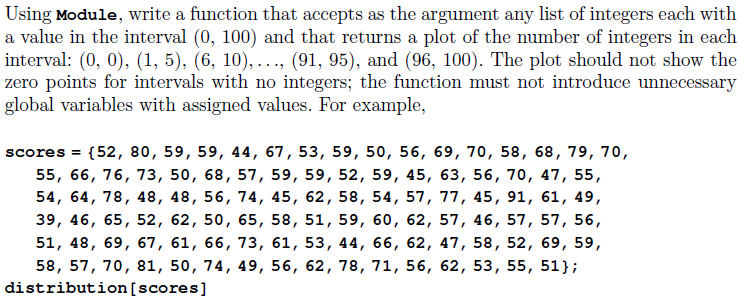
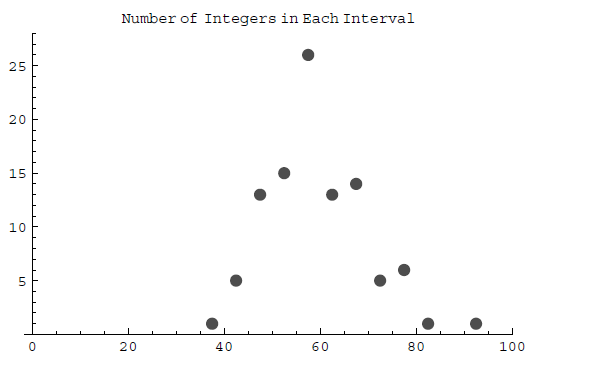
Using Module, write a function that accepts as the argument any list of integers each with a value in the interval (0, 100) and that returns a plot of the number of integers in each interval: (0, 0), (1, 5), (6, 10),..., (91, 95), and (96, 100). The plot should not show the zero points for intervals with no integers; the function must not introduce unnecessary global variables with assigned values. For example, scores (52, 80, 59, 59, 44, 67, 53, 59, 50, 56, 69, 70, 58, 68, 79, 70, 55, 66, 76, 73, 50, 68, 57, 59, 59, 52, 59, 45, 63, 56, 70, 47, 55, 54, 64, 78, 48, 48, 56, 74, 45, 62, 58, 54, 57, 77, 45, 91, 61, 49, 39, 46, 65, 52, 62, 50, 65, 58, 51, 59, 60, 62, 57, 46, 57, 57, 56, 51, 48, 69, 67, 61, 66, 73, 61, 53, 44, 66, 62, 47, 58, 52, 69, 59, 58, 57, 70, 81, 50, 74, 49, 56, 62, 78, 71, 56, 62, 53, 55, 51); distribution[scores] Using Module, write a function that accepts as the argument any list of integers each with a value in the interval (0, 100) and that returns a plot of the number of integers in each interval: (0, 0), (1, 5), (6, 10),..., (91, 95), and (96, 100). The plot should not show the zero points for intervals with no integers; the function must not introduce unnecessary global variables with assigned values. For example, scores (52, 80, 59, 59, 44, 67, 53, 59, 50, 56, 69, 70, 58, 68, 79, 70, 55, 66, 76, 73, 50, 68, 57, 59, 59, 52, 59, 45, 63, 56, 70, 47, 55, 54, 64, 78, 48, 48, 56, 74, 45, 62, 58, 54, 57, 77, 45, 91, 61, 49, 39, 46, 65, 52, 62, 50, 65, 58, 51, 59, 60, 62, 57, 46, 57, 57, 56, 51, 48, 69, 67, 61, 66, 73, 61, 53, 44, 66, 62, 47, 58, 52, 69, 59, 58, 57, 70, 81, 50, 74, 49, 56, 62, 78, 71, 56, 62, 53, 55, 51); distribution[scores]
Step by Step Solution
There are 3 Steps involved in it

Get step-by-step solutions from verified subject matter experts
 Study Help