







Question: using System; using System.Collections.Generic; using System.Linq; using System.Text; using System.Threading.Tasks; namespace CardDealer { class Deck { // Include any private fields here // ... public
using System; using System.Collections.Generic; using System.Linq; using System.Text; using System.Threading.Tasks;
namespace CardDealer { class Deck { // Include any private fields here // ... public Deck() { // Include your code here // ... }
public void Shuffle() { // Include your code here // ... }
public string Deal() { // Include your code here // ... } } }
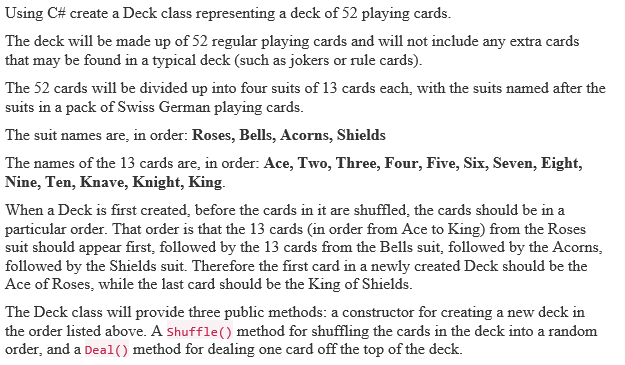
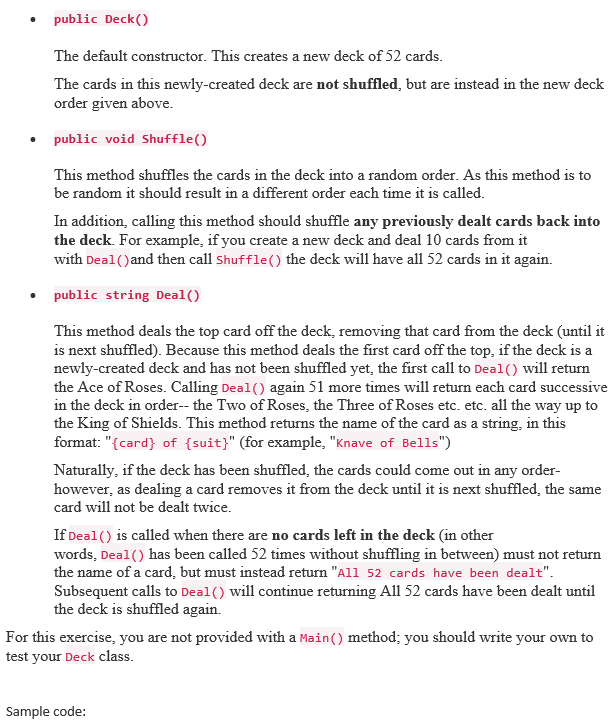
Using C# create a Deck class representing a deck of 52 playing cards The deck will be made up of 52 regular playing cards and will not include any extra cards that may be found in a typical deck (such as jokers or rule cards) The 52 cards will be divided up into four suits of 13 cards each, with the suits named after the suits in a pack of Swiss German playing cards The suit names are, in order: Roses, Bells, Acorns, Shields The names of the 13 cards are, in order: Ace, Two, Three, Four, Five, Six, Seven, Eight, Nine, Ten, Knave, Knight, King When a Deck is first created, before the cards in it are shuffled, the cards should be in a particular order. That order is that the 13 cards (in order from Ace to King) from the Roses suit should appear first, followed by the 13 cards from the Bells suit, followed by the Acorns, followed by the Shields suit. Therefore the first card in a newly created Deck should be the Ace of Roses, while the last card should be the King of Shields The Deck class will provide three public methods: a constructor for creating a new deck in the order listed above. A shuffle() method for shuffling the cards in the deck into a random order, and a Deal() method for dealing one card off the top of the deck
Step by Step Solution
There are 3 Steps involved in it

Get step-by-step solutions from verified subject matter experts
 Study Help